Who Is Michelle Pfeiffer? The Story Behind the Movie Star You Thought You Knew
Every few months, the internet rediscovers the same few seconds of film: a woman in a black vinyl bodysuit, perched on the arm of a piano in a red satin dress, cracking a whip hard enough to knock the head off a mannequin standing across the room. Michelle Pfeiffer did that trick herself. Decades later, she would say that learning to use the whip was one of the hardest things she had ever done, and that the character who came out of it seems to have nine lives — a joke about Catwoman that also happens to be the best available description of Pfeiffer's own career. Everyone can picture the face. Almost nobody, it turns out, has actually done the arithmetic of how that face got there, what it cost, and what she built with it once she arrived.
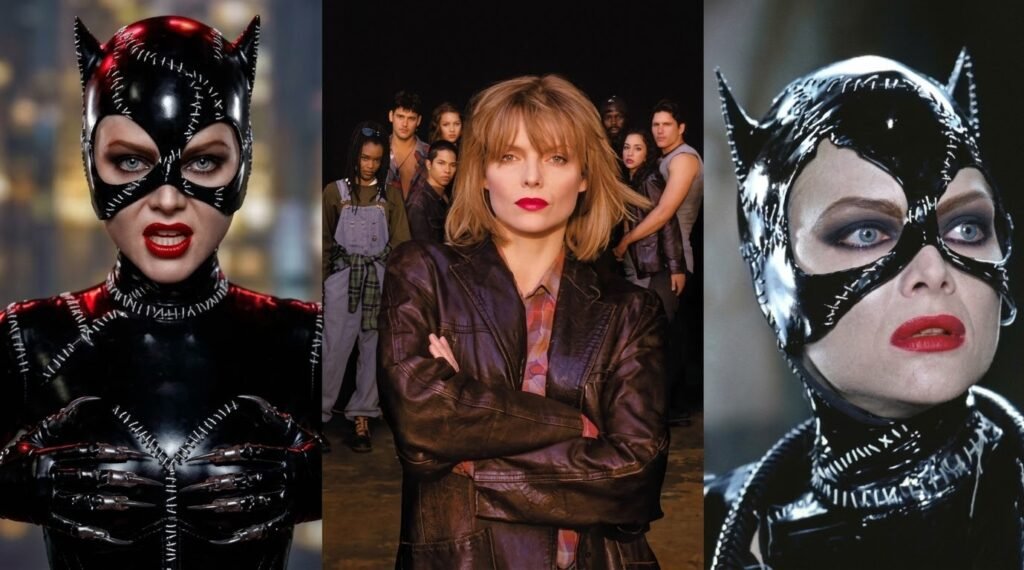
The popular version of Michelle Pfeiffer is compact enough to fit on a poster: the most beautiful woman in Hollywood, briefly the most acclaimed actress in it, then a long, graceful quiet. Catwoman. The singer on the piano. The woman Jack Nicholson's character couldn't stop talking about. What that version leaves out is roughly four decades of refusals, negotiations, producing memos, box-office shocks and at least two complete second acts — one of them behind a fragrance counter. The real career is stranger and more instructive than the legend, and in 2026 it has become more visible than it has been in twenty years, on two television series at once, at an age when the industry historically stops writing women like her into the story at all.
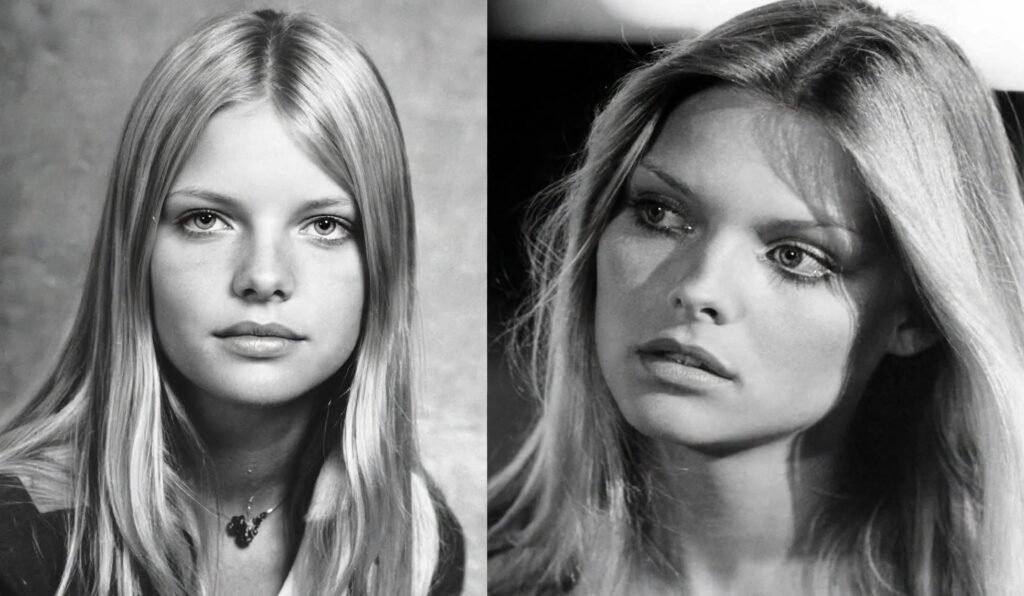
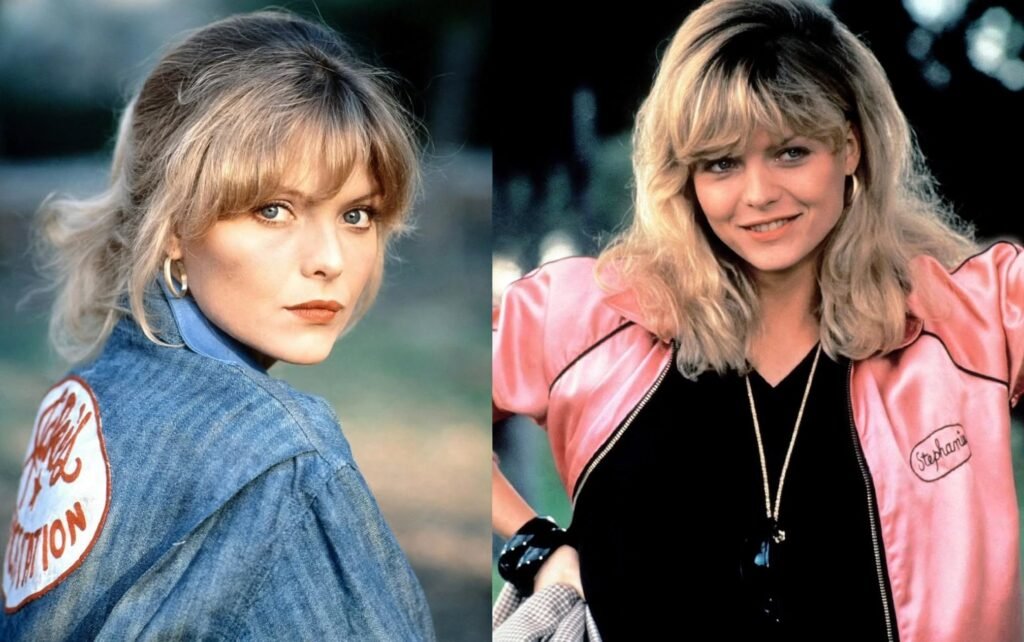
The architecture begins in 1978 in Orange County, where a teenager named Michelle Pfeiffer won the Miss Orange County pageant and placed sixth at Miss California — a detail that matters not because beauty pageants make stars, but because an agent on a judging panel saw her there and started her toward auditions. Her first screen credit came that same year, in a 1978 episode of Fantasy Island, followed by the usual apprenticeship of the era: bit parts in network series like Delta House and CHiPs, and three television movies in 1981. Her feature debut was The Hollywood Knights in 1980, a period comedy nobody remembers for her. Then came the role that should have ended the conversation: Stephanie Zinone, the Pink Ladies' leader in Grease 2 (1982), the most notorious critical and commercial failure on her résumé. The sequel grossed about $14.3 million domestically and opened to reviews that treated it as an insult to the original. Her agent would later say that the association made it harder for her to get hired at all.
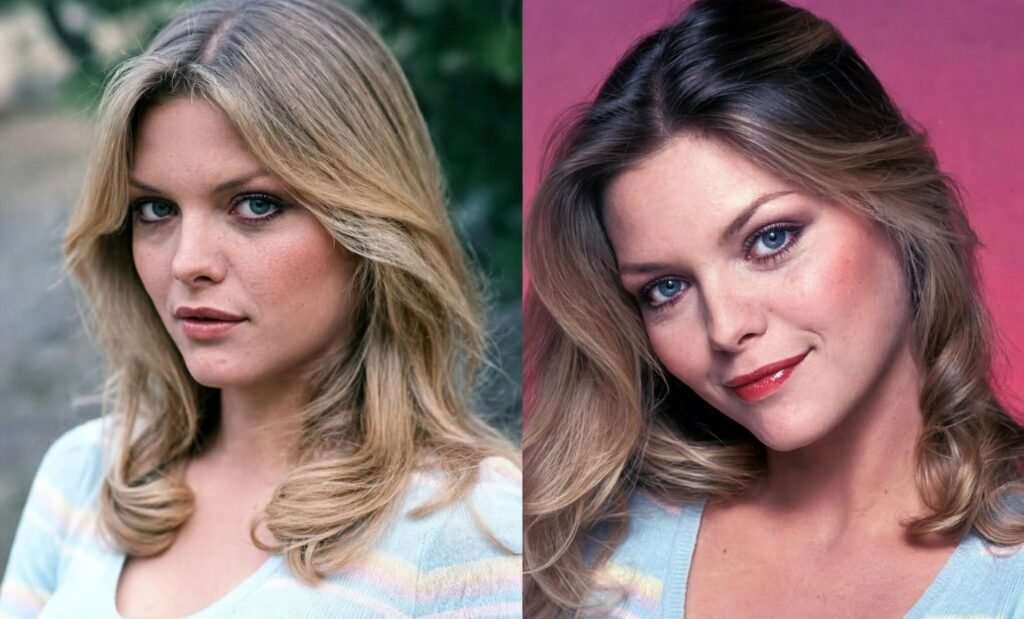
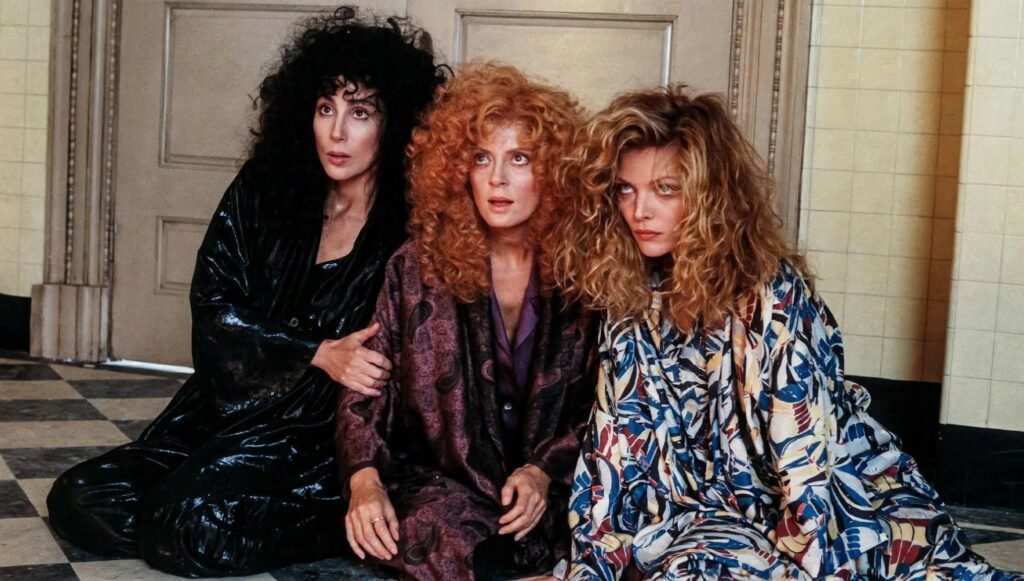
What happened next is the first lesson in how Pfeiffer's career actually works. A year after Grease 2 flopped, she appeared opposite Al Pacino in Brian De Palma's Scarface — a film that was itself savaged on release and became one of the defining American movies of its decade. She has said she was terrified during its making. She kept working anyway: Ladyhawke in 1985, then The Witches of Eastwick in 1987 alongside Cher and Susan Sarandon, a $62.8 million hit that put her in the room with Jack Nicholson and proved she could hold a studio comedy against the biggest male star alive. The machine was turning. Dangerous Liaisons followed in 1988, and with it the first of what would become three Academy Award nominations — she lost that year to Geena Davis, though she took the BAFTA for supporting actress — and the performance that taught Hollywood something it had been slow to learn: that the face everyone wanted to photograph could also carry a story about the destruction of an innocent woman, quietly, without vanity, from the inside.
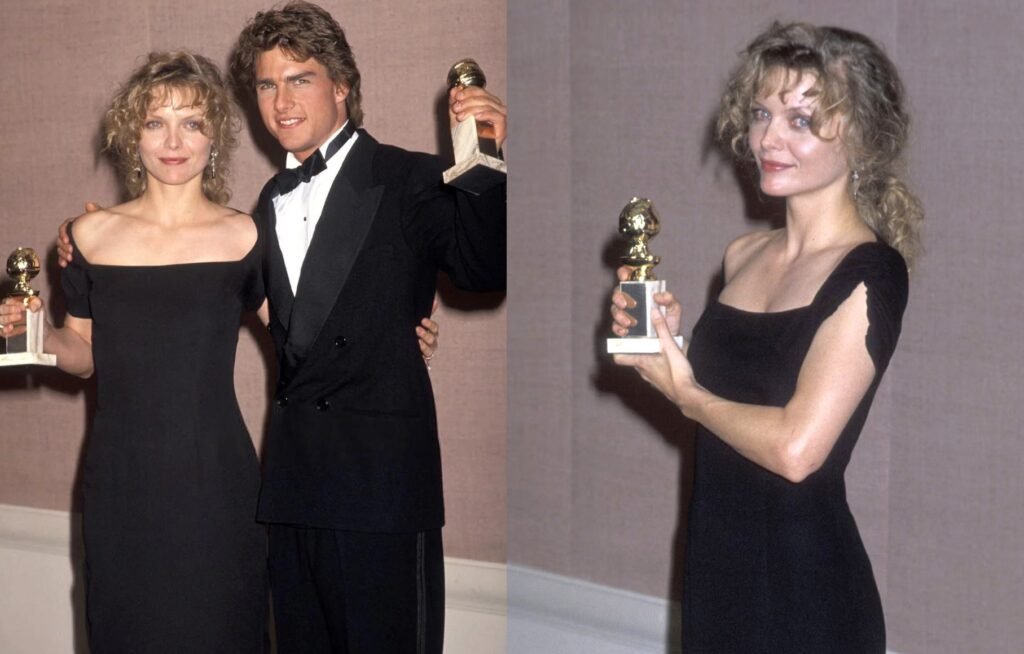
Then came 1989, and The Fabulous Baker Boys, the film that Pfeiffer's fiercest admirers still treat as the real one. She played Susie Diamond, a former escort hired to sing duets with two brothers act, and she sang the material herself — two months of intensive vocal preparation with a coach, terrified the whole time, delivering "Makin' Whoopee" on a piano in a red dress in a scene that has since become shorthand for a certain kind of American movie magic. The film grossed about $18.4 million, a fraction of what Batman Returns would earn three years later, but it won her the Golden Globe for dramatic actress and a Best Actress Oscar nomination. She lost that one too — to Jessica Tandy, in Driving Miss Daisy — and the near-miss would become the pattern of her peak: critical vindication, industry applause, and hardware going home with somebody else.
The early 1990s were the years the public version of Pfeiffer was assembled. Katya Orlova in The Russia House opposite Sean Connery, another Globe nomination. Scorsese's The Age of Innocence, another nomination. And Batman Returns in 1992, the role that guarantees she will be recognizable as long as movies are watched. The circumstances were awkward: Annette Bening had been cast as Selina Kyle and left the production after becoming pregnant — a fact Pfeiffer has complained the press turned into a competition it never actually was — and Pfeiffer stepped in, spent months learning to crack a whip, and created a Catwoman that every actress who has played the part since has had to define themselves against. Zoë Kravitz, asked decades later about taking the role, named the women whose Catwomen had shaped hers: Julie Newmar, Eartha Kitt, Halle Berry and Pfeiffer. Batman Returns earned $267 million worldwide.
The number that best captures the strange logic of her career is the one from the following year. In 1992 she made Love Field, a drama about the Kennedy assassination era that she also produced through her own company, Via Rosa Productions, which she had co-founded at the start of the decade. The film earned barely a million dollars at the domestic box office. It also Pfeiffer her third Academy Award nomination in five years — Best Actress, the only category she had not yet been nominated in — which she lost that year to Emma Thompson. An actress nominated three times by age 34, in an era when studios still built calendars around movie stars, had just headlined a film that almost nobody saw. That gap — between the industry's verdict and the audience's — is where the real Michelle Pfeiffer story lives.
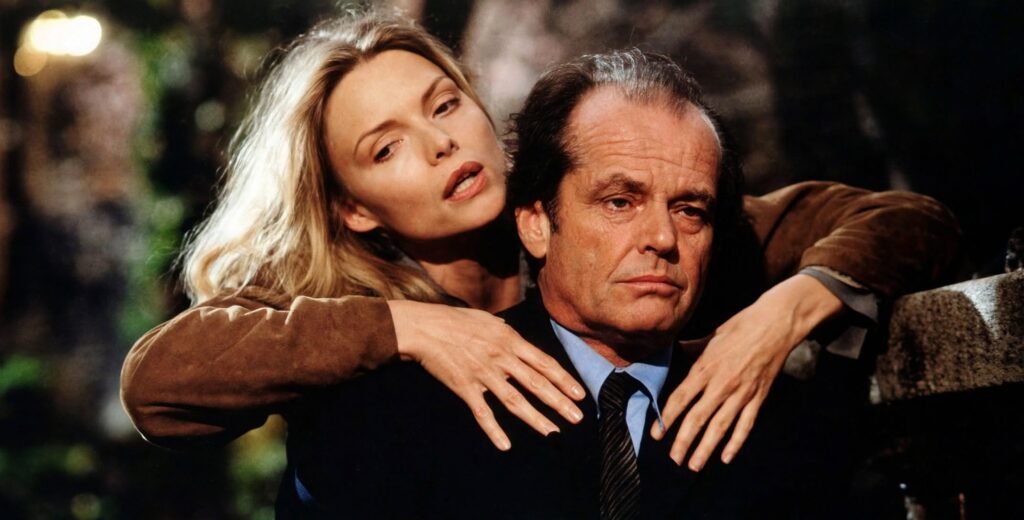
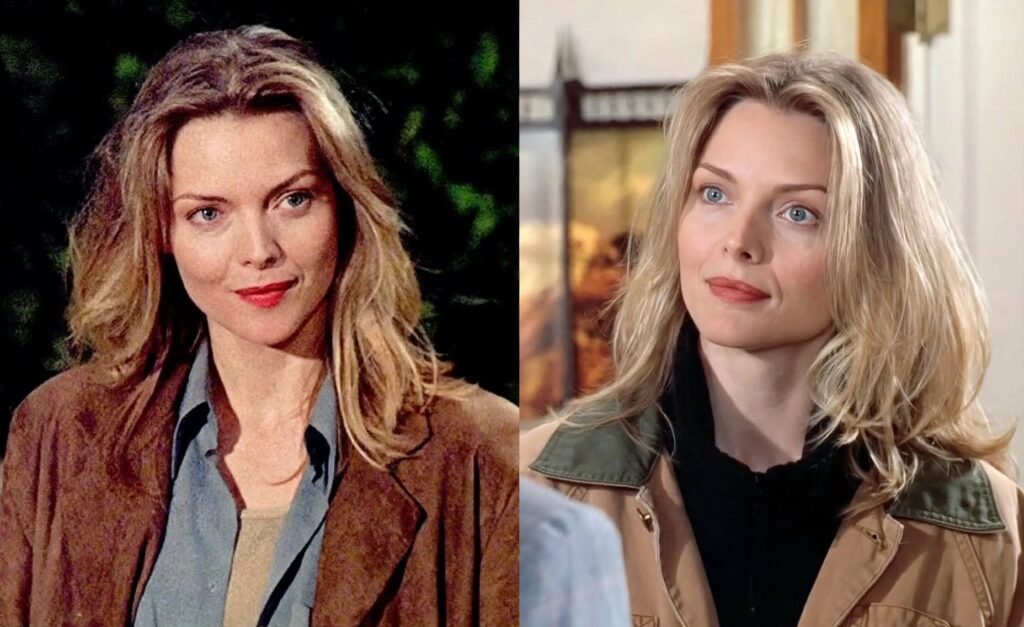
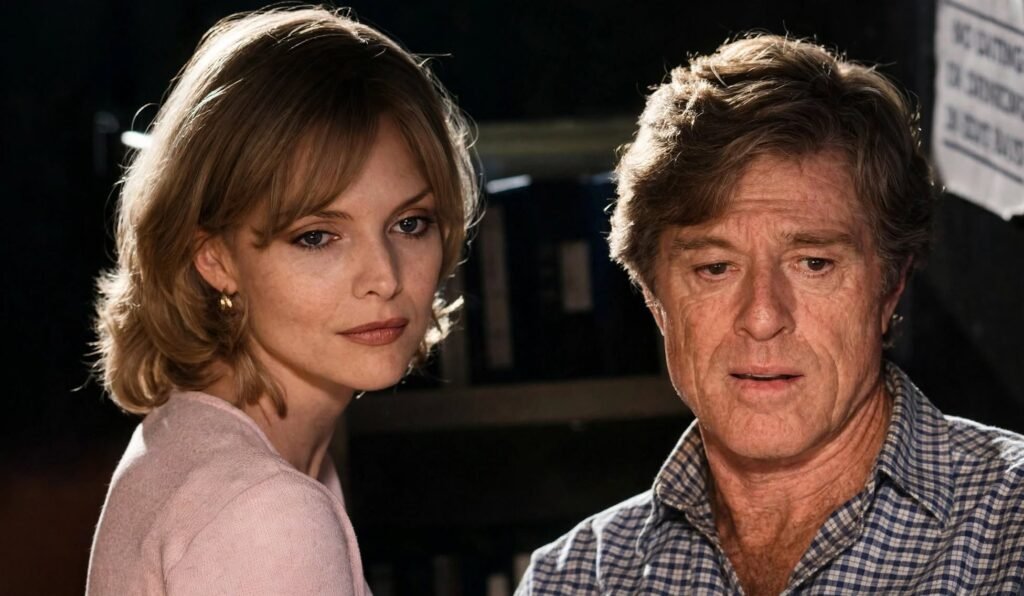
It would be easy, and wrong, to read the mid-1990s as a slide. Dangerous Minds, the toughest-classroom drama she also produced in 1995, was dismissed by critics and earned $179.5 million worldwide against a $29 million budget, one of the better returns of her career. But the pattern of the decade's second half was inconsistent in a way that the mythology of that era usually smooths over: One Fine Day underdelivered, A Thousand Acres disappointed, The Story of Us landed at 26 percent on Rotten Tomatoes with $27 million to show for it. In between sat What Lies Beneath in 2000, a $288 million worldwide hit, and The Age of Innocence, a film whose reputation has only grown. Her instincts remained better than her hit rate, and she kept producing — The Deep End of the Ocean, Dangerous Minds, A Thousand Acres — long before "executive producer" became standard issue for anyone with a famous face.
And then, by the standards of a woman who had been everywhere for fifteen years, she mostly stopped. This is the part the popular version of Michelle Pfeiffer gets most wrong, because it is usually filed under disappearance or decline, and it was neither. She has described it precisely: she didn't set out to stop working, she said in 2023 — the requirements simply narrowed until almost nothing fit. Where it shot, for how long, in what season, whether her children could come, whether filming would collide with school. Her agent began calling her Dr. No. She has said she became so picky that she was unhirable, and that she was at peace with that. The children were the point: a daughter, Claudia, adopted in 1993 while Pfeiffer was single, raised with the screenwriter David E. Kelley, whom she married that year and who stepped into fatherhood within months of their meeting; a son, John, born in 1994. The famous refusals belong to this period, and she has been careful about what they meant: she declined Basic Instinct because of the nudity and sexual material — she described herself, without drama, as modest — and has said the one she regrets turning down is Thelma & Louise. Other refusals, she has pointed out, were never judgments at all; they were scheduling, or a promise to a child.
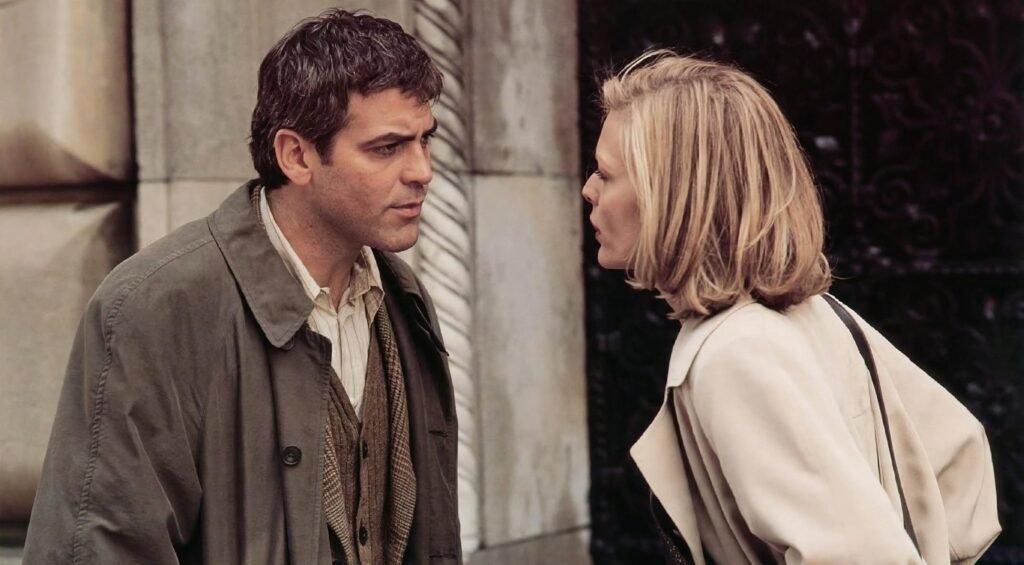
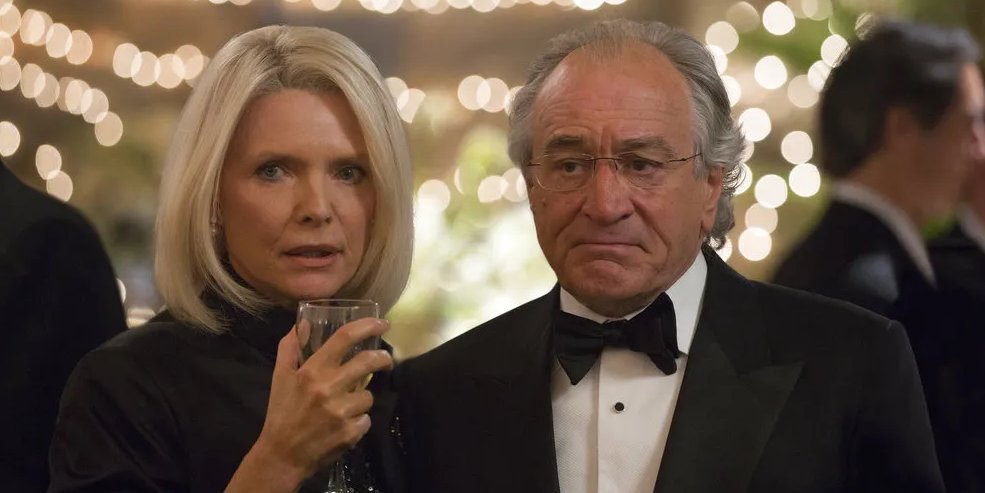
The re-entry was gradual, and its shape tells you where the industry had moved. Hairspray and Stardust in 2007. The Wizard of Lies on HBO in 2017, as Ruth Madoff, which brought her first Emmy nomination and announced that the most interesting parts for a woman of her experience had migrated to television. Murder on the Orient Express, $352 million worldwide. And the franchise surprise: Janet van Dyne, the original Wasp, in Marvel's Ant-Man and the Wasp, a $623 million film, followed by a credit in Avengers: Endgame, which became the highest-grossing film ever released. Paul Rudd later told a story about that period that is the cleanest evidence of her actual star power anyone has produced: at an Endgame gathering, established actors reacted to Pfeiffer's arrival the way fans react, with undisguised shock that she was standing in front of them. Fame, she has said, terrified her at the beginning. The terror was never visible from the outside.
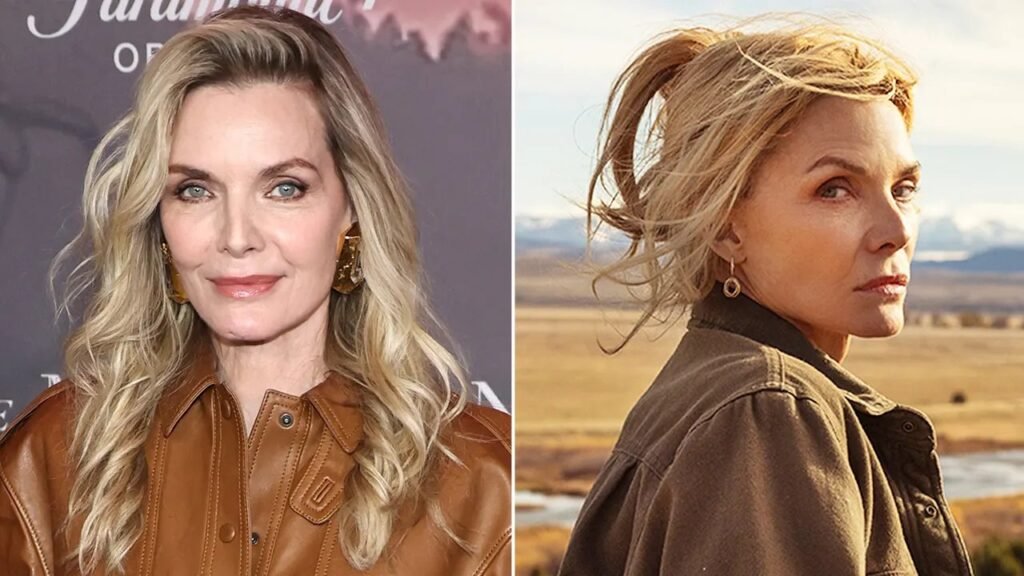
What she did with the re-entry is the second act almost nobody planned for. In 2022 she played Betty Ford in The First Lady and Gladys Presley in Baz Luhrmann's Elvis; in 2023 she returned as Janet van Dyne in Quantumania. Then came the year she did not take off. In December 2025, promoting the Prime Video holiday comedy Oh. What. Fun., in which she plays a mother whose family takes her annual labor for granted, she said she expected to spend most of 2026 away from work, with a new grandchild. Instead, 2026 became her biggest year since the 1990s. The Madison, an original Paramount+ drama created by Taylor Sheridan's world but not part of the Yellowstone universe, premiered in March with Pfeiffer as a Montana widow opposite Kurt Russell, renewed for a third season before the second had even aired. In April, Apple TV+ and A24 premiered Margo's Got Money Troubles, David E. Kelley's adaptation of the novel, with Pfeiffer as the mother of Elle Fanning's character, alongside Nicole Kidman — renewed within a month. In June, the Gotham Film & Media Institute gave her its Legend Tribute. By August she had collected two more Emmy nominations, one for supporting actress in a comedy and one, as an executive producer of Margo, for outstanding comedy series — bringing her career Emmy total to three nominations, none of them a win, which is its own small monument to how her industry has honored her.
The August conversation is worth pausing on, because it contains the best available answer to the question this article opened with. At a Hollywood Reporter panel, Pfeiffer said she did not want to star in another movie alone anymore — ensembles, she explained, were more fun. The remark traveled the internet as a retirement-adjacent headline, and she corrected it on The Tonight Show, calling retirement talk the most ridiculous thing and clarifying that she had only ever said she likes working with other people. Read that exchange against the whole career and it stops being a clarification and becomes a thesis. This is a woman who has spent forty years declining the version of stardom that asks you to be available to everyone: the Grease 2 typecasting she refused to be defined by, the nudity she wouldn't shoot, the school-calendar ultimatums that cost her roles, the solo-billing she no longer wants. Her agent's joke — Dr. No — was never a phase. It was the operating system.
Which leaves the two questions the story actually turns on: what she is an example of, and why she still matters. On paper, the first question has an unsatisfying answer: three Academy Award nominations and no wins, eight Golden Globe nominations and one win, a BAFTA, roughly fifty film credits, and tracked box-office totals in the billions across the films of her that distributors counted. She was never the biggest star of her era, and by the awards record she was not the most decorated. But star power was never the trophy count. It is the thing that makes other actors forget they are famous when you walk into the room; the thing that makes a whip clip from 1992 travel further than most films released last year; the thing that made Stephen Frears recall, decades after Dangerous Liaisons, that Pfeiffer had met a young Keanu Reeves on that set and told him he would be a big star — before anyone in the industry knew it. She had an eye for what lasts. She always applied it to her own career last.
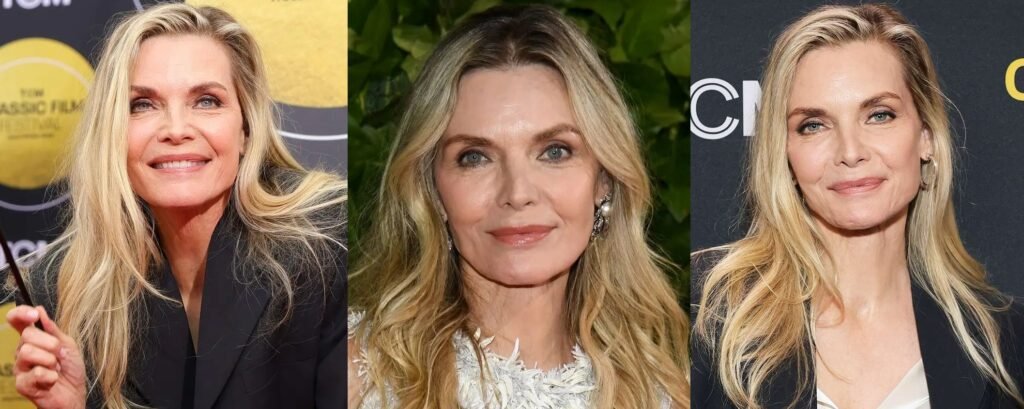
On the second question — why she still matters — the honest 2026 answer is that it is not nostalgia driving this chapter. Grease 2 has its cult, Batman Returns has its anniversaries, What Lies Beneath has its anniversary reappraisals, and the whip clip will outlive everyone reading this. But none of that explains two series renewed inside a year, an Emmy nomination as both performer and producer at 68, or the observation critics have begun making about the 2026 roles in particular: that they are written for a woman her age with the complexity usually reserved for men's late careers. Pfeiffer didn't outlast the machinery of stardom by out-waiting it. She kept producing, kept choosing ensembles over spotlights, kept saying no until the yeses were the ones she wanted — and then, when the industry finally started writing parts worth her time, she was standing there, exactly where she had always been, doing her own stunts.
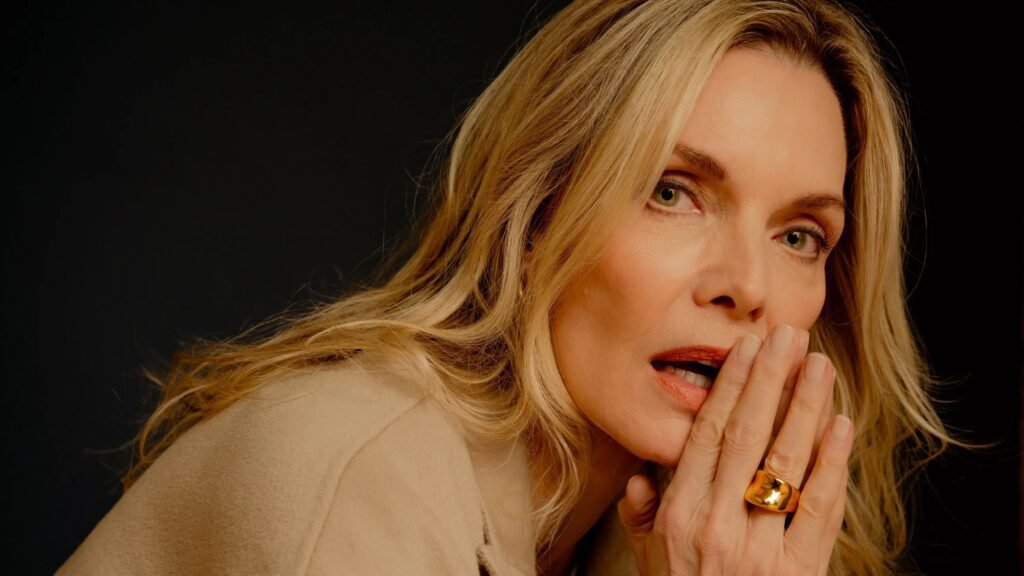
Now she has two shows streaming, a third season ordered, a fragrance business she founded and still runs, a grandchild she planned 2026 around, and an agents' nickname that turned out to be prophecy. The name was always famous. The story — of a Movie Star who treated her own scarcity as the last thing she controlled — is what people are only now getting to know.