The Radical Softness of Pamela Anderson’s Next Act
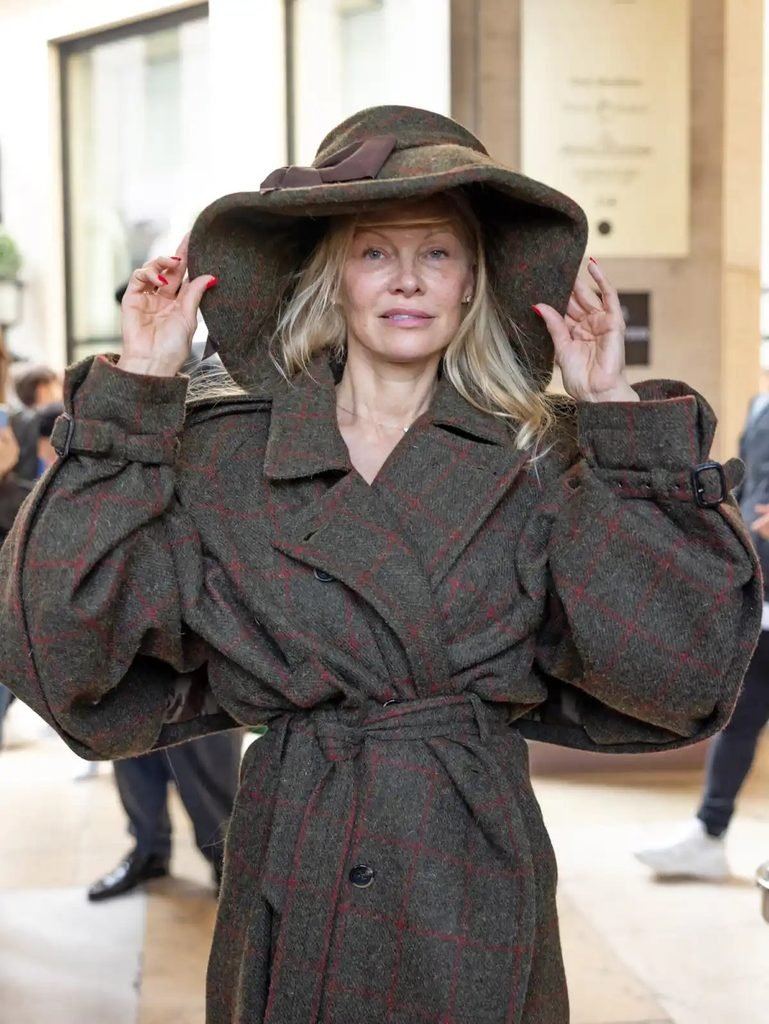
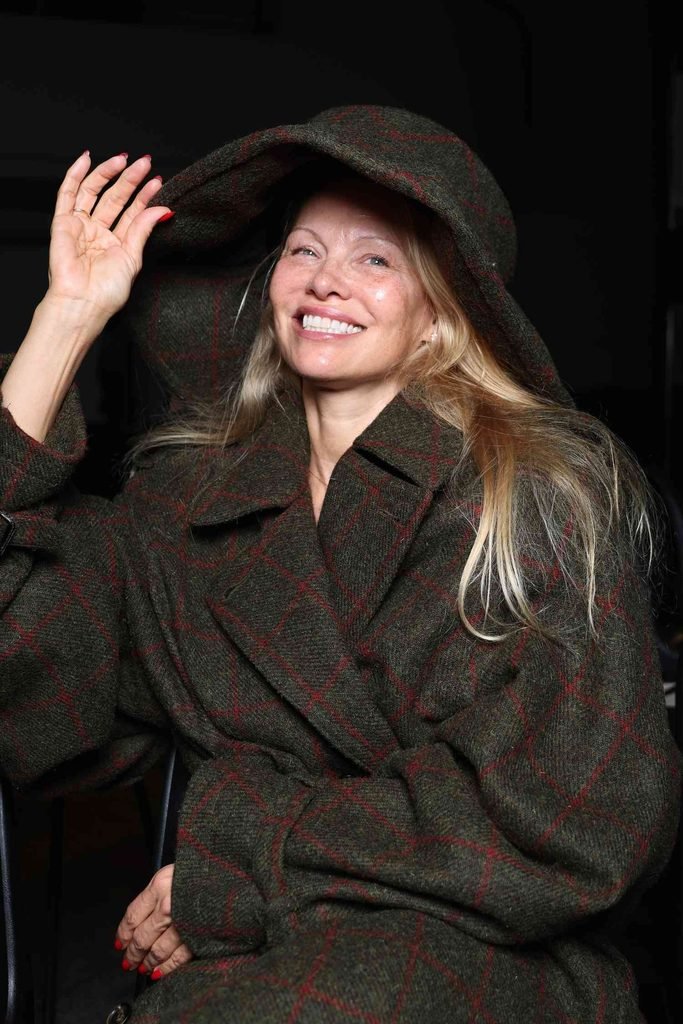
On a crisp morning at the Louvre, surrounded by centuries of framed genius and soaring French architecture, an icon of American pop culture stood quietly beneath the brim of a massive hat. She had gone to Paris seeking the anonymity of an observer, fully expecting the crowd to look past her toward the masterworks on the walls. Yet, long before a legendary fashion editor approached her to praise her unadorned presence, the room had already taken notice. It was not because she had demanded attention, but because she had chosen to stop competing for it.
That moment of quiet defiance marks the central thesis of Pamela Anderson’s remarkable second act. For decades, the global gaze reduced her to a hyper-stylized archetype of blonde glamour, a cartoonish ideal constructed in high-gloss makeup chairs and preserved in the neon amber of nineties television. Today, however, Anderson is redefining the terms of her own visibility. At a moment when digital culture pushes women toward filtered homogenization, her radical choice to strip away the armor—both cosmetically and artistically—has transformed her from a nostalgic pinup into one of the most intriguing dramatic forces in modern cinema.
The turning point arrived with a cinematic breakthrough that recontextualized her entire career. In taking on the lead role in Gia Coppola’s acclaimed feature The Last Showgirl, Anderson stepped into the skin of a veteran performer confronting the sunset of a vanishing art form. It was a performance stripped of superficial defense mechanisms, demanding a raw, grounded vulnerability that surprised industry skeptics but came as no surprise to Anderson herself. For years, she had carried the quiet confidence of an actor who knew she possessed untapped depth, waiting only for a director to offer a canvas large enough to hold it.
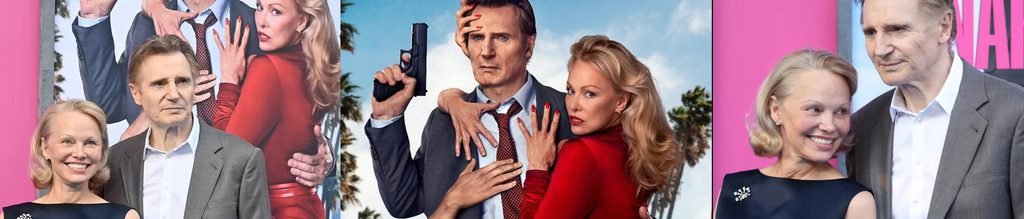
That dramatic baseline has opened the floodgates to an extraordinarily fertile creative period. Rather than retreating to the quiet sanctuary of her ranch on Vancouver Island—where she spent years tending her garden, crafting artisanal preserves, and writing her memoirs—she has plunged headfirst into a diverse slate of projects. Her upcoming screen appearances range from dynamic roles in dynamic ensemble pieces like Rosebushpruning alongside Karim Aïnouz and The Place to Be, to a high-profile turn in the reimagined Naked Gun franchise opposite Liam Neeson. In the latter, under the direction of Akiva Schaffer, she leans into classic romantic comedy traditions, approaching high-concept humor with the exact same sincerity and emotional grounding she brings to heavy drama.
This professional renaissance is closely intertwined with a personal reclamation of her own legacy. Alongside her sons, who now act as protective creative partners in her production ventures, she is preparing to revisit Barb Wire, the 1996 cult sci-fi action film that was once dismissed by critics as a mere vehicle for her aesthetic. Decades later, with the perspective of a seasoned artist, she views the original project not as a failure, but as an audacious, cartoon-inspired exercise that accomplished precisely what it set out to do. Bringing the property back as a dark comedy series represents a full-circle moment of creative ownership, allowing her to refashion the narrative on her own terms.
What makes this current phase so resonant for multiple generations of women is that Anderson's evolution has never been about rejecting her past. She views the iconic leather dresses, the dramatic stage makeup, and the towering blonde silhouettes of her early career with genuine affection, recognizing them as protective layers that allowed her to navigate unimaginable public scrutiny. The cultural staying power of those characters, she understands, never rested on superficial beauty alone. It was rooted in an underlying human vulnerability—an eagerness to love, make mistakes, and embrace life without apology—that connected with audiences long before the world learned to appreciate her craft.
In an era dominated by algorithmic perfection and smartphone cameras, her choice to move through the world as a fully realized, unvarnished human being feels like an act of gentle revolution. By stepping into room after room populated by industry peers and showing up exactly as she is, she has sparked a broader conversation about self-acceptance, aging, and the freedom of authentic expression.
Standing on the threshold of a wide-open future filled with cinematic premieres, family milestones, and quiet afternoons in her garden, Anderson remains entirely unbothered by the pressure to predict what comes next. Having surrendered the need for control, she has discovered that the ultimate power lies in embracing the mystery of the present moment. Her current joy is not a passive state, but an intentional choice—a quiet, rebellious refusal to let the past define the boundaries of what she might accomplish next.