The Mexican (2001): The Cursed Pistol, the Ghost Town, and the Most Famous Couple in the World
In March 2001, Brad Pitt and Julia Roberts opened at No. 1 at the American box office with a strange film about a love that doesn’t quite fit — filmed in a ghost town high in the Mexican mountains.
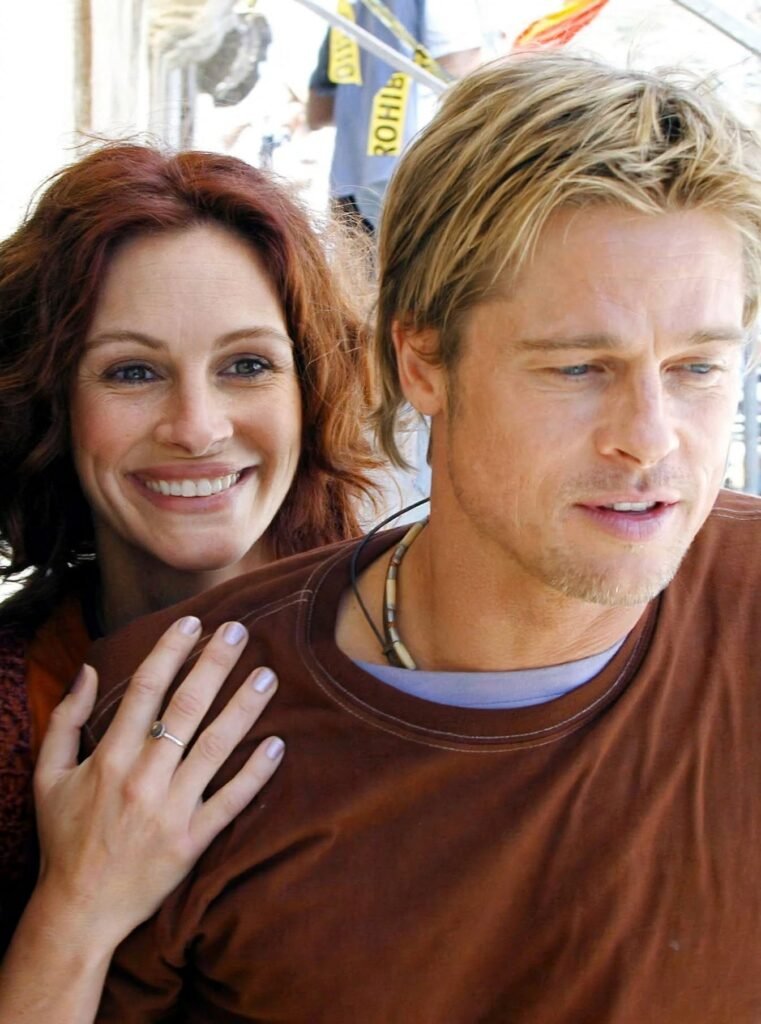
The first weekend of March 2001 had a sense of transition to it. Hannibal had just posted one of the biggest openings in history, and the Oscars were three weeks away — the ceremony where Julia Roberts would finally take home the Best Actress statuette for Erin Brockovich. It was in this exact window that American theaters received one of the strangest bets of the year: the two biggest movie stars on the planet in a story about an antique pistol said to be cursed, a hitman who gives relationship advice, and a couple who genuinely love each other but can’t seem to be happy. The Mexican, directed by Gore Verbinski — who would make The Ring the following year and launch Pirates of the Caribbean two years later — opened at No. 1 with an impressive $20.1 million from nearly 3,000 theaters: blockbuster numbers for a movie that was anything but a blockbuster.
Jerry Welbach (Pitt) is the likable doormat of a mob outfit: he owes a never-ending favor to his boss Arnold Margolese (Gene Hackman) and keeps collecting last jobs that are never actually the last. When his boss sends him to the Mexican countryside to retrieve a richly decorated pistol known as “The Mexican,” Samantha (Roberts) gives him an ultimatum: the gun or her.
Jerry goes after the pistol. Samantha hits the road — and is kidnapped along the way by Winston Baldry (James Gandolfini), a professional hitman who, instead of intimidating her, spends the entire movie trying to figure out why she and Jerry can’t make their relationship work. Meanwhile, Jerry crosses the desert stumbling over his own feet, with a stray dog that has decided he is family now and one problem after another.
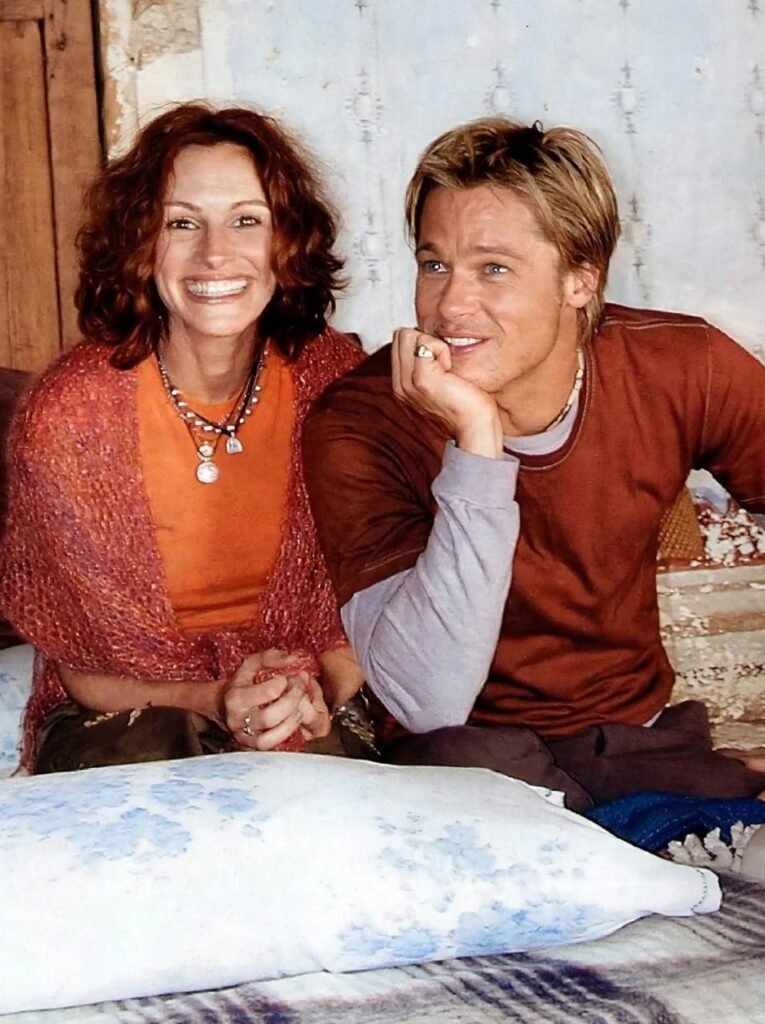
To film Jerry’s Mexico, nobody went to a studio. The production settled in Real de Catorce, in San Luis Potosí — an old silver-mining village high in the mountains, largely emptied after the end of the mining boom and reached through a narrow tunnel carved through the mountain. For weeks, Hollywood lived there: facades were restored, the town square became a set, locals joined the production as extras, and the almost-ghost town briefly came alive with the movement of a major city. The Mexico in the film is a real place — and the entire movie benefits from it. No set could invent a place like that.
The shoot, which was supposed to be short, dragged on; the announced budget grew; Mexican authorities even fined the production for damage to the historic site. The irony was impossible to miss: a film about a cursed gun whose own production seemed determined to prove that curses were real. But the legend inside the film was never really about bad luck — it was always about the price.
The screenplay, by J.H. Wyman, began small, growing out of a short film he had made himself in the 1990s, and the story told by the bar owner (Rubén Blades) like a fairy tale — the gunsmith, the nobleman, the two young lovers, the tragedy — establishes from the very first scene the question The Mexican is really asking beneath all the chases: can two people who love each other actually be happy together? Or is love itself the kind of wealth that destroys those who possess it?
March 2001 was also the absolute height of James Gandolfini’s fame — and the film’s biggest stroke of genius was casting the actor who played Tony Soprano as cinema’s gentlest hitman. Winston kills people for a living, but in the car with Samantha, all he wants to talk about is love. His monologue about the paradox — two people who truly love each other and still can’t manage to stay together — is the scene everyone took home from the theater. And the calendar played along: the film opened on Friday, March 2, and the following Sunday, March 4, HBO premiered the third season of The Sopranos. On the opening weekend of The Mexican, America saw the same man twice — television’s most frightening criminal and cinema’s most romantic outlaw.
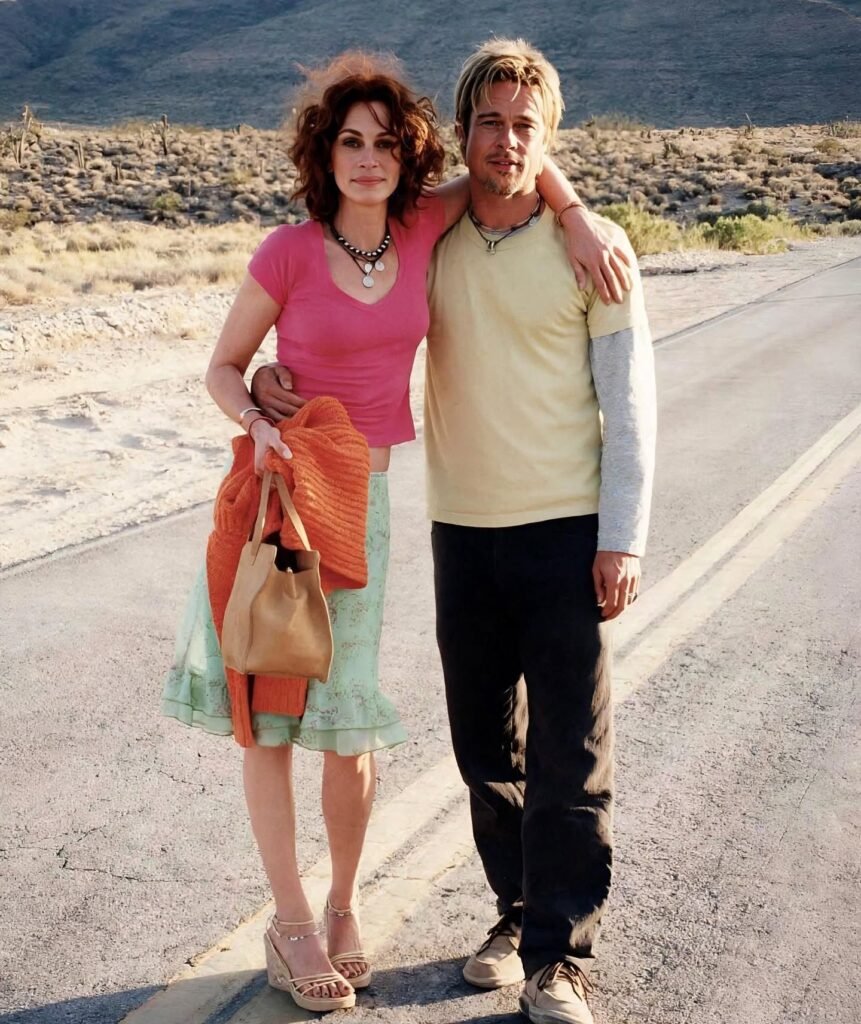
For Roberts, it was a curious test in the middle of her own Oscar campaign: Samantha begins as the girlfriend who issues ultimatums, spends much of the film kidnapped — delivering, through Winston, a list of romantic demands for Jerry — and ends up becoming the heart of the movie. And Pitt, a year and a half after Tyler Durden, chose to play the opposite: Jerry is the guy who can’t say no, who takes the last job knowing it will never really be the last.
Hollywood’s most photographed couple spends most of the film apart, talking on the phone with a longing you can feel from the other side of the line. The movie knows it: distance is the theme.
The critics were divided — the movie is long, and some saw two stories stitched together in a hurry. But time settled the argument: it is Samantha and Winston’s journey that remained etched into cinema, and it is the legend of the gun that turns The Mexican into a fable rather than a romantic comedy. In the end, when the dust settles in the Mexican desert, the film reveals what it has been from the very first minute — a story about the price of love, with a relic in place of treasure and a couple in place of the curse. Without spoiling the ending, the final twist is the kind that makes you leave the theater wanting to tell the story all over again, just to see the listener’s face.
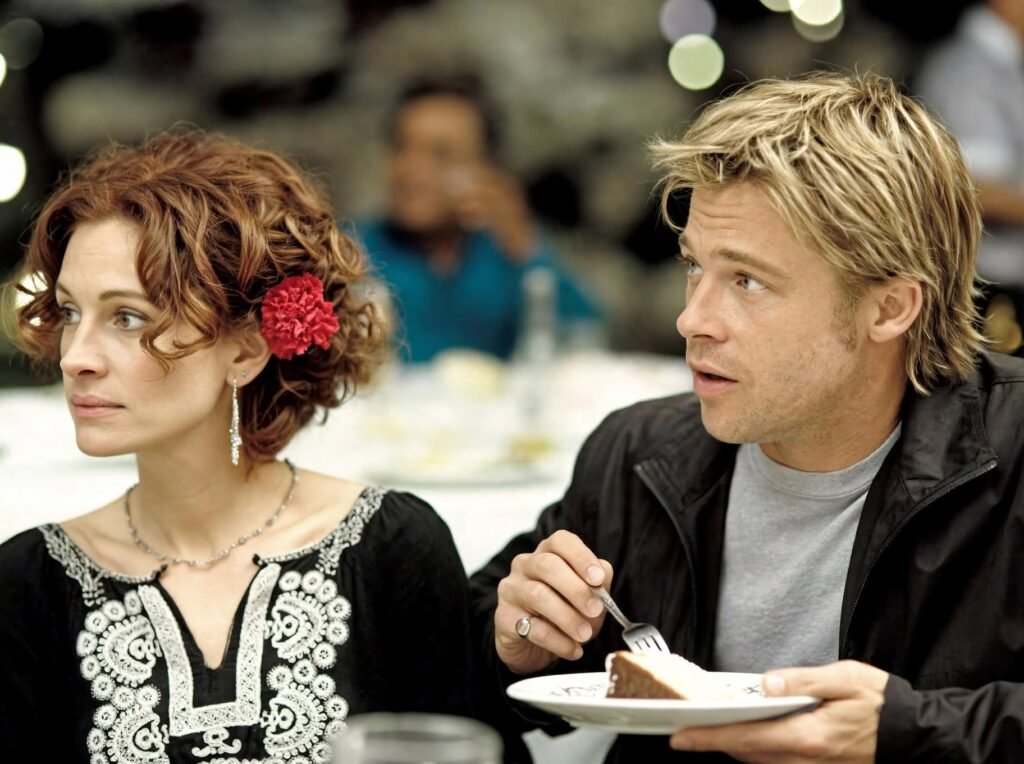
And Real de Catorce remained. The spotlights left through the same narrow tunnel they had entered through, and the village returned to its rhythm as a small place high in the mountains — only now, from that year onward, with a movie living inside it. The Mexican never really left the screen: it became that Sunday-afternoon movie, the one that makes you stop channel-surfing at the bar scene, when the old man begins telling the story of the gun. It was an era when movie stars could still open films — and they opened at No. 1 with a story that, beneath the curse, says the oldest thing in the world: that love comes at a price. By the time the old man finishes telling the story, you’ll already be inside the movie again.