The Shape Is Already on Your Street: Why Michael Myers Still Owns October
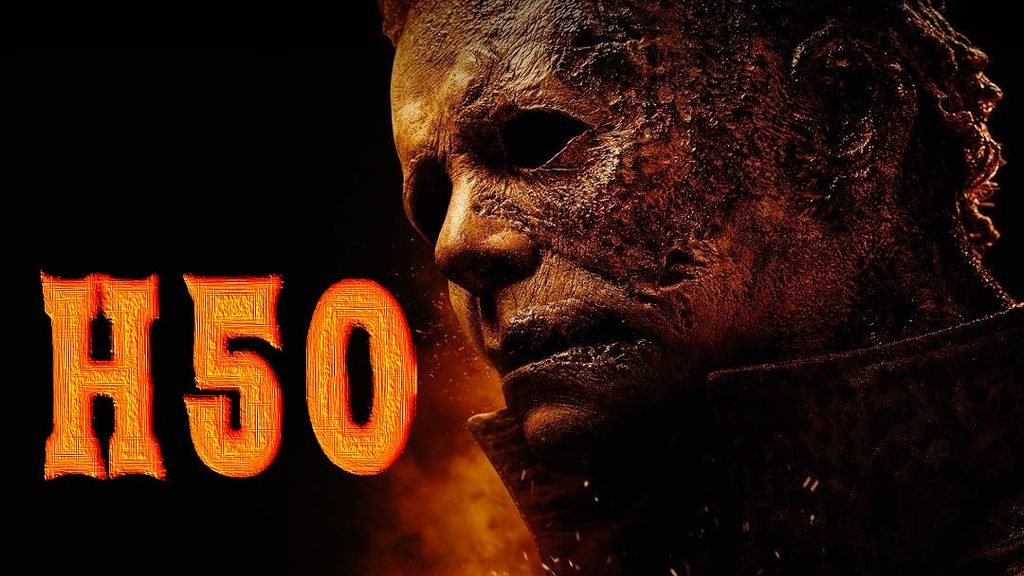
The calendar does the marketing now. Somewhere in early September, before a single leaf drops, you start seeing the mask — that bleached William Shatner approximation of nothing — folded into store aisles, meme feeds, and your own peripheral vision, and you realize no other horror franchise gets an entire month of cultural residency the way Halloween does. Freddy parses out nightmares and Jason needs a summer camp; Michael Myers simply waits for October, when every suburban porch in America briefly becomes Haddonfield. That annual return is precisely why the franchise's cultural weight dwarfs its peers: while A Nightmare on Elm Street and Friday the 13th built loud, quotable icons, John Carpenter built an absence. Michael doesn't monologue, doesn't smirk, doesn't even accelerate. He is an empty shape that each generation dresses in its own fears — and the unforgettable moments flow from that blankness: the opening P.O.V. tracking shot that made a childhood home feel surveilled, the slow sit-up behind Laurie in the closet, the head tilted one degree too far, the ending that has never once delivered a body. Forty-plus years on, the scariest image in the series remains the simplest — the mask standing motionless on the sidewalk, letting you fill the silence with whatever you're afraid of.
Which is exactly why the saga's multiple timelines are such a fascinating act of self-sabotage. The 1978 original's genius was restraint; the 1981 sequel's first sin was an explanation, retrofitting Laurie Strode into family lore and sentencing the franchise to decades of footnotes. Halloween 5 and 6 wandered into the absurd "Cult of Thorn" wilderness — and the infamous Producer's Cut doesn't redeem that mythology so much as give its confusion a longer runtime to explain itself, which is not the same as having a point. H20 was the elegant course correction: smart, self-aware, and finally earned, only for Resurrection to treat Laurie's death as disposable throat-clearing and hand the boogeyman to a webcam-era subplot and Busta Rhymes doing karate — perhaps the single most indefensible pivot in horror history. Rob Zombie's remakes mistook a misery dossier for psychological depth: the more they explained Michael, the smaller his blankness became. And the Blumhouse trilogy, which opened with genuine fire in 2018, then squandered it — Kills confusing a lynch mob with social insight, and Ends sidelining its own boogeyman for a Corey-and-Allyson tragedy that might have worked as a standalone film but played as a betrayal billed as a finale. Four timelines, thirteen films, and the rights holders have spent decades retconning, apologizing, and starting over — a serialized confession no other slasher saga has had to make this many times.
Now the rumor mill says the confession may end in a theater. The "creative reset" Miramax and Trancas once pitched as television has gone conspicuously quiet, and the industry chatter that has replaced it points to something fans have been whispering for years: a full-blown theatrical reboot reportedly targeting the 50th anniversary of Carpenter's original — a milestone that arrives in 2028, and that fans have already nicknamed Halloween H50. Nothing has been officially announced; no writer, no director, no cast. But the chatter is telling in itself, because a half-century anniversary is exactly the kind of occasion this franchise has fumbled before, and H50 will live or die on one creative decision: whether it treats Michael as a puzzle to solve or a presence to endure. The dignified version is not another "final" chapter, another family twist, or an origin story — the franchise has already burned the word final four times and the word family twice. It's a single-night, slow-burn film set across one ordinary neighborhood: multiple households, one October 31st, Michael as an intrusion rather than a mythology. No cult, no bloodline, no childhood trauma montage; every failed sequel failed because it tried to make Michael knowable.
If H50 does materialize, the anniversary gift Hollywood owes Carpenter is casting that honors silence. Skip the nostalgia-swap playbook of attaching a marketable legacy name as the new Michael — the adult Shape should remain an unshowy, physically distinctive performer seen only through the mask, the way Nick Castle and Jim Winburn understood it. As the new final girl, Megan Suri (The Hunt, Never Have I Ever) is the kind of sharp, watchful lead who can hold a frame in silence rather than replicating Laurie's nervous energy; she'd be a survivor, not an heir. For the Dr. Loomis function — the one voice in Haddonfield who takes the threat seriously before anyone believes her — Carrie Coon is the ideal choice: a psychiatrist whose authority unnerves rather than comforts, delivering dread in a calm voice instead of a beleaguered scream. And a briefly glimpsed young Michael, played in near-total silence by someone with the inscrutable stillness Elliott Heffernan showed in Blitz, would be far more powerful than any grim backstory. One condition, non-negotiable: Laurie Strode stays home. Jamie Lee Curtis closed that door with real finality in 2022, and dragging her back a fifth time for an anniversary cameo would only prove the franchise learned nothing from Resurrection.
What makes Halloween irreplaceable is that it never needed to be coherent to be powerful; it needed only to be patient. The franchise's worst films all made the same mistake — mistaking explanation for evolution — while its best moments all shared one discipline: the camera holds, the street goes quiet, and something is standing where nothing was. If Miramax and Trancas are genuinely steering toward a 2028 return, they should stop trying to fix the timeline and start respecting the silence. October comes back every year regardless. The only question is whether, the next time it does, the Shape is standing there as something we fear — or something we've finally, exhaustingly, explained away.