The Sound of 44th Street: The Day ‘Grease’ Stopped New York and Redefined Pop Culture
The summer of 1978 in New York City did not lack for noise, but in early June, the loudest sound on 44th Street wasn't traffic or construction. It was the chorus of thousands of teenagers singing along to music they hadn't yet seen on a movie screen.
When Grease premiered at the Ziegfeld Theatre, Paramount hadn't simply booked a red carpet. They had constructed a full-scale 1950s carnival on the asphalt, complete with vintage rides, cotton candy stands, and a high school marching band setting the rhythm in the middle of Manhattan. For blocks, the sidewalk became a corridor of leather jackets, rolled-up white tees, and gravity-defying pompadours. The line didn't just wrap around the block, but seemed to loop back onto itself, fueled by a soundtrack that had already been saturating the airwaves for weeks.
By the moment the lights went down inside the auditorium, the audience didn't feel like a room of isolated spectators, but rather like the student body of a single school celebrating the start of vacation.
When we remember Grease today, it is common to talk about astronomical box office numbers or the unbroken sequence of multi-platinum hit singles. But what transformed the film into a cultural milestone was the physical, noisy sensation of a period piece colliding directly with the youthful energy of the late 1970s. The feature took the collective nostalgia of 1959 and distilled it through the pop filter of 1978, creating a universe that felt simultaneously like a guarded photo album and a party happening at that exact second.
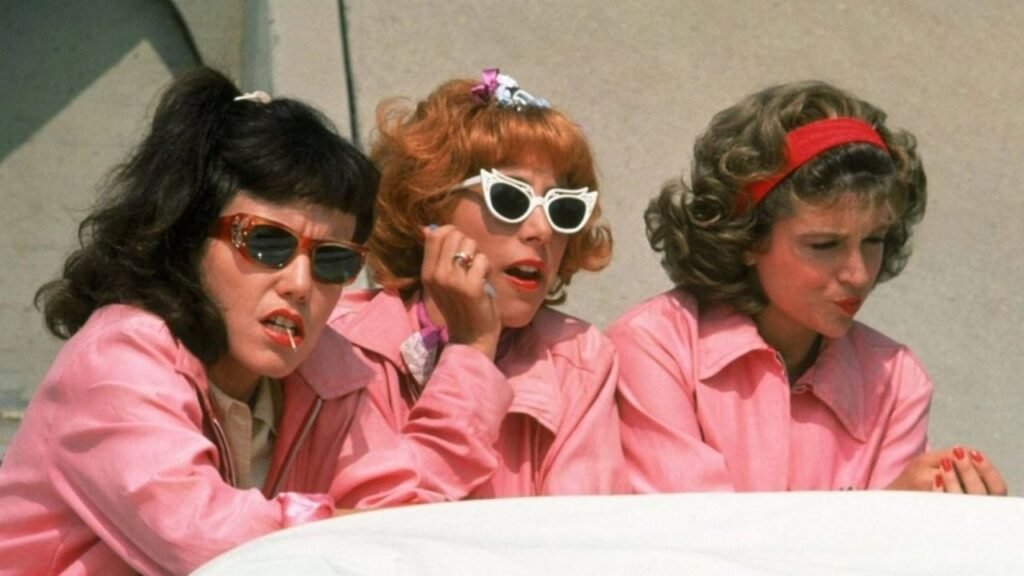
This electrifying atmosphere wasn't restricted to New York. As the print reached theaters across the country, theater managers reported unusual scenes for the time: entire audiences standing up in the middle of the screening to dance in the aisles during "You're the One That I Want," or groups arriving at matinees dressed as the Pink Ladies, reciting the lines right along with the actors on screen.
Director Randal Kleiser remembered the sheer physical force of those early screenings, noting how the crowd's reaction usually drowned out the sound of the projection itself. He recounted that the energy in the theaters was overwhelming, to the point where people weren't just watching the movie, but talking back to it. The noise of the audience at every musical intro was so loud that it drowned out part of the dialogue, turning a simple film screening into a live event.
This audience response captured the essence of what the film built. Grease was about adolescent posturing—that conscious effort to seem unshakable that every generation invents for itself. Danny Zuko's attitude and Sandy Olsson's innocence weren't just archetypes; they were the armor of young people trying to figure out who they were supposed to be before the school bell rang.
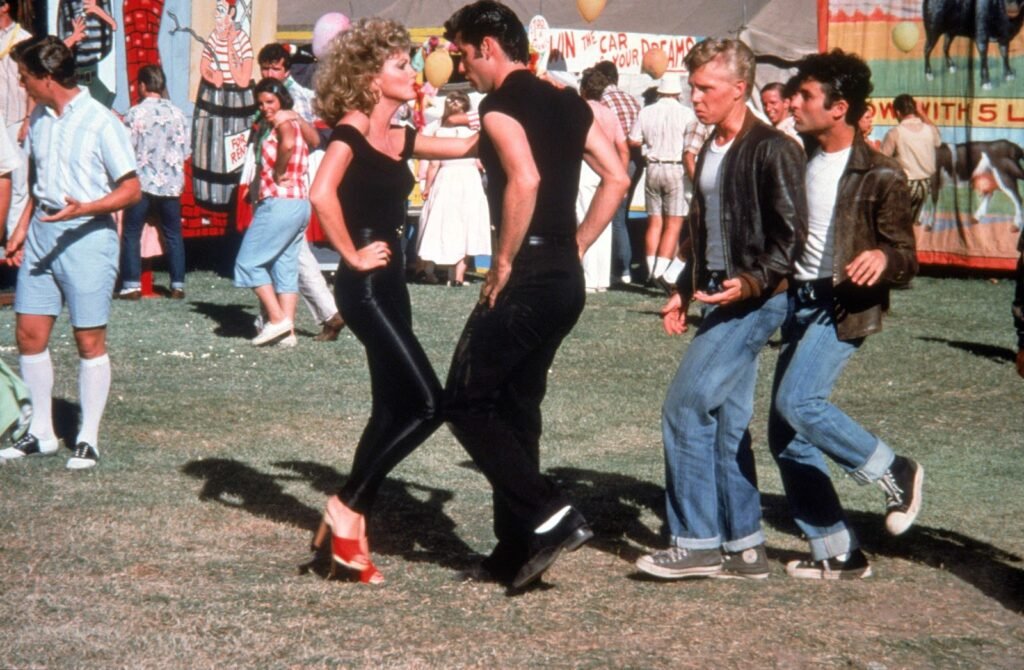
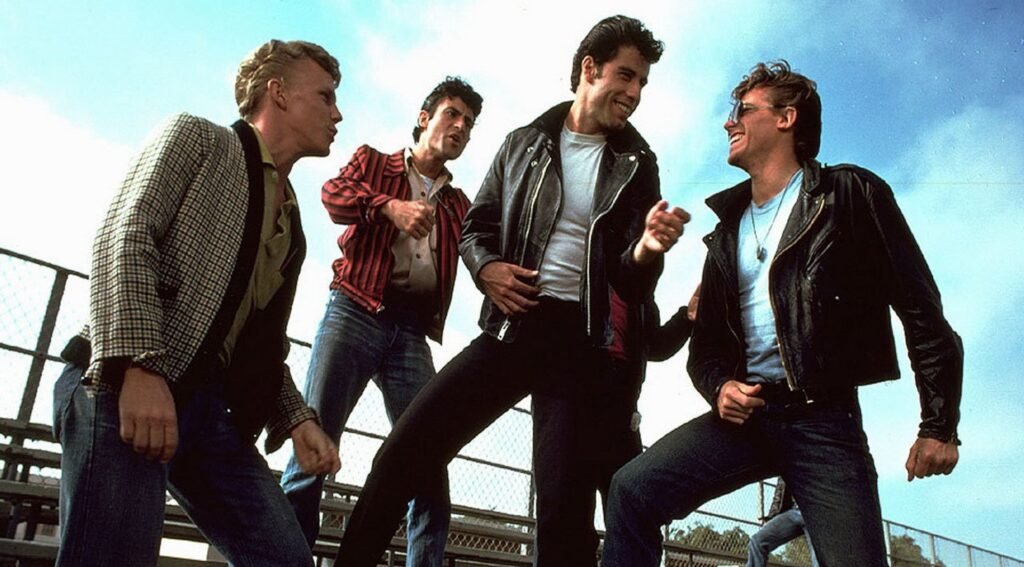
The film's intelligence lay in not taking its own nostalgia too seriously. Behind the pastel cars, the dance contests, and the neon glow of the diner, there was an affectionate parody of youth identity. When Danny feigns disinterest in Sandy in front of the T-Birds, or when Sandy tries to decipher the unspoken rules of a slumber party, the film captures the exact hesitation of someone trying to fit into a group.
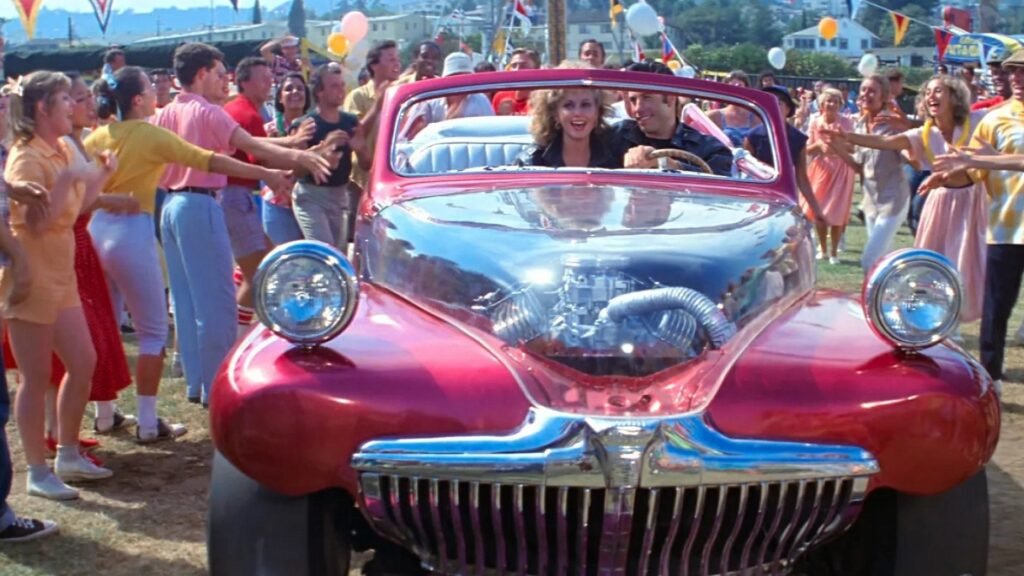
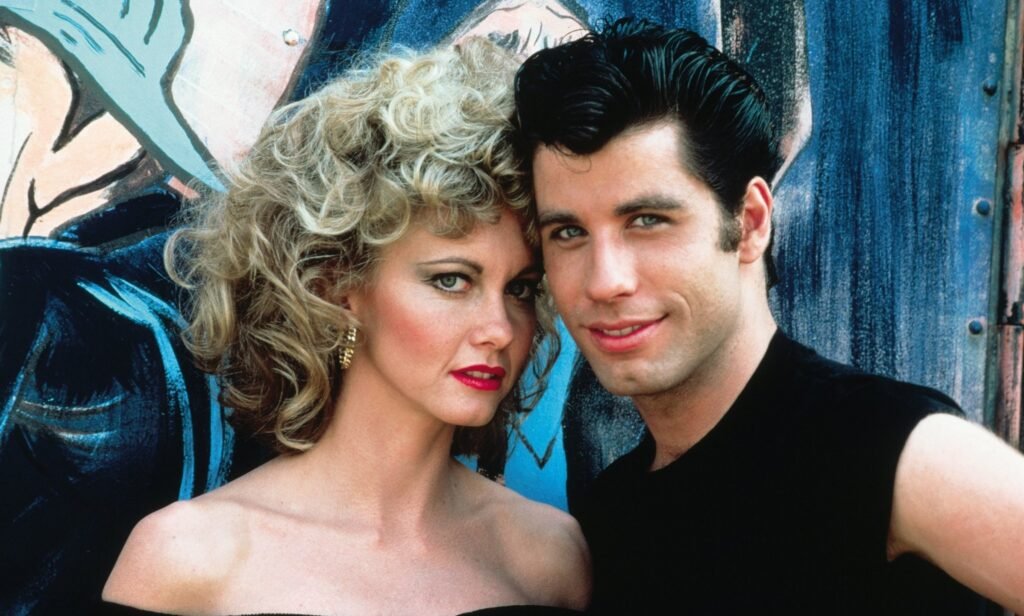
This complicity between the actors and the audience shone through every scene. John Travolta, riding the giant wave of Saturday Night Fever, brought an electric charm to Zuko that made the tough-guy persona strangely human. Beside him, Olivia Newton-John delivered a sincere vulnerability that anchored the entire fantasy. The chemistry between the two didn't feel manufactured by a studio; it looked like two people genuinely having fun on a set transformed into an eternal summer afternoon.
Looking back at Grease today is not merely remembering a 1978 release or a fantasy about 1959. It is recalling the feeling of sitting in a dark theater where every song felt like something you had known for years, where the crowd cheered when the black leather jacket finally appeared at the carnival, and where, for two hours, high school felt like the best place in the world to be.
The film remains alive in our memory not because it is a flawless historical document, but because it knew how to capture the exact moment when cinema opened the doors to a grand party and invited everyone to step inside.