Kevin Spacey and Kate Winslet: The Life Of David Gale
There was a time when a Hollywood thriller could arrive in theaters with a murder, a death sentence and a question that followed audiences all the way home: what if the truth was not what it seemed? That was the particular promise of The Life of David Gale, Alan Parker's 2003 drama starring Kevin Spacey, Kate Winslet and Laura Linney. It was not simply selling a mystery. It was selling an argument, wrapped inside a race against an execution date, and asking audiences to decide for themselves whether they were watching the story of an innocent man, a political martyr or something far more complicated.
When the film opened in North America in February 2003, it belonged to a kind of mainstream adult thriller that feels increasingly distant today. These were movies built around serious subjects, recognizable stars and complicated moral questions, released into theaters with the expectation that audiences would actually sit with the story afterward. Spacey brought that conversation to The Late Show with David Letterman that same month, promoting the film at a moment when late-night television was still one of the places where a movie could make its case directly to millions of viewers. The appearance now feels like a small time capsule of how films were marketed before social media completely changed the conversation: an actor sitting across from a host, talking about a movie whose biggest selling point was the question it wanted audiences to argue about.
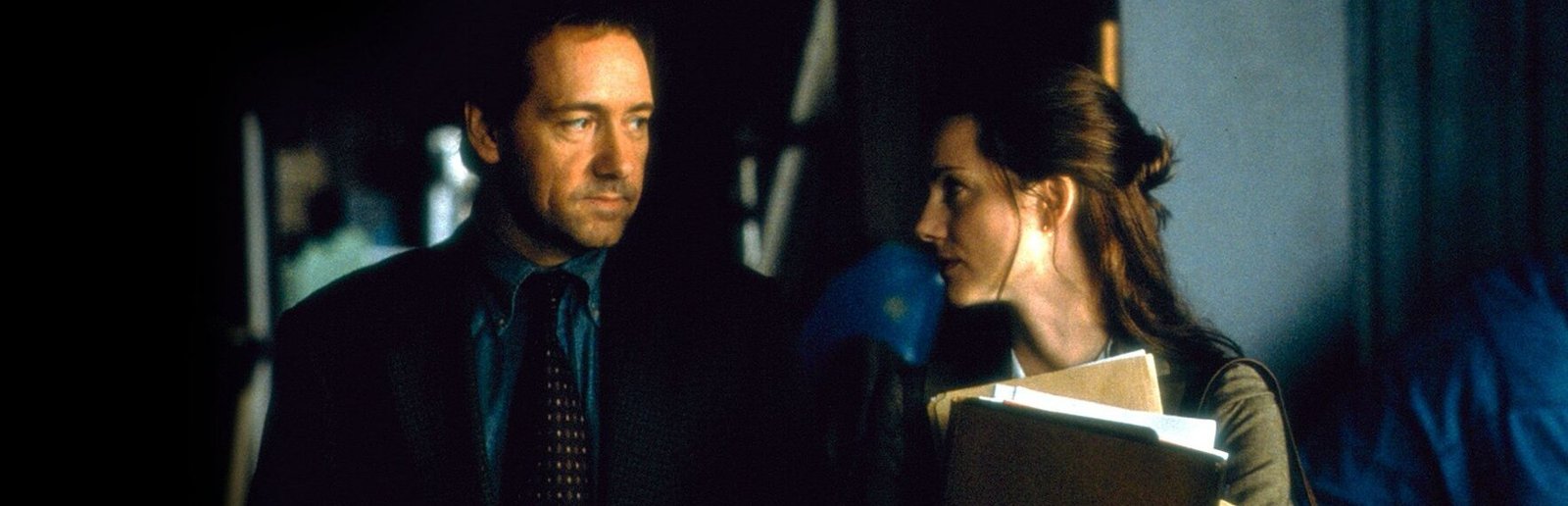
At the center of Parker's film is David Gale, a brilliant philosophy professor at the University of Texas and a prominent activist opposed to the death penalty. His public life collapses after he is accused, convicted and sentenced to death for the rape and murder of his friend and fellow activist Constance Harraway, played by Laura Linney. With only three days left before his execution, Gale agrees to a series of exclusive interviews with journalist Bitsey Bloom, played by Winslet. What begins as an extraordinary assignment quickly becomes something much more urgent when Bitsey starts finding inconsistencies in Gale's story and the evidence surrounding his conviction. Suddenly, the clock is not simply counting down to an execution. It is counting down to the possibility that the truth could disappear with him.
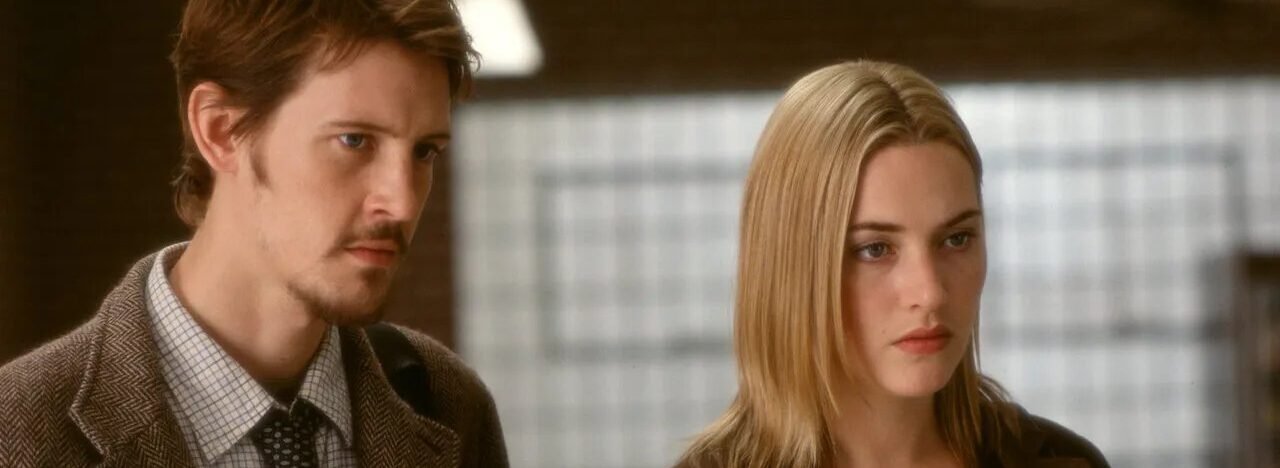
That setup is what makes The Life of David Gale so effective as a time capsule of early-2000s Hollywood. The film takes a subject that could easily have produced a straightforward political drama and turns it into a puzzle, deliberately withholding information and encouraging the audience to keep reassessing what they think they know. Parker moves between Gale's past and his final days on death row, contrasting the intellectual world he once inhabited with the increasingly claustrophobic reality of a man waiting to die. Spacey plays Gale with the kind of confidence that makes his character difficult to read, while Winslet gives Bitsey the skepticism necessary to keep the story moving. You are never quite sure whether she is uncovering a terrible injustice or walking directly into someone's carefully constructed trap.
And that uncertainty was part of the experience. In 2003, before streaming libraries made almost every movie immediately available and before audiences could dissect a twist online within minutes of a premiere, a film like The Life of David Gale had a different kind of afterlife. You watched it, left the theater or turned off the television, and carried the question with you. You talked about what really happened. You reconsidered the ending. You argued about whether the characters had manipulated you or whether the film had given you enough clues to figure everything out.
Alan Parker, who had already spent decades moving between socially charged dramas, musicals and literary adaptations, directed The Life of David Gale as his final feature. That gives the film another layer of hindsight, but its most interesting legacy remains the kind of movie it represents: a star-driven, adult-oriented studio thriller that was willing to put a difficult moral question at the center of its entertainment. Whether you ultimately find its twists convincing or not, there is something fascinating about returning to a movie that expected its audience to engage with an argument as much as a plot.
For someone who remembers The Life of David Gale, revisiting it can bring back a very specific era of Hollywood — the years when a film could be a mystery, a political debate and a major-star event at the same time. For someone discovering it for the first time, that may be the more interesting invitation. Forget whether you already know where the story goes. The pleasure is in watching a film from an era when Hollywood still believed a thriller could send you home with something to argue about.