Glenn Close Spent 43 Years Chasing an Oscar. Now She Is Having the Most Fun Playing Someone Vile
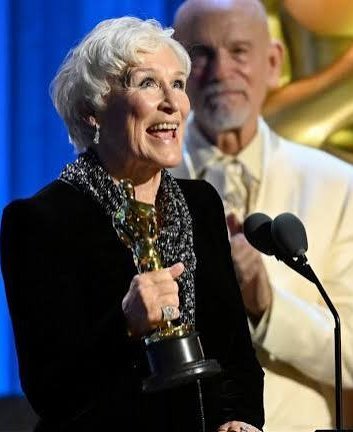
Glenn Close has been nominated for an Oscar eight times and has never won one. On Sunday night in Los Angeles, the Academy stopped waiting on the voters and simply handed her a statuette. At 79, with a record she had shared with Peter O'Toole for the most acting nominations without a victory, she accepted an honorary Oscar at the 17th Governors Awards, thanked the room for the only prize she says ever mattered, and went back to work promoting the most gleefully unpleasant role of her career.
That role is Drusilla Sickle in The Hunger Games: Sunrise on the Reaping, which opens in U.S. theaters on Friday, Nov. 20, with early-access screenings starting Wednesday. Directed by Francis Lawrence from a screenplay by Billy Ray and Michael Lesslie, the prequel adapts Suzanne Collins's 2025 novel and travels back 24 years before Katniss Everdeen, to the morning of the reaping for the 50th Hunger Games, the Second Quarter Quell. Joseph Zada plays a teenage Haymitch Abernathy, Ralph Fiennes a younger Coriolanus Snow, Elle Fanning the future Effie Trinket. Drusilla holds the job Effie would inherit years later: Capitol escort to the District 12 tributes, same assignment, considerably crueler model.
Three and a half hours, five faces, one orange bob
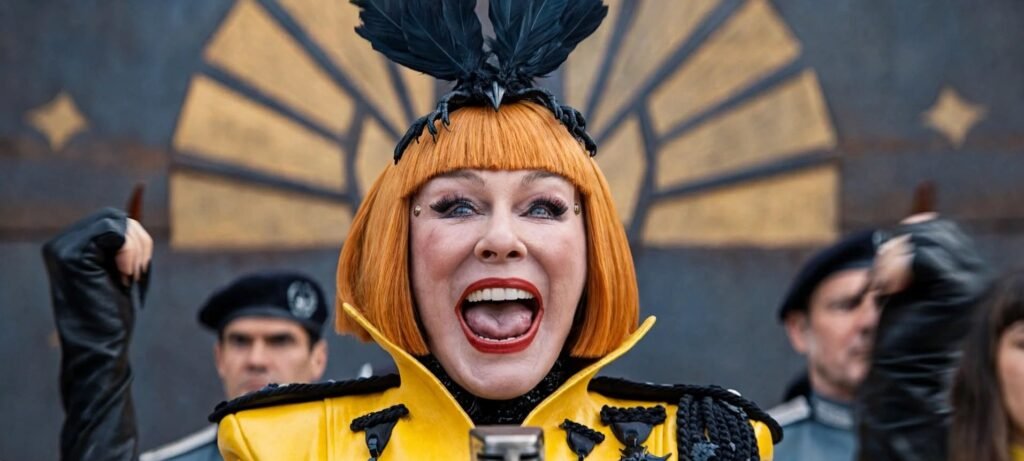
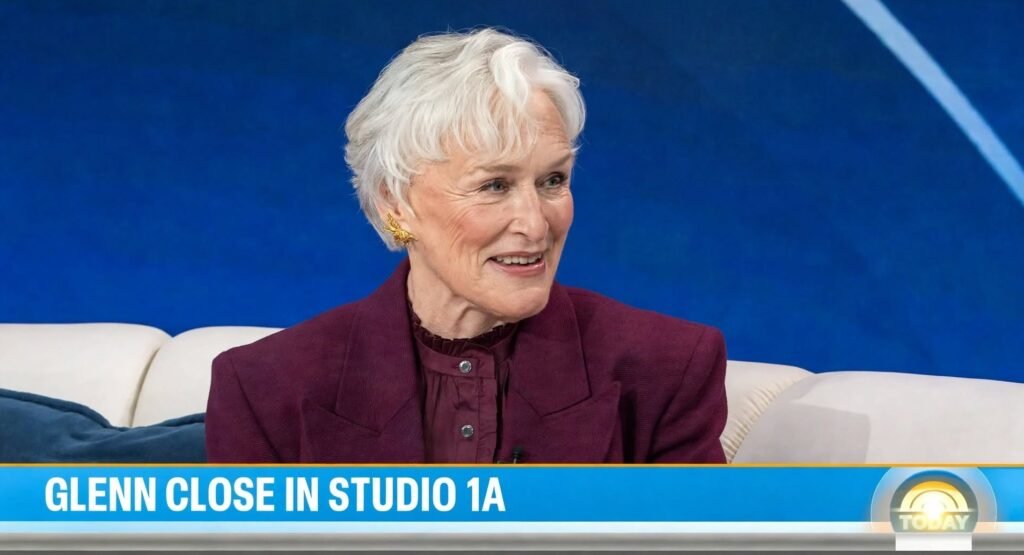
The transformation has done much of the film's promotional work on its own. In a televised interview this week, Close put the daily makeup time at roughly three and a half hours whenever she worked in full costume, and said the team built five separate looks for the character. Not all five survived the final cut. What reached the screen is an orange bob with severe bangs, lacquered red lips and a face pulled so tight it appears varnished, an effect she has credited to a makeup and hair team willing to experiment with tape as much as prosthetics.
What the prosthetics only suggest, Close supplies. She described Drusilla as vile and corrupt, everything hateful about the Capitol in one person: a 25-year veteran of the Games who despises the districts, regards the tributes as livestock, and treats the whole arrangement as material for her dinner parties. She also noted, without much evident regret, that Drusilla drinks.
Keeping the young cast on their toes
Co-stars half her age have said she took the villainy home with her between takes. Close did not dispute it. She confirmed that she deliberately startled younger actors on set to keep them unsettled, and demonstrated the shriek on cue. The reasoning was practical rather than mystical: a villain who is charming between setups is easy to laugh off, while one who might be standing behind you is not.
Three generations of moviegoers, one very specific talent
A widely shared post online observed that Close has now frightened three separate generations, first as Alex Forrest in Fatal Attraction, then as Cruella de Vil in 101 Dalmatians, and now as Drusilla. Her correction was precise and slightly deflating. Fatal Attraction, she suggested, frightened men more than women; children she has certainly terrified; women, she is not sure she has ever truly scared.
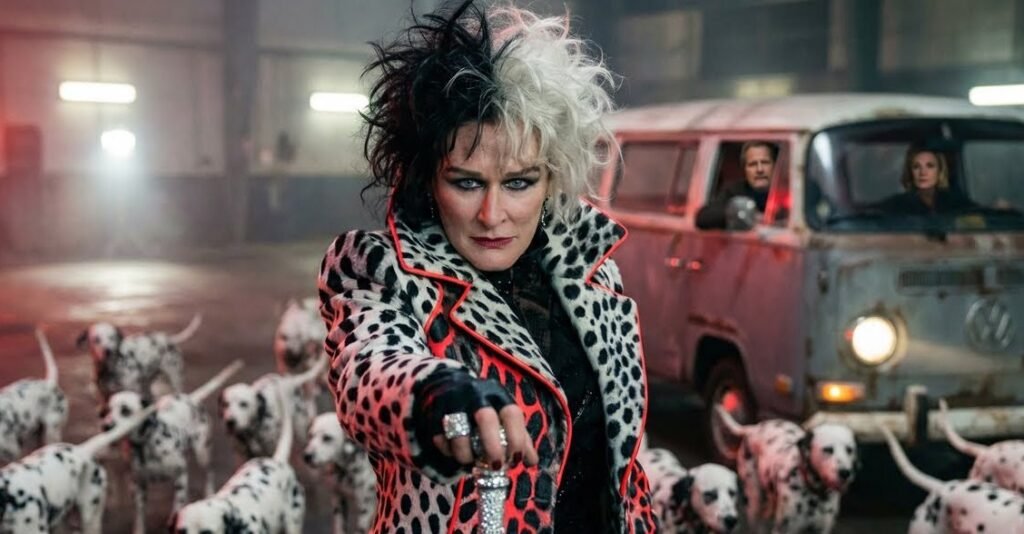
The internet's larger point survives the correction. Few actors remain in the culture's nightmares across five decades and more than 100 film credits, and fewer still do it while being nominated for Oscars for entirely different kinds of work.
The Malkovich roast, and a record she would rather not hold
John Malkovich, her Dangerous Liaisons co-star, introduced her at the ceremony by cataloguing the ways her characters have died on screen: decapitated, stung by scorpions, devoured by infected children, killed in car crashes, strangled, shot at a feminist rally, shot again. Close's only note afterward was that he had left poisoning off the list.
The joke landed because the fact underneath it is not funny. Her first nomination came more than four decades ago for The World According to Garp, the most recent in 2021 for Hillbilly Elegy: four leading nods, four supporting, no competitive win. Her acceptance remarks kept returning to the same accounting. Being in the room, she said, surrounded by people whose work had sustained and challenged her, with her daughter and son-in-law watching, was the honor itself — less humility than a settled answer to what a career is actually for.
Why she keeps choosing the extremes
Close has described herself in recent interviews as an unfinished person, and this week she expanded on it. A character, she explained, she can finish; herself she cannot. The unresolved material she brings to a role is precisely what lets her build someone whole on screen, which is as good an explanation as any for a filmography that runs toward the obsessive, the monstrous and the flamboyantly cruel.
In Sunrise on the Reaping, that instinct produces an antagonist who is not supernatural in the least. Drusilla is a hostess: vain, drunk, bored, entirely at ease with the arrangement that kills children for the cameras. It is the kind of part that wins awards in a different year, and Close plays it with the relish of someone who has decided that being terrifying is a form of craft rather than a cost.