Why Everyone Suddenly Has Eyes on Netflix’s The Body
Netflix's The Body is the most-watched English series on Netflix in its debut week is a show about a rumor nobody can stop repeating. That is not a coincidence. It is barely even a metaphor.
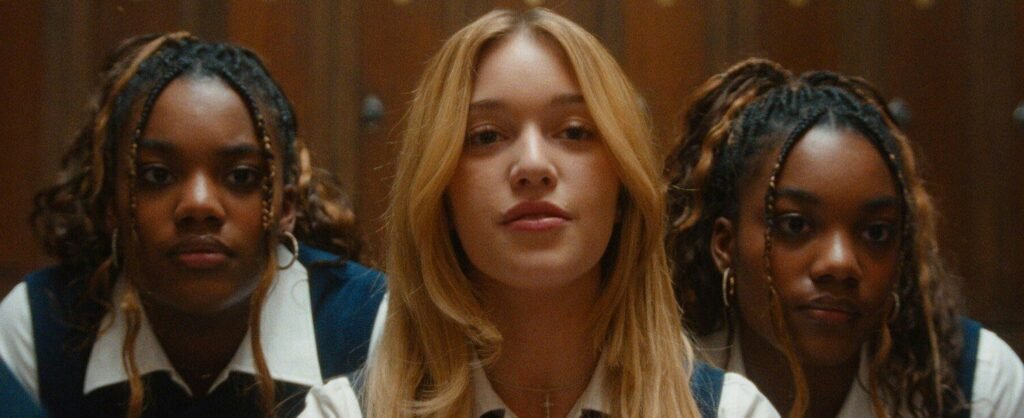
The Body opens on Halloween night, 2004. At St. Mark's, an all-girls Catholic school, the Lions — the dance team, and the social order that comes with it — throw a party in an abandoned convent. There is ecstasy. There is a mock Satanic ritual in which the girls, laughing, offer up their newest member as a virgin sacrifice in exchange for a win at regionals. By morning, Grace Franklin is in a coma, and the girls who put her there have made the only decision that will govern the next seven hours of television: they decide to say nothing.
That silence is the engine. What follows is not really a ghost story, though the show is happy to let you think so. Each girl begins having visions of Grace — warnings, or prophecies, or the ordinary machinery of guilt wearing a costume. The visions spread. Then the town spreads them. Within a week, a private crime has become public revelation, and no one involved can tell the difference between a sign from God and a story they told once and can no longer take back.
The part everyone leaves out: it's 2004 on purpose
This is where most quick write-ups lose the thread. The Body is a period piece, and not for nostalgia alone. Flip phones, multi-tap texting, velour tracksuits, Chingy and Ciara on the soundtrack: a world where information moved fast but not instantly, and where, crucially, a lie was still easy to bury. Quinn Shephard, who created the series and wrote its first episode — titled, with intent, "Slutty God" — has been explicit that the setting is an argument, not a mood board.
"I've always been interested in the idea of girlhood as a religious experience," she told Netflix's Tudum, calling the show "gritty camp... a raunchy teen psychodrama with a dash of Catholic horror." She has also described it as a love letter to the Y2K teen movies and erotic thrillers she grew up on — Carrie, Jennifer's Body, Heavenly Creatures, Mean Girls — filtered through a teenage fixation on The Crucible and the Salem witch trials. She has noted, drily, that revisiting that material lands differently "with the shading of our current political climate."
The personal stake is the reason it isn't cheap
Shephard wrote the show as her first television script, in her early twenties, the same year she came out. "It's satirizing some of the trauma of growing up queer and repressed and the confusion around that," she has said — and you can feel it in the show's central knot. Anya Butler (Kristina Bogic), the school's reigning queen bee and team captain, is closeted and in love with her co-captain and best friend, Elise (Sara Boustany). Lisbeth (Geena Meszaros), a loner raised by fundamentalist snake-handlers, joins the squad by default when Grace goes under, gets close to Anya, and then crosses from helping her to blackmailing her. Grace herself, played by Sofia Wylie, spends most of the season as the thing everyone projects onto: a body, a message, a verdict.That is a sharper piece of writing than "teenagers get haunted." It is a show about a community that would rather build a theology than admit what it did.
The numbers, and the fight
Netflix's own chart tells the story plainly. In the week of November 9–15, The Body debuted at No. 3 among English series with 5.1 million views — but with 37.4 million hours watched, more than any other English series that week, and that was with only five days on the service. By November 22, FlixPatrol had it at No. 1 worldwide and in the U.S., with a top-10 placement in roughly 80 countries. Reviews followed: Rotten Tomatoes settled around 87% from critics against an audience score in the high nineties, with Metacritic at 73. (Those figures move weekly; treat any single number as a snapshot.)
Then came the backlash, which is the most instructive part of the whole rollout. A petition demanding Netflix pull the series for "blasphemous" and "anti-Christian" content passed 100,000 signatures within days, as reported by CBC, Deadline and The Independent. A show about a town that whips itself into a frenzy over a story it half-invented generated a frenzy over a story its critics half-watched. You could call that bad luck. It reads more like the thesis landing.
Why it's the easiest conversation in streaming right now
Three practical reasons, none of them mysterious. All eight episodes dropped at once, roughly an hour apiece, so it satisfies the binge reflex instead of rationing it. It arrives in the one stretch of the calendar when people want something moody and enclosed — candles, slumber party, the vibe Shephard herself recommended. And it treats adolescent friendship as a serious bond with real stakes, which is rarer than it should be; Variety called it "a distinct entry among TV's many teen-oriented offerings," and Vogue went further, naming it "the most fun teen drama we've had in years."
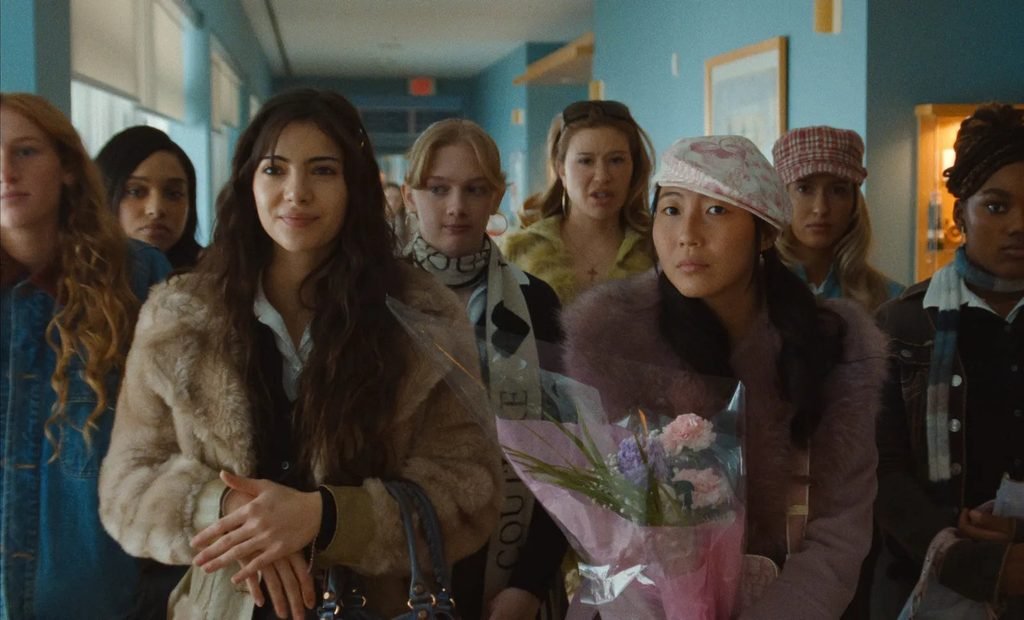
The creative team helps. Shephard runs the show with co-showrunner Gina Gammell, her "true creative partner," under a Felix Culpa banner that includes Riley Keough and Sacha Ben Harroche — the same team behind Under the Bridge, and the second collaboration between Shephard and Keough. Chernin and North Road are behind it too. This is not a scrappy experiment; it is a confident one.
What it is not, yet, is renewed. Netflix has announced no second season, and the finale is built to leave you arguing — the show never fully adjudicates between the supernatural and the hysterical, which is either its smartest choice or its most infuriating one depending on which friend you ask.
Which is the point. The Body is less interested in answering than in watching what a group of people will do to keep a story alive. Eight episodes in, so is everyone else.