Ghost (1990): The Spiritual Laws Behind the Greatest Love Story of the ’90s
In July 1990, as the lights dimmed in movie theaters across the United States, audiences settled into their seats expecting a romantic crime thriller - or perhaps a supernatural comedy from the same director behind Airplane! What those crowds found in the dark, however, was a profound experience of spiritual recognition that turned Ghost into the highest-grossing film of the year, pulling in more than half a billion dollars worldwide and leaving packed theaters in hushed silence broken only by audible sobs.
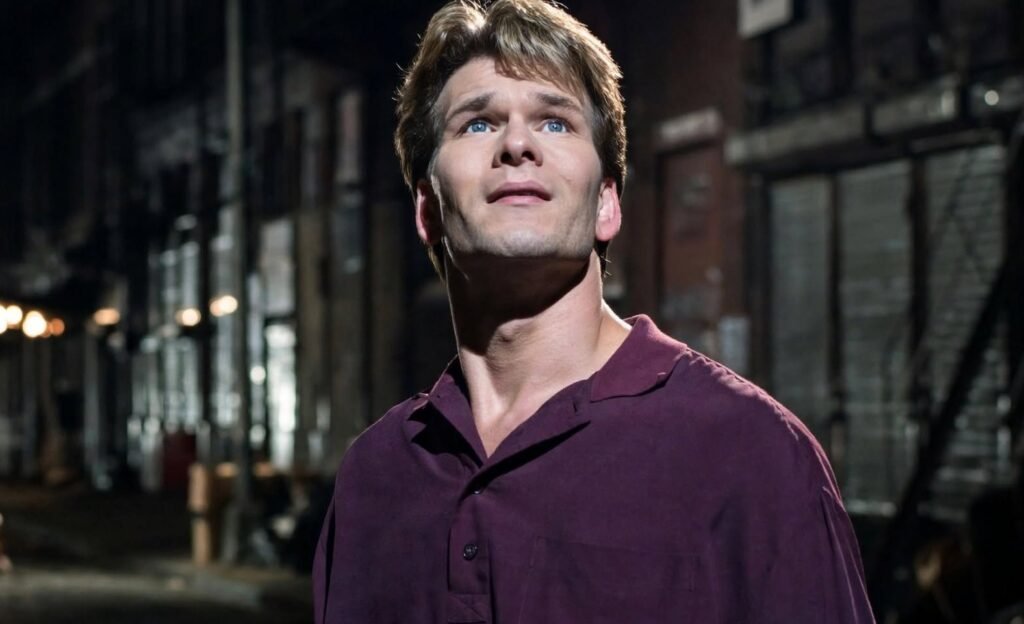
At the time of its release, screenwriter Bruce Joel Rubin and director Jerry Zucker recalled in contemporary interviews how the film had to be extensively tested in front of real audiences before its premiere precisely because no one at the studio was sure moviegoers would embrace a love story in which the leading man spends nearly the entire runtime dead. What happened during those preview screenings and opening weeks, according to the production team's own accounts, was that people didn't just cry over the separation of Sam Wheat and Molly Jensen - they walked out of theaters talking about real-life grief, loss, and the tangible possibility that consciousness survives the physical body.
That immediate connection was no accident; it was born from a rigorous spiritual architecture that Rubin built through years of studying mystical traditions, Eastern meditation, near-death experience accounts, and classic spiritualist literature. Rewatching Ghost today, what leaves the deepest impression isn't just the iconic pottery wheel scene set to "Unchained Melody," but the precision with which the film maps out the invisible laws governing the afterlife—treated here not as cheap fantasy, but as a natural extension of human existence that materialist science, confined to the measurable phenomena of this plane, still lacks the instruments to verify.
The Awakening After Death and Spiritual Perception
Within the very first minutes after the fatal gunshot on a dark New York street, the film establishes its first major spiritual premise: Sam Wheat feels no pain at the moment of death and does not immediately realize he has passed on. In spiritualist literature, Kardecist spiritism, and documented accounts of near-death experiences, this initial state is widely described as post-mortem confusion or gradual detachment. When death strikes suddenly and violently, consciousness remains so deeply immersed in the emotional and sensory density of physical life that the spirit continues to perceive itself as incarnate—trying to touch objects, speak to people, and understand why no one answers its call. The camera captures this transition without fanfare, staying locked on Sam's perspective as the solid world slowly refuses to yield to his hands.
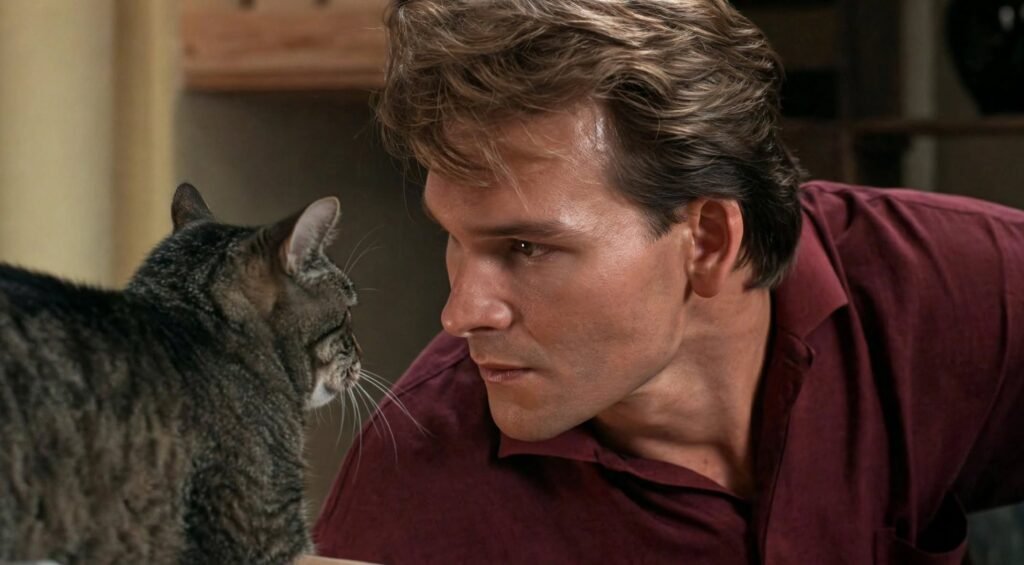
It is within this same liminal zone that one of the film's most memorable details since 1990 appears: Molly's cat, which arches its back, hisses, and fixes its gaze directly on the empty space where Sam is standing. Across spiritualist traditions and centuries of observations regarding animal perception, cats and other domestic animals do not filter reality through human rational conditioning, retaining an instinctive sensitivity to energetic frequencies and disembodied presences sharing the home. In the movie, the cat serves as the first silent witness confirming that Sam has not vanished into nothingness, but has simply shifted to a different vibrational frequency.
The Light of Transition and Earthbound Spirits

Later that same night, as Sam looks down at his lifeless body, a column of intense, silent, and welcoming light appears high above the alley, accompanied by a wave of peace drawing him upward. In spiritualist tradition and studies on the passage of the soul, this light represents the gateway to higher planes—a kind of magnetic beacon meant to guide the newly departed spirit away from earthly density toward a dimension of rest, clarity, and reunion. Sam's entire drama stems from his refusal to step into it. Bound by earthly love and the urgency to protect Molly from imminent danger, he chooses to remain anchored to the terrestrial plane—what spiritualists call the lower astral realm—where spirits still tethered to passions, fears, or unfinished material business continue to orbit the living.
Moving Things With Your Mind: The Subway Ghost's Lesson
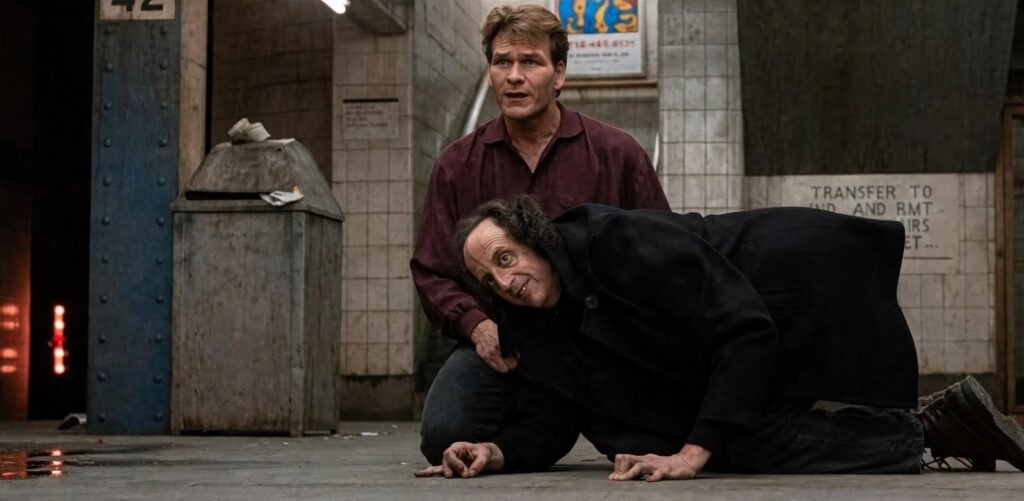
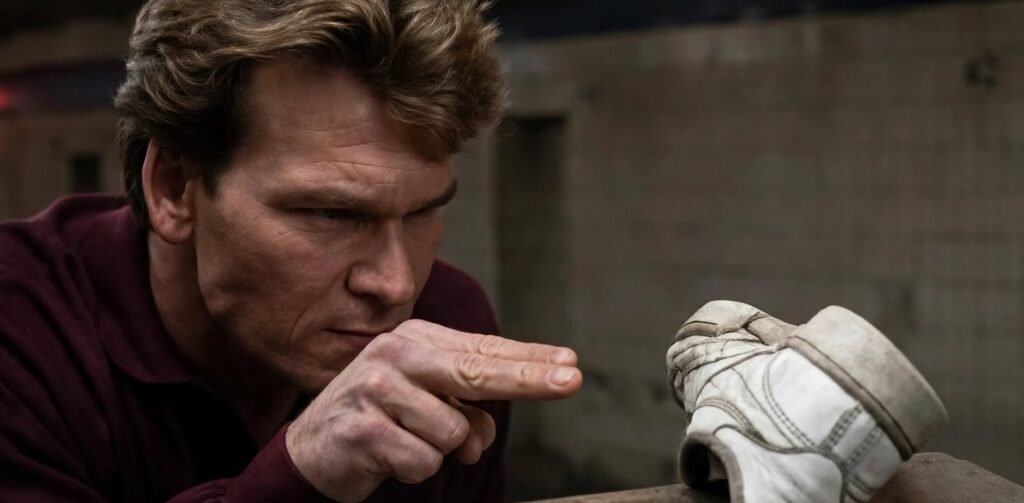
It is precisely in this intermediate territory that Sam crosses paths with the unsettling subway ghost, the unforgettable figure who haunts New York's underground trains, lunging at passengers and hurling objects through sheer willpower. In spiritualist understanding, souls that wander trapped in specific physical locations represent spirits who refused to move on, remaining consumed by anger, resentment, and an obsessive attachment to the material world. Because they continue vibrating close to physical density, these spirits learn to concentrate and manipulate heavier material energy to produce physical effects—just as he teaches Sam to move a penny through focused emotion—yet they remain trapped in a repetitive cycle of isolation and rage, unable to evolve until they let go of the hatred anchoring them to the tracks.
The Mechanics of Mediumship and Channeling Through Oda Mae Brown
When Sam finally finds Oda Mae Brown, the medium who hears his voice without initially believing in her own gift, the film dives into the mechanics of mediumship with an accuracy that surprised even researchers of the subject when the movie came out. Even before Sam experiences it himself, the script plants the spiritual rule among the line of spirits waiting in Oda Mae's parlor: when a spirit named Orlando attempts to enter the medium's body, another waiting spirit warns him flatly that once inside, a spirit becomes weak.
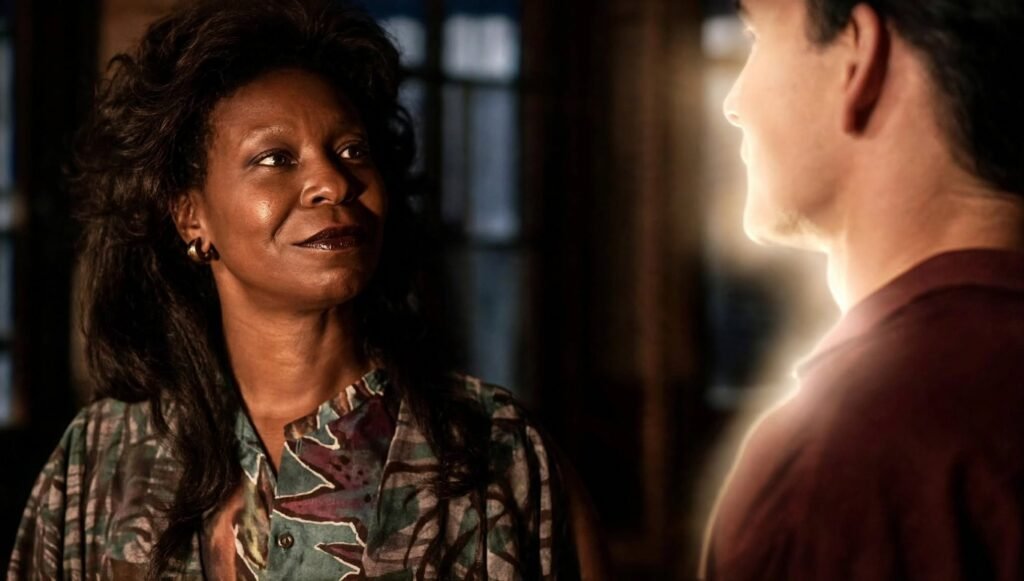
Within spiritualist understanding, full incorporation requires a profound vibrational lowering on the part of the communicating spirit and an intense energetic coupling with the medium's nervous and vital systems. By plunging back into the density of biological matter to move a physical body, the spirit temporarily forfeits the lightness and autonomy of its free state, experiencing genuine energetic exhaustion the moment the trance breaks - just as we see Sam stagger, pale and drained of strength, after leaving Oda Mae's body following his final slow dance with Molly.
It's Not Judgment - It's the Law of Attraction

This very same law of spiritual resonance governs the grim fate of Willy Lopez and Carl Bruner, two characters whose downfall is decided not by an external courtroom, but by the vibrational nature of their own choices. The instant they die, neither Willy nor Carl sees the welcoming light that called out to Sam. Instead, dark, shapeless, hissing figures emerge from the shadows of the street and drag them violently into the abyss. Within spiritualist traditions, this sequence illustrates the law of magnetic affinity in the astral plane: a spirit is not punished by an arbitrary judge, but drawn directly to the frequency of consciousness it cultivated in life. Consumed by greed, betrayal, and moral callousness, Willy and Carl were already spiritually attuned to the densest, most turbulent regions of the unseen world. Once stripped of the shield of their physical bodies, they become immediately visible and vulnerable to the lower entities and dark forces inhabiting those shadowy realms, pulled into planes of suffering and spiritual reckoning through pure vibrational resonance.
True Love Is What We Take With Us
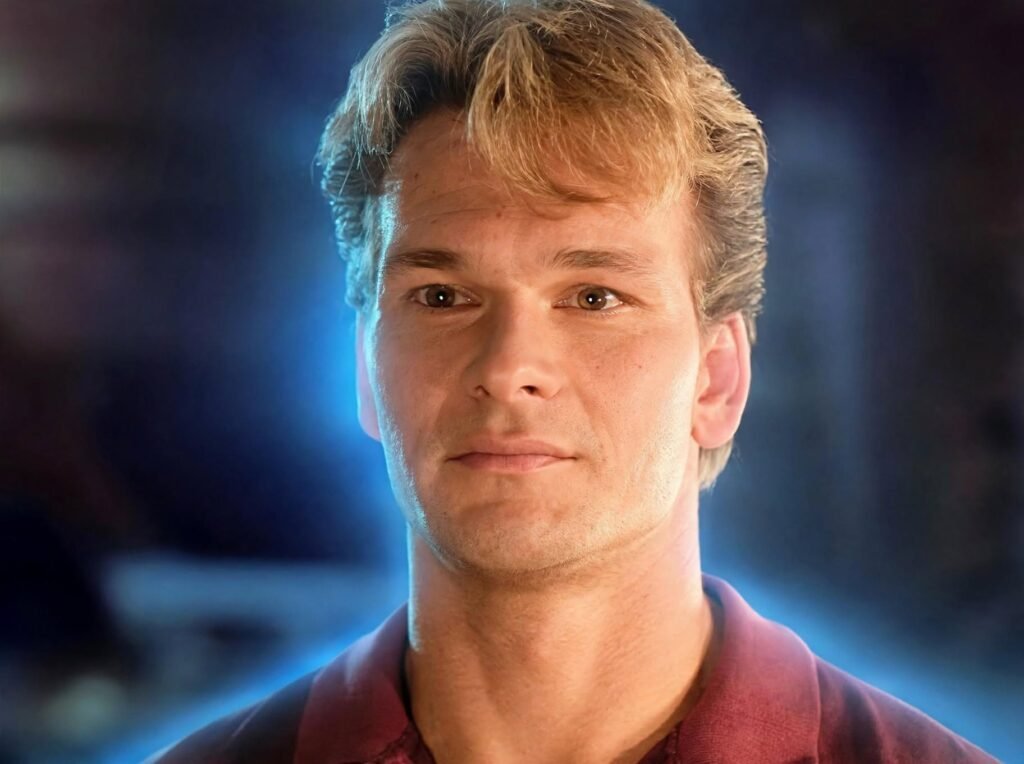
In stark contrast, Sam's final farewell captures the exact reason Ghost has remained etched in the emotional memory of everyone who saw it in theaters in 1990—or rediscovered it years later on television. With his mission to protect Molly fulfilled and the truth brought to light, the veil between both worlds parts one last time. The light returns, now revealing luminous silhouettes of other spirits waiting for him in peace, and Sam can finally be seen and heard by Molly before stepping forward. As he walks into that radiant doorway in the final scene, the film returns viewers to the real world with the quiet assurance that love is never severed by the physical boundary of death—it merely crosses a threshold that, sooner or later, opens for us all.