Lois & Clark: The Superman Show That Was Almost Named After Lois Lane
A haircut, and a title the network took away
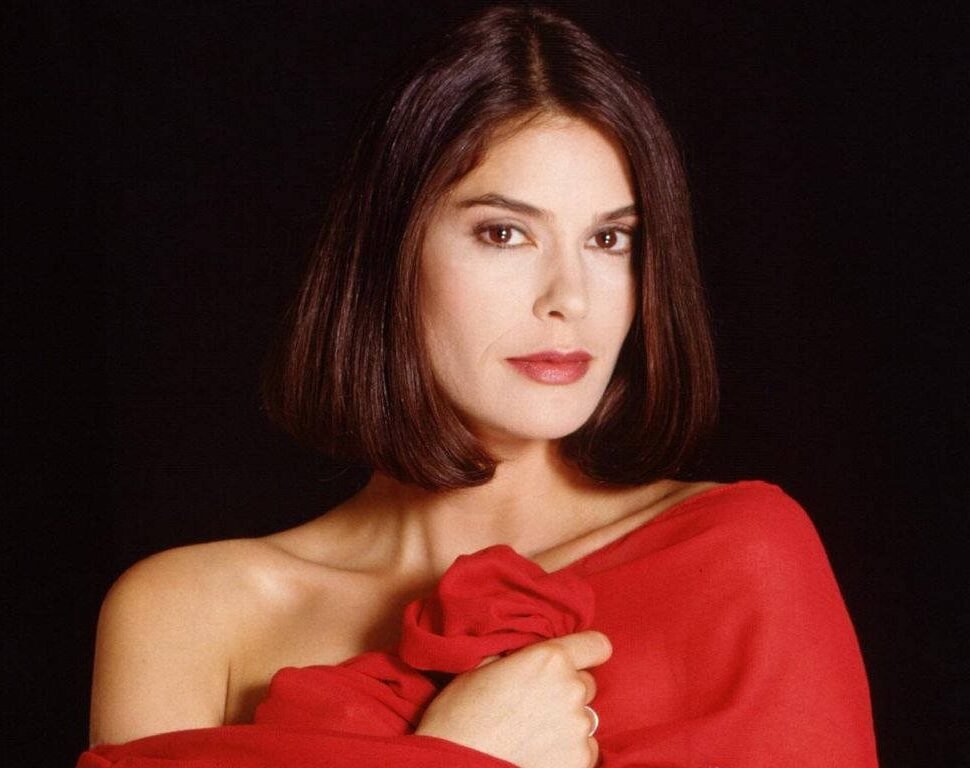
LeVine's first note to Teri Hatcher was about her hair. She suggested something a woman could manage in the morning, the kind of cut that resolves itself when you wake up, and Hatcher came back to the set with her long hair gone. It was an early signal that this Lois Lane would not be the Lois of the comics — and LeVine, who had never read a comic book, had no intention of making her one. She wanted a reporter who was smart and sassy, and she wanted her to be an equal to Clark, not a prize. The show she sold to ABC in 1991 was called Lois Lane's Daily Planet, and Clark Kent was close to peripheral: a farm boy with a secret who drifts into a newsroom where the actual protagonist already works. Then Leslie Moonves and LeVine took it to the network, and it came back as Lois & Clark. A show named after a woman, retitled as a couple.
Clark is the person, Superman is the costume
The premise came from John Byrne's 1986 reboot, which had settled an old argument by declaring Clark the real identity and Superman the disguise. LeVine took that and refused to sand it smooth. "I didn't want to make him perfect either," she said. "Superman, at that time, could do no wrong." Her Clark could. That single choice decides how a show about a flying man ends up being about a man who cannot say what he means. The line the series gave him states the whole thesis: "Superman is what I can do. Clark is who I am." Casting followed the same logic. LeVine thought Dean Cain was too young, and did not hide it; what won him the part was his reading of the scene where Clark tells Jonathan Kent that he has never felt like he belongs anywhere.

A hero who was allowed to be ordinary
Cain built the performance out of two different men. "I played my Clark much closer to that of George Reeves," he said, "and my Superman closer to Christopher Reeve." He has always been candid that he preferred the first half of that job. In his account, Clark is a very regular guy carrying a wonderful secret, while Superman is the man of action, the errand — which is why the show never asked him to change his voice or straighten his posture when the cape went on. What he played instead was a person deciding, week after week, how much of himself to reveal to the woman at the next desk.
The pilot refused the candy
Robert Butler, who directed the pilot, and cinematographer Chuck Minsky deliberately avoided what Butler called the "jelly bean colors" of the superhero shows that had come before, and lit the thing like a drama instead. It is the reason the series looks like a workplace comedy with a flying problem rather than a toy commercial. LeVine's favorite scene in the pilot is also the most revealing: Clark, home in Smallville, trying on supersuits with his mother, Martha, to the sound of Bonnie Tyler's "Holding Out for a Hero" — a montage that quietly quotes other heroes' costumes, and ends with the public getting its first look at him and shrugging. Is it a bird? A plane? No: just a guy in a pair of tights and a cape.
A top-60 show that rewrote the genre
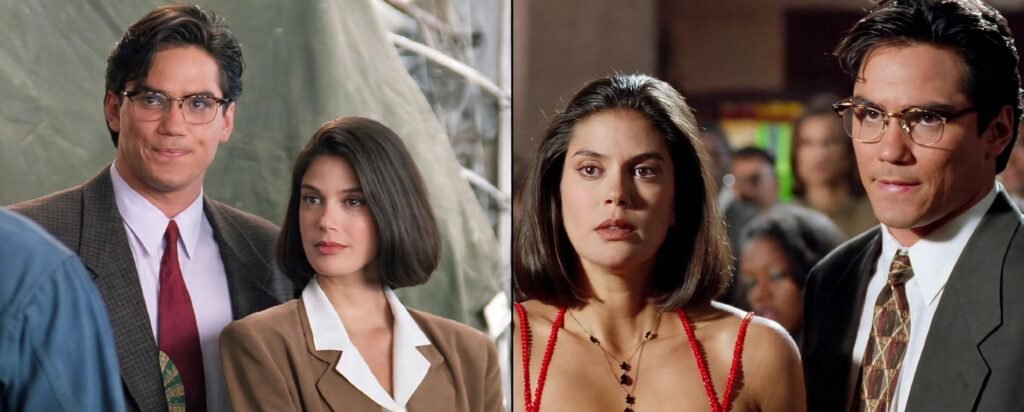
The show was never a phenomenon, and the numbers are unromantic. The pilot drew 18.3 million viewers on September 12, 1993; season one averaged 18.1 million and finished 60th for the year. ABC kept it for four seasons and 88 episodes, and it won a Saturn Award for best genre series, which is the kind of prize a show collects when it is admired more than watched. It also made hard, ordinary decisions that aged well: Michael Landes was dropped as Jimmy Olsen after one season for looking too much like Cain, and LeVine fought, and lost, to keep John Shea's Lex Luthor as a permanent member of the cast. What survived is the structure — the romance in the newsroom, the family in Kansas, the insistence that the person comes before the cape — and it is the structure that Supergirl and Superman & Lois are still standing on. The ending the show chose is the argument it had been making all along: you can fly over the entire world and still come back, at the end of the day, to the person standing beside you in the newsroom.