Who Is Jodie Foster? Her Oscars, Her Rules
In 1976, Jodie Foster appeared in Taxi Driver, Bugsy Malone and Freaky Friday. That is a Martin Scorsese nightmare of Times Square, an Alan Parker gangster musical in which every gangster is a child, and a Disney comedy about a mother and daughter who swap bodies. She was thirteen for most of that year. Most careers spend decades working toward range; hers started with it, and the reason says more about her than any of the famous titles do.

The popular version of Jodie Foster is a story of survival: the child star who didn't implode, the two Oscars, the cannibal in the glass cell, the fiercely private adult. It's a good story, but it undersells her. Surviving is something that happens to a person. What she did, again and again, was set the terms.
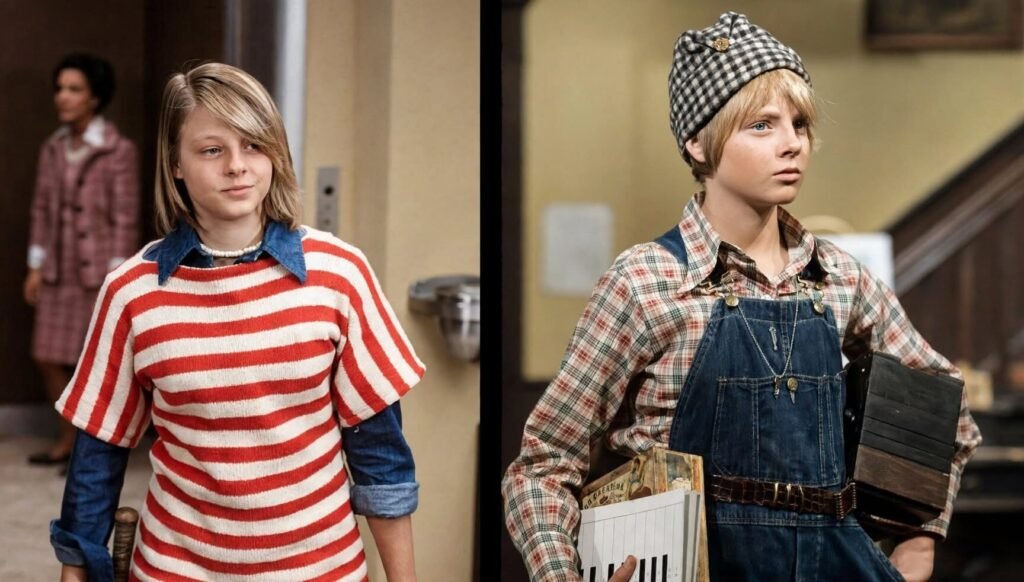
The child who could hold a scene against De Niro
By the time Scorsese found her, she had already been working for roughly a decade. She was in a Coppertone commercial at three, then in the television that raised a generation of American kids: Mayberry R.F.D., Bonanza, Gunsmoke, and eventually the lead in a TV adaptation of Paper Moon. Disney came next, with Napoleon and Samantha and Freaky Friday.
These were adult workplaces, and she learned them the way other kids learn a trade: where to stand, how to hit a mark, how long a day really is. Scorsese cast her in Taxi Driver after seeing her in Alice Doesn't Live Here Anymore, a small role in a film that mattered. Iris, a child prostitute, was as dangerous a part as a twelve-year-old could be handed in 1975; she was reportedly required to undergo a psychological evaluation before production could proceed, and her older sister Connie stood in for some of the more adult material. The film won the Palme d'Or at Cannes, and at fourteen Foster was nominated for an Oscar, losing to Beatrice Straight for Network. Hollywood now knew her as something stranger than a child star. She was a child who could hold a scene against Robert De Niro.
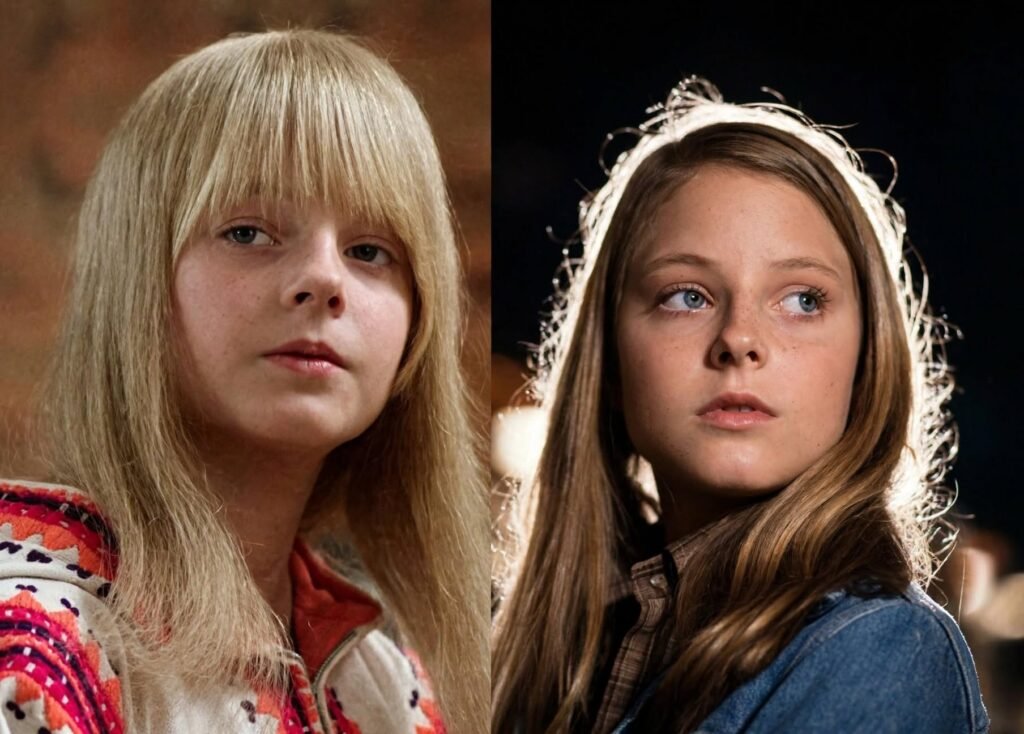
The year the camera turned on her
Then the film came back for her. John Hinckley Jr., who had fixated on Foster after seeing Taxi Driver, shot President Reagan in March 1981 in a bid to impress her. She was a Yale undergraduate at the time. She wrote about it once, in a 1982 Esquire essay called "Why Me?", and then said very little for decades.
Read that as editorial interpretation rather than documented motive, but it is the first piece of evidence in the case for understanding her: a person who has been that publicly entangled with someone else's obsession has strong reasons to build walls, and the walls are part of the career. She went on to graduate in 1985 with a literature degree, in an industry that generally treats a child star's education as the thing that happens while the phone isn't ringing.
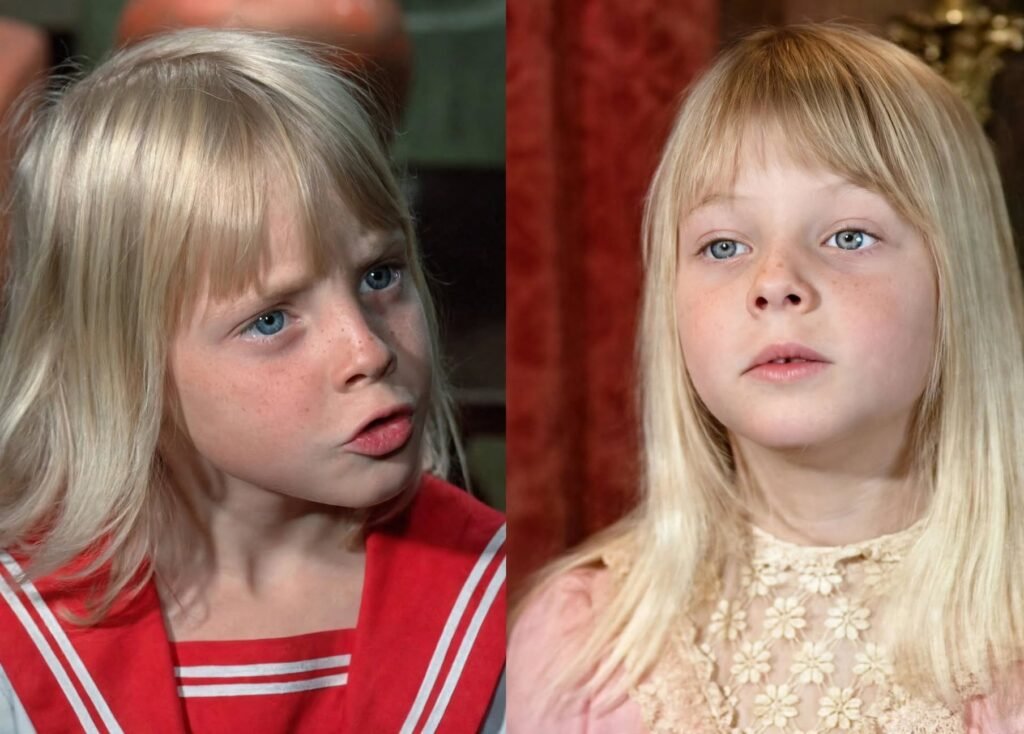
Her teens and twenties on screen were stranger than the legend suggests. Foxes (1980) showed what a grown-up Foster could do with a film about teenage girls and no adults paying attention. The Hotel New Hampshire (1984) was a literary adaptation that didn't land. The Blood of Others (1984), a French-language film by Claude Chabrol, was one most Americans have never heard of, and it was a clue to something that would pay off forty years later.
Two Oscars, and the authority of paying attention
The turn arrived at twenty-six with The Accused (1988). She plays Sarah Tobias, a waitress gang-raped in a bar while other men cheer, and the film's subject is not the attack but everything after it: the plea bargain that lets her attackers plead to something without the word rape in it, and the prosecutor (Kelly McGillis) who finally goes after the men who stood there clapping, charging them with criminal solicitation. It won Foster the first of her two Best Actress Oscars, and it reset what Hollywood believed she was.
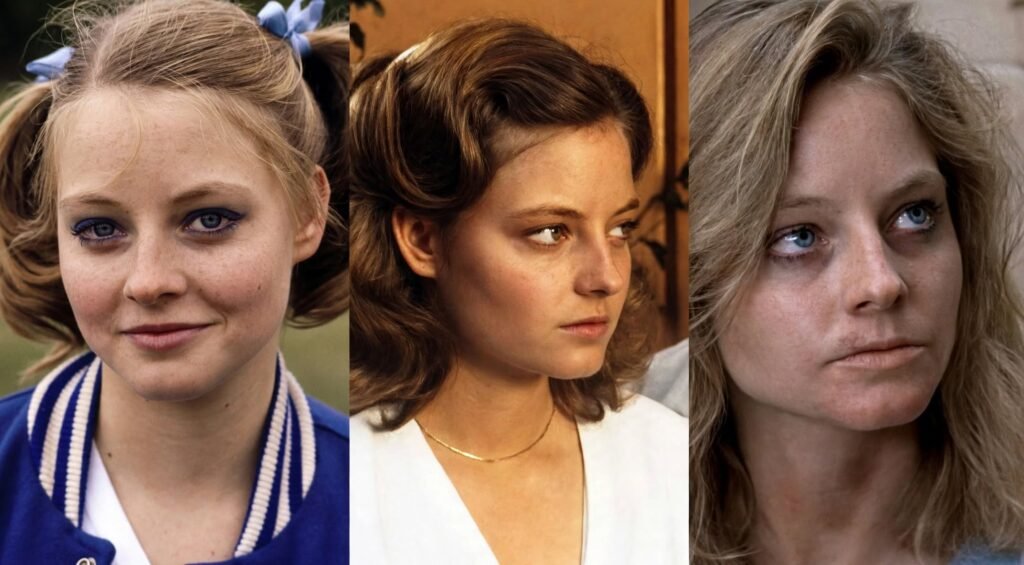
Three years later came Clarice Starling. By most accounts the role was first offered to Michelle Pfeiffer, who passed; Foster pursued it, and Jonathan Demme gave it to her. The Silence of the Lambs (1991) was made for a reported $19 million and took in roughly $130 million domestically. It swept the top five Oscars, including Best Picture and Best Actress, which made Foster a two-time winner before she turned thirty.
What gets lost in the retelling is how unusual the performance is for a thriller heroine. Clarice is outmatched, underestimated and visibly afraid, and the film treats that as the source of her authority. A protagonist whose power comes from attention rather than force became a template Foster spent the next fifteen years bending in different directions.
The move nobody counts
In the same season she won her second Oscar, she directed her first feature. Little Man Tate (1991), in which she also played the mother of a gifted child, was a modest, intimate film. Hollywood at that moment would have handed her any franchise or romantic lead she wanted, and she spent the capital on a small picture about a boy who is too smart for his world.

In 1992 she founded Egg Pictures, which went on to produce a handful of features, including Nell (1994), which earned her another Oscar nomination. She directed Home for the Holidays (1995), a Thanksgiving ensemble comedy with Holly Hunter and Robert Downey Jr. — a warm, bruised movie that didn't become a hit. Meanwhile she kept the commercial side alive with Sommersby (1993) and the studio comedy-western Maverick (1994), where she stole scenes from Mel Gibson as a con woman, proving she could be funny at a budget. Then came Contact (1997), adapted from Carl Sagan's novel. Sagan died before it came out, and Foster's Ellie Arroway, a scientist who doesn't blink when no one believes her, became one of the defining roles of her middle career.
Fame, popularity and star power
The early 2000s brought a stumble that turned into a hit. Foster had been preparing to direct Flora Plum, a 1930s circus drama with Claire Danes and Russell Crowe, and the project fell apart before it reached cameras. Then Nicole Kidman had to leave David Fincher's Panic Room after an injury, and Foster stepped in on short notice. The film opened in March 2002, grossed about $96 million domestically, and cast an eleven-year-old Kristen Stewart as her daughter. It is easy to forget that Foster was also offered the return to Clarice in Hannibal and turned it down — a decision that looks bolder the longer you think about it.

Panic Room was followed by Flightplan (2005), which topped its opening weekend, and The Brave One (2007), and together they made a pattern: Foster as the woman in a sealed space, or an unfriendly one, forced to out-think people who assume she can't. In between she took the quieter supporting part of Madeleine White in Spike Lee's Inside Man (2006), a power broker who is never wrong about what things cost.
Here the distinction between fame, popularity and star power gets useful. Fame she had from the age of three. Popularity came in waves: Disney kids, Oscar voters, thriller audiences. Star power — people turning up because it's her — shows up most clearly in a narrow lane, the female-led thriller, and weakens when she steps outside it. The Beaver (2011), which she directed and which paired her with Mel Gibson just as his personal scandals were in full view, barely registered, and later outings like Hotel Artemis (2018) never became the event her name might have suggested.
The move behind the camera
The decade that followed looks like a retreat only if you measure it by leading roles. She was in Roman Polanski's Carnage (2011) and Neill Blomkamp's Elysium (2013), and directed Money Monster (2016) with George Clooney and Julia Roberts.

The less visible change was where she put her energy. She directed episodes of Orange Is the New Black and House of Cards, then "Arkangel" for Black Mirror in 2017, and in the streaming era found something the movie business of her youth couldn't offer: a place for a woman in her fifties to keep working behind the camera without also being the face on the poster. Her speech accepting the Cecil B. DeMille Award at the 2013 Golden Globes was about privacy, and it is hard not to read it alongside the Hinckley years. A person who has been watched since toddlerhood tends to value the ability to say what is hers and what isn't.
The strangest act is the current one
She won a Golden Globe for The Mauritanian (2021) and earned a fifth acting Oscar nomination for Nyad (2023), playing the coach of a long-distance swimmer opposite Annette Bening. In 2024 she took True Detective: Night Country, a bleak Alaska procedural, and won her first Emmy; a Golden Globe followed in January 2025. She was in her early sixties, leading a television series for the first time, at the center of the conversation.
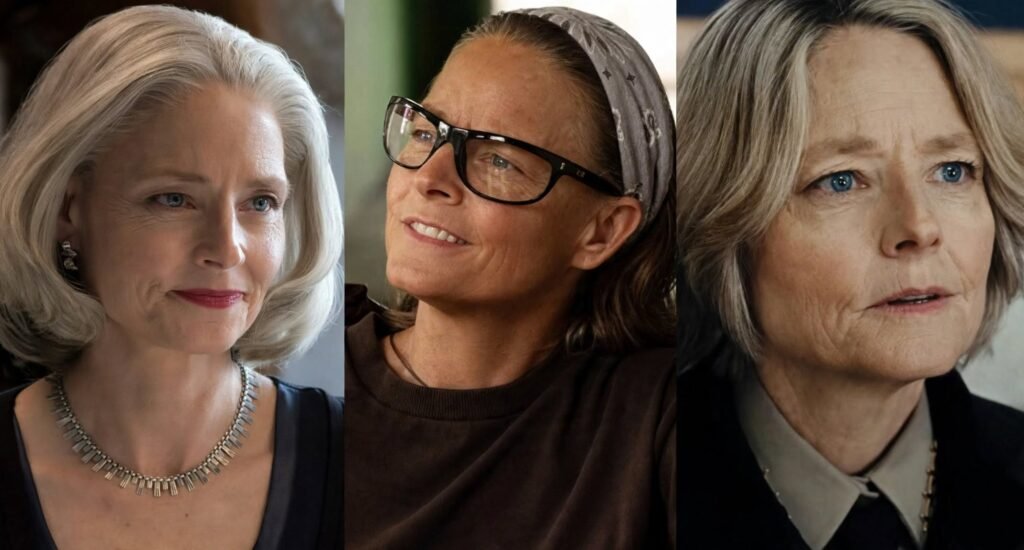
In May 2025 she premiered Vie Privée (A Private Life) at Cannes, out of competition: Rebecca Zlotowski's French-language mystery in which she plays a psychiatrist convinced that a patient's death was not a suicide. She had been offered leading French roles before and was "too scared to take them on"; acting in French, she says, makes her "a totally different person." The language dates to the Lycée Français in Los Angeles, and it had been waiting in her career since The Blood of Others. Reports of the standing ovation at Cannes ranged from eight to ten minutes, a small disagreement that still says something about how the room felt.
What she is doing in 2026
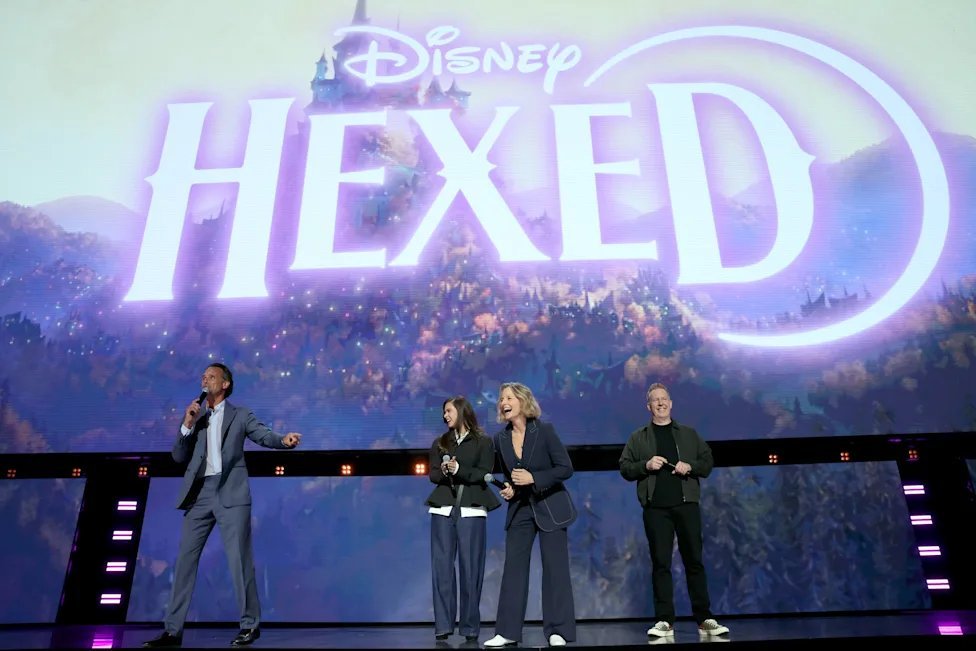
It would be easy to call all this a legacy, but the evidence is more interesting than that. Thomas Harris's novel reached the stage for the first time this summer, in Gina Gionfriddo's adaptation that opened at Leicester's Curve and is touring the UK into 2027. The Cinémathèque suisse ran a seventeen-film retrospective in Lausanne from late August through October. And this Thanksgiving she is in Hexed, voicing Queen Celeste — the villain, a witch queen who will stop at nothing to keep her power. It is her first voice role in a Disney animated film, nearly sixty years after she spent her childhood on Disney sets. A woman whose first screen credit predates most of her current audience's parents is still adding to the record rather than curating it.
So who is she?
She is not simply the child who survived or the actress who won twice. She became a movie star in at least three different ways, and each time she converted the thing the industry expected to be her ceiling into leverage. The child prodigy turned into a collaborator whom Scorsese and Demme trusted. The two-time Oscar winner used the moment to direct a small film about a gifted boy. And the woman who might have settled into a late career of safe cameos chose a French-language thriller, an Alaskan crime series and a swimmer's coach.
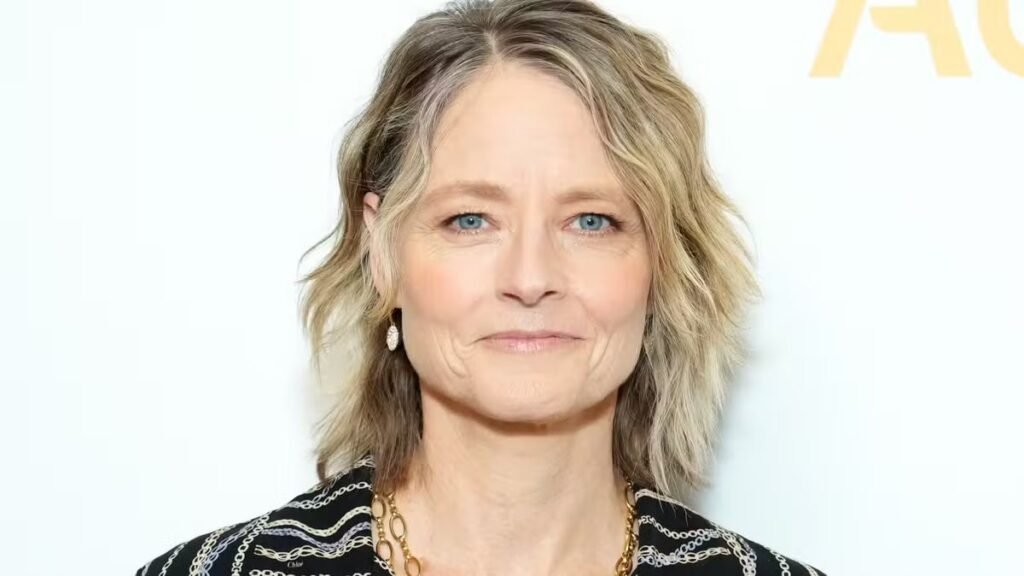
The face is the part everyone knows. What built the stardom was control, exercised quietly and early: over rooms, over scripts, over who gets to look and for how long. The name is familiar. The story is that she has spent nearly sixty years deciding where the camera is allowed to go.