Who Is Julia Roberts?
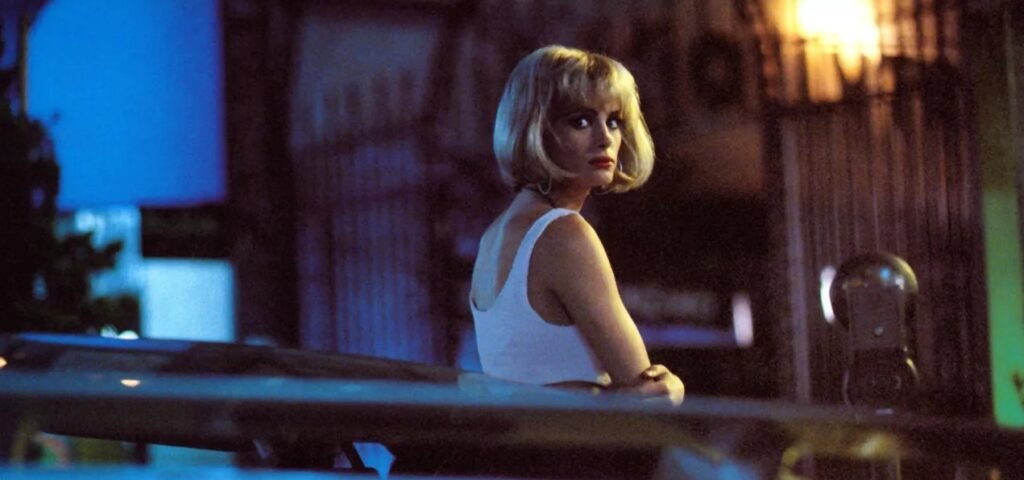
The first thing the world learned about Julia Roberts was that it could not stop looking at her. In Pretty Woman she was a Hollywood Boulevard hustler in a blue minidress and blonde wig who turned a shopping trip on Rodeo Drive into a small act of class warfare, and the camera did not merely watch her — it believed her. The widening laugh, the walk, the cigarette behind the ear, the way she said "big mistake, huge," as though she had just invented the phrase. Within a year of that film, a twenty-two-year-old from a small town in Georgia was the most popular female star alive, and the industry had a tidy explanation ready: she had a smile. That explanation is not wrong; it is simply too small.
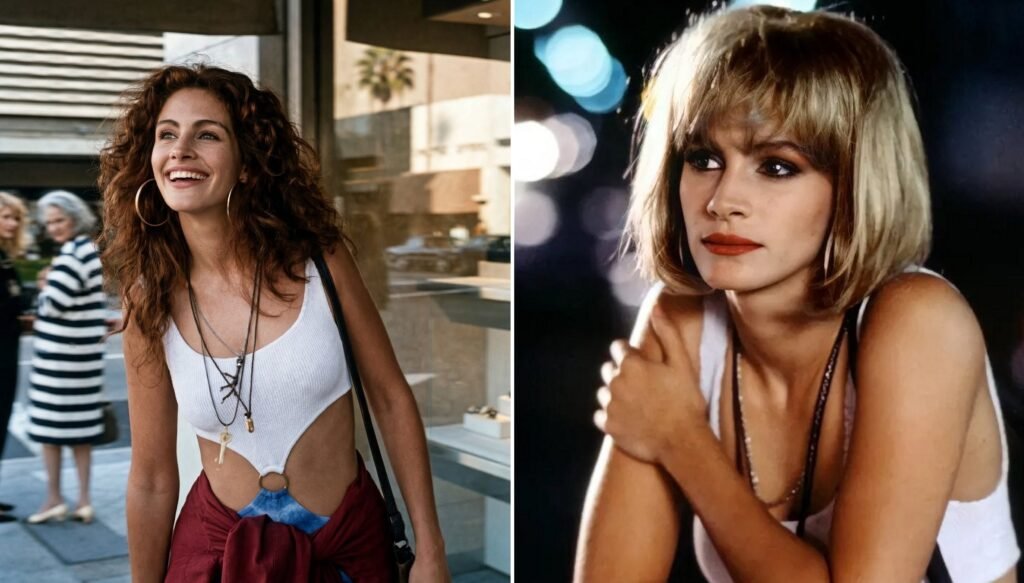
A smile gets you cast once. It does not survive thirty-five years, a genuine box-office collapse, a Broadway drubbing, a shift from theaters to streaming, and the quiet disappearance of the romantic comedy as a viable star vehicle. The real question is how a performer with one unusually specific gift — an instinct for making artificial situations feel emotionally true — turned that gift into a machine for power. She kept that machine running long after the movies around her changed, and the story begins not with Rodeo Drive but with a struggling theater workshop outside Atlanta.
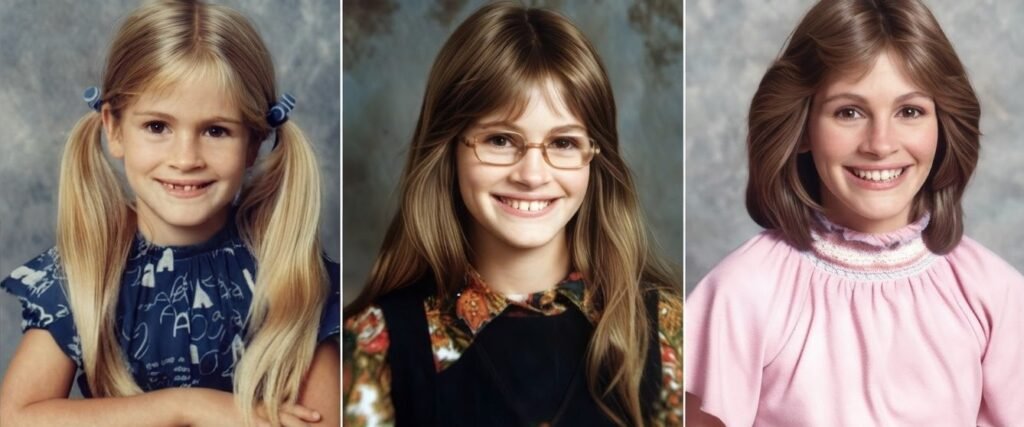
Julia Fiona Roberts was born on October 28, 1967, to two former actors who had met performing for the United States Armed Forces. After settling near Decatur, Georgia, Betty Lou Bredemus and Walter Grady Roberts founded the Atlanta Actors and Writers Workshop, a small theater school that happened to be the only racially integrated company of its kind in the region. Among the children who took classes there were the kids of Coretta Scott King and Martin Luther King Jr., and Walter coached their daughter Yolanda. The workshop went broke, the marriage ended in 1972, and when the family was struggling, Coretta Scott King — grateful for Walter's mentorship — paid the hospital bill for Julia's birth. Her father died of throat cancer in 1977, when she was ten.
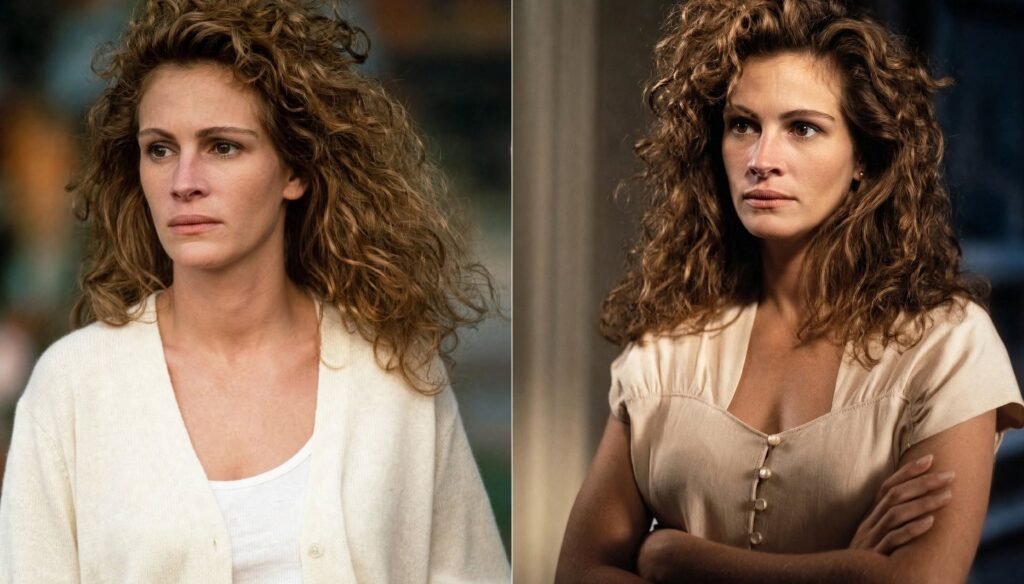
As a teenager she wanted to be a veterinarian and played clarinet in the school band. She graduated from Campbell High School in 1985, moved to New York at seventeen to join her older siblings, signed with a modeling agency, and began taking acting classes. The résumé that followed is a reminder that she was a working actor long before she was a famous one: a 1987 guest spot on Michael Mann's Crime Story, a two-line appearance in Blood Red cast by her brother Eric, bit parts in Firehouse and Satisfaction, and a guest role in the Miami Vice finale. None of it was stardom, but all of it was training. Then two films changed the equation within a single year.
Mystic Pizza gave her Daisy Araújo, a rebellious Portuguese-American waitress, and Roger Ebert noted the "fierce energy" behind the beauty. Steel Magnolias gave her Shelby, a young bride navigating diabetes, a part she won partly against executives' preference for Laura Dern and Winona Ryder because the playwright Robert Harling, watching her screen test, concluded: that's my sister. It earned her a Golden Globe and her first Oscar nomination. By the time Pretty Woman arrived she was no discovery — she was a performer with a real instrument, waiting for the right frame.
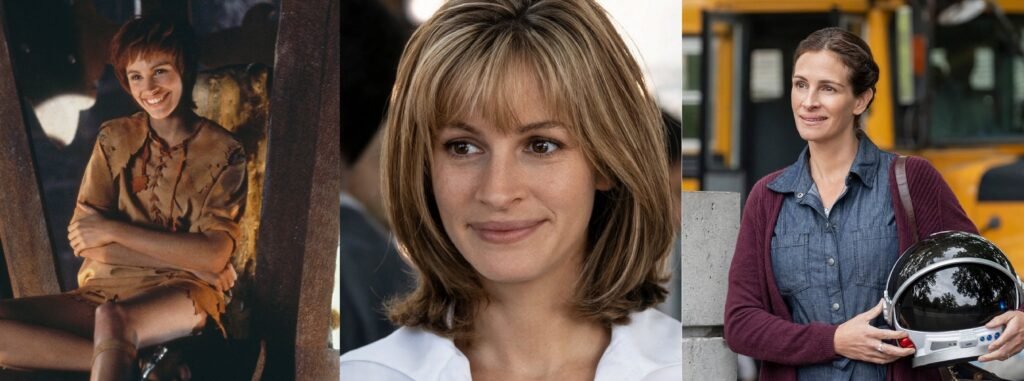
That frame nearly did not exist. Pretty Woman began as a bleak independent script about drug addiction and street prostitution before Disney's Jeffrey Katzenberg pushed for a modern fairy tale, and the role was offered to stars who turned it down. Julia Roberts, then twenty-two, took it and did what the script could not: she made the fairy tale feel earned. The premise is absurd and the transformation preposterous, yet she plays it as if the stakes were real, which is the actual nature of her talent. The film grossed roughly $463 million on a $14 million budget, still holds the record for the most domestic tickets ever sold by a romantic comedy, and stood as Disney's biggest R-rated hit for more than three decades, until Deadpool & Wolverine.
Hollywood read the result as a formula and spent the 1990s discovering it could not be bottled. Sleeping with the Enemy pulled in about $175 million, Steven Spielberg's Hook reached roughly $301 million, and The Pelican Brief cleared $195 million, while she appeared as herself in Robert Altman's The Player and pushed into historical drama with Michael Collins. Then came the rupture. Mary Reilly, a moody retelling of Dr. Jekyll and Mr. Hyde, cost about $47 million and returned roughly $13 million — the first unqualified failure of her career. The lesson was not that audiences had tired of her; it was that the persona which sold tickets could not automatically redeem an idea that did not work.
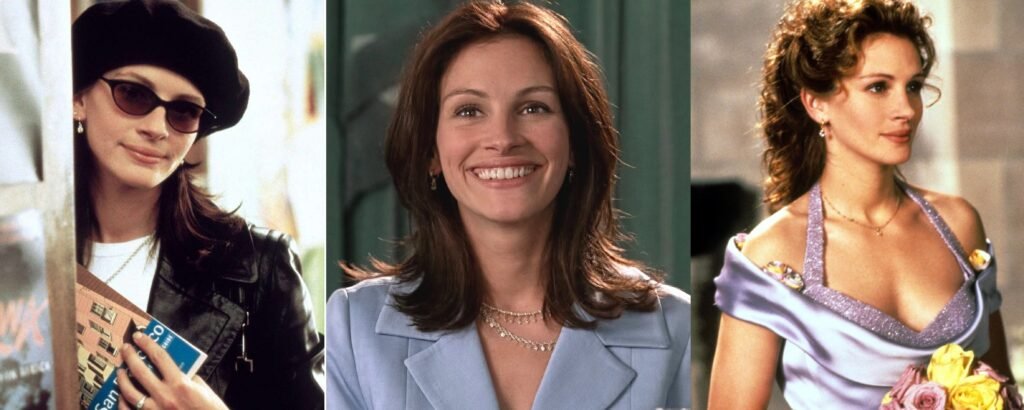
The recovery, beginning in 1997, was one of the more remarkable commercial turnarounds in modern Hollywood. My Best Friend's Wedding handed her the unflattering role of the woman trying to sabotage the romance and still earned about $299 million, while Conspiracy Theory and Stepmom pushed past $137 million and $159 million. Then came the films that defined her late-1990s reign: Notting Hill, opposite Hugh Grant, at about $363 million, and Runaway Bride, which reunited her with Richard Gere for a $309 million global haul and a record opening for the genre. A failing star would have been recast; she was, instead, bigger than ever.
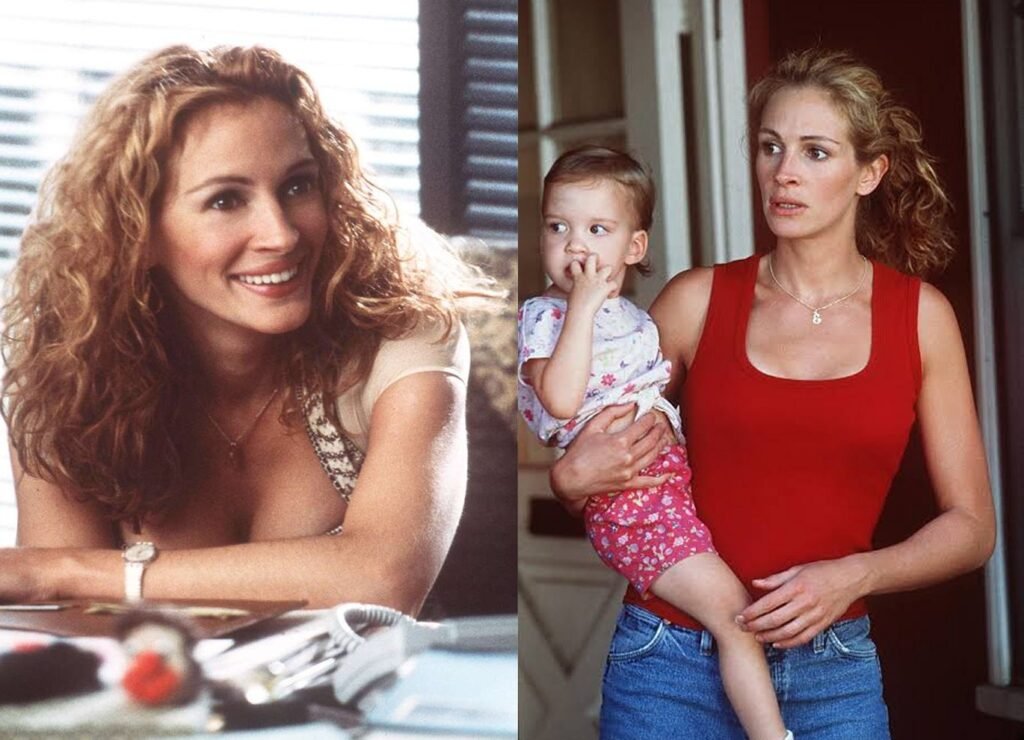
What happened next is the hinge of the whole story. For Erin Brockovich, Steven Soderbergh's account of the legal clerk who helped build a case against a utility poisoning a California town, she gave the best performance of her career and made history on both sides of the camera. She became the first actress ever paid $20 million for a single film, and the movie delivered, grossing about $256 million and carrying her to a sweep of the season's major prizes: the Academy Award, the BAFTA, the Golden Globe, and the Screen Actors Guild Award. Two years later she broke her own record, commanding a reported $25 million for Mona Lisa Smile. Early in her career the industry cast her as an ideal; by the turn of the millennium she was setting the terms.
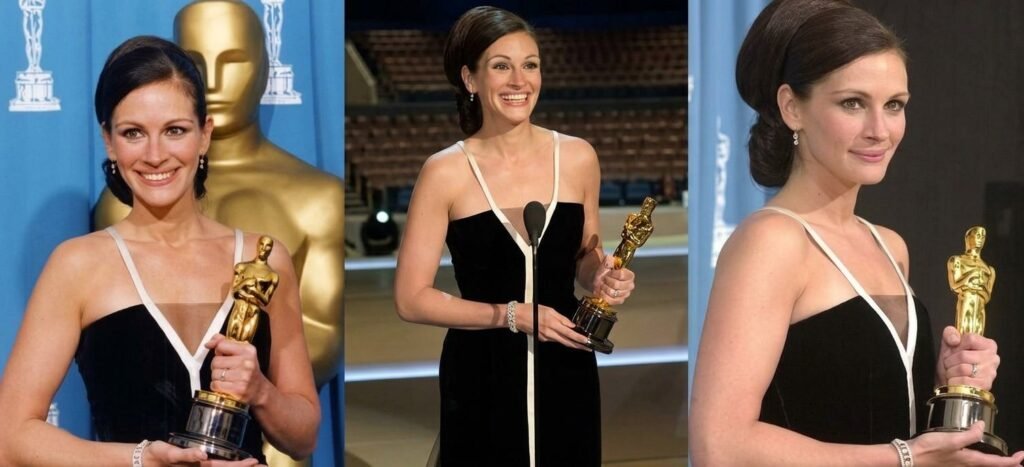
The decades since are best understood not as a decline but as a renegotiation. She moved into ensembles and experiments — the Ocean's films, where the joke is that her character impersonates Julia Roberts; Soderbergh's scrappy Full Frontal; Nichols's Closer, in which she replaced Cate Blanchett and deliberately shed the mannerisms that had made her rich. Sometimes the brand pushed back: her 2006 Broadway debut in Three Days of Rain sold furiously and drew some of the harshest reviews of her life. Then came the mature act, in which August: Osage County brought a fourth Oscar nomination and television gave her a new stage — executive-producing and starring in Amazon's Homecoming, playing Martha Mitchell in Starz's Gaslit, and producing and headlining Netflix's Leave the World Behind. In 2025 she took on Luca Guadagnino's After the Hunt, which flopped yet earned her a Golden Globe nomination, and through her company, Red Om Films, she now helps decide which ideas get made.
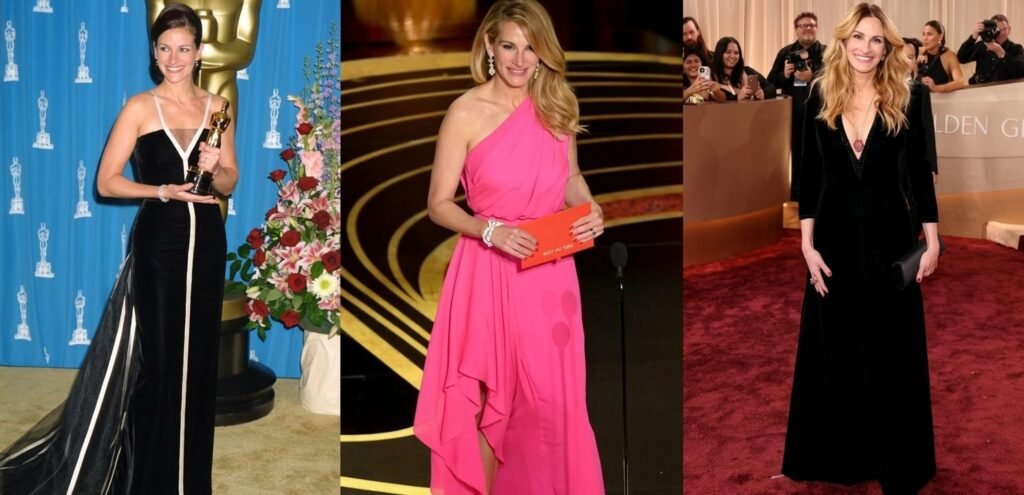
It is tempting to file her under nostalgia, but nostalgia describes an audience remembering the past, and what Julia Roberts has is durability — which is a choice. She has been named People's Most Beautiful Woman a record five times, from 1991 to 2017, and her filmography runs past forty features. The relevance shows up elsewhere: a fifteen-year run as the face of Lancôme's La vie est belle, campaigns for Chopard and others, an honorary César in 2025, and a French knighthood in the Order of Arts and Letters. Whenever the industry's idea of her grew stale, she changed the idea rather than disappear.

So who is she, really? Not simply the beautiful woman with the famous smile, and not merely the sum of the films you can name, but a performer who discovered early and almost accidentally that warmth could be made commercially powerful — and then spent three decades learning how to spend that power. Pretty Woman proved an audience would fall for her, Mary Reilly proved it would not fall for everything, Erin Brockovich proved the falling could be converted into leverage, and the television and producing work proved she could let the image change without losing the audience. The smile opened the door; what she did next is the story, because she treated stardom not as a fixed image to be protected but as the ability to make people follow her when the image no longer looked the same. That is the difference between being famous and being a Movie Star.