Tom Cruise Has Never Stopped Chasing the Edge of the Cliff
Ask Tom Cruise if he fears death, and he doesn't dodge the question the way you might expect from an actor who has spent four decades convincing audiences he's invincible. In his recent sit-down with journalist Zach Baron for GQ, Cruise admits, without hesitation, that yes, he does think about mortality, and that riding a motorcycle off a cliff, something he has literally done on camera, would terrify most people. What separates him, he explains, isn't an absence of fear. It's a willingness to sit inside it, to treat uncertainty as the raw material of both his work and his life. He isn't afraid to feel afraid. That's the whole philosophy, distilled.
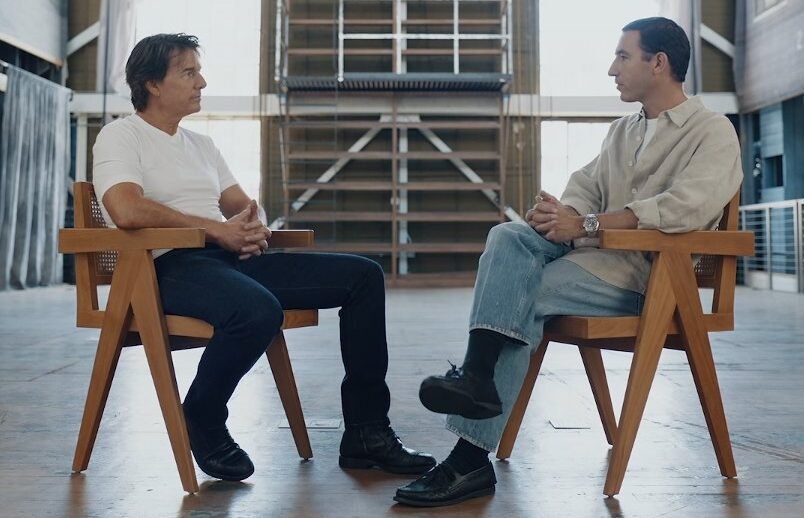
It's a rare moment of stillness from an actor who has spent his career in motion, and the conversation arrives at a strange inflection point: Cruise has just turned 64, he recently collected an honorary Oscar at the Governors Awards, and he is preparing to release Digger, his first true departure from spectacle filmmaking in years.
That same appetite for uncertainty runs through how Cruise talks about his own filmography. For years, the assumption was that his career had split cleanly into two lanes: the Mission: Impossible-scale spectacle that has made him one of the last true box-office draws left standing, and the prestige auteur period of the late nineties and early 2000s, when he sought out Paul Thomas Anderson, Stanley Kubrick, and Michael Mann. Cruise rejects the idea that he ever consciously pivoted away from that second lane. What looks, from the outside, like a deliberate strategic shift, he frames instead as a continuous education, one project teaching him the tools he needed for the next.
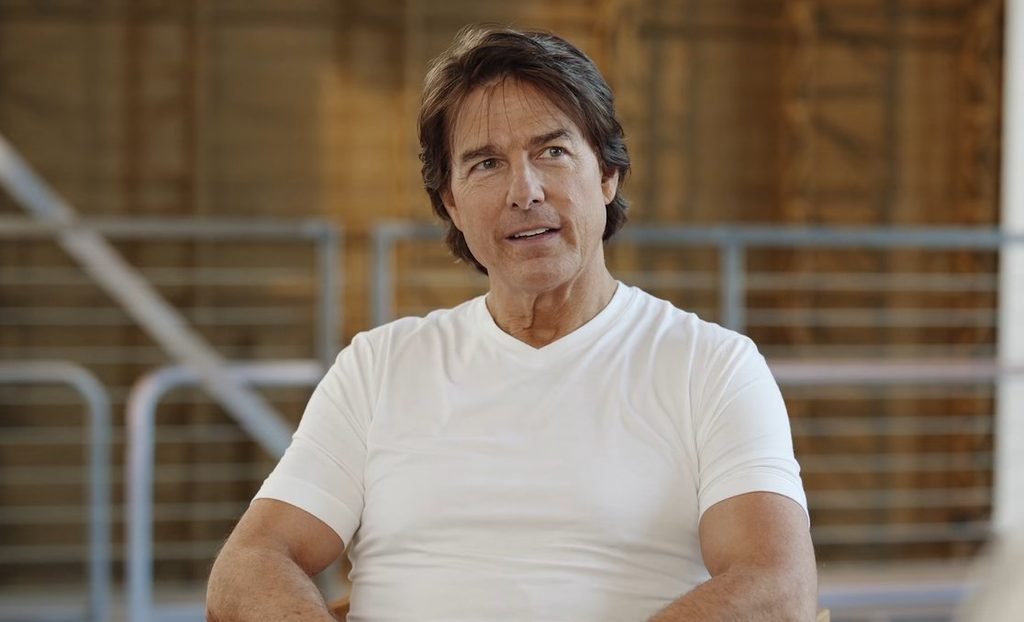
That philosophy is what makes Digger, his upcoming film with Alejandro González Iñárritu, feel less like a departure and more like the culmination of an idea Cruise has been building toward for a long time. Described by Warner Bros. as "a comedy of catastrophic proportions," Digger casts Cruise as a character named Digger Rockwell, "the most powerful man in the world," who sets out on a frantic mission to prove he is humanity's savior before the disaster he has caused destroys everything. It's a wild swing for an actor best known for hanging off the sides of airplanes, and Cruise traces his interest in Iñárritu back to seeing Amores Perros decades ago, long before most of Hollywood had caught on to the director's talent. He describes being struck not just by the storytelling but by the sheer craft on display: the framing, the color, the performances, the machinery required to pull it all together. That instinct, to reverse-engineer how a film achieves its effect on an audience, has clearly stayed with him ever since.
Digger, which shot for six months in the United Kingdom and is set for release on October 2, 2026, marks Iñárritu's first English-language film since The Revenant and reunites him with Birdman co-writers Nicolas Giacobone and Alexander Dinelaris, alongside Sabina Berman. The ensemble around Cruise, Sandra Hüller, John Goodman, Michael Stuhlbarg, Jesse Plemons, Sophie Wilde, and Emma D'Arcy, reads like a film festival lineup rather than a traditional star vehicle, and the project's timing, opening in the same fall corridor where Iñárritu has historically premiered Birdman and Bardo, has fueled speculation about a possible Venice bow. It's also the first film to emerge from Cruise's production deal with Warner Bros., a studio he returns to a decade after Edge of Tomorrow.
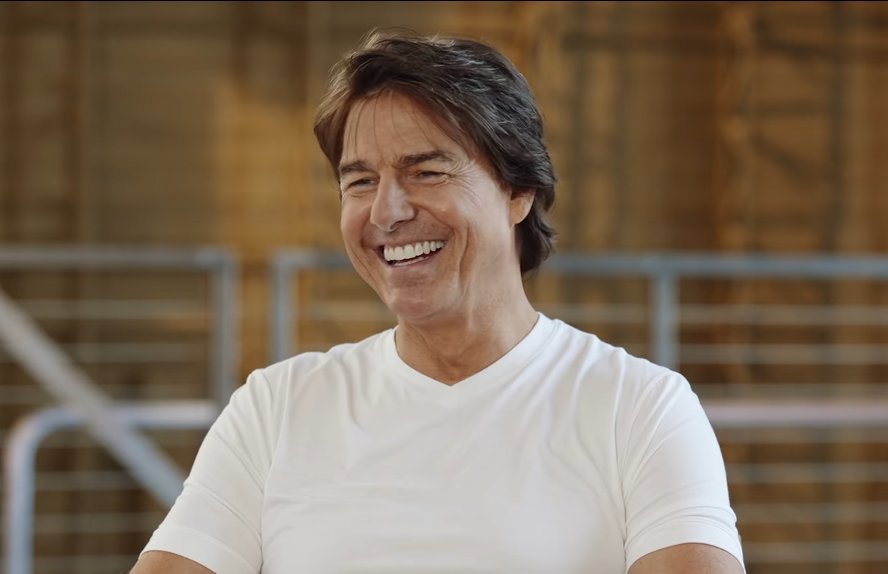
Much of the conversation with Baron circles around a phrase Cruise has repeated for years but rarely explained in depth: that making movies is not what he does, but who he is. Unpacked, it becomes less a slogan and more a worldview. He talks about the collaborative nature of filmmaking, insisting that no single person, not even the director, makes a movie alone, and about the almost obsessive discipline that has defined his life since childhood, when he began writing down goals on a board and listing, beneath each one, the skills he'd need to learn to reach it. That habit, it turns out, never really stopped. Asked what he does on an ordinary day when he isn't on a film set, his answer is telling in its simplicity: he's always preparing for the next one.
There's a version of this story that could easily tip into hagiography, the aging action star reflecting soberly on mortality and legacy. Cruise resists that framing almost instinctively. When the conversation turns to age, he brushes off any suggestion that 64 has changed how he sees his craft, and when asked whether he considers himself a mentor to a new generation of actors, he deflects the label, name-checking peers like Brad Pitt and insisting that filmmaking knowledge is generational, passed down and reshaped rather than owned by any one person. It's a small moment, but it captures something essential about how Cruise wants to be understood: not as the last movie star, a title he's been handed more than once, but as one node in a much longer chain of craftsmen figuring out how to move an audience.
Picture him again on that ramp in Norway, gunning a motorcycle toward open air, trusting a parachute he built his own myth around perfecting. That image, more than any Mission: Impossible poster, is what Digger and this interview are really about: an actor who has spent his life leaping first and figuring out the landing later, finally willing to let an audience watch him think about the fall.