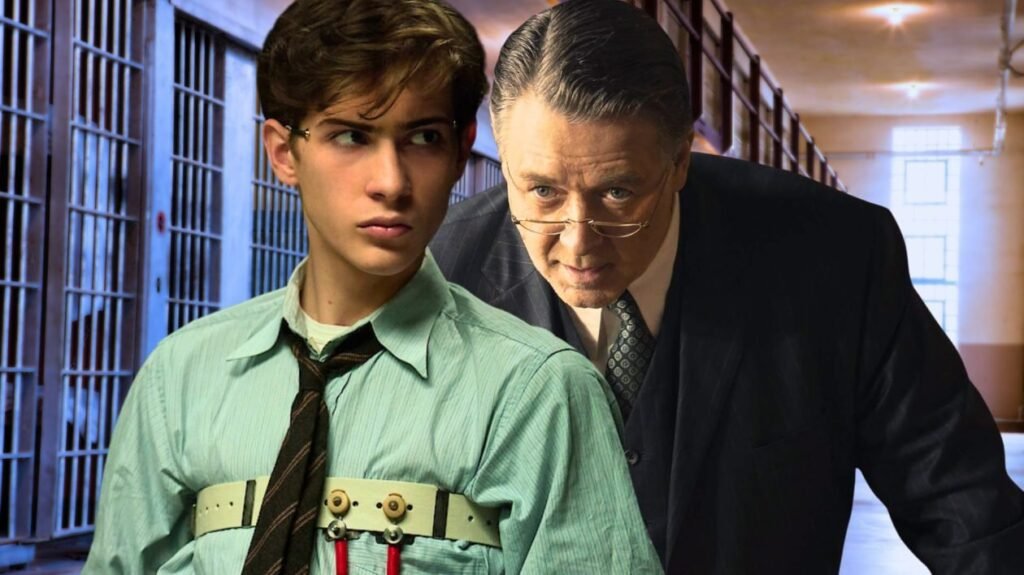
Courteney Cox’s Unlikely Second Act: How a Hotel Lunch Counter Led to ‘Evil Genius’
Sitting at her favorite corner spot at the Beverly Hills Hotel counter, Courteney Cox happened to run into filmmaker Barbara Schroeder. That chance encounter turned into an eight-year obsession, as Cox revealed in an interview with The Hollywood Reporter. Schroeder had directed Evil Genius, the gripping documentary about the infamous 2003 “pizza bomber” bank heist in Erie, Pennsylvania. When she mentioned that the narrative film rights were available, Cox immediately claimed the project. Through production delays, industry strikes, and the challenges of independent filmmaking, she remained committed to a story that could move beyond the sensationalized headlines surrounding the real-life crime and focus instead on its deeply unsettling, tragic human core.
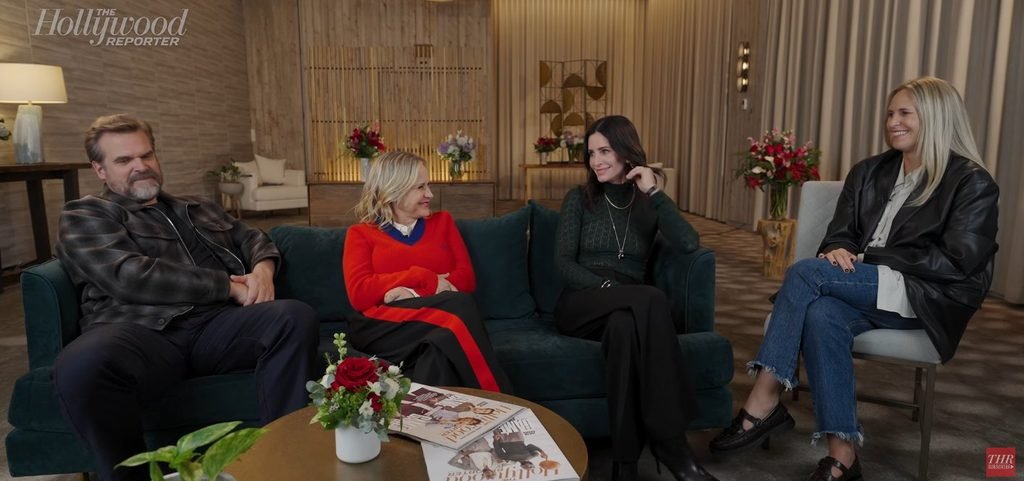
Premiering as a feature narrative at the Toronto International Film Festival, Evil Genius marks a major milestone for Cox behind the camera. The film also brings together a powerhouse cast led by David Harbour and Patricia Arquette, both of whom undergo striking transformations to capture the essence of the real-life figures behind the bizarre crime.
For Harbour, portraying the complex central figure meant leaning into stark paradoxes. He balanced an imposing physical presence, enhanced by custom-fitted Carhartt overalls, with soft, surprisingly delicate mannerisms that underscored the character’s dark intellect. Arquette, known for her extraordinary range across film and television, took a similarly grounded approach. Rather than relying on heavy prosthetics or hyper-literal mimicry, both actors focused on capturing the interior lives and emotional underpinnings of their roles.
The project also became something of a family affair. Cox’s daughter, Coco, and Arquette’s daughter, Harlow, both make appearances in the film, extending a multi-generational connection to acting that runs through their respective families.

That collaborative spirit extended to the way the characters were developed. Rather than stepping into a rigid, pre-packaged vision, Harbour and Arquette worked closely with Cox to shape their characters’ distinct looks and psychological profiles, allowing the performances to evolve alongside the production.
For Cox, bringing Evil Genius to TIFF represents the payoff of years of persistence. What began with an unexpected conversation at a hotel counter eventually became a feature film and a significant step forward in her work behind the camera. The project also reflects a deliberate approach to a story that could easily have been reduced to true-crime spectacle, instead steering it toward a more nuanced exploration of character, motive, and human complexity.