Notting Hill: The Door Was Never Supposed to Be Famous
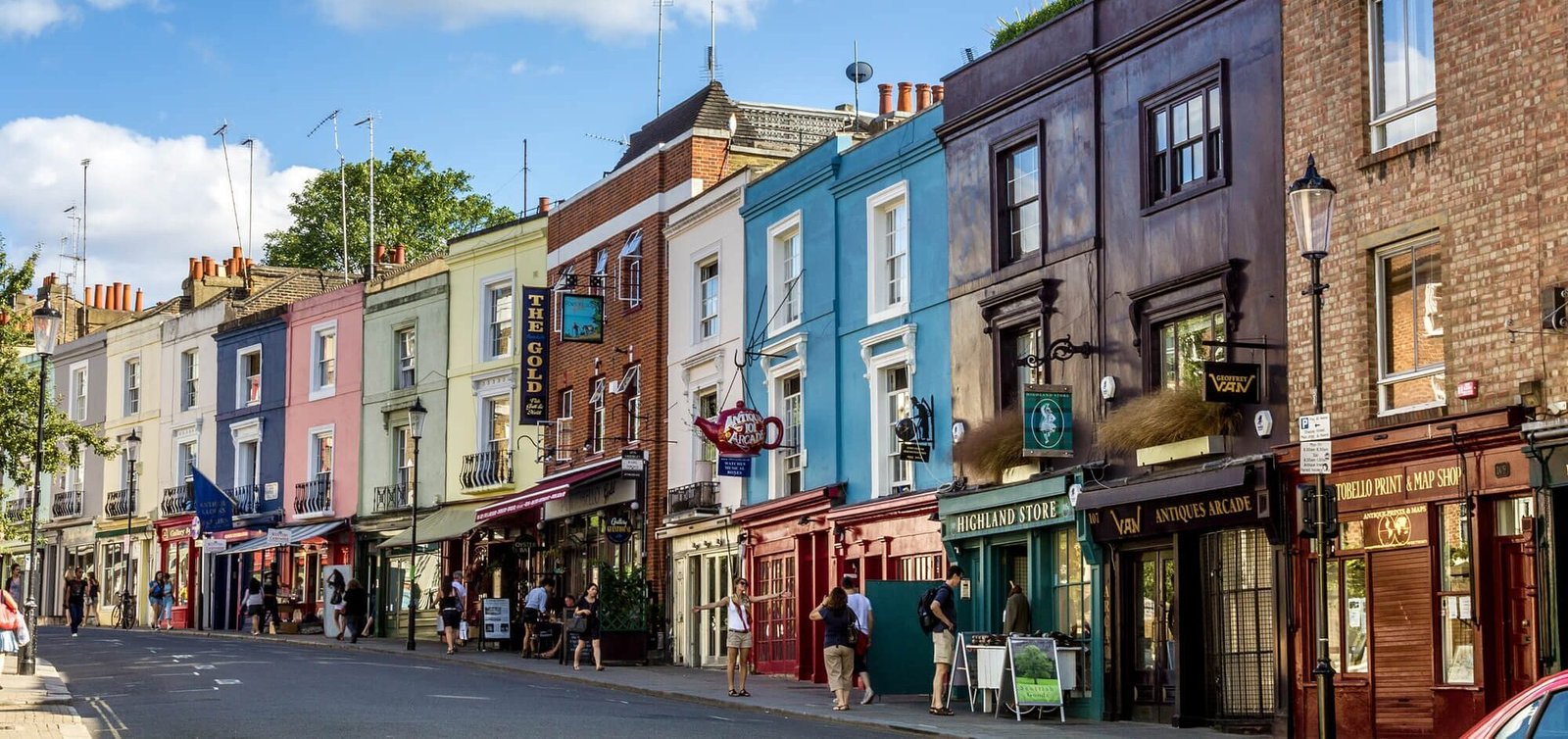
There's a particular kind of London street where nothing much is supposed to happen — pastel houses, a market winding down for the evening, someone's bicycle leaned against a railing. And then a film comes along and quietly claims it. That's more or less what happened to a stretch of Westbourne Park Road in the late 1990s, when a production designer went out scouting locations for a new romantic comedy and came back two days later with a single Polaroid of a house with a bright blue front door.
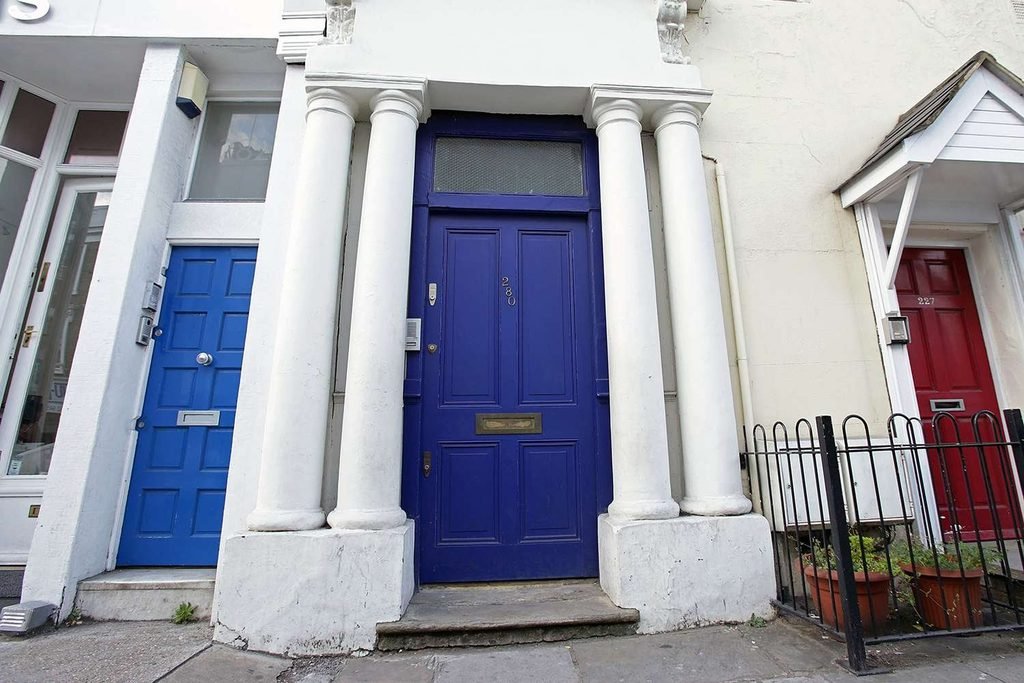
The writer, sitting across the table, looked at the photo and said, essentially: very funny. That's my house.
It wasn't a joke. The designer hadn't recognized the address. He'd simply picked the best-looking blue door on the best-looking street in the neighborhood, and it happened to belong to Richard Curtis, the man writing the movie. Curtis let it stay in the script anyway — only the exterior, never the inside — and that accidental front door became, within a year, one of the most photographed doorways in the world. Strangers signed their names across it in marker. Eventually it had to be taken off its hinges and auctioned for charity, replaced by a door that spent a while painted black, just to see if the crowds would go away. They didn't. It's blue again now.
That's the kind of movie this is. Notting Hill, released in Britain in May 1999, is a film that leaked out of its own frame and into real life almost immediately — and it's worth remembering not just for what happens on screen, but for how strangely, specifically alive it became the moment it left the studio.
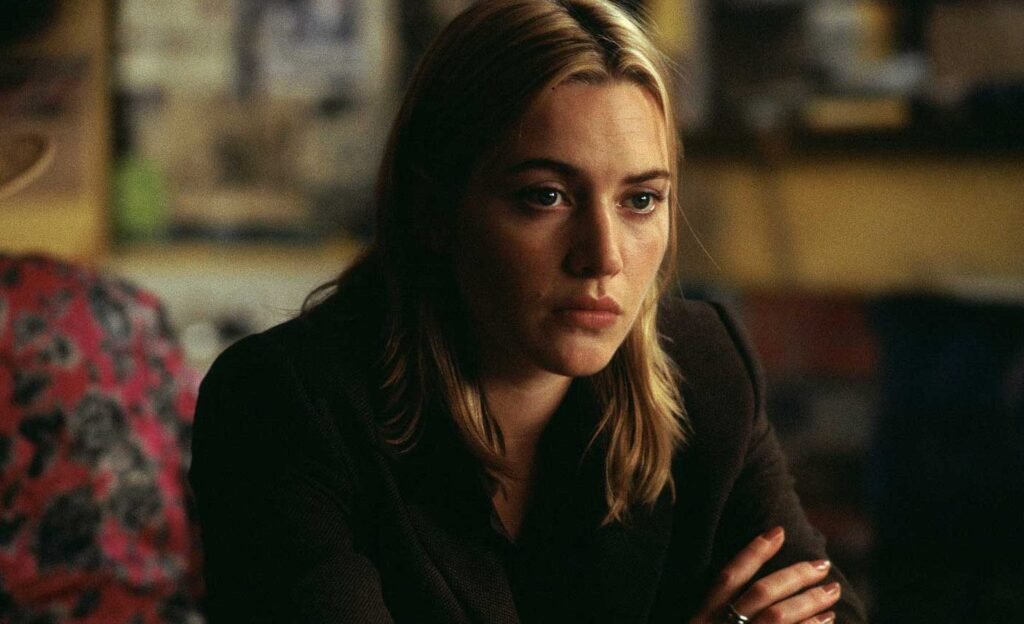
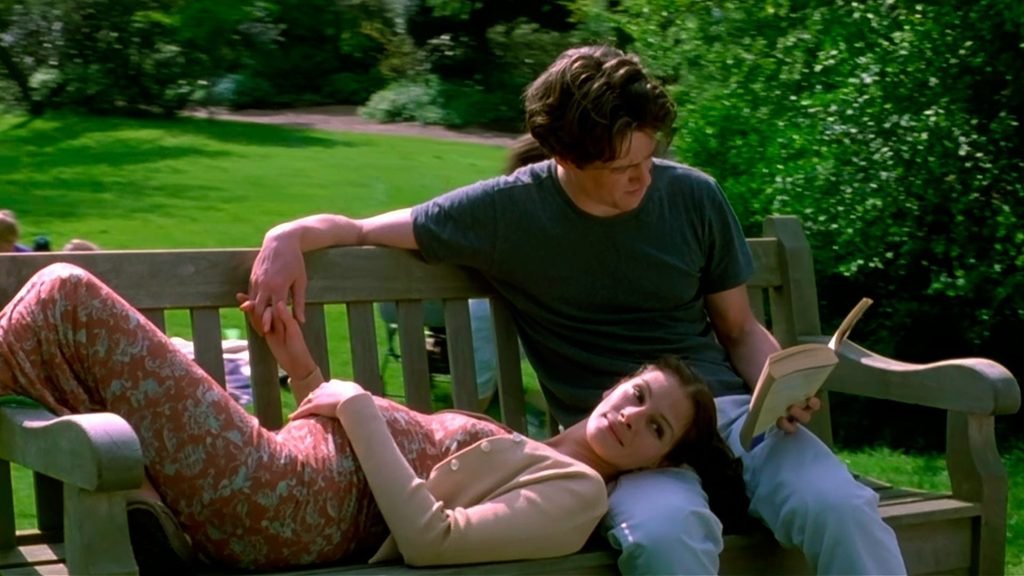
If you've never seen it: the premise is disarmingly small. William Thacker, played by Hugh Grant, runs a failing travel bookshop in Notting Hill and is quietly getting over a divorce. One ordinary afternoon, the most famous film actress on the planet — Anna Scott, played by Julia Roberts — walks into his shop. Minutes later, on the street outside, he spills orange juice down her front and, mortified, offers her his flat around the corner to get changed. She goes. What follows is Richard Curtis doing what Richard Curtis does best: a love story that keeps almost happening, getting interrupted by fame, by tabloids, by a chaotic circle of Will's friends, by the sheer improbability of the thing, before landing — eventually, on a park bench, with a woman who is pregnant and just wants to sit and read — somewhere unbearably tender.
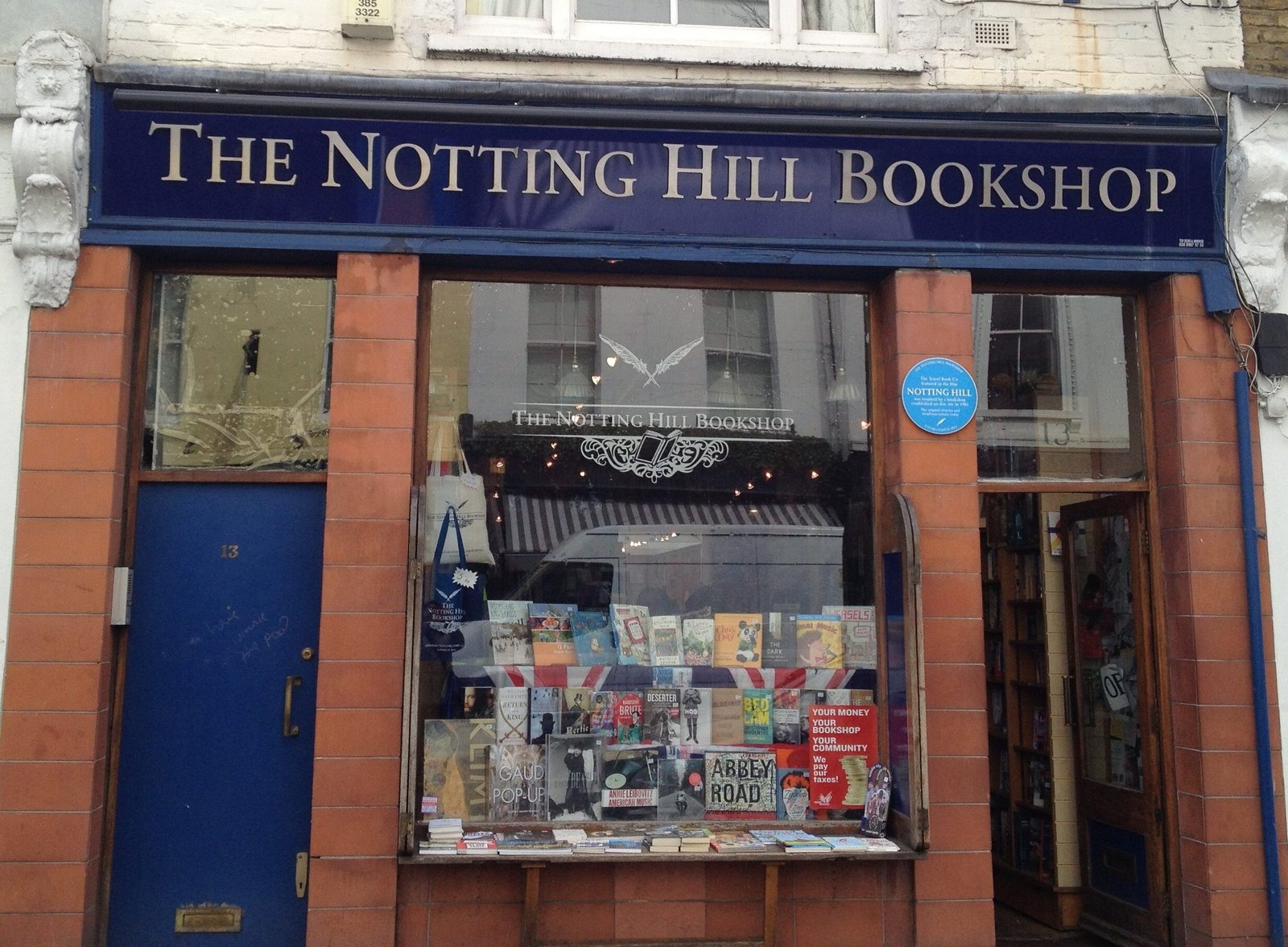
It's a small story about a very large problem: what happens when one person in a relationship is, structurally, unreachable. Anna isn't unreachable because she's cruel or cold. She's unreachable because she's famous, in a way the film treats less like glamour and more like a kind of exposure — a permanent, low-grade siege.
The best scene in the film isn't the love story at all; it's Anna, alone in Will's cluttered flat, describing what it's actually like to have your body and your face and your worth priced and photographed for a living, and asking, quietly, to just be somebody's girlfriend for a while. It's the moment the film stops being a fantasy about meeting a movie star and starts being about what fame actually costs the person living inside it.
Here's the detail that makes the film's own history feel like it's winking at itself: one of the last big set pieces is a premiere — Anna's premiere, held in Leicester Square, where Will finally does something reckless to get to her. To shoot it, the production needed to fill the real Empire cinema on Leicester Square with a crowd of extras, photographers and lights, recreating exactly the kind of premiere night the film itself was about to have. According to location records, permission for the square came through with barely a day's notice, after delays over safety concerns, and the crew had to conjure the whole spectacle — fans, paparazzi, floodlit crowd — almost overnight. A film about the strange machinery of movie premieres nearly didn't get to film its own.
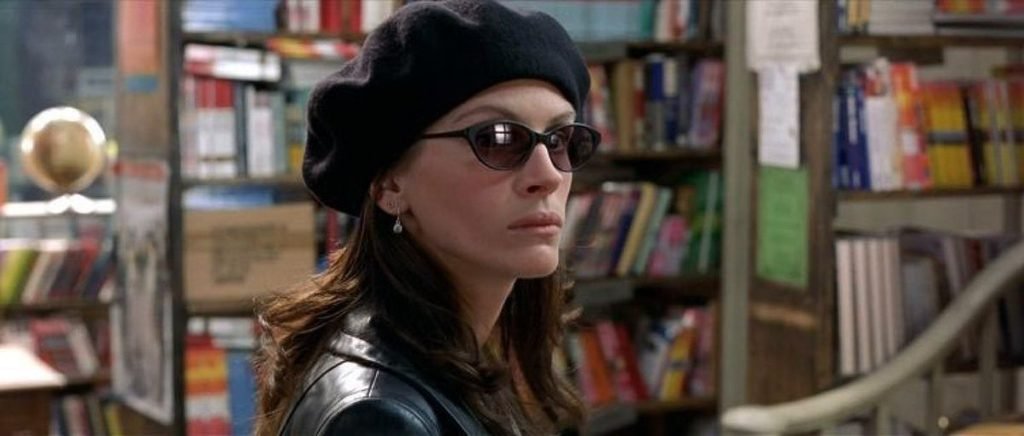
It didn't have to wait long to have the real thing. On the 27th of April, 1999, Notting Hill had its actual premiere at the Odeon in Leicester Square — a few hundred yards from where the fictional one had been staged. Julia Roberts arrived in red. Elizabeth Hurley was there. So was Rhys Ifans, who played Will's unfailingly chaotic Welsh flatmate Spike — the character responsible for one of the film's most quoted images, answering the door to a scrum of photographers wearing nothing but his underwear, mistaking a genuine tabloid siege for a prank. Weeks later the film opened in New York too, with Roberts on that carpet as well, and by the time the numbers were counted, Notting Hill had become the highest-grossing British film ever released up to that point — a record it would hold only until another film knocked it off, but that's how these things go.
What's easy to forget, watching it now as a tidy, beloved rom-com, is how unsettled the people who made it were by how closely it brushed against something real. The film opens with a rush of fabricated tabloid footage and premiere montage meant to establish Anna Scott as a bona fide, decades-deep movie star — and by Curtis's own account, when he and his collaborators actually assembled it using real premiere and paparazzi material shaped around Roberts, the effect wasn't cute. It was faintly alarming. They realized, watching it back, exactly what level of fame they were asking a story to hold. That unease is in the finished film, if you're looking for it — under the market scenes and the changing seasons and the birthday-party brownie roulette, there's a genuine nervousness about what it does to a person to be looked at by everyone, all the time.
None of this would matter if the small stuff didn't work, and the small stuff is why people still put this film on. It's Hugh Grant doing his stammering, apologetic thing better here than almost anywhere else in his career. It's the walk through Portobello Road that ages Will four seasons deep in about ninety seconds of screen time — coat, no coat, umbrella, sunshine — set to nothing but a song and the sound of a market going about its business. It's a press-conference-crashing declaration of love that ends not with a kiss but with the plainest, least poetic line in the whole script, the one everyone remembers even if they've forgotten everything else: a girl, standing in front of a boy, asking him to love her.
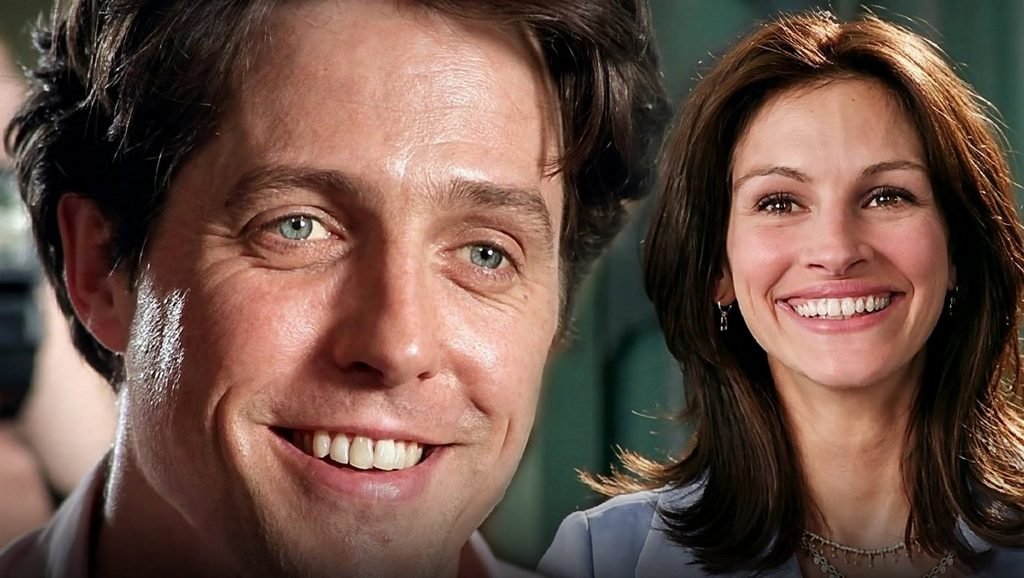
The real bookshop that inspired Will's — a travel-only shop tucked into Blenheim Crescent — closed its doors for good some years after the film made it a landmark, which is its own quiet, bittersweet footnote: the fictional shop outlived the real one that gave it its shelves. The blue door is still there, still getting photographed by people who've never read the script and never will, some of whom couldn't tell you who directed it. That's fine. That was always the film's real trick — it built something so specific to one imaginary corner of London that the corner became real, and the fiction became the thing people go looking for on holiday.
If you know it, this is your invitation to sit down with it again on a rainy evening and let the market walk and the brownie scene and that bench at the end do exactly what they've always done. If you don't, there's a door on a residential street in west London, painted a color it never should have been famous for, waiting to tell you why.