In the mid-1960s, something unusual began to happen in the letters arriving at the Marvel newsroom: readers didn’t just want another issue — they wanted to be a part of it. Stan Lee, always with a knack for a direct connection with the audience, realized he had something bigger than a comic book publisher on his hands: he had a nascent community, and he decided to deliberately nurture it.
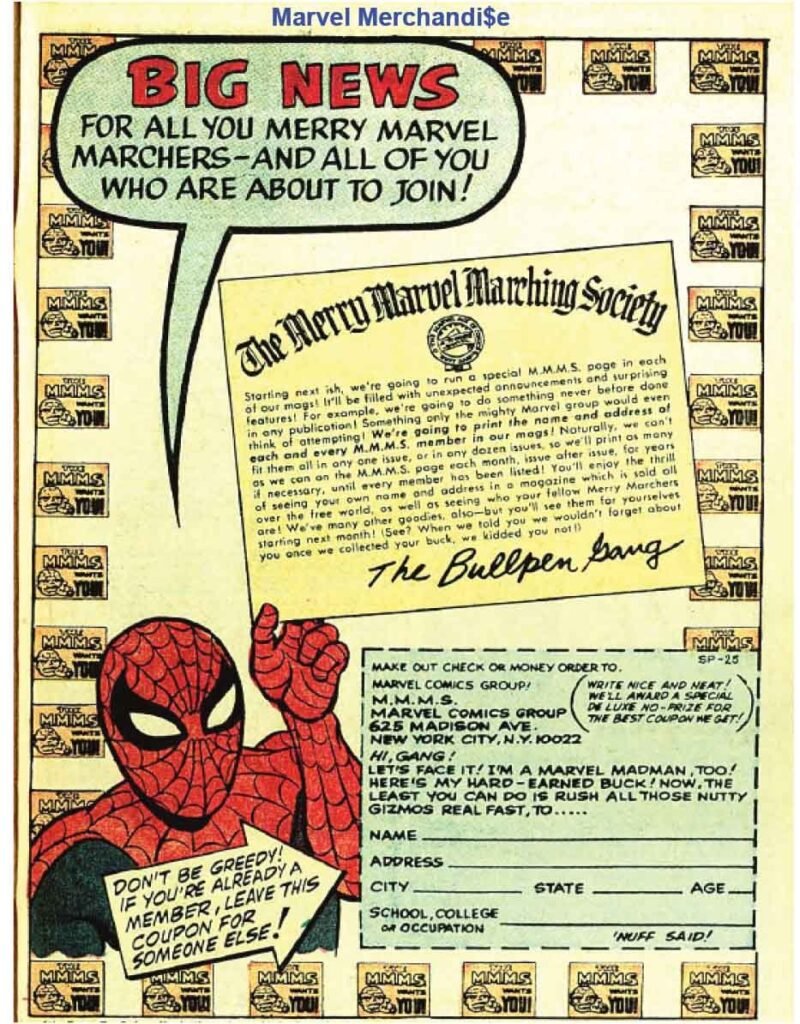
The idea was simple and, for its time, almost revolutionary: turn readers into members. The Merry Marvel Marching Society was born in 1965, an official fan club that distributed membership cards, vinyl records, and pins — and along with it, the “Bullpen Bulletins” section, where Stan Lee spoke directly to the audience about behind-the-scenes stories, upcoming releases, and inside jokes, as if everyone there were accomplices to the same secret.
Concurrently, the universe was gaining real depth: storylines began to deliberately cross paths, with Spider-Man appearing in the pages of the Avengers and the Fantastic Four sharing covers with Doctor Strange. In 1966, Black Panther debuted in the pages of Fantastic Four before later joining the Avengers, marking the arrival of the first Black superhero in mainstream comic books and expanding who could be a hero within that world. And across American college campuses, an unexpected audience — students who saw in Marvel’s flawed heroes a mirror of the decade’s own restlessness — adopted comic books as almost mandatory reading.
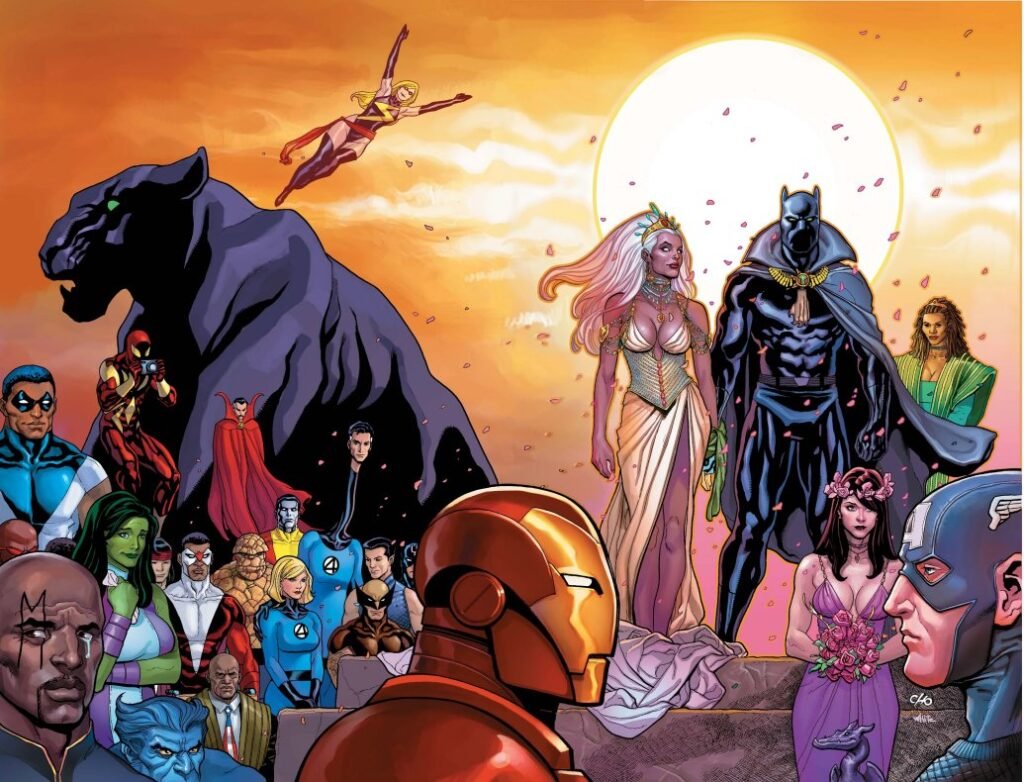
It was this combination of an organized community, an increasingly interconnected universe, and an audience growing far beyond children that caused Marvel to cease being just an emerging publisher and definitively become a culture.