SHARON STONE: The Story Behind the Legend You Thought You Knew
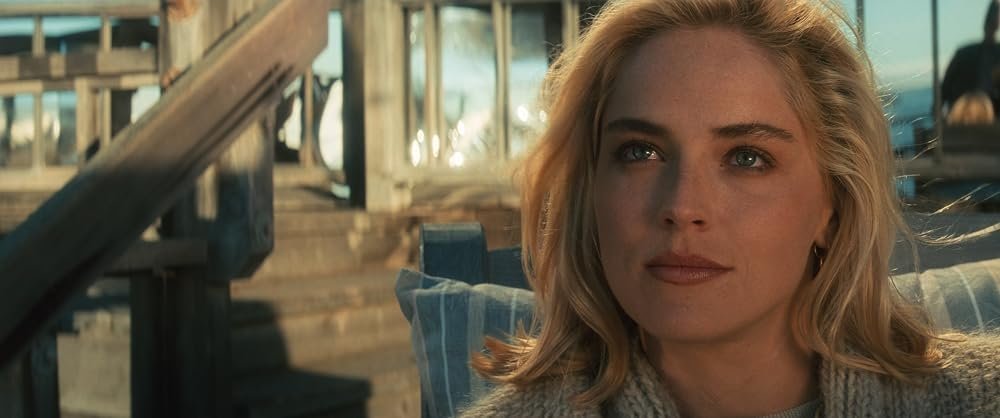
The scene most people remember isn't a line of dialogue. In Basic Instinct, Sharon Stone's Catherine Tramell sits in a police interrogation room, uncrosses her legs, and the movie becomes a permanent part of the culture. The moment made her one of the most photographed and desired women in the world, and it also narrowed her, in the eyes of an industry happy to sell the image but uneasy about the woman behind it. The story of Sharon Stone is largely the story of that gap, between the fantasy Hollywood built around her and the performer who kept trying to take control of it. She did not become a Movie Star by fitting the fantasy; she became one by surviving it.
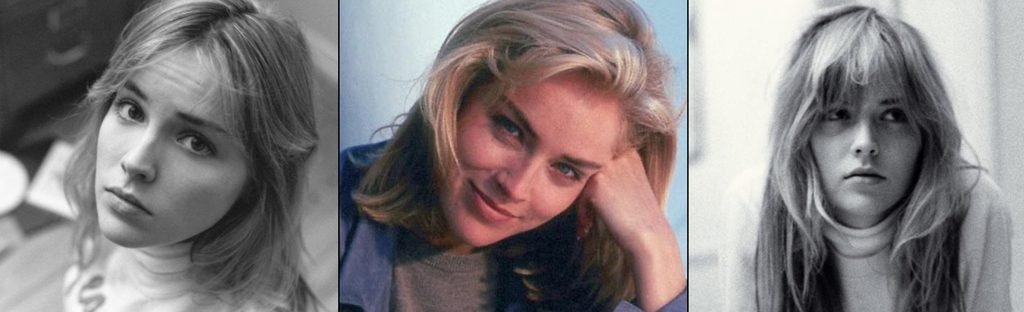
Nothing about her arrival suggested destiny. Sharon Vonne Stone was born on March 10, 1958, in Meadville, Pennsylvania, to a working-class family — her father a tool-and-die worker and factory man, her mother an accountant and homemaker. She was, by most accounts, an exceptional student, reported to have an IQ in the 150s, skipped ahead in school, and enrolled at fifteen at Edinboro State College on a writing scholarship to study creative writing and fine arts. She left before finishing, moved east, and was signed by the Ford modeling agency in 1977, living in Milan and Paris before deciding modeling was not the life she wanted.
Back in New York she stood in line to work as an extra in a Woody Allen film, and that was how the decade began.
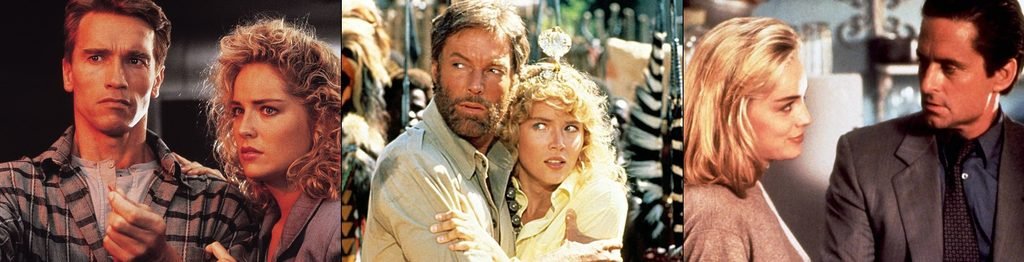
The 1980s were a long apprenticeship most biographies politely skip. Her first real speaking part came in Wes Craven's Deadly Blessing, and the years that followed are a blur of guest spots on Silver Spoons, Remington Steele, Magnum, P.I. and T.J. Hooker, thankless roles in Irreconcilable Differences and Police Academy 4, and the Indiana Jones imitations King Solomon's Mines and its sequel, which earned her an early Razzie nomination. She appeared in Steven Seagal's Above the Law, in Action Jackson, in the miniseries War and Remembrance. By 1990 she had been working for a decade and was still not a star, which is the part the "overnight sensation" version leaves out.
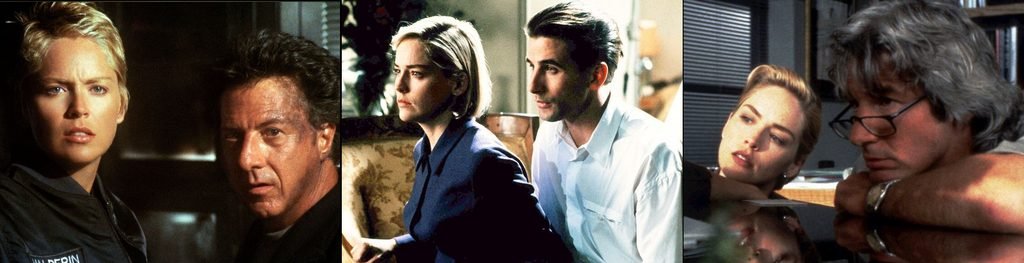
The shift came in Paul Verhoeven's Total Recall (1990), where she played Lori, the wife who turns out to be an assassin. Opposite Arnold Schwarzenegger she held the screen and made deception look intelligent rather than merely menacing. The film grossed about $261 million worldwide, and more importantly it put her in front of the director who would define her career. Verhoeven saw something other filmmakers had missed: a presence that could carry danger, glamour and calculation at once, and two years later he cast her in Basic Instinct.
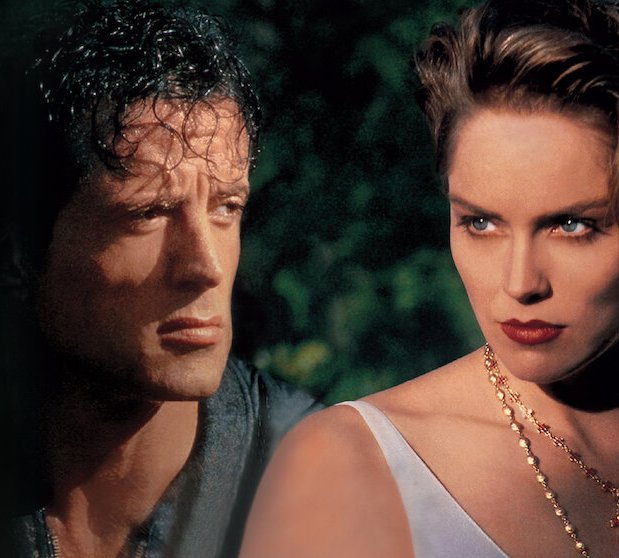
That film made her a global phenomenon and, almost immediately, a problem for the studio system. Catherine Tramell was the kind of role established actresses turned down, and Stone took it and owned it; the interrogation scene became one of the most analyzed and parodied images in cinema, and the movie grossed roughly $353 million worldwide. It also earned her a Golden Globe nomination, and a reputation the industry could not see past.
For all the success, she was paid about $500,000 while her co-star Michael Douglas was reportedly paid $14 million — a gap of some $13.5 million for two leads in the same film. Her response was characteristically practical: she negotiated to keep the wardrobe.
What followed was the trap. Sliver and The Specialist kept her in the erotic-thriller lane and did well enough at the box office, around $116 million and $170 million worldwide, while inviting the critics' contempt.
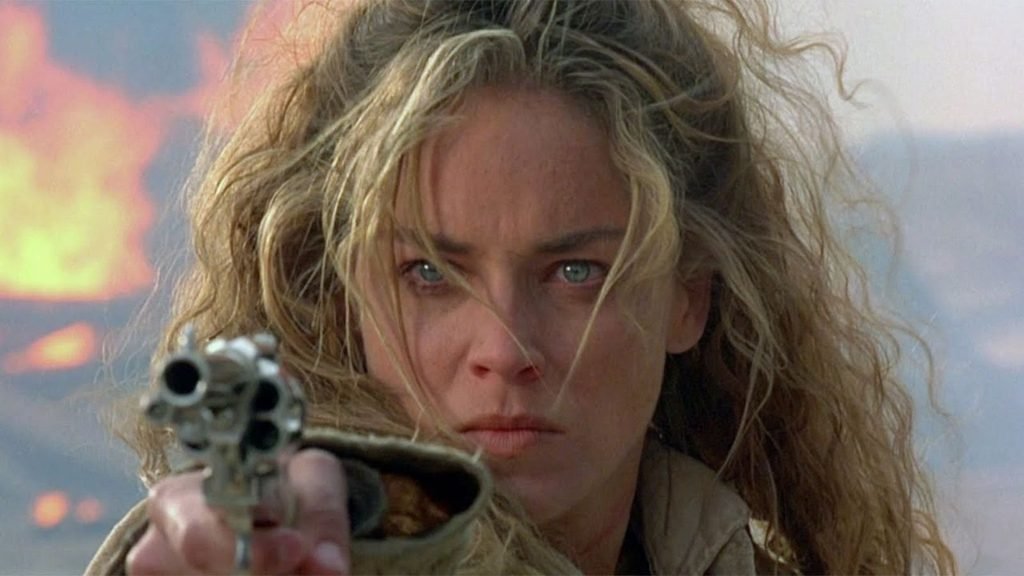
She was, in effect, punished for doing exactly what the movies had asked of her, and the parts she took to break out, like the death-row drama Last Dance, were the ones that failed commercially. Even her attempts at control were read as provocation: she produced and starred in The Quick and the Dead, determined to shape her own material rather than wait to be cast. The industry had made a sex symbol and then seemed affronted when she wanted to be something more.
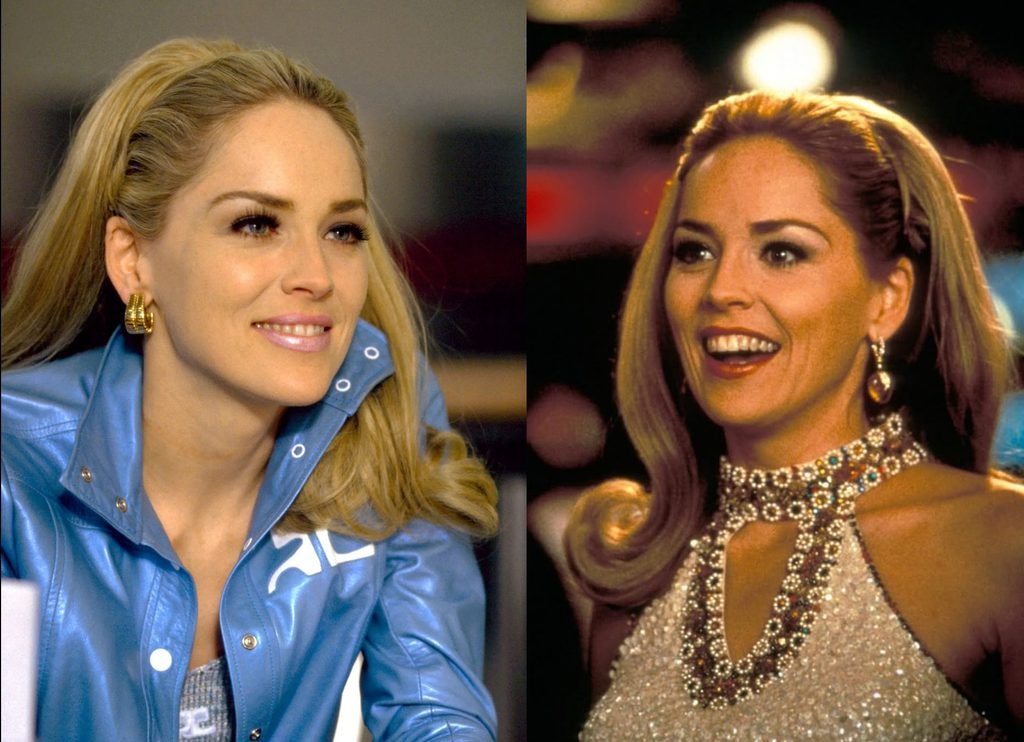
The answer to that reduction was Casino (1995). As Ginger McKenna, the trophy wife who spirals through Las Vegas, Robert De Niro's money and her own self-destruction, Stone turned spectacle into tragedy, and Martin Scorsese gave her a role with real weight.
She won the Golden Globe for Best Actress in a Drama and earned her only Academy Award nomination — recognition that had eluded her for the earlier, flashier work. It was the clearest possible argument that the performer behind the image could carry a serious film, and it remains the performance that best explains what she was always capable of.
If one gesture captured her attitude toward the machinery around her, it came at the 1996 Oscars. When the gowns she had planned to wear were lost in a delivery accident, she improvised, wearing a simple black Gap shirt with a designer skirt and jacket — and the image became more memorable than most of the couture that night. It was playful and defiant at once, a refusal to treat the red carpet as sacred. The same instinct ran through her whole career: she kept insisting on her own terms, in a business that preferred its leading ladies agreeable.
Then, in September 2001, the terms changed without her consent. Stone suffered a stroke caused by a vertebral artery dissection that produced a subarachnoid hemorrhage, a near-death event she would later describe in harrowing detail. She lost roughly eighteen percent of her body mass in nine days, spent years rebuilding her health, and later said it took about seven years to feel she had recovered and regained her footing. In her 2021 memoir, The Beauty of Living Twice, she revealed the crisis also cost her around $18 million in savings, because she was too incapacitated to manage her own finances. Hollywood, she has said, kept going without her and treated her differently when she came back.
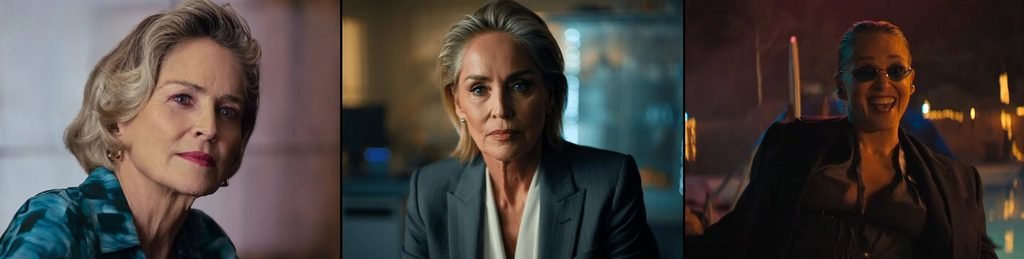
The second act she built was quieter but genuinely impressive. She won a Primetime Emmy in 2004 for a guest arc on The Practice, playing an attorney who believes she can hear God, and spent the following years moving between television and independent film. She worked with Jim Jarmusch on Broken Flowers, appeared in Steven Soderbergh's interactive Mosaic, played a memorably cruel villain in Ryan Murphy's Ratched, and turned up in The Flight Attendant and Better Things. Alongside mainstream missteps like Basic Instinct 2, she kept choosing character work over the protection of her old image. Whatever the industry had decided she was, she kept auditioning to be something else.
Off screen, that insistence took a different form. Stone became one of the most visible fundraisers in the fight against AIDS, serving as global campaign chair for amfAR and helping raise hundreds of millions of dollars for research, work that earned her the Peace Summit Award from the World Summit of Nobel Peace Laureates. She has spoken bluntly about the pay gap, revealing that studios kept offering her the same $500,000 baseline for years, and that she once turned down a $100 million film because an unknown male lead was offered millions while she was offered a fraction of it. Her activism and her candor are of a piece: both are refusals to accept the terms she was handed.
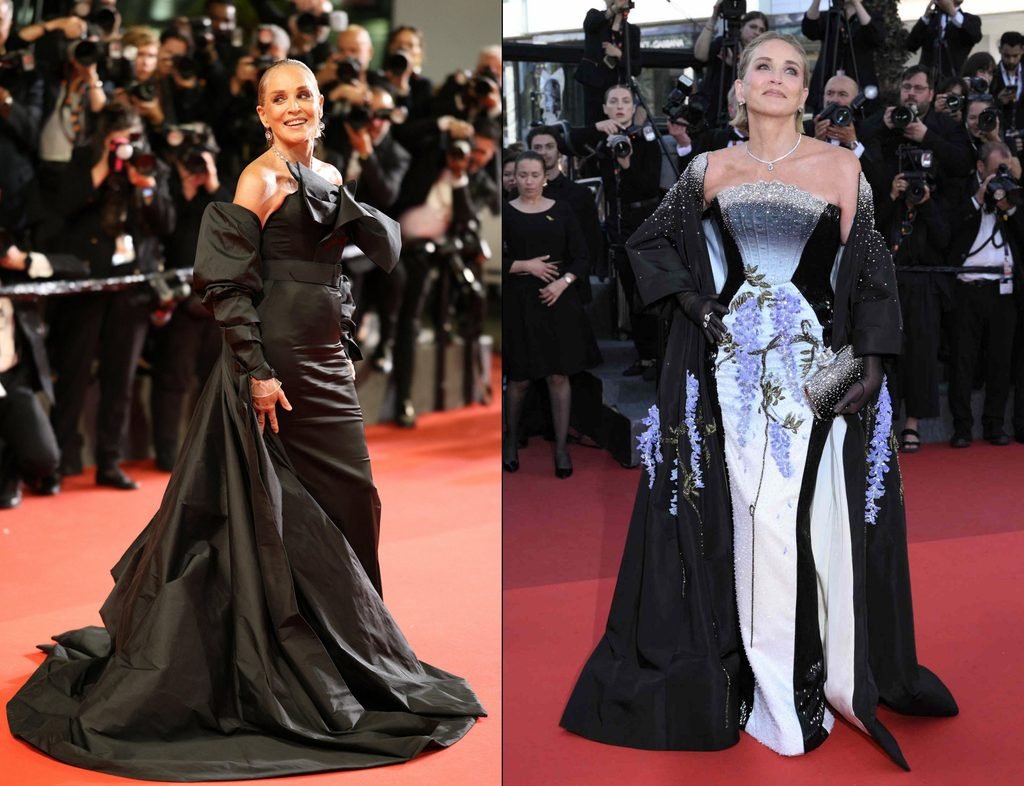
So who is Sharon Stone, really? Not simply the woman from the interrogation scene, and not merely a cautionary tale about what Hollywood does to its sex symbols. She is a performer who spent a decade earning her way in, became famous for an image she did not fully control, and then spent the rest of her career trying to take that control back — in her roles, in her salary negotiations, in her recovery, and in a memoir that refused to flatter anyone, including the industry that made her. She was paid a fraction of her co-star, reduced to a fantasy and nearly erased by a stroke, and she is still working, still talking, still refusing the version of herself that sells most easily. The leg-cross made her a Movie Star; the decades after it are the reason she remains one.