Two Hours Living in Gotham

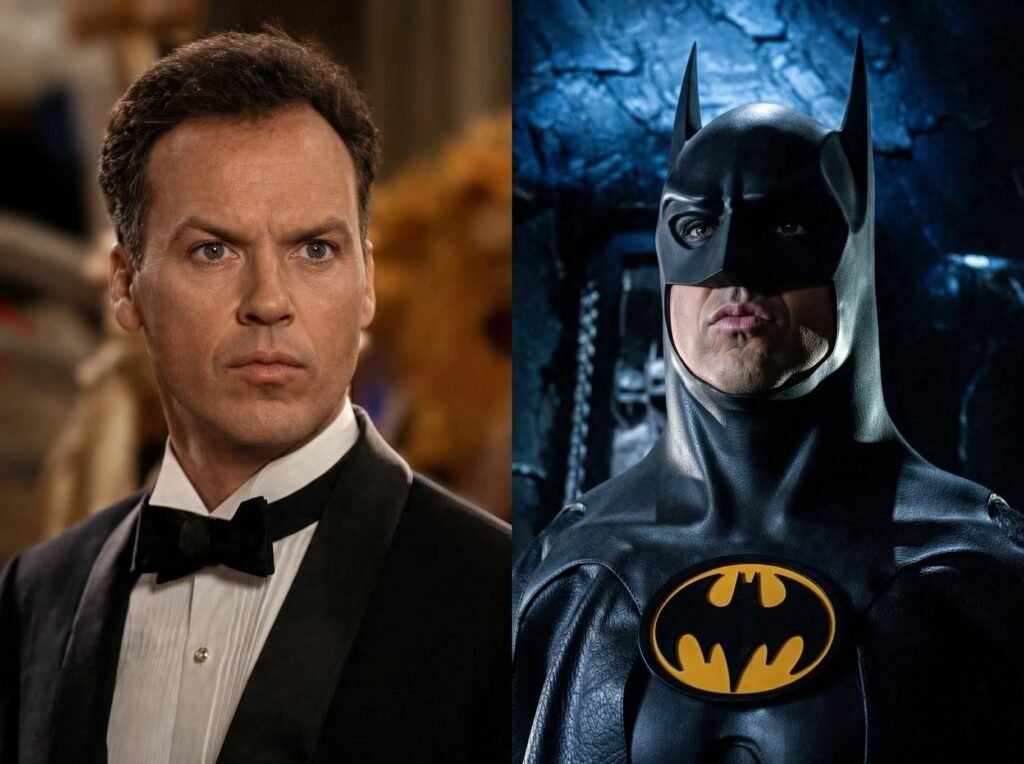
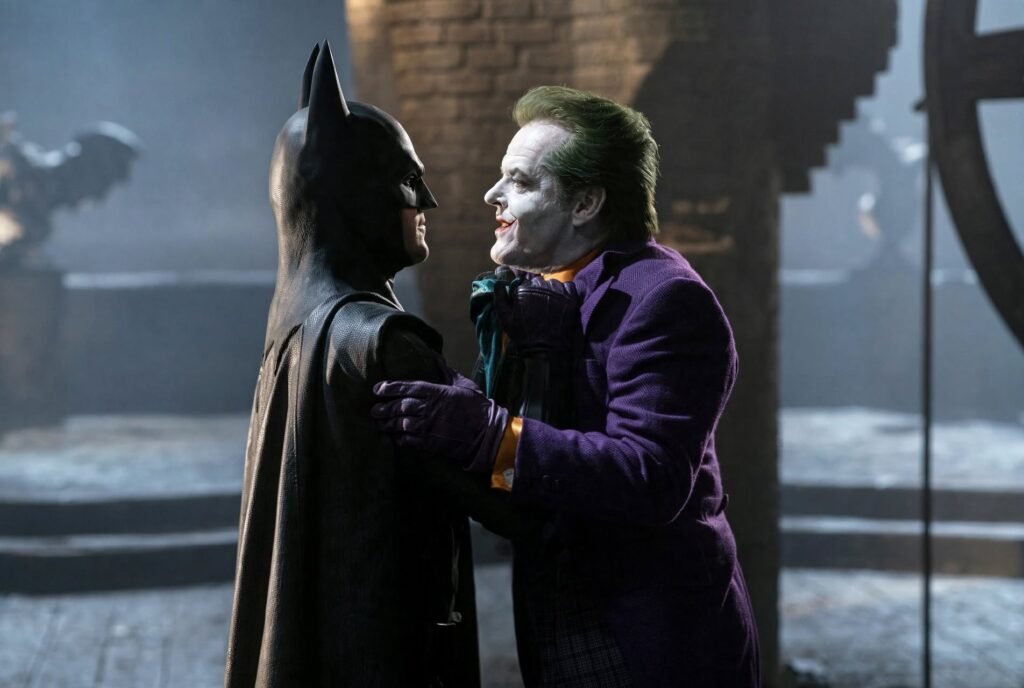
Batman (1989), Tim Burton's film, is one we remember by its temperature. Its darkness is not an absence of light: it is matter. Gotham arrives with no one introducing it — and without apologizing for it. Production designer Anton Furst spoke about the project like someone describing a place that had always existed: "a New York with no building codes for three hundred years," factories stacked on top of residential buildings, and an urban-planning rule turned upside down — where New York set back its skyscrapers to let light into the streets, Gotham pushed them into the block, "so that you'd have oppressive canyons." The film's cathedral was, in his words, "a Gaudí skyscraper with elements of a Hitchcock hill house." The Flugelheim Museum, an industrial joke at the Guggenheim. None of this comes explained. The city is there when the camera arrives — just like the hero himself: Bruce Wayne gets no origin scene, no mythology lesson. The story begins with the Batman already in operation, and when he finally says what everyone had been waiting to hear, he says only: "I'm Batman."
And yet, in the summer of 1989, an entire country stood outside that shadow. Since the previous Christmas, movie theaters across the United States had been running a thirty-second commercial for the film. "You can't turn on a network without seeing Batman commercials, interviews and clips," Providence Journal editor Jack Major told the Los Angeles Times on June 18. Maggie Thompson, co-editor of the Comic Buyer's Guide, summed up the mood with a comparison that already sounds like a relic: "Remember the smiling faces and the hula hoops? Batman is a hula hoop."
But the memory that opens that summer is smaller and more detailed: a Friday night, June 16, 1989, on the sidewalks of Westwood, in west Los Angeles. The premiere would be on Monday the 19th. And people were already in line.
Richard Baltin, 32, went to the theaters at 3 a.m. on Saturday, after a party at his house, because he had seen people waiting since the night before. "I had to sleep somewhere," he told the Times. "I might as well sleep in line." And right after, like someone excusing himself: "I'm not really a hardcore Batman fan. I came because I think it's going to be one hell of a movie." Prince's music — the film's soundtrack — was blasting through the streets of Westwood as he spoke. "It started as a pajama party," Baltin said, "and turned into a block party."
On Monday, two theaters became a set. The entrance to the Bruin was rebuilt as the mouth of the Batcave; across the street, the Mann Village got a six-meter cutout of Batman; the bat symbol showed up even on the spotlights. According to the Times, more than 8,000 people took to the streets or climbed onto rooftops to watch the stars' cars arrive. A thousand audience members got in free — some of them in line since that Friday.
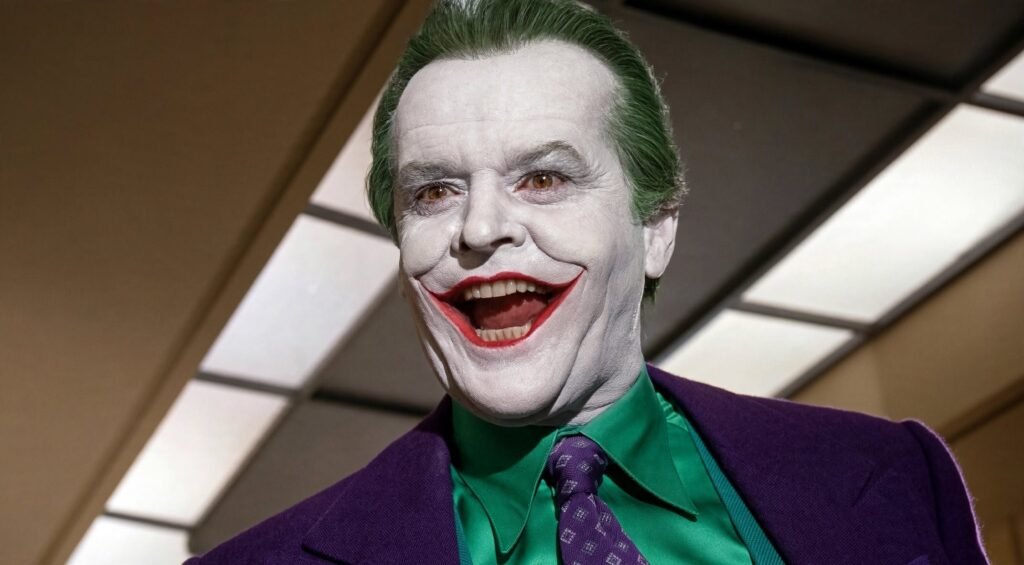
That was where John Ryan, 22, waited with his face painted white and his hair dyed green: a sidewalk Joker, in line since 7 p.m. on Friday. Someone on the street gave him money, thinking he was homeless; when he found out the guy was a Batman fan, he came back and asked for the money back. "We gave it back." Ryan hadn't seen the film yet — and told the paper what he expected from it: "It's a different Batman, with a darker attitude." The audience was already speaking the film's language before it arrived.
At 9 p.m., Nicholson still hadn't appeared. "Where's Jack? Where's Jack?" the crowd chanted. The studio scheduled a second screening after midnight — and some people cheered. Around them, restaurants tallied the damage in their own way: the Johnny Rockets diner feared running out of food; the Yogurt Place on Westwood Boulevard was selling "two or three times more than on a normal day." Even the seats became a complaint: audience assignments were raffled off, and not always to the people who had waited for days.
In the days that followed, it stopped being just a line in Westwood. At Golden Apple Comics on Melrose Avenue, owner Bill Liebowitz was selling 36 different Batman T-shirts; in six days he sold out nine cases — almost 7,000 packs — of stickers, and hired a security guard and doubled his staff on weekends. There was also the detail no marketing plan can fabricate: since May, more than 1,200 six-foot-tall Batman posters had been stolen from the frames of the New York subway and from bus shelters in Los Angeles, San Francisco, Chicago and St. Louis, Missouri. "This is a first," said Doreen Roberts of Gannett Transit. "Posters have been stolen before. But never like this. This is unheard of."
On Thursday the 22nd, there were 1,219 preview screenings around the country. On Friday, June 23, it opened in 2,194 theaters. The Los Angeles Times of the 27th recorded a weekend record: $42.7 million, more than $13 million above what Ghostbusters II had done the week before. Reviews largely divided, audiences still lining up the same way: sidewalk campsites, ticket scalping, even a fight at Mann's Chinese, with an arrest. And the same country that had sent 50,000 letters of protest to Warner against Michael Keaton in the suit lined up anyway. In one theater, before the curtain went up, the audience did the wave — that thing from baseball stadiums and rock concerts. Barry Reardon, Warner's head of distribution, tried to name what he was seeing: "This has become a phenomenon. It's past the stage of being a movie. It's become an event."
Outside the Chinese, Joel Salvatierra, 12, was proud of having seen the sneak preview before everyone else: "I wanted to tell all my friends I saw it before them." And Jennifer Chlebek, 23, said on her way out the words every distributor dreams of hearing: "I'm going to see it again. There are no words to describe it. I wish Batman were real. I want to live in Gotham City."

This is where the line becomes the film. Because what that crowd wanted to live in was the city Furst built in three months at Pinewood Studios in England — a 95-acre set closed to everyone, where rented helicopters tried to spy from above and the police were called when two reels of film (about 20 minutes) were copied in a pirated-video attempt. Burton described the project like someone describing a continent: "Gotham is a bit of a caricature of New York, a timeless American city... I see the sets as an extension of the characters" — and finished, smiling, the whole formula: "As if hell had burst through the sidewalks and just kept growing."
Hell had concrete form on screen: the Joker dancing through the museum amid the works he had just vandalized, with Prince on the sound system; green gas balloons bursting over the main street while 500 extras ran; the Batwing, with its sickle-shaped wings in the shape of the bat symbol itself, striking the steps of the cathedral. And the Batmobile, built to carry "all the intimidation that comes off the image of Batman." On set, Burton and Keaton were still trying to figure out how that man should move: "We'd say 'he has to walk slowly' and it looked ridiculous... It's like children playing — this guy in a bat suit. We felt like children playing superhero — but with a lot of money."

Thinking it over, the most documented gesture of that summer is a wave — the one the audience did before the curtain went up. Before the first image. Before the first note of Danny Elfman's score. When the curtain finally did go up, what stood there was what the line had promised without knowing how to say it: a city of canyons and concrete darkness, a hero who doesn't explain who he is, the breath held all the way to the cathedral bell. And the girl who said "I want to live in Gotham City" wasn't praising the campaign. She was describing the film.
Two hours living in Gotham. That is why they started waiting on Friday.