The Breakfast Club’s Five Stars Shared a Stage for the First Time in 40 Years — and Most Fans Missed It
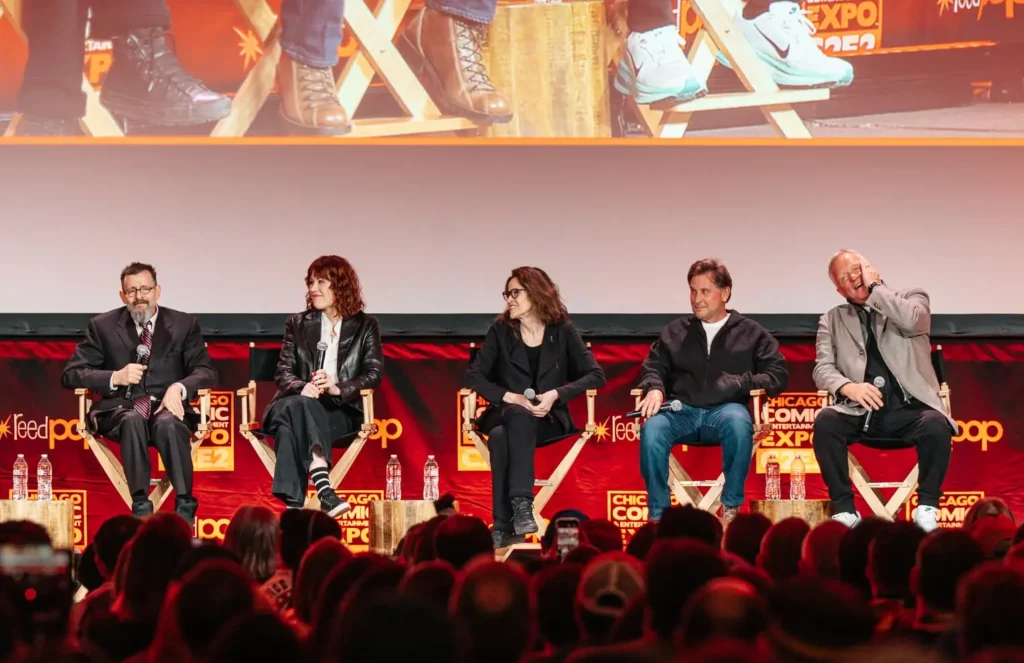
At C2E2 in Chicago, The Breakfast Club's cast, Ringwald, Judd Nelson, Ally Sheedy, Anthony Michael Hall and Emilio Estevez finally sat in the same room to talk about a movie they made in a suburban high school four decades ago.
A Saturday That Never Ended
The library is too quiet, and the clock on the wall is doing that thing where it moves without moving. Somewhere a pencil taps. A girl in a pink sweater picks at a piece of sushi, a kid in a trench coat slouches a little lower, and a wrestler in a letter jacket stares at the ceiling like it owes him money. John Hughes built that room out of an actual suburban Chicago high school in 1984, on a budget the cast still describes as roughly a million dollars, and for a certain generation of Americans it never really closed. What almost nobody knew is that the five people who sat in it walked into a real room together last year — for the first time in about four decades.
The Reunion Nobody Told You About
It happened at C2E2, the Chicago Comic & Entertainment Expo, in front of a convention crowd rather than a network camera crew. Ringwald, Nelson, Sheedy, Hall and Estevez sat down for a panel about the film, and a moderator's question established the thing worth knowing: this was genuinely the first time all five of them had shared space in roughly 40 years. It wasn't a prime-time anniversary special or a studio-produced reunion; there's no trailer, no red carpet, no press tour. The evidence is a fan-shot video that has been making the rounds online, which is exactly why so many people who grew up on this movie found out about it late — or not at all.

No Cardboard Cutout Required
Ringwald opened by saying she felt "very emotional and moved to have us all together," then added the line that got the room: "This is the first time that Emilio has joined us. We don't have to use the cardboard cutout anymore." Estevez, the holdout, explained that he'd skipped every one of his own high school reunions, and that what finally brought him in was hearing secondhand that Ringwald had asked, "Does Emilio just not like us?" "That broke my heart," he said. Chicago mattered, the 40th anniversary mattered, and after four decades of group photos with a stand-in, he decided it was time. The room, by all accounts, lost it.
The Night Anthony Michael Hall Woke Up Fired
The best story of the afternoon belongs to a hotel in Century City, where Hughes gathered the cast for the first script read-through. Hall had spent the previous day having all four impacted wisdom teeth pulled; he was swollen, bleeding and on pain pills when his agent called to insist he show up, and the production sent a car because he couldn't drive. After the read, Hughes screened the first cut of Sixteen Candles for them. Hall made it maybe as far as the opening credits before passing out, and came to as the end titles rolled. He looked at Nelson, who told him, "I think you're getting fired." Hall believed him.

Four Hours of Film and One Brutal Verdict
Few fans know how close this movie came to being written off before anyone saw it. Hall and Estevez sat through an assembly of everything Hughes shot, cut together in sequence with no music, no color timing and no editing — "over four hours long," Hall said, "like being in detention." When it ended, Estevez leaned over and delivered a two-word review: "It's unreleasable." Hall asked whether they'd at least cut it and add music, and Estevez said no, then called him an idiot for asking. The person handed that footage was editor Dede Allen, whose credits include Dog Day Afternoon, Serpico and Reds — a fact the cast brought up with real reverence.
Partners, Not Employees
Ask this cast what Hughes actually gave them and the answer isn't nostalgia, it's labor conditions. "A lot of directors say they want partners, but they want slaves," Nelson said. "Hughes wanted partners" — the evidence being his standing instruction, "If it doesn't sound authentic, make adjustments," and the fact that the script supervisor retired after this film. Nelson also described the take where Hughes let the camera's 1,500-foot magazine run dry in the middle of Hall's stoned monologue rather than call cut, waiting two more minutes for a natural pause while the cast held their laughter off camera. "It's never happened since," he said. Ringwald, for her part, was clear-eyed about the trade: "We sacrifice a certain amount of grace for a name," she said, "and the older you get, you realize that's kind of a deal made with the devil."
Why It Still Lands at 15 and at 55
The film's machinery is simple and it hasn't rusted: five kids get labeled — a brain, an athlete, a basket case, a princess, a criminal — and spend a day discovering the labels were the least interesting thing about them. Ringwald watched it with her daughter when the girl was a little too young, later did a piece about the experience for This American Life, and says it changed how she parents; she watched it again with her 15-year-olds and reports they never once reached for their phones. Estevez was asked about the last shot, that fist raised in the empty field, and refused to over-explain it: "It's a gesture that means victory," he said, but "John leaves it open to what is victorious." Forty years on, Nelson still gets asked for the punchline to the joke Bender tells hanging from the library ceiling. He has never given it up.
Monday Always Comes
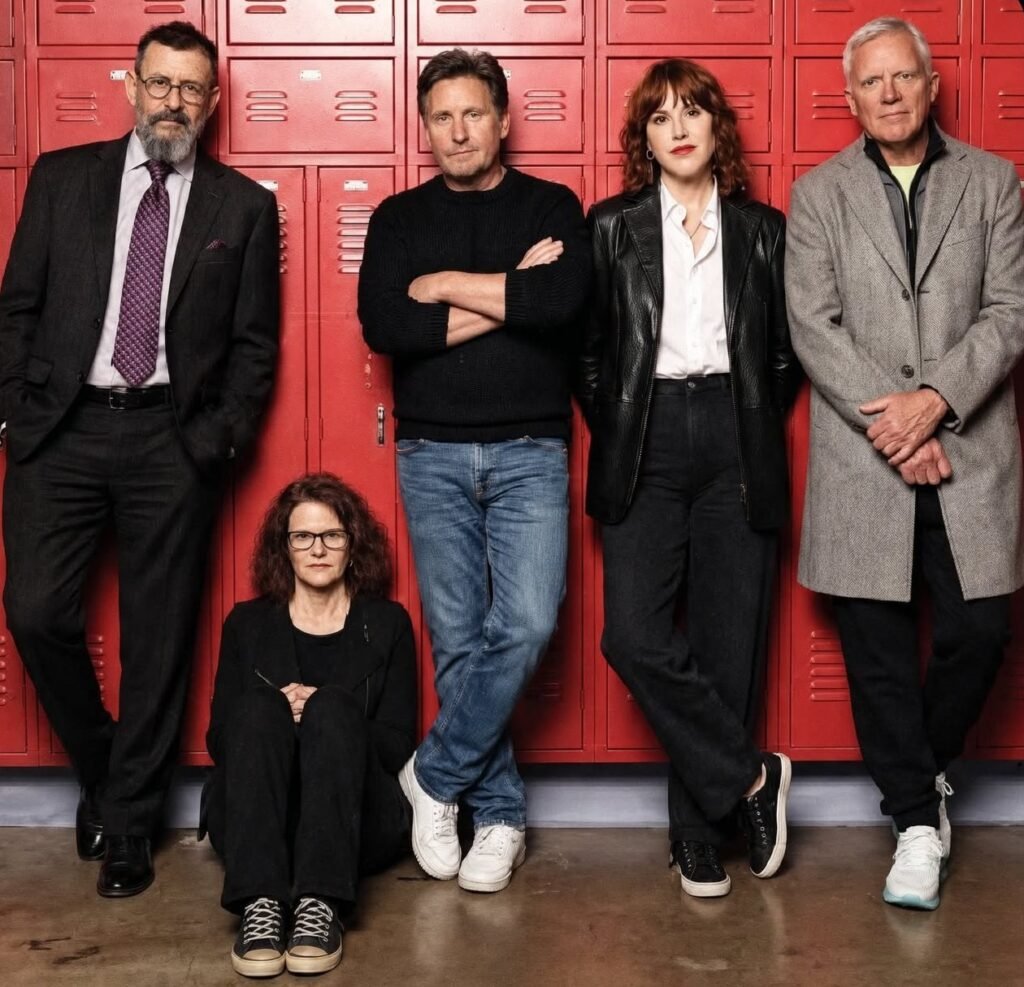
The panel ended the way the movie refuses to, with all five of them in the same frame and the clock still running. A fan asked them to finish the sentence "I'm most thankful for The Breakfast Club for—," and the answer that landed was simply "John Hughes," who died in 2009 and who never got to write the scene where these characters meet again as adults. That may be the real reason the film holds: it stops before Monday, so every viewer gets to decide what happens at school on the other side of the weekend. The full conversation is out there if you go looking for it, and the movie is easier to find than ever. Watch it once with someone who's never seen it, and see which character they pick.