The Beatles Movie That Refused to Show the Beatles
You get boots. A shadow. The backs of four heads in a service elevator. A hotel corridor with a door closing at the far end. That's the Beatles in I Wanna Hold Your Hand — the biggest band in the world, present in every frame and visible in almost none of them. Janet Maslin, writing in The New York Times, called it the film's trick: you never actually see the Beatles, but you never miss them either. By the time the screaming peaks, you'd swear you had.
She was right, and the reason is stranger than the effect. That restraint wasn't a stylistic flourish two young filmmakers talked themselves into. It was the price of getting the movie made at all.
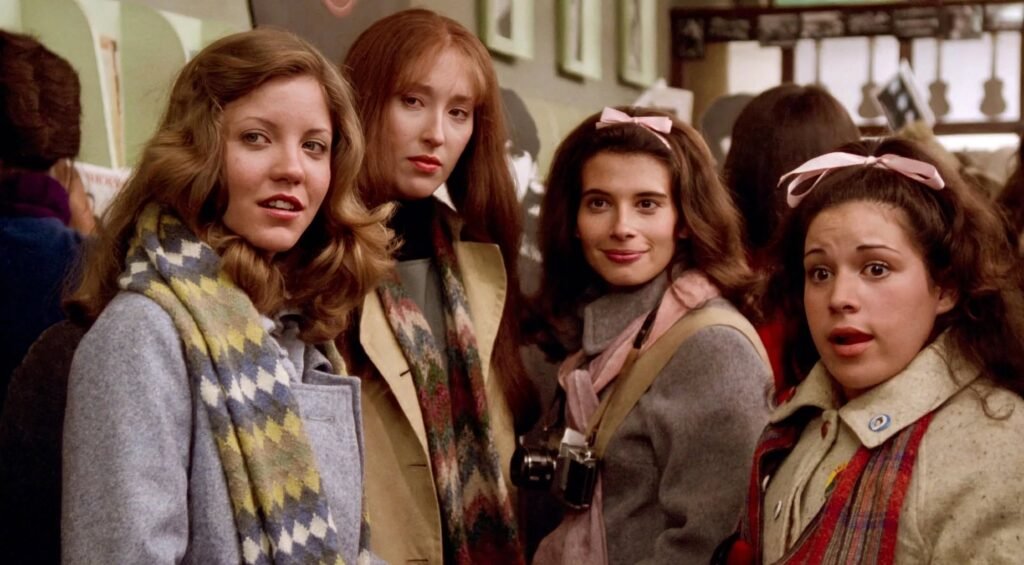
It started with a record
Bob Gale and Robert Zemeckis were in Gale's apartment one night in 1976 with an early Beatles album on the turntable, reading the liner notes. They hit a word neither of them had thought much about: Beatlemania. A decade after the fact, with a Broadway show about to revive the whole circus, the two of them started remembering how insane it had been — the crowds, the fainting, the police lines.
The idea arrived nearly whole: not a film about the Beatles, but a film about kids trying to get close to them. Their pitch was "American Graffiti meets Ben-Hur," and the logic behind it was that Ben-Hur never shows you Jesus's face either. It sounded like a clever formal trick.
It turned out to be a survival strategy.
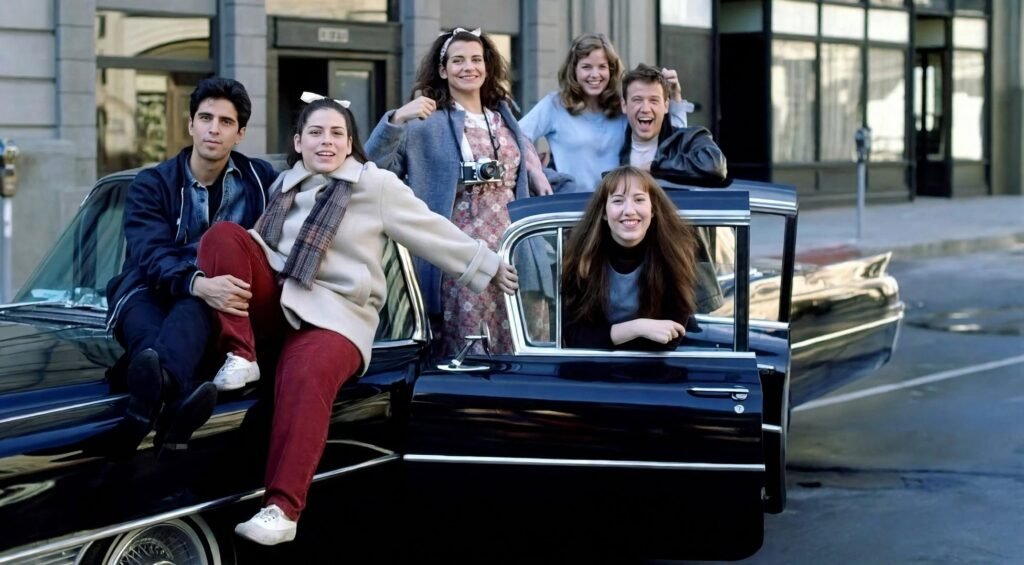
Nine months, four lawyers, and a title
Clearing the music took about nine months. Zemeckis has always insisted they used only material from the first two albums, everything up to February 1964, because accuracy mattered more than hits.
Warner Bros. passed. Steven Spielberg made a few calls that landed the project at Universal — and then Universal's own lawyers went to work. Gale says the legal department advised the studio not to make the film at all, for fear the Beatles would sue, which he believes was a first in the studio's history.
The title was a problem too. It was going to be Beatlemania until the Broadway show took the name; the studio rejected Beatles 4-Ever. And because the lawyers wanted proof the band would never appear, the filmmakers storyboarded every scene to demonstrate exactly how they'd keep the Beatles off camera. The film's famous discipline was, in part, a document filed in negotiation.
Building the Plaza in Burbank
They wanted the Plaza. They scouted it, because the Beatles had actually stayed there. The hotel's answer, as Gale tells it, was that it had survived the real thing once and once was enough. So the Plaza became a set on the Burbank backlot, with an extra wing added to make the proportions read correctly on camera.
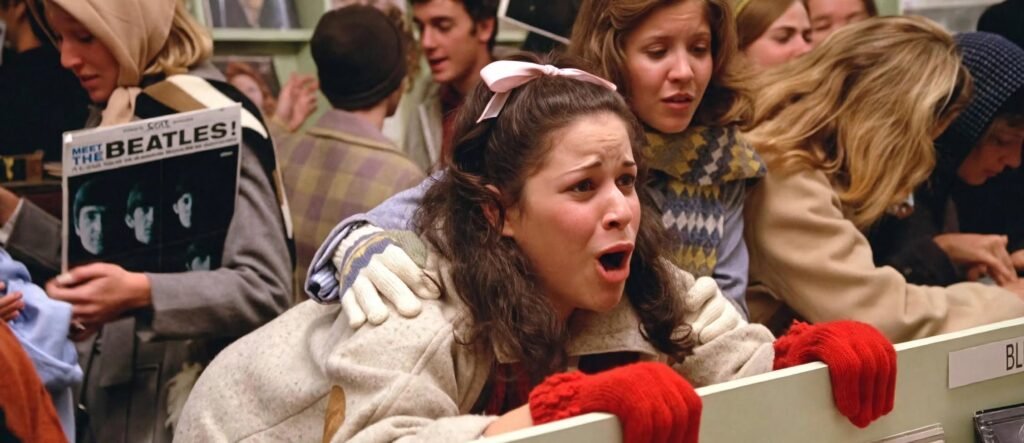
The crowd outside was its own production. The filmmakers recruited 500 extras between the ages of 13 and 17, and the kids brought their own heavy coats, mittens and scarves — February clothing worn in 80-degree weather, take after take.
The details got obsessive. Gale borrowed genuine Beatles talcum powder from a fan he'd met at a memorabilia convention, and the fan was furious about how much of it ended up on Eddie Deezen in the finished scene. Even the film's most outrageous line wasn't invented: a woman announcing she would marry John, and answering the reminder that John already had a wife by saying his wife could die, came from a real interview the writers found while researching.
The ending they had to shoot twice
Here is the part most people don't know. They filmed the entire Ed Sullivan climax with the camera pointed only at the audience — the crowd losing its mind, the music playing, not a single cut to the stage. That was the movie. It was screened for Universal president Sid Sheinberg, who told them it couldn't go out that way. By their account, he sent them back to shoot the band, joking that if the Beatles sued, at least he'd have them in one room. This was, Gale says, about two weeks before the film opened.
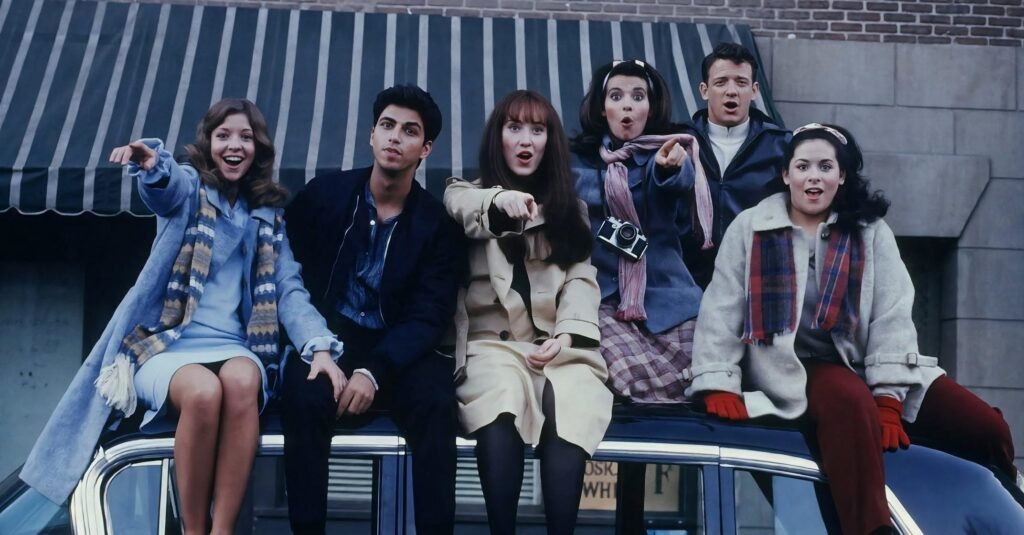
So they hired four Beatles fanatics and had them study the 1964 broadcast until they had every movement. Rich Correll, a former child actor from Leave It to Beaver, drilled them like a sergeant, and Zemeckis says the whole performance was shot in a single day. The camera sits where a television camera would sit, and the stage hums with the real broadcast playing on monitors. Zemeckis notes it was one of the first films to sync video playback to the camera's shutter, which is why you don't see the rolling bar that used to crawl across TV sets photographed on film.
That's why the moment feels like a glimpse rather than a reenactment. Two weeks of panic produced the only honest-looking footage of the Beatles in the movie.
The crowd is the cast
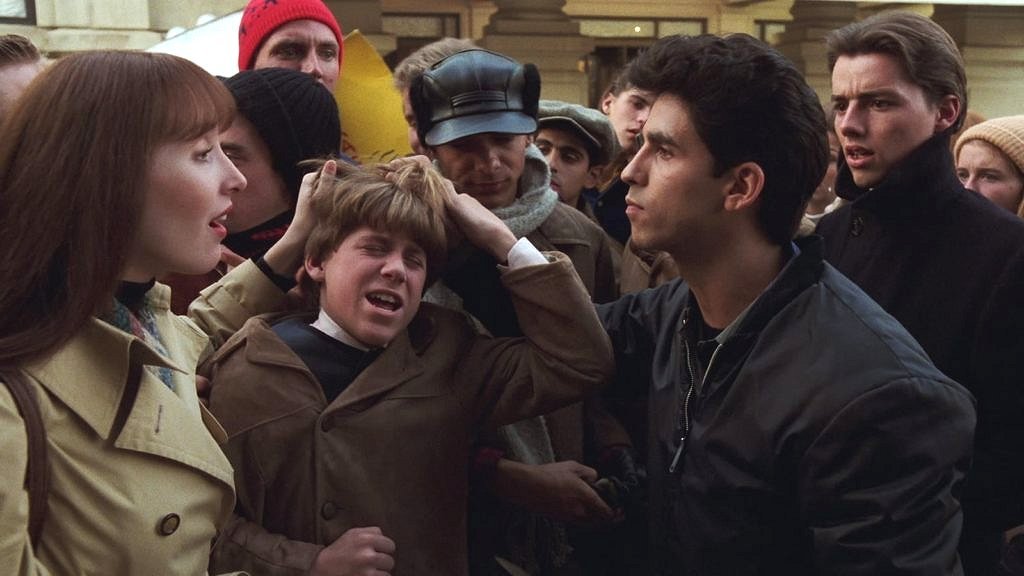
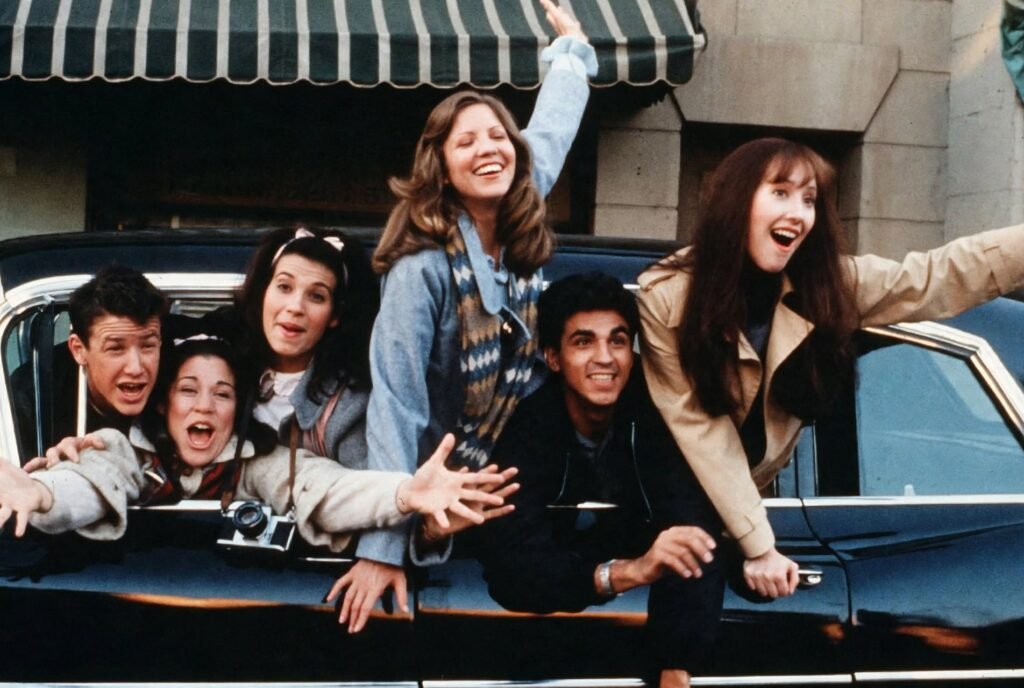
Around that finale, the film belongs entirely to its people, and the film knows it. Rosie throws herself at Paul McCartney with total commitment. Pam wants one last taste of freedom before her wedding. Grace wants the photographs. Janis hates the whole thing; Tony hates it more. Ringo Klaus knows everything about the band and nothing about anything else. Ed Sullivan warns his ushers to expect screaming, hysteria and fainting, and calls it all perfectly normal.
The worst week of the year
I Wanna Hold Your Hand opened on April 21, 1978. The first preview audience went wild — laughter, cheering — and Zemeckis later called it one of the great memories of his life. Critics were kind; Gene Siskel called it perfect summer entertainment. But Gale says the film opened during the single worst week at the box office that year. It cost $2.8 million and grossed about $1.9 million.
Years later, a critic named John Ross wrote that he was evidently one of roughly six people to see it in a theater on its first release, and that the stuck-elevator gag nearly choked him with laughter in a Dothan, Alabama, multiplex. That is almost the whole story of the movie in one image: a handful of strangers laughing at a film about a crowd that had once filled the streets.
The review that mattered
One more scene, and it happened after the credits.About a year after release, producer Tamara Asseyev had lunch with Ringo Starr's manager. He told her the Beatles had watched the film, and had decided not to sue. Which may be the best review it ever got. So go back and watch it again. Watch the shadows on the wall, the boots, the hotel corridor, the backs of four heads in the elevator. You never see them. You never miss them.