Sylvester Stallone Wrote His Way Out of the Past. At 80, He’s Still Writing
The Rocky icon sits down at home to talk about a memoir, a new season of Tulsa King, and the chaos that made him.
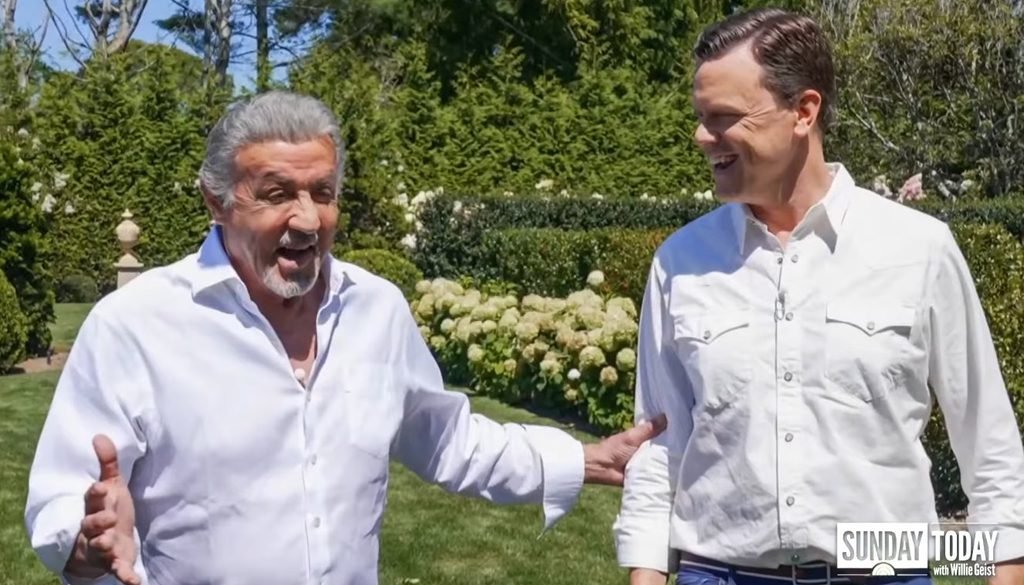
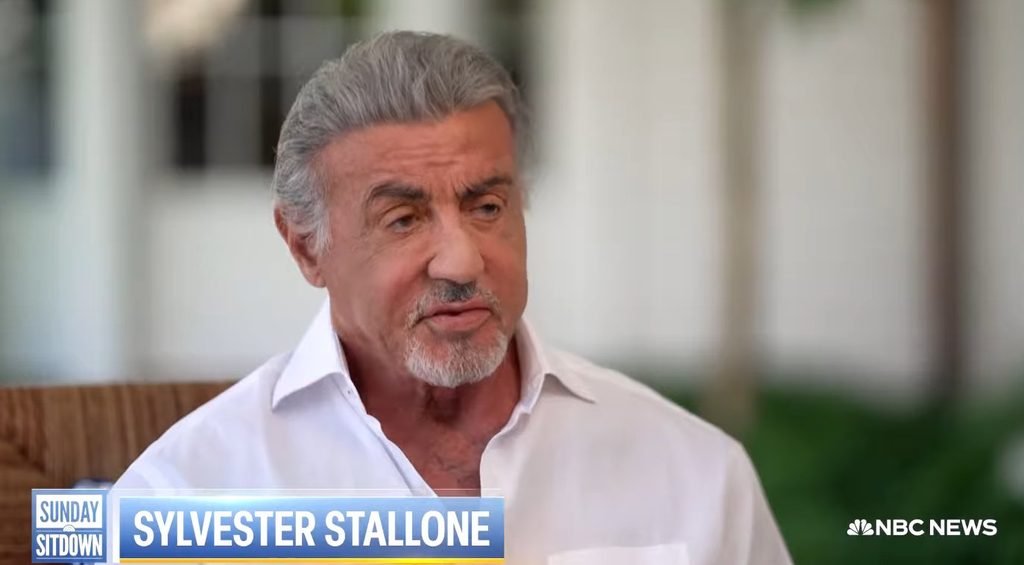
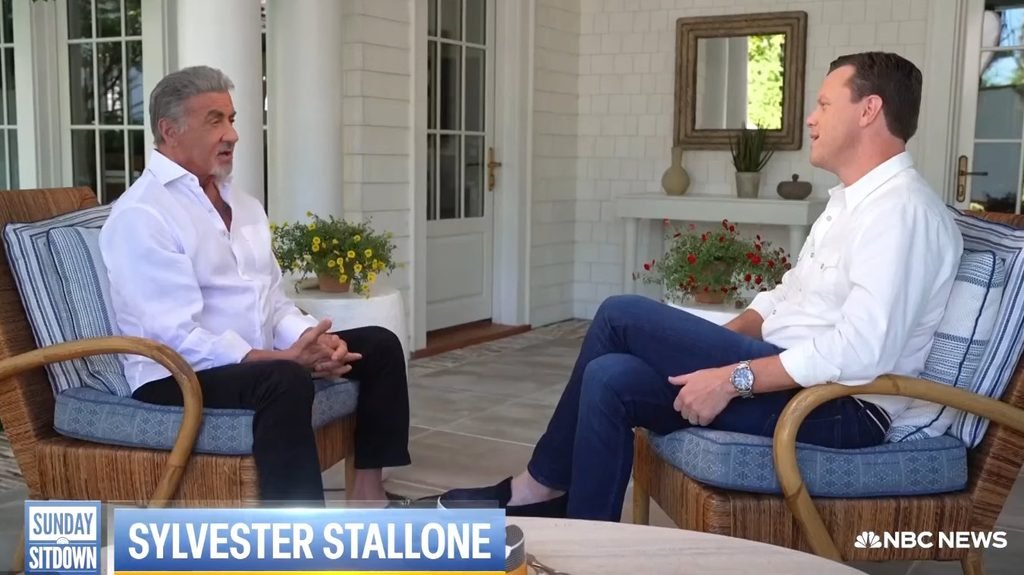
On Long Island, in a home he could not have imagined as a hungry young actor, Sylvester Stallone now measures his life in decades rather than deals. He turned 80 this past July, an age that invites the kind of summing-up most stars resist, and he has chosen to do it in public. Willie Geist traveled to his home last summer for a Sunday Sit-Down, and the conversation that resulted is less a victory lap than an audit of a life. The man who once cleaned lion cages at the Central Park Zoo now lives among the Hamptons, a contrast he clearly finds funnier than flattering.
It would be easy to reduce that trajectory to a fairy tale, and Stallone has spent a career being mistaken for a symbol of effortless American muscle. The interview quietly dismantles that reading. What emerges instead is a performer whose defining trait was never his physique but his refusal to be a passenger in his own story, a stubbornness that first looked like insanity and later looked like vision. The tough guy on screen, he suggests, is a costume worn over something softer.
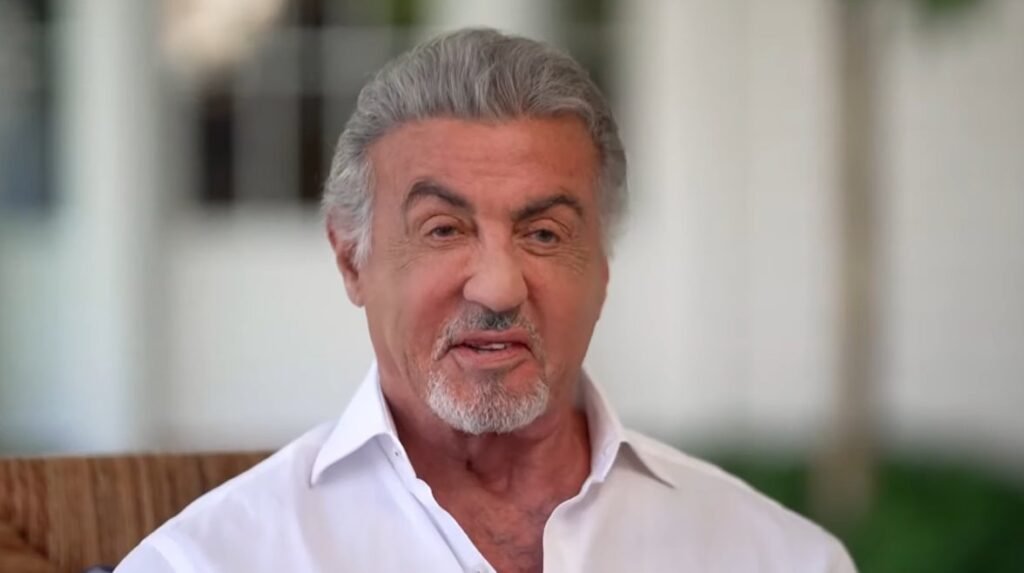
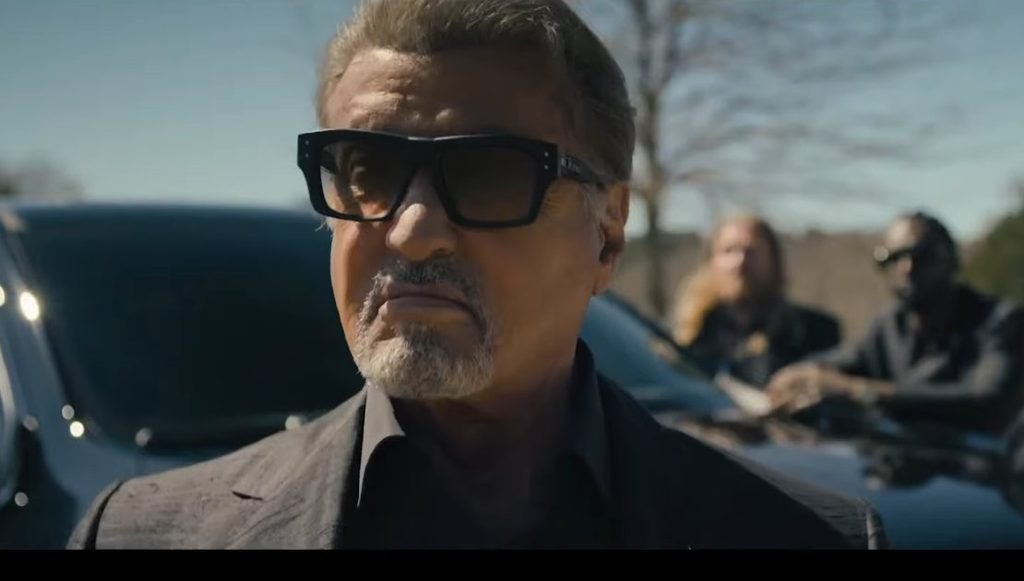
That costume is currently on loan to Dwight Manfredi, the exiled New York mob capo at the center of Tulsa King, the Paramount+ series created by Taylor Sheridan that became Stallone's first leading role in a scripted television show. Now heading into its fourth season, the series gave him something the movies had begun to withhold as he aged: a part that demanded nuance rather than volume. He explains that he wanted to find the humor and the pathos in a gangster, a man who has lost his wife and family and whose pain an audience could recognize as its own. He also admits the irony of the timing, since at his age the opportunities in film had started to feel like diminishing returns.
The road to that home began in Hell's Kitchen, in a Manhattan charity hospital, on July 6, 1946. A forceps delivery severed a facial nerve and left the lower left side of his face partially paralyzed, a medical accident that shaped both his slurred speech and his unmistakable scowl. His parents' volatile marriage sent him into foster and boarding care as an infant and kept the family moving between New York, Maryland, and Washington, D.C. What he describes from those years is not nostalgia but a lingering emptiness, a child wondering why his upbringing could not simply have been pleasant. He answers himself with a rueful joke, noting that his household was less like the Waltons and more like the Mansons.
The love of performance arrived as an escape rather than a calling. He has said he was always searching for a real male role model and could not find one at home, so he went looking for one in the dark of a movie theater, drawn less to serious actors than to pure escapism. After dropping out of the University of Miami, he moved to New York and discovered a loneliness so complete that he barely went out at all. One New Year's Eve, in 1970, he stood alone in Times Square and looked at the crowd, and the realization that landed on him became a kind of motto: every person there wanted to be somebody, so he had better go home and outwork them.
For years the industry saw only one thing when it looked at him, casting him in small, typecast roles as a thug until he decided to stop waiting for permission and write his own way in. The screenplay he produced was about an underdog boxer named Rocky Balboa, a character drawn from a fighter's determination rather than a writer's polish. He likes to recall the blunt advice he gave himself then, the idea that if he had not been born with much of a brain he had better start using his body. It was a joke that doubled as a business plan, and it worked far beyond anything he could reasonably have predicted.
The most revealing passage concerns what happened next. Studios loved the script but wanted a bankable star in the lead, and one offer reportedly reached roughly $360,000 for Stallone to step aside and let someone else play Rocky. He turned it down, and he explains the decision with a clarity that sounds rehearsed only because he has spent fifty years living with it. If he had taken the money, he reasons, it would eventually have been gone, and he would have been left the most bitter man alive, because the project was never about selling out. He calls himself no great believer in miracles, yet he still describes what followed as one.
Rocky exploded, earning ten Academy Award nominations and winning three, including Best Picture, while Stallone personally earned nods for both Best Actor and Best Original Screenplay. That dual recognition made him the first person since Orson Welles to be nominated for acting and writing on the same film, a fact that tends to get lost beneath the mythology of the underdog. The victory resonated beyond his own career. Matt Damon has said that when he and Ben Affleck were trying to protect their own lead roles in Good Will Hunting, they kept Stallone's example as their rallying cry whenever executives pushed for bigger names. The risk Stallone took became a template for a generation of writers who refused to hand over their own stories.
That understanding is the engine of his new memoir, The Steps, which arrives September 29 and details a long and difficult climb rather than a highlight reel. Instead of feeling sorry for himself, he explains, he came to suspect that all the hardship and extraordinary chaos had actually prepared him for the impossible task of getting Rocky made when nobody knew his name. He looks back at his own biography and finds it reads like a bad novel, and he admits to genuinely mixed feelings about whether the pain helped him or merely happened to him. That ambiguity, he says, is precisely what the book is about.
The timing of the reckoning is deliberate. A biopic about the making of Rocky, titled I Play Rocky, reaches theaters in November, and the fourth season of Tulsa King begins streaming on Paramount+ on October 16, surrounding the 80-year-old with reminders of both the beginning and the present of his career. What the interview ultimately clarifies is that Stallone's significance was never the miracle, the muscles, or the franchises alone. It was the decision, made again and again across six decades, to author his own life instead of accepting the role someone else offered him. The underdog he played on screen was never a character he borrowed; it was a description of how he chose to work — and at 80, he is still refusing to hand over the script.