Michael J. Fox Waited 40 Years to Write to the Man Who Almost Had His Life
The letter
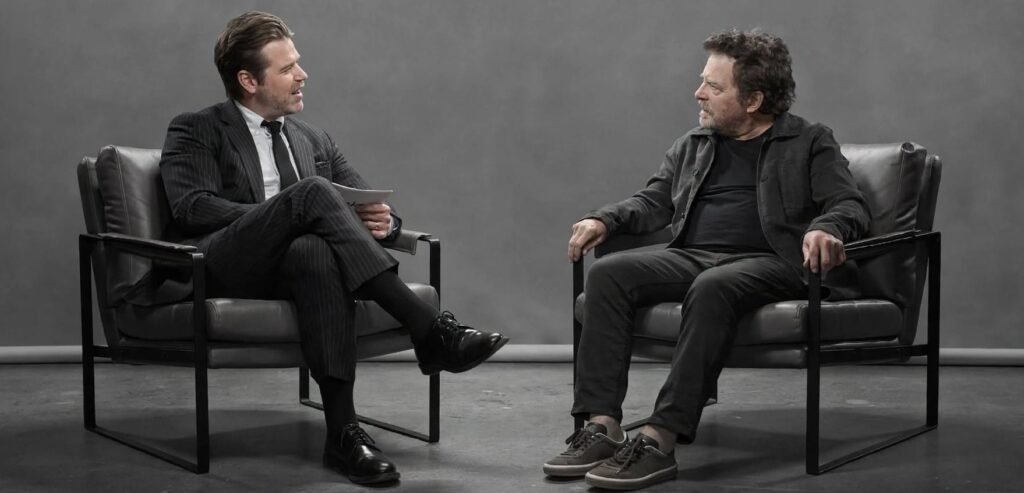
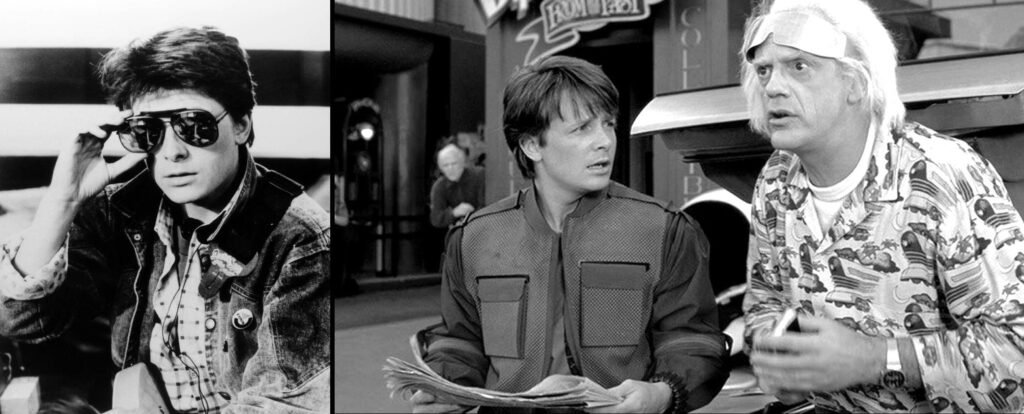
Eric Stoltz was cast as Marty McFly and shot for roughly two months before Robert Zemeckis replaced him with the star of a sitcom. In his memoir Future Boy, Fox writes about the letter he eventually sent the man he displaced — nearly forty years later. Asked at Esquire why he waited, he said: "I didn't think he was in a rush to hear from me." Stoltz had told a magazine he had no regrets, "although rich and famous probably would have been nice." Fox knew the decision was never about talent. "It was just about an energy thing," he said. "I had energy to spare." So he called him on a whim. Stoltz came to his office, and they "shot the shit about movies and kids and the fickle finger of fate."
The rule his father gave him
It arrives in one sentence. Fox had been lobbying to move to the States; his father thought the whole idea was a disaster. What he said was: "If you're gonna be a lumberjack, you might as well go to the goddamn forest." Then he drove him down. His parents were children of the Depression and the war, "risk averse," their lives arranged so that nothing was left exposed — and they overrode their own instincts anyway, which he says he will be grateful for forever. The kid from Burnaby, BC then spent a decade passing as the all-American boy, which he notes was not hard: "a kid could grow up in Canada and pass himself off as the all American kid." His grandmother, who died when he was nine, had already called it: the world would know him as Michael.
Saying yes to the things that should be a bad idea
The rule explains the jobs that look like errors. Larry David pitched an episode in which Larry accuses his upstairs neighbour of exploiting Parkinson's to ruin his life. Fox's first reply was "No, they'll crucify us. They're gonna kill us if we do this." Then he reversed himself: "No, that's not a problem. That recommends it to me." He played himself, so "I can't screw it up," and improvised through a Hitler moustache drawn on a Businessweek cover of his late father-in-law and a Coke can that sprays him in the face. Same instinct put him onstage at Glastonbury with Coldplay, unable to hold the guitar properly, kicking on a tempo change. The band had timed the pyro to that kick and never told him. Three hundred thousand people lost it. "A well-timed kick can steal the show."
What thirty-five years of it taught him
He was diagnosed in 1991 and kept it to himself for eight years, trying to hold it off with exercise and diet. What he learned, he says, was patience, resilience, and how to ask for help. What he noticed when he finally spoke was the stigma — Parkinson's filed as "a disease only for old people," the person you wait behind at the elevator and get annoyed at. "And that's me now." At home it is not a subject. Tracy "just deals with it in front of us and doesn't add a whole lot of stuff to it." He jokes that she is so busy with their four kids he doubts she knows he has it, and reckons his children would land on it "the ninth or 10th thing" they'd say about him. His own version of the foundation's message is blunter: "A little bit to myself, I say get over it."
What thirty-five years of it taught him
When Shrinking came along — Bill Lawrence, who ran Spin City, built the part after Fox called him about Paul's Parkinson's storyline — he took it on the condition that the character be someone else. "Michael J. Fox just pops into your life and hangs out for two episodes," he said, and that would take the reality out of the series; instead Gerry became "a lucid waking dream." The refusal to be reduced to one fact is the same one behind his answer about the Barbara Walters interview in November 1998, the week he told the world. He had, he said, "in a way, got to see my own obit." What it taught him was that an obituary "is not the sum of your life." The kid who sold his guitar and got on the bus — figuratively; his father drove — ended up over a garage in Beverly Hills. In June the country made him a Companion of the Order of Canada, its highest honour. Asked whether he would fight for Canada if it came to blows: "I get a pass," he said. "I get a medical pass."