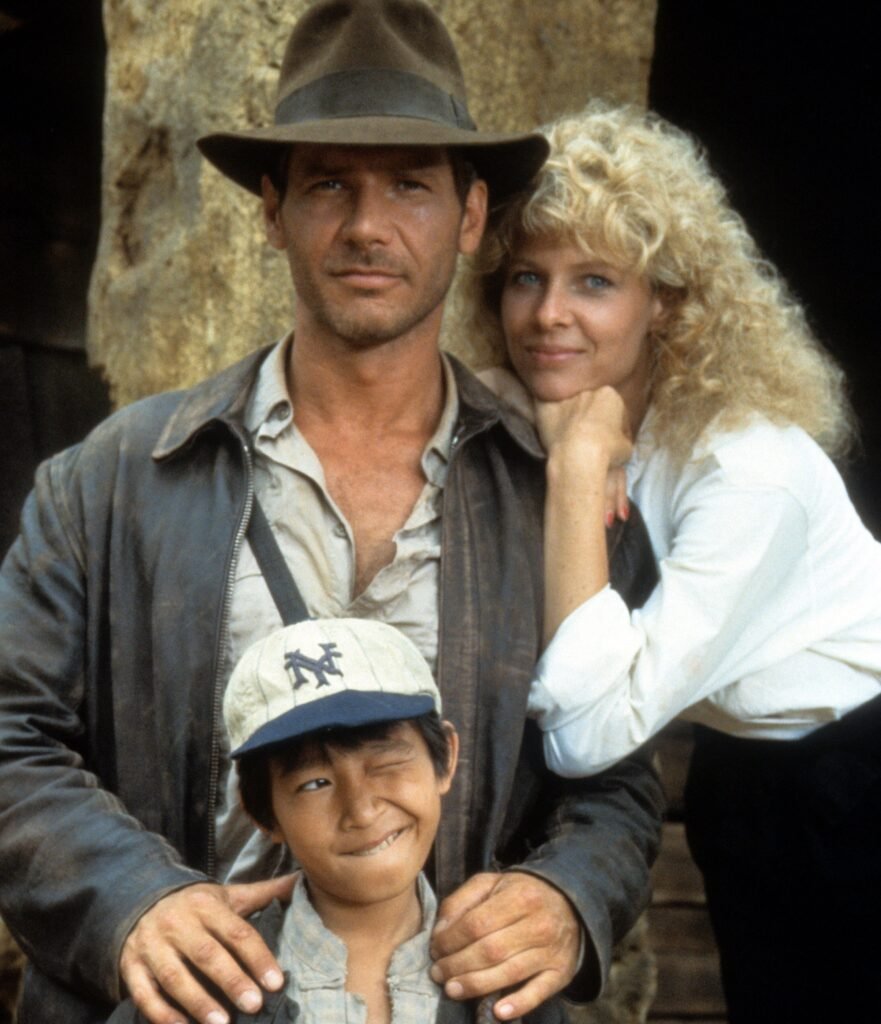
When Raiders of the Lost Ark became a phenomenon, the obvious question was where Indiana Jones could go next. The answer George Lucas and Steven Spielberg came up with was, in a surprisingly personal way, shaped by what was happening in their own lives. In 1984, both filmmakers were going through difficult moments — Lucas was dealing with a divorce, while Spielberg had just ended a relationship — and instead of simply repeating the adventurous optimism of the first film, they channeled some of that darker emotional state into the story. The result was Indiana Jones and the Temple of Doom, by far the darkest chapter in the franchise, featuring a scene in which a still-beating heart is ripped from a victim’s chest. The sequence shocked audiences so much that Lawrence Kasdan, who had written the first film, refused to write the sequel, reportedly describing the material as “horrible.”
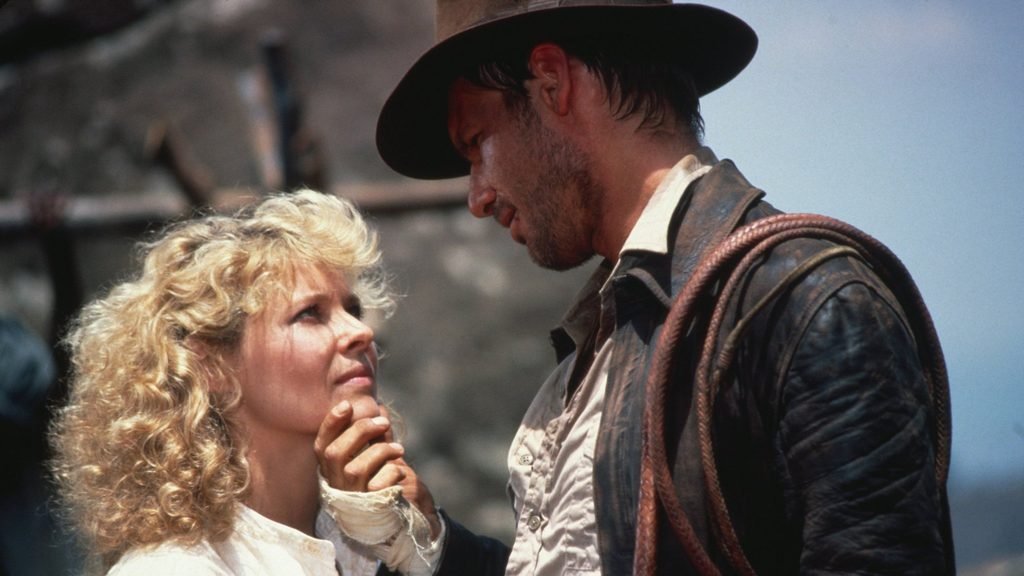
The audience reaction was so intense that it ended up changing the movie industry. Parents complained that the film’s PG rating gave them no warning about the level of graphic violence they were about to see, and Spielberg eventually took the issue directly to Jack Valenti, then president of the MPAA, suggesting the creation of a rating between PG and R. A few weeks later, the PG-13 rating was officially introduced. Although Red Dawn would become the first movie to receive the new classification, Temple of Doom was directly responsible for prompting the change. A sequel born out of a difficult period in the personal lives of its creators had, almost accidentally, helped rewrite Hollywood’s rules for age ratings.
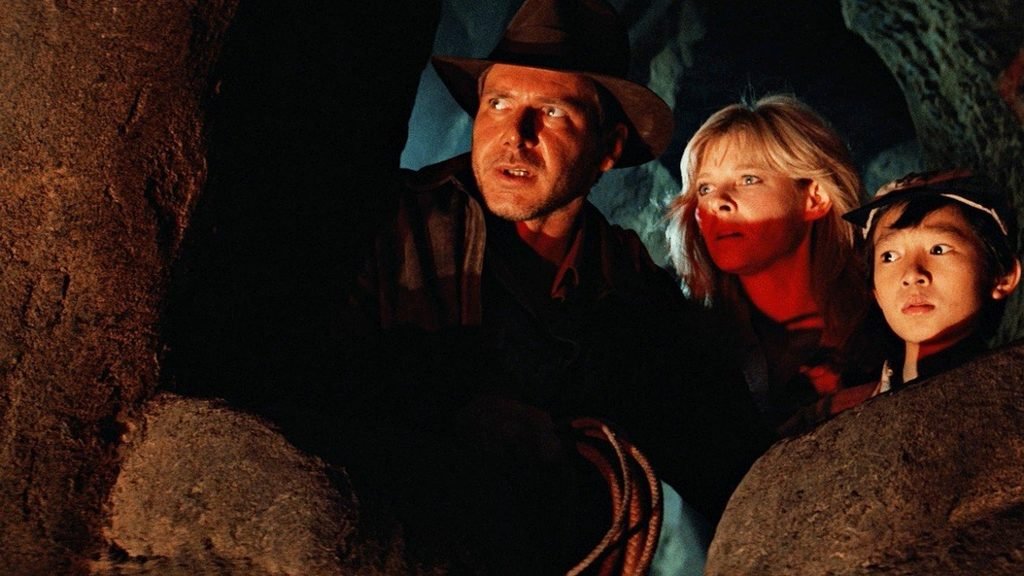
Behind the scenes, the physical reality of the production was just as demanding as the darker tone of the story. Harrison Ford suffered a herniated disc while filming a fight sequence in Sri Lanka and had a hospital bed kept nearby so he could rest between takes, refusing to bring production to a halt. The giant insects that became one of the movie’s most memorable visual nightmares were another logistical headache, especially in an era when digital effects were decades away from becoming standard. The real insects used during filming hated bright light and repeatedly tried to escape toward the darkest corners of the set, forcing the crew to constantly reposition the lights simply to keep them where the cameras could capture them.
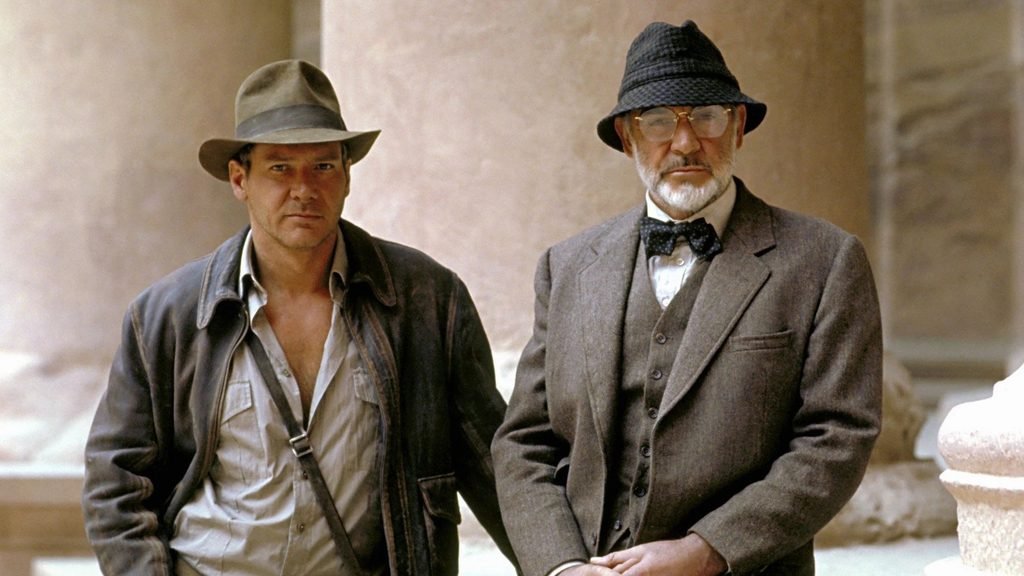
Five years later, Spielberg would openly acknowledge that he had gone too far with the darkness of Temple of Doom, and the creative response was once again surprisingly personal. Rather than pushing Indiana Jones into an even darker world, Lucas and Spielberg decided to expand the character emotionally in the opposite direction by exploring a relationship that the first film had barely touched upon: his complicated bond with his father. Indiana Jones and the Last Crusade exists, in large part, because Sean Connery agreed to play Henry Jones Sr. Connery had initially turned down the role, arguing that he was only twelve years older than Harrison Ford and that the character, as originally written, lacked enough depth. A student of history himself, Connery brought a stronger sense of personality to Henry and drew inspiration from Victorian explorer Richard Francis Burton to create a father who was every bit as stubborn, demanding, and obsessive as his son.
Much of the chemistry between the two characters, however, came from something that could never have been planned on the page: improvisation. One of the movie’s most memorable exchanges, when Henry casually reveals that “she talks in her sleep,” exposing the fact that he had also been involved with the same woman his son is pursuing, was not in the script. Connery improvised the line during a take, and the genuine reaction from the cast, who struggled to contain their laughter, was enough to convince the filmmakers to keep it in the final cut. Even the way Ford and Connery dealt with the unbearable heat on the zeppelin set became an unexpected piece of movie trivia. Connery decided to film the dining-table scenes without trousers, keeping them hidden below the table, and Ford followed his lead. That is why virtually every shot of the two men during those scenes is framed from the waist up.
The world of Indiana Jones, then, did not grow simply because the maps became more complicated or the artifacts more powerful. It expanded because its creators kept bringing pieces of their own lives into it, first channeling the pain and uncertainty of two difficult breakups into the darkest chapter of the series, and later finding a sense of warmth and reconciliation through the relationship between Indy and his father. Even surrounded by Nazis, sacred relics, giant insects, and ancient mysteries, that personal dimension gave the franchise something more durable than spectacle. It gave Indiana Jones a world that could continue growing because, beneath all the adventure, there were always recognizable human relationships at its center.