In the mid-1940s, DC no longer needed to prove that superheroes sold magazines — it needed to prove it could sustain an entire universe without it collapsing under its own weight. World War II drove sales like never before: soldiers read comic books in the trenches, and children in the United States consumed covers that promised justice in a real world that was becoming increasingly uncertain. What used to be a niche business was turning into a mass phenomenon.
The idea, then, shifted from just creating new heroes to connecting them. It wasn’t enough to have Superman, Batman, Flash, and Green Lantern in separate magazines — they needed to coexist, cross paths, and form something bigger than the sum of their parts. It was this ambition that transformed the Justice Society of America, formed in 1940, into the first true sign that a universe existed there, rather than just a shelf of characters.
The numbers told the story better than any editorial: All-American Publications, the sister publisher responsible for Flash and Green Lantern, and National Comics, home to Superman and Batman, grew side by side until they formally merged decades later under the single umbrella of DC. Meanwhile, monthly print runs in the millions made the publisher’s heroes a guaranteed presence on every newsstand across the country — a ubiquity that no rival publisher could match.
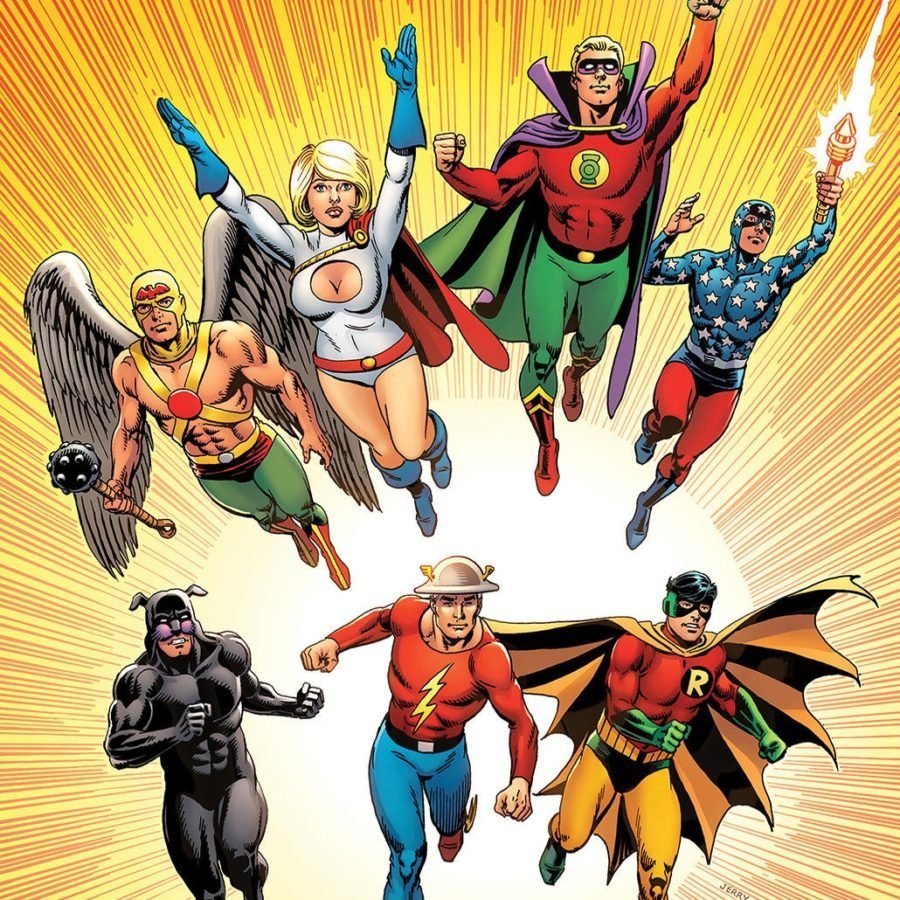
This quiet growth, built on mergers, record print runs, and an increasingly intertwined roster, was what ensured DC survived the Golden Age of comic books itself — entering the following decade not as a passing success, but as a universe that already knew, instinctively, how to expand.