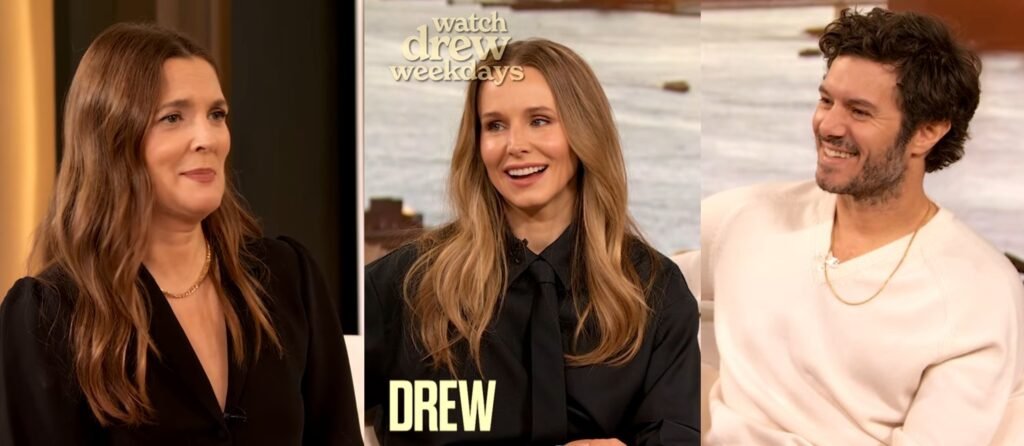
Adam Brody and Kristen Bell joined The Drew Barrymore Show to talk about the runaway success of their Netflix romantic comedy, Nobody Wants This. With the series sitting comfortably atop the streaming charts, the two leads looked back on the intersecting paths that shaped their careers — and on how those earlier chapters eventually led them to share the screen.
Brody recalled the early-2000s explosion of The O.C., explaining that shooting far from the spotlight kept the cast largely insulated from the frenzy surrounding the show. He also revisited his brief stint on Gilmore Girls, noting that the series has reached an even wider, multi-generational audience thanks to streaming — a shift that has let him fully grasp how far his early work travels.
Bell, meanwhile, opened up about her voiceover role as the unseen narrator of Gossip Girl. After Veronica Mars was cancelled, she took the initiative and pitched herself for narration on the newly launched teen drama. That decision introduced her to Leighton Meester, who had previously appeared on Veronica Mars opposite Adam Scott before landing her career-defining part as Blair Waldorf. Bell joked about the symmetry of now starring opposite Meester’s real-life husband, Brody, years after the two women’s careers first brushed against each other.
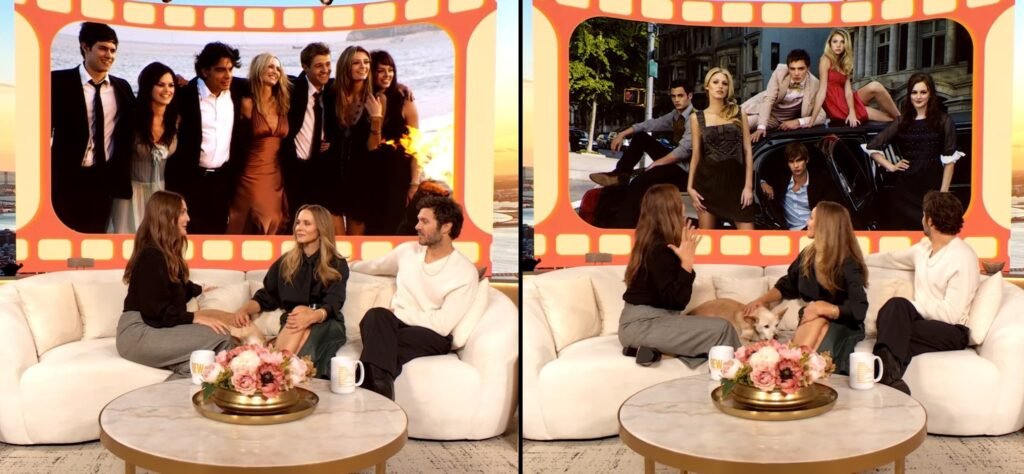
The pair also traded favorite moments from their filmographies, including Bell’s time on the camp classic Burlesque alongside Cher, Christina Aguilera and Stanley Tucci. She described a lighthearted on-set dynamic with Julianne Hough, whose character clashed with Bell’s on screen even as the two became friends off it. Taken together, the conversation made clear how decades of shared television history underpin the easy chemistry Brody and Bell bring to Nobody Wants This, still going strong on Netflix.
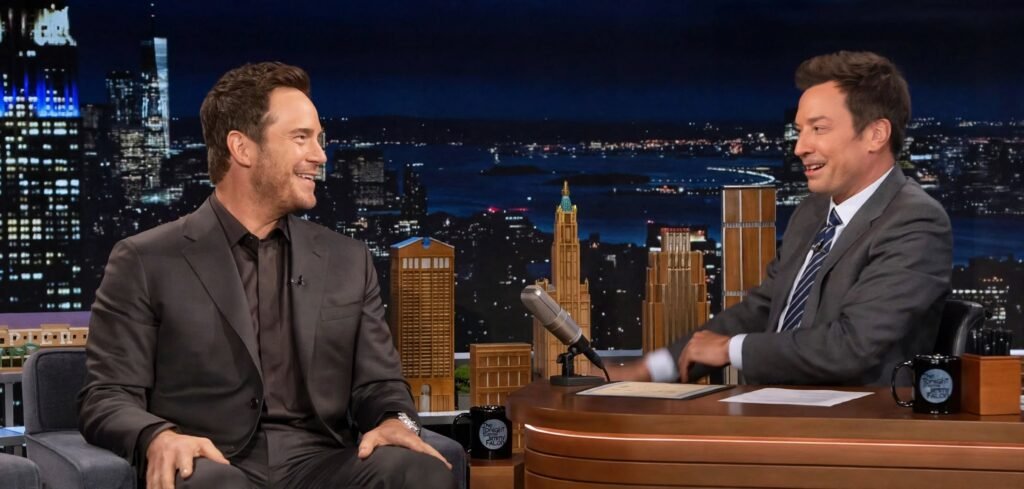
Actor Chris Pratt made his 10th appearance on NBC’s The Tonight Show Starring Jimmy Fallon, bringing updates on the long-awaited second season of Prime Video’s hit action series The Terminal List.
More than four years after the premiere of the first season, the star and executive producer confirmed that the upcoming installment expands the franchise into a globe-trotting espionage thriller. Moving beyond the dark, domestic revenge plot of the debut season, the new episodes take the narrative international, featuring locations across South Africa, Morocco, London, Greece, Ukraine, and Washington, D.C.
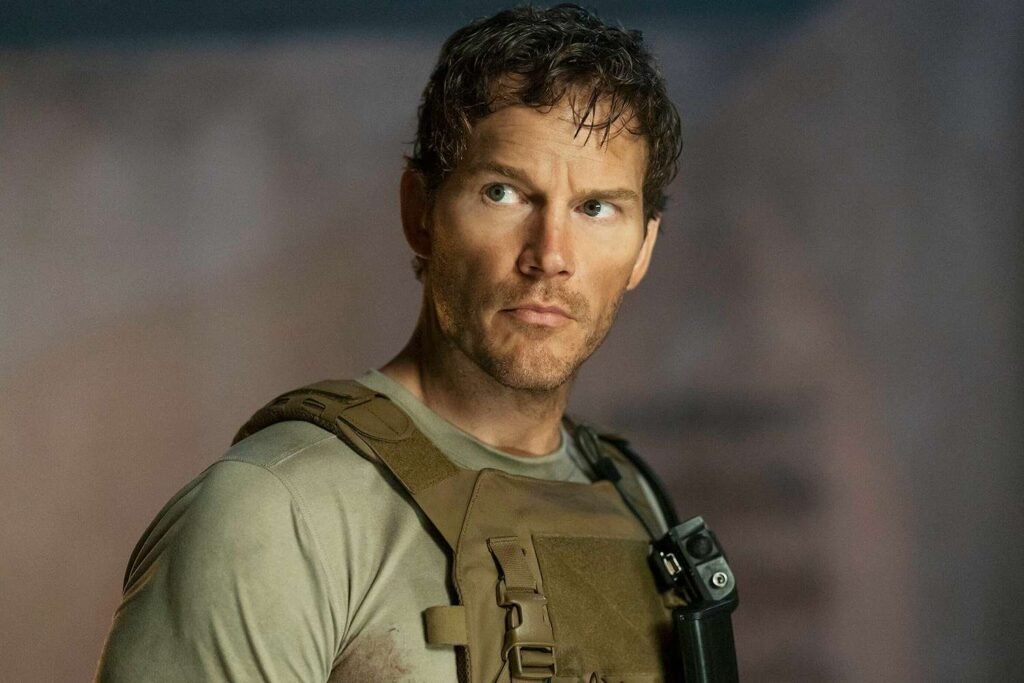
Addressing the four-year gap between seasons, Pratt explained that production faced several delays, including the industry strikes, while the team also produced a prequel season, The Terminal List: Dark Wolf, in the interim. The actor emphasized that authenticity remains the cornerstone of the show, which is adapted from the bestselling book series by former Navy SEAL Jack Carr.
The production heavily incorporates military veterans across its cast and crew, including director Ray Mendoza and executive producer Jared Shaw. Pratt noted that the high level of realism in the combat tactics, jargon, and behavior is a key reason the show resonates so strongly with viewers and military veterans alike.
During the interview, Fallon presented Pratt with a certificate commemorating a personal milestone outside of Hollywood: his very first hole-in-one in golf, achieved on May 23, 2026. Pratt shared the story of scoring the lucky shot on the eighth hole at Ojai Valley during a friend’s wedding weekend. After accidentally hitting the milestone ball into a crowded driving range on the following hole, the actor admitted he had to comb through thousands of golf balls in a secluded corner of the course to retrieve it, so that his wife, Katherine Schwarzenegger, could frame it alongside his official certificate.
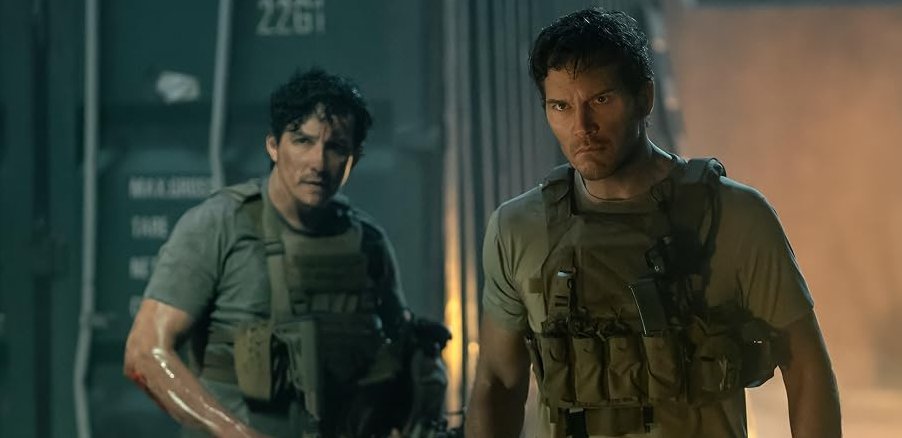
The conversation also touched on a lesser-known chapter from Pratt’s early career, before his breakout roles in television and film. While working as a server at the Bubba Gump Shrimp Company restaurant in Maui where he was initially discovered, he wore a name tag that originally read “Christopher” but gradually wore down until only “Christo” remained.
The nickname caught on among his coworkers to the point where the actor briefly considered adopting the single name professionally at the start of his acting journey, complete with an early Hollywood headshot from that era.
The Terminal List Season 2 premiered Wednesday, October 21, on Prime Video, with all eight episodes available to stream at once.
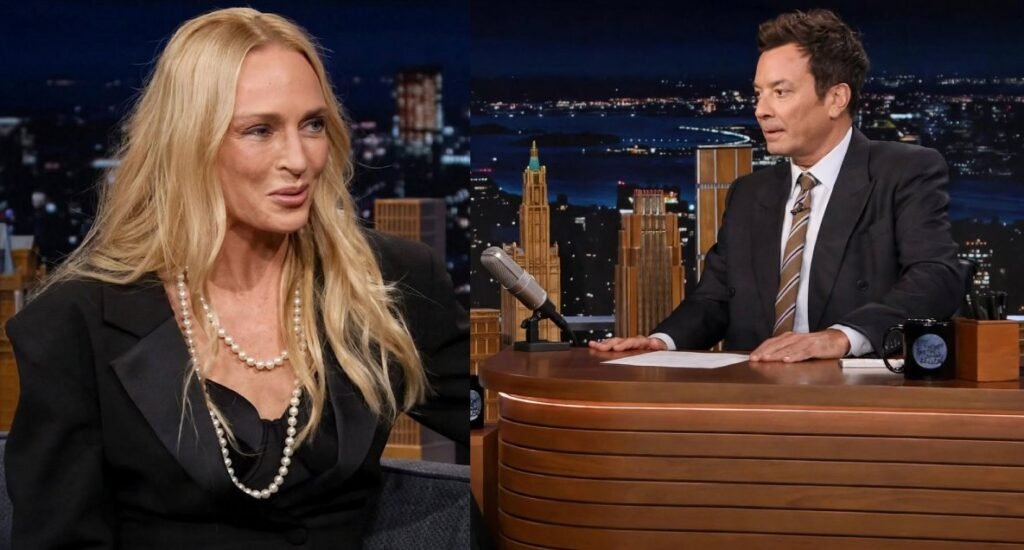
Actress Uma Thurman appeared on The Tonight Show Starring Jimmy Fallon to discuss the upcoming second season of Paramount+’s hit series Dexter: Resurrection, which premieres Friday, Oct. 30.
Reflecting on the creative process behind the show, Thurman noted how rewarding it is to collaborate with top-tier creators like Clyde Phillips and Scott Reynolds, whose screenplays shape characters directly around the cast’s strengths. Addressing what fans can expect when the show returns, the actress confirmed that the bloodshed and the relentless pursuit of wrongdoers will continue without slowing down, maintaining the intense tone that made the revival a massive success.
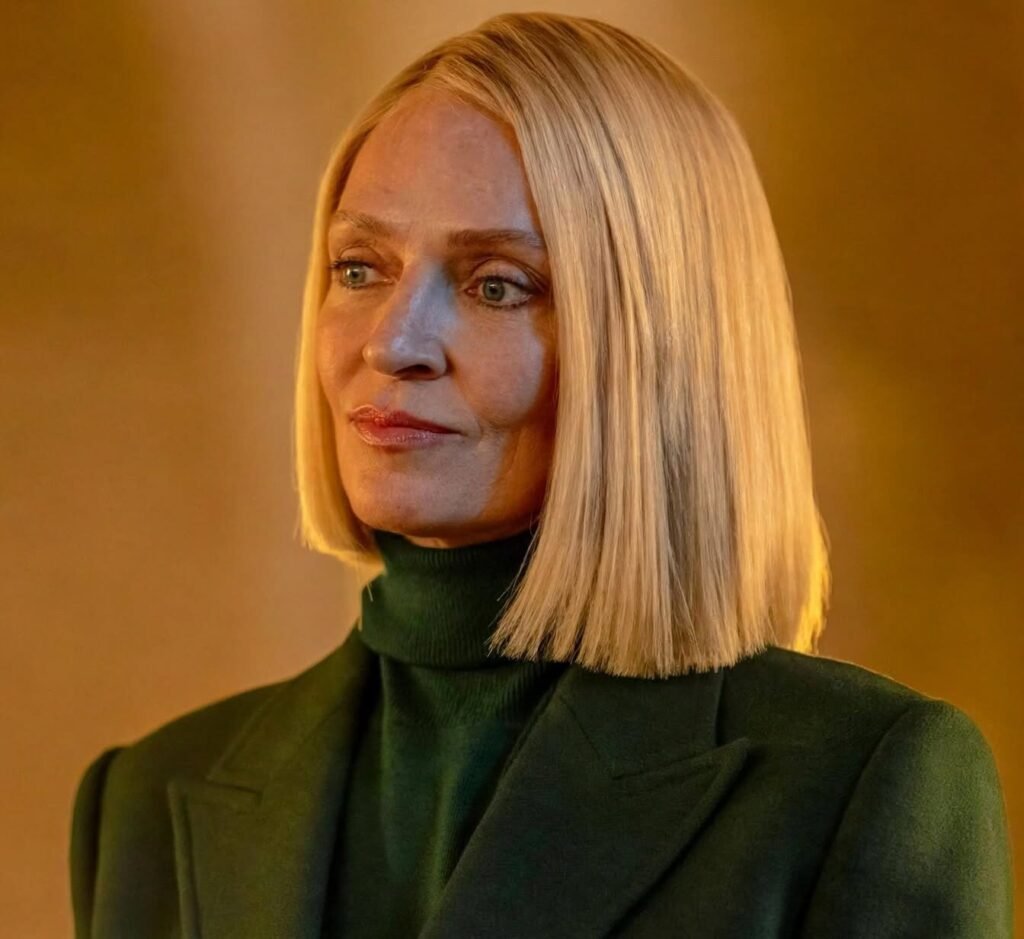
Beyond her television work, Thurman shared a surprising personal hobby: an expanding backyard orchard. Over the past two years, the actress has planted around 40 apple and pear trees, embracing the philosophy of delayed gratification to cultivate fruit for future generations. She brought a batch of freshly harvested apples, picked straight from her own trees, to the talk-show host as a gift, joking about testing the waters with apple-based treats.
Shifting to her early years, Thurman recalled an amusing childhood memory that highlighted her lifelong streak of independence. At about three years old, she embarked on a solo neighborhood mission to buy a pair of red high-heeled shoes she had spotted in a store window, using a small handful of change.
The adventure ultimately resulted in a police encounter and a dramatic rescue by her mother on the street — an early determination that continues to define her career.
Dexter: Resurrection Season 2 premieres Friday, Oct. 30, on Paramount+.
Kristin Kreuk is marking 25 years of Smallville with a more candid look back than fans may expect. In a one-on-one conversation with the podcast, House of El, for a Smallville 25th anniversary interview series, the actress who played Lana Lang said her relationship with the superhero drama was complicated, and that she was never sure acting would be her long-term path. Now 43, she noted that the show covered essentially her entire young adult life, and she still finds it remarkable how much it means to viewers. She also pointed to what has her attention now: a new comic series rooted in her time shooting in Winnipeg.

Kreuk explained that she loved acting as a kid but never saw it as a realistic career, and that she landed the first role she auditioned for. She recalled testing for Smallville in Los Angeles in December 2000, feeling relaxed because she wasn’t attached to the outcome, with pilot director David Nutter putting her at ease. She said she is grateful the show came before social media, since she values her privacy and anonymity. Growing up on camera meant failing in public, she added, and it left her far more comfortable with failure.
She was equally frank about why she moved on after seven seasons. Kreuk said she struggled to reconcile parts of the character, didn’t yet feel she had a voice, and wasn’t experienced enough as an actor to see how to shape Lana from within the scripts. She also wanted work that felt more purposeful. She remembered her last day as a real ending, marked by a gift of a book on Japanese Buddhism to co-star Tom Welling in the studio alley, and she took the lessons into her next series, Beauty and the Beast.

On why the show endures, Kreuk credited its coming-of-age themes, especially the idea that what makes someone feel like an outsider can be their greatest gift. She also pointed to the contrast between supportive and destructive parenting in the Clark Kent and Lex Luthor storylines. The cast’s closeness has surprised her too. She said Michael Rosenbaum became a close friend around season six and pushed her for years to do conventions, which helped her build a new connection with Welling and grow closer to Erica Durance and Laura Vandervoort. Those fan events, she said, have turned the one-way dynamic between fans and actors into a real community that has reshaped her own experience of the show.
Kreuk’s current focus is Black Star, a comic series she created with two friends, inspired by the four seasons she spent in Winnipeg filming Burden of Truth. The idea grew from the Masonic symbolism in Manitoba’s legislative building, including a marble feature known as the pool of the black star. The trio built a two-century mythology that begins with the Red River settlement in the 1800s. Issue four is next, a sign that Kreuk, 25 years after Smallville, is putting her energy into stories she gets to build herself.
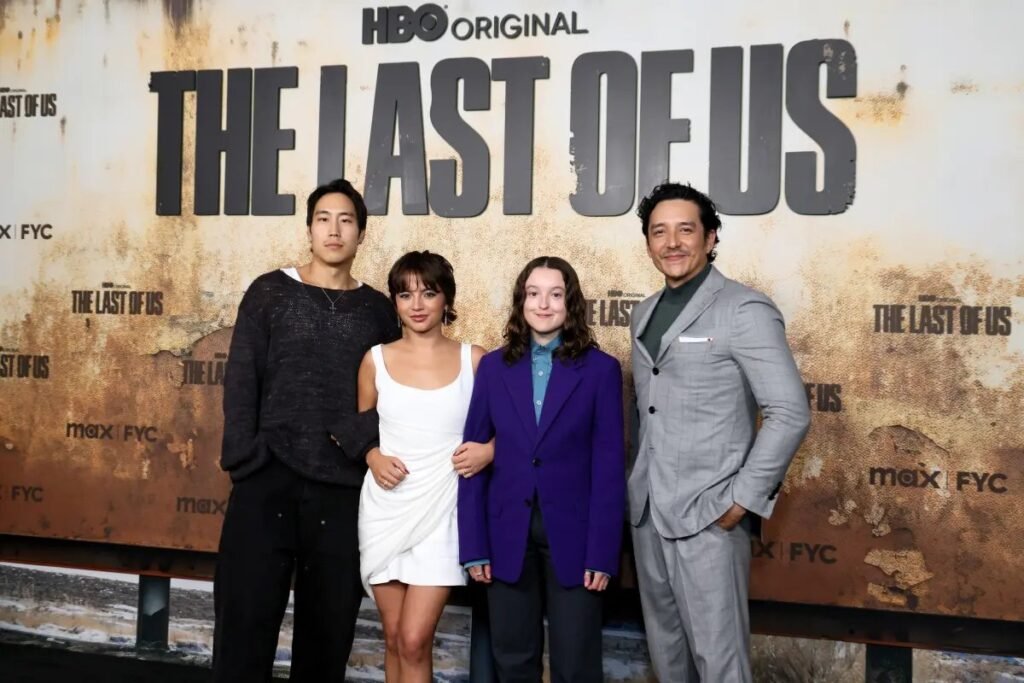
HBO’s The Last of Us is in the rare position of being one of television’s most decorated dramas with its most turbulent stretch still behind it — and Season 3 is now close enough to touch, even if the network is holding the calendar. Filming ran in Vancouver through 2026, and by October 3 production listings had the season in post-production with principal photography complete. HBO chief Casey Bloys put it plainly to Deadline in September: the new season will happen in 2027, and he doesn’t have a date. No official trailer has been released, which means every casting announcement is currently doing the work a teaser would normally do — and the most recent one, John Goodman joining the cast on September 26, is exactly why the show keeps surfacing in conversations it isn’t technically participating in yet.
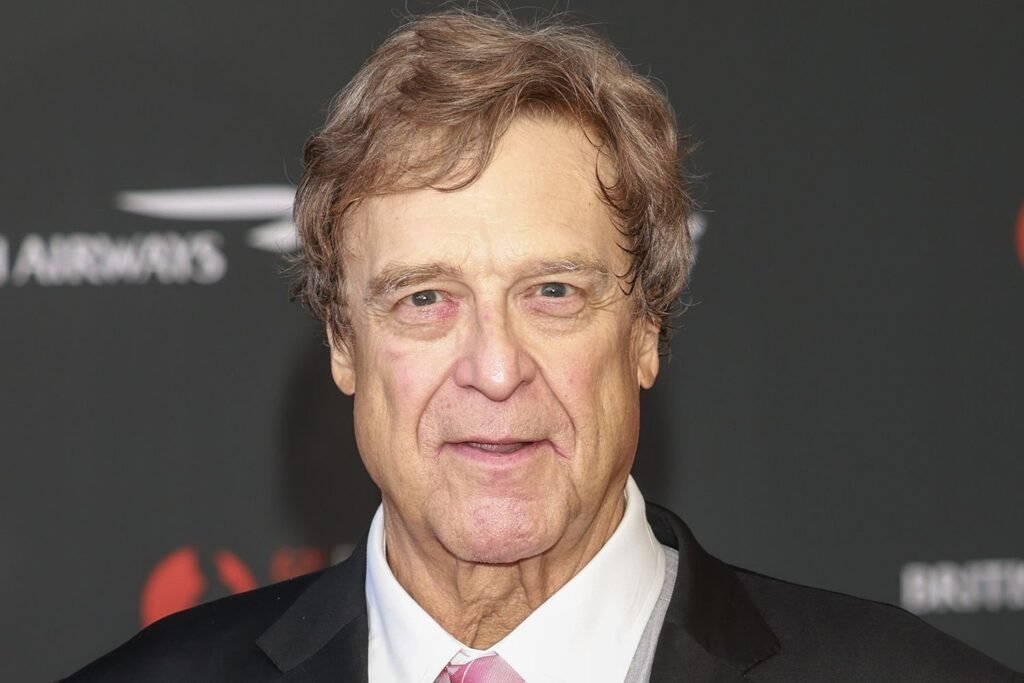
The trajectory so far explains why the fanbase is watching every move. The first season premiered January 15, 2023, and its finale drew 8.2 million same-night viewers, with later reporting putting the season at 32 million cross-platform viewers; it holds 96% on Rotten Tomatoes and 84 on Metacritic, and racked up 24 Emmy nominations with eight wins, including acting prizes for Nick Offerman and Storm Reid. Season 2 arrived April 13, 2025, and split the audience in a way few shows manage: critics stayed at 92% on Rotten Tomatoes while the audience score fell to 37%, the finale drew 3.7 million first-night viewers on a Memorial Day weekend HBO noted was soft for sampling, and the documented backlash around Joel’s death, Ellie and Dina’s relationship and Bella Ramsey’s performance was loud enough that Variety covered it directly. The season still earned 16 Emmy nominations and a win for sound editing, and HBO renewed the series for Season 3 on April 9, 2025 — before Season 2 even premiered.
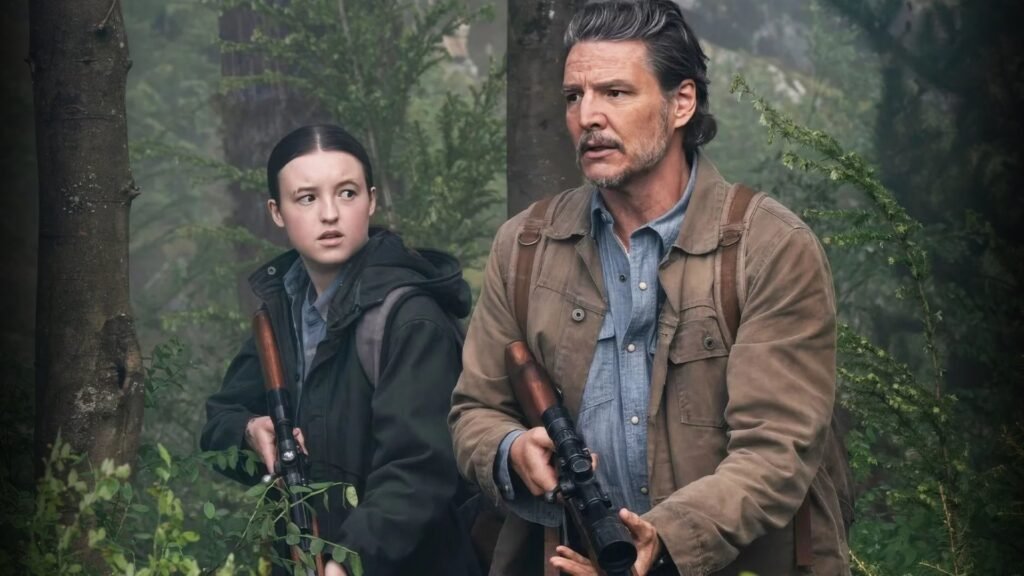
What Season 3 is doing is the thing the second game did: changing whose story you’re following. Joel is dead, killed with a golf club in the second episode of Season 2, and the new season moves to Abby’s perspective — Kaitlyn Dever’s character, a soldier of Seattle’s Washington Liberation Front, whose three days in the city overlap with everything Ellie just lived through. Bella Ramsey returns as Ellie but has said she expects to appear “not a whole bunch,” which tracks with the game’s structure of handing the lead to its other protagonist. The confirmed roster blends both worlds: returning faces include Isabela Merced as Dina, Gabriel Luna as Tommy, Jeffrey Wright as Isaac, and Tati Gabrielle, Spencer Lord and Ariela Barer — Nora, Owen and Mel — promoted to series regulars. The newcomers are the surprise: Patrick Wilson as Jerry, Abby’s father; Jason Ritter; Peter Sarsgaard as Amon; Clea DuVall as a Seraphite; Jorge Lendeborg Jr. taking over as Manny; and in the September wave, Goodman as Joey, plus Ian Alexander and Laura Bailey, both of whom voiced characters in the games and are now playing someone else entirely on screen. Pedro Pascal’s participation has not been confirmed, though flashback sequences would fit the source material.
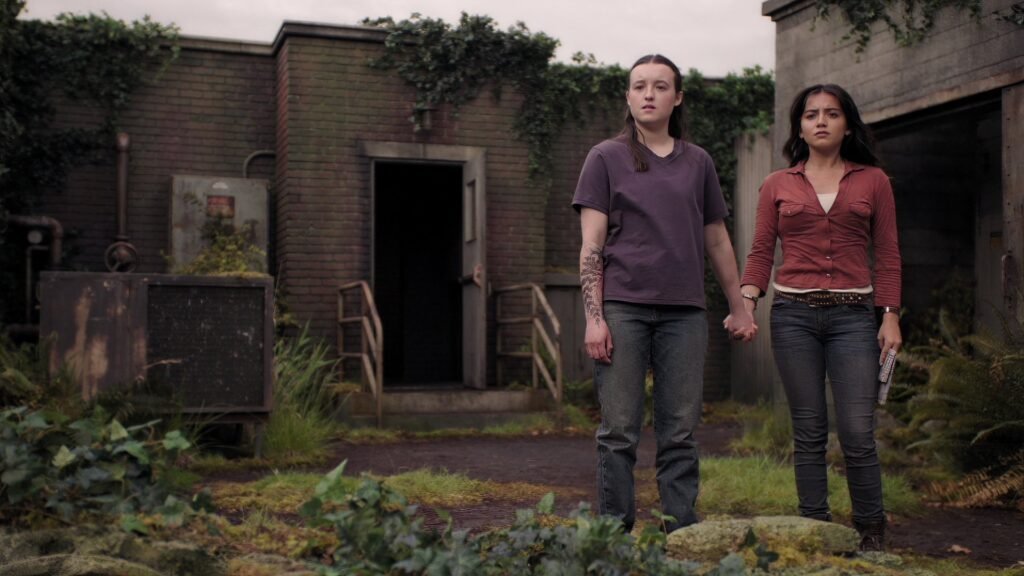
The bigger question hovering over all of it is whether Season 3 is the last one. Craig Mazin, now the sole showrunner after Neil Druckmann stepped back following Season 2, said in May 2025 that there was no way to finish the story in a third season and that a fourth was the most likely outcome — but by September 2026, Bloys said he believed Mazin had planned Season 3 as the final chapter, while carefully framing that as his understanding rather than a network order. No Season 4 has been announced, and no Season 3 episode count has been made public, though Mazin has said it will run longer than Season 2’s seven installments and feel closer to Season 1. That ambiguity may be the most faithful adaptation element of all: Part II was a game about perspective shifts that divided its own audience, and its television version is now asking viewers to wait two years, switch sides, and find out whether the show can pull off live TV’s most divisive structural gamble.
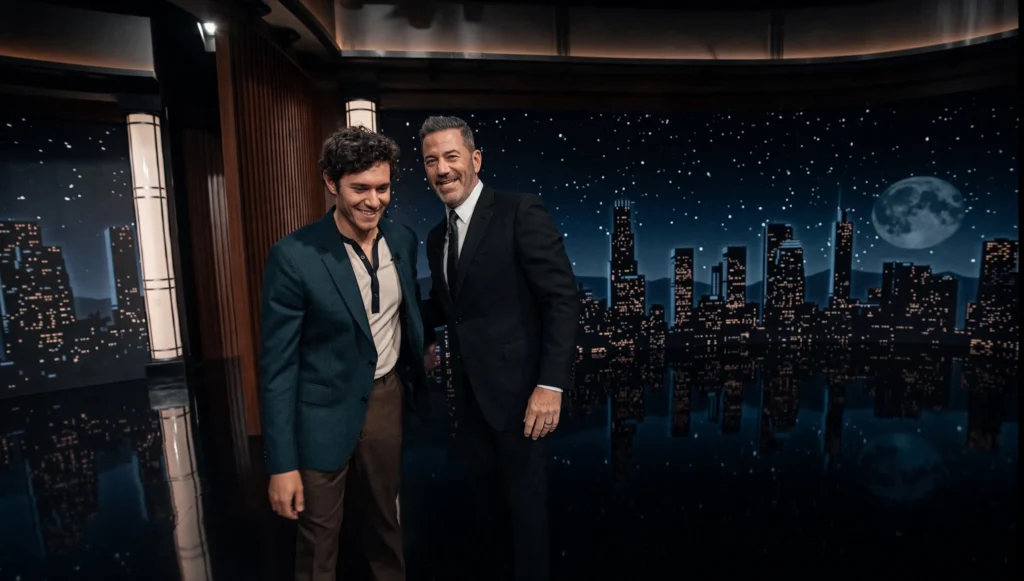
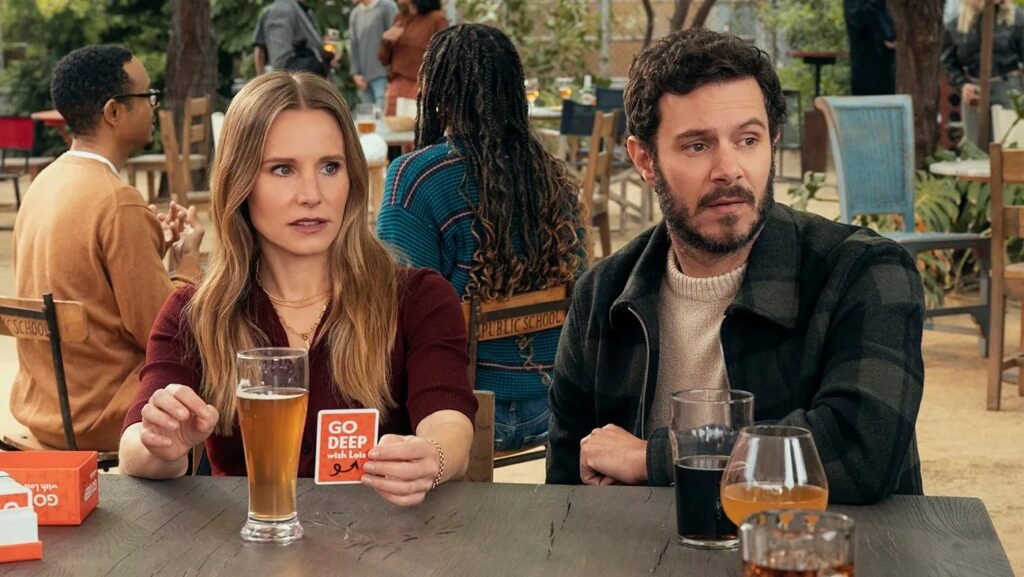
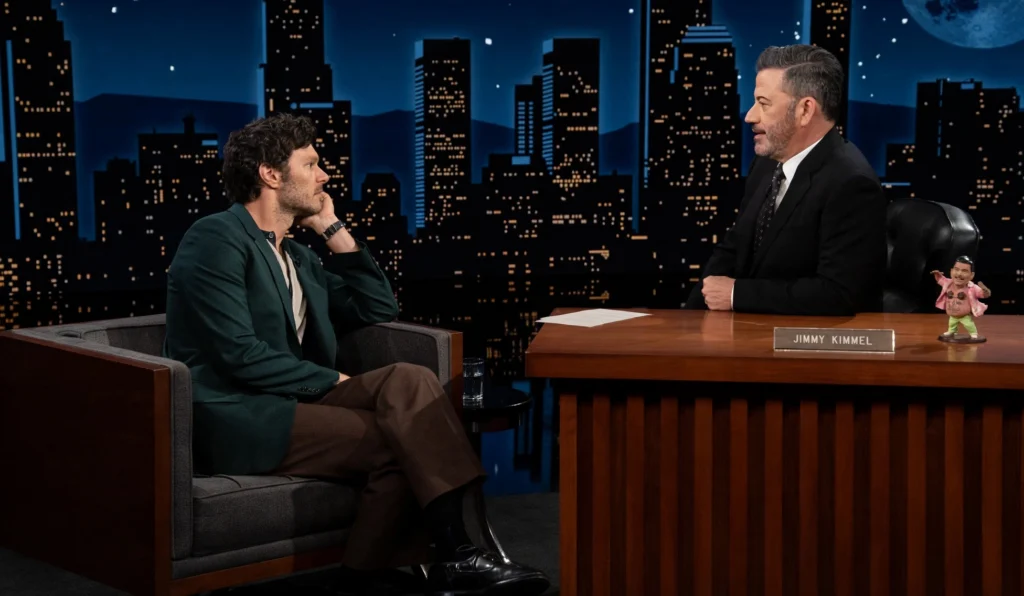
Adam Brody has spent the last two years hearing strangers shout at him on the street — and he came prepared to talk about it on Jimmy Kimmel Live on Thursday night, just over a week before the October 22 premiere of Nobody Wants This’ third season on Netflix. In the appearance, the actor said he’d initially sensed the comedy would find a broad audience, but that the range of people who bring it up still surprises him. On a recent trip to Scotland, where his wife was filming, high school field-hockey players approached him about the series, and later that same day, a table of men in their seventies at a lunch restaurant mentioned it too. He took it as evidence that Nobody Wants This is not a niche hit with a single demographic but a genuinely worldwide one.
That reach is backed by hard data. The first season premiered September 26, 2024, and opened with 10.3 million views in its first four days, per Netflix’s Top 10 figures reported by Variety, eventually racking up 15.9 million in its second week. Season 2 arrived October 23, 2025, opened to 8.6 million views in four days, and finished 2025’s second half with 30 million views in Netflix’s own engagement report. Created by Erin Foster, the show earned three Emmy nominations in 2025 — Outstanding Comedy Series, plus lead actor and lead actress nods for Brody and Kristen Bell — and six Golden Globe nominations across 2025 and 2026 without a win. Netflix renewed it for Season 3 on November 4, 2025, twelve days after Season 2 debuted, and the new batch runs ten half-hour episodes.
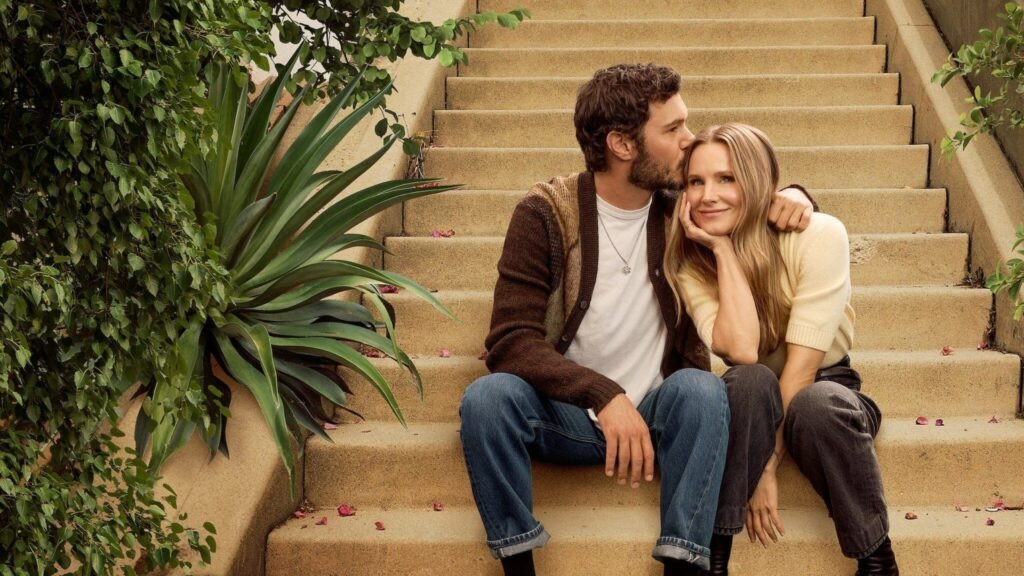
The interview’s lighter stretch revealed something about how the show lands at home. Brody said his children, ages six and eleven, know he’s on the show and simply don’t care — though his daughter does light up about the fact that he works with Anna, and his wife, Leighton Meester, guest-starred in Season 2 as a mommy influencer with a childhood grudge against Bell’s Joanne. What did register with the kids was darker: Brody showed them a clip from Scream 4, in which he appeared as Deputy Hoss and was killed by Ghostface, and his six-year-old has now decided to dress as Ghostface for Halloween. “He murdered daddy,” Brody summed up, with the deadpan timing his fans know from the show.
There was also a reminder of the road to the rabbi role, which fits the rest of his life better than it might seem. Brody said he flirted with acting at twelve, did a single school play as a paperboy in an adult production, found it unsatisfying, and stepped away for years — during which he worked as a janitor at a local swimming pool (he was too small to hold the leaf blower), a car wash, Einstein’s Bagels, surf shops, a hotel minibar restocker, and a supermarket he got fired from. His last job before acting, he said, was at a Blockbuster, a detail confirmed back in a 2023 Associated Press interview and one he acknowledged his eleven-year-old can’t quite process. The one piece of childhood nostalgia he did hand down: a first concert at age twelve, front row at a local hip-hop radio show — the year, he figured, was 1992, which would put Kriss Kross at the peak of their run. Between the Blockbuster shifts and the Ghostface demise, the guy now famous as the hot rabbi on Netflix has a résumé that reads less like a star’s and more like the plot of his own show’s underdog charm.
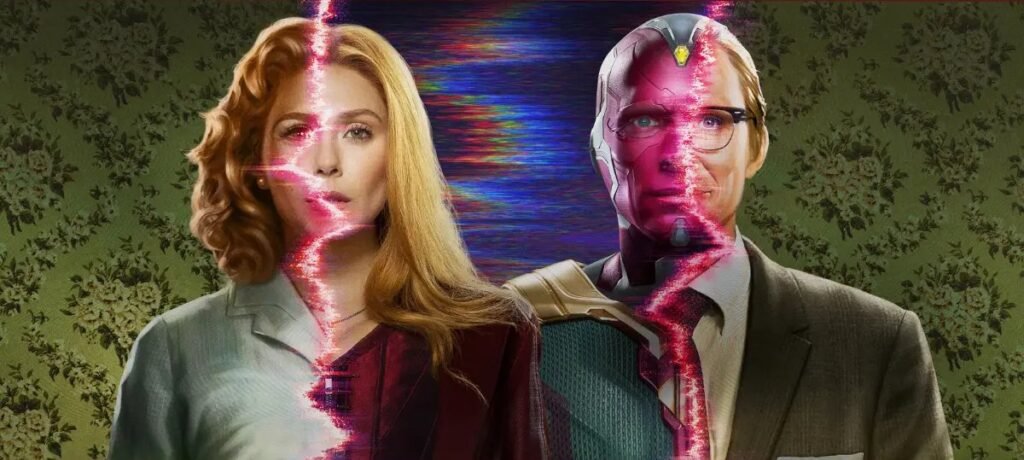
Marvel Television launched VisionQuest on Disney+ this week, dropping the first two episodes a day early on October 13 and kicking off an eight-episode run that closes the chapter Paul Bettany’s White Vision opened in WandaVision. The series picks up with Vision living quietly under a human alias before a bounty forces him onto the run with Thomas Shepard, a teenage boy who may be the reincarnated Tommy, the speedster son Wanda Maximoff created back in Westview. With new episodes arriving October 21 and 28, then November 4 and a finale on November 11, the rollout gives Marvel’s fall slate a steady weekly presence through mid-November.
Marvel has been explicit that this is the third and final entry in what fans first billed as the Westview Trilogy, following WandaVision in 2021 and Agatha All Along in 2024, and the studio itself has adopted the label in its own marketing. Five years after WandaVision redefined the MCU’s streaming ambitions with its sitcom-hopping grief story, the new series trades those TV-pastiche gimmicks for straight science fiction about memory and artificial consciousness. Early reviews suggest a solid but not unanimous landing: VisionQuest holds 82% on Rotten Tomatoes from 45 reviews and 62 on Metacritic, with critics praising Bettany and James Spader’s performances while some, including Variety, fault the show for keeping its emotional core at arm’s length.
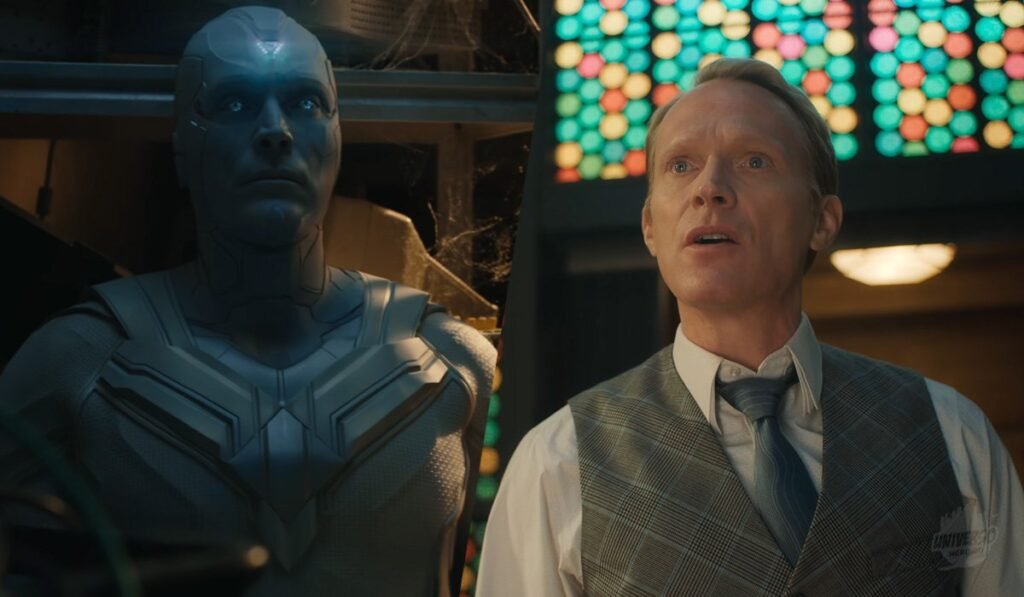
The timing has little to do with algorithm luck. Marvel surprised New York Comic Con on October 8 by screening the premiere at the end of its Television and Animation panel, with Bettany, Spader, Ruaridh Mollica and Emily Hampshire on stage, lifting the review embargo the same evening and seeding a full week of coverage ahead of launch. The casting news did the rest of the heavy lifting: Spader is back as Ultron for the first time since Avengers: Age of Ultron, now living inside Vision’s programming as one of several AI personas rather than a physical threat, and Mollica plays the older Tommy opposite Bettany. Todd Stashwick rounds out the board as Paladin, the bounty hunter chasing them, while Hampshire voices E.D.I.T.H., the AI originally introduced in Spider-Man: Far From Home. As of launch day, no viewership figures have been released, so the actual audience numbers remain the one piece of the story still unwritten.
Behind the camera, the project changed hands in ways that shaped what landed on screen. Jac Schaeffer, the creator who launched WandaVision and later ran Agatha All Along, stepped away from the spinoff amid scheduling conflicts, and Terry Matalas — the showrunner behind Star Trek: Picard’s warmly received third season — took over in 2024. Matalas has said the writers were largely left alone to tell their story, with Marvel Studios chief Kevin Feige handing him a single non-negotiable: bring Vision and his son together. The result lands at a moment when Marvel’s TV phase is still searching for a reliable identity, which makes a contained, self-contained character study an unusually clean bet.
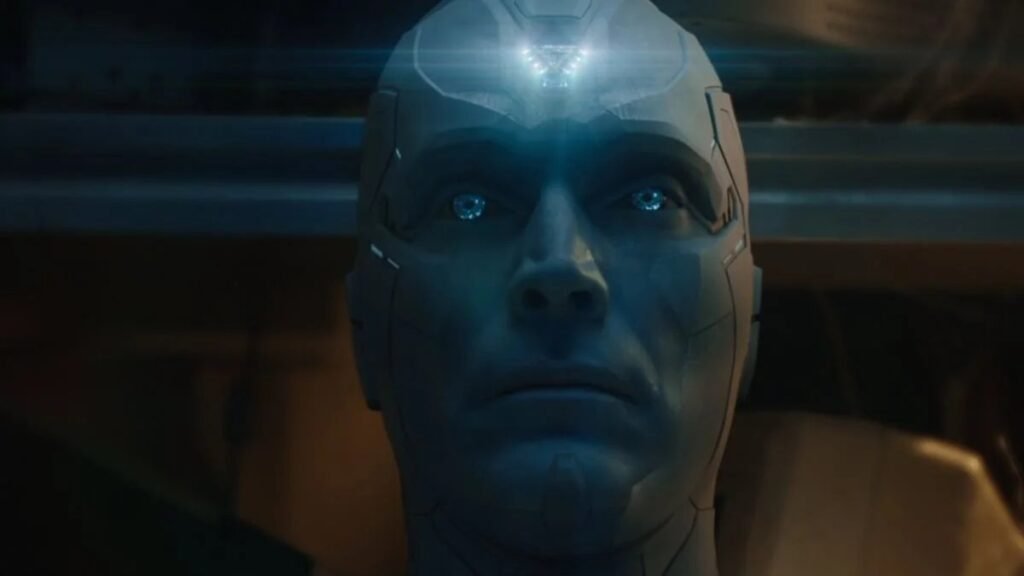
Whether VisionQuest sticks the landing won’t be clear until the finale on November 11, but its first week has already done something few MCU streaming launches manage lately: it arrived with a clear reason to exist beyond franchise maintenance. Bettany is also set to receive the Virtuoso Award at the SCAD Savannah Film Festival on October 26, keeping the conversation going well past the premiere. For viewers who have followed Vision from Ultron’s creation to Westview’s White Vision, the next four weeks answer the one question the trilogy has asked since 2021 — and, for once, the answer is actually scheduled.
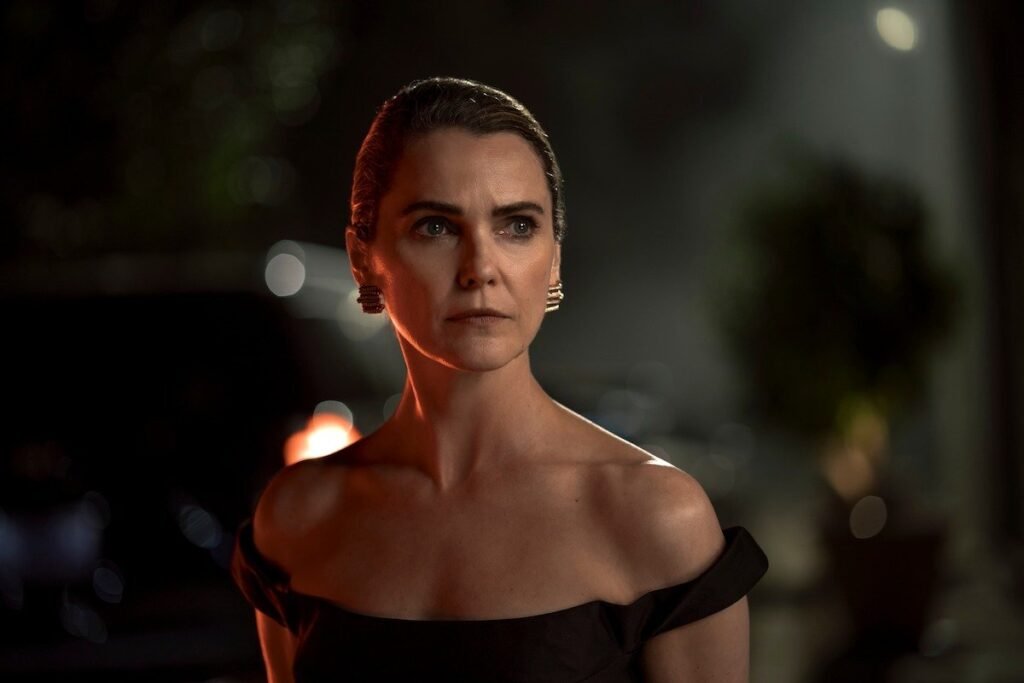
The Diplomat, the Netflix political drama created by Debora Cahn, returns on October 15 with eight new episodes, and the timing is no accident. The show arrives riding its best critical run ever — season 3 sits at 97% on Rotten Tomatoes and scored the series’ first Emmy win — plus a real awards-season haul: Keri Russell took home the SAG Award for drama actress in 2026, and Allison Janney won the Emmy for supporting actress the same year. Netflix dropped a teaser and a full trailer in the weeks before the premiere, and the streamer has been unusually forward about where the story goes next. Four seasons in, this is a show that grew from a handsome Embassy-survival drama into the streamer’s most decorated political thriller, and it’s not asking viewers to remember much to get back up to speed.
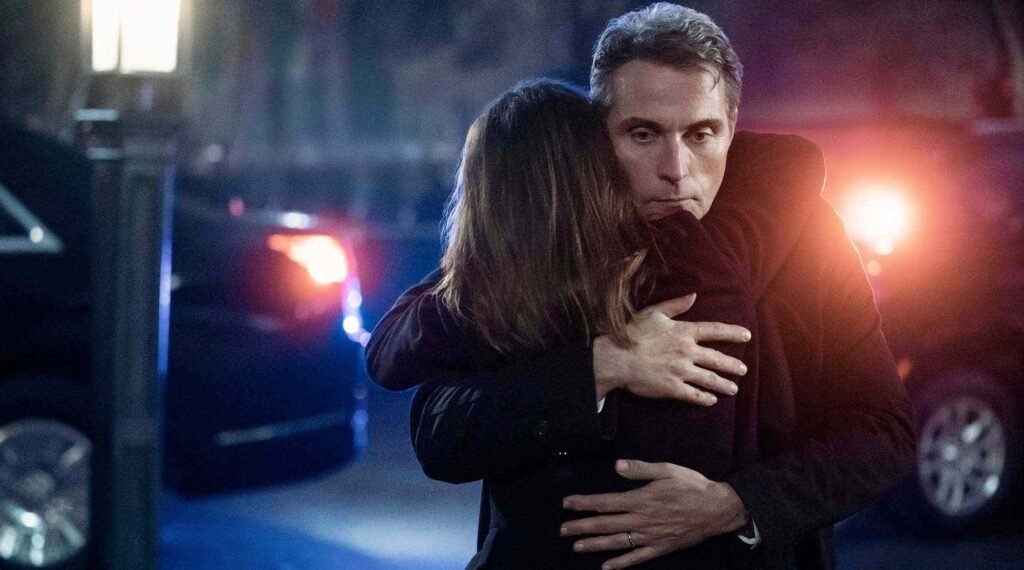
The trajectory matters. The Diplomat premiered in April 2023 and hit number one in its debut week with 57.48 million hours viewed in four days, landing in the Top 10 across 86 countries. Each season since has been better reviewed than the last — 84% on Rotten Tomatoes for season one, 95% for season two, 97% for season three, with Metacritic scores climbing in lockstep from 74 to 84. The Emmy nominations followed: ten in total, including two straight Outstanding Drama Series bids in 2025 and 2026, three lead actress nominations for Russell, and a 2026 supporting actor nod for Rufus Sewell. Season three, released in October 2025, hit number one on Nielsen’s weekly U.S. streaming chart with 1.24 billion minutes watched. That’s the setup entering season four: a show still peaking, with an audience already proven and waiting.
What’s driving the buzz right now is one specific question the season three finale refused to answer. President Grace Penn, who took office after William Rayburn’s death in season two, and Vice President Hal Wyler — Kate’s own husband — secretly pulled a Russian nuclear weapon called Poseidon off a submarine. The finale ends with Hal telling Penn that Kate knows. Season four picks up in the wreckage: Netflix’s official synopsis describes a catastrophic event that shatters the fragile U.S.–U.K. peace and Kate’s marriage at the same time, with the Penn–Hal conspiracy now threatening outright war and Kate forced into an alliance with First Gentleman Todd Penn against the woman she works for. It’s a genuinely loaded premise for a show that spent three seasons making diplomacy look like high-stakes combat. Nana Mensah, who plays chief of staff Billie Appiah, joins Janney and Whitford as a series regular this season — Netflix’s way of saying the White House scheming is now half the show.
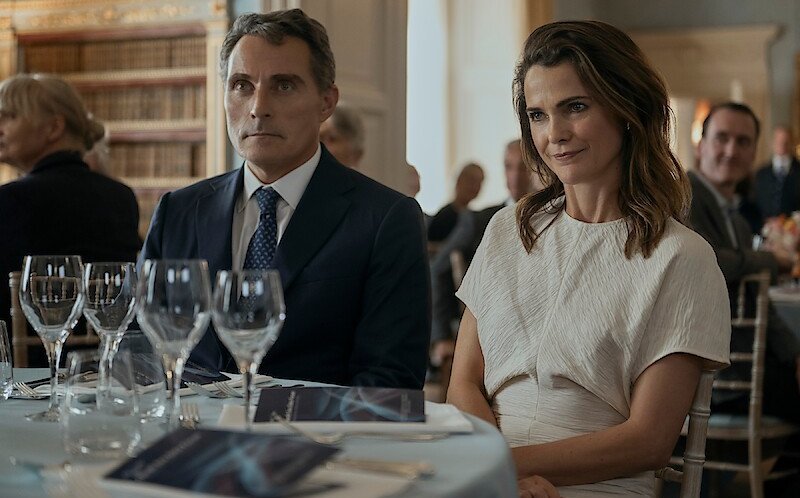
Behind it is Debora Cahn, a writer from The West Wing and Homeland who has run the series from day one and keeps the machine on a near-annual schedule; in an interview published days before the premiere, she described making each season as consuming “every waking hour and many non-waking ones.” Russell, meanwhile, has become a fixture of awards season three years running without any other high-profile project diluting her focus — this is her show. Sewell, as Hal, has quietly become the series’ most unpredictable element. What remains unknown is whether this is the end: Netflix has confirmed season four and nothing beyond it, and the streamer isn’t saying. That uncertainty turns October 15 into appointment viewing — the rare streaming return where the story’s future genuinely hangs in the balance, on screen and off.
After moving from Vancouver to LA, Tracker returns for season 4. Justin Hartley shares what’s next for Colter, from new secrets to crossover ideas.
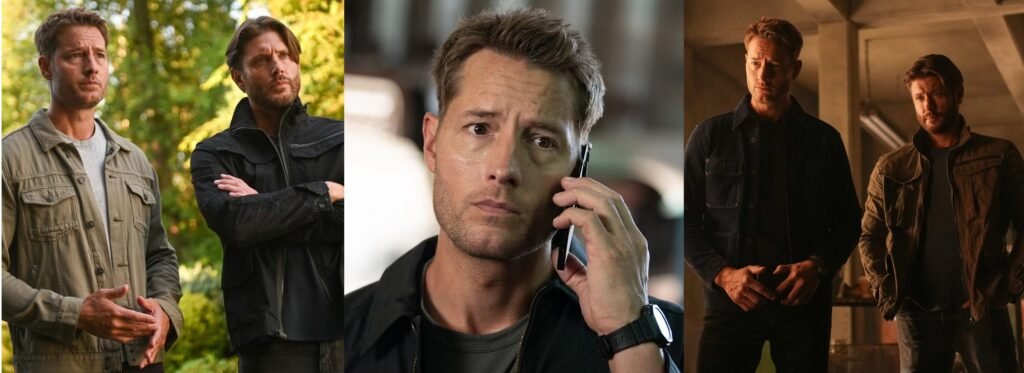
Justin Hartley says the fourth season of Tracker, which premiered Oct. 4 on CBS, turns up the action and, for the first time, gives Colter Shaw a bit of a personal life. Speaking with Entertainment Tonight in an exclusive interview on the show’s new Los Angeles set, the star teased that if Colter ties up some of the loose ends weighing on him, he may finally become available for romance. Hartley kept the details vague to avoid spoilers, but promised that the season stays true to the show’s blueprint and will feel familiar to longtime viewers.
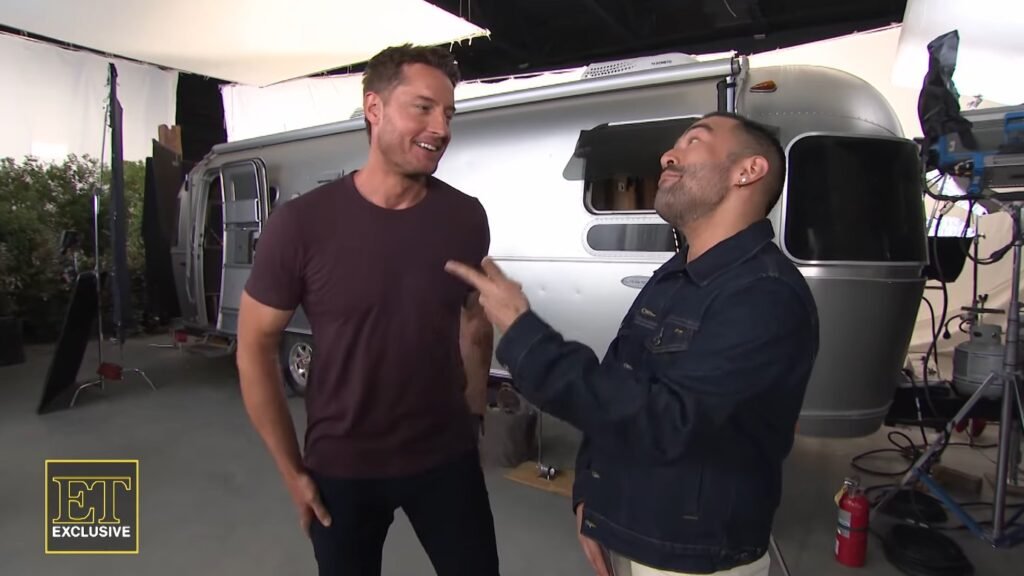
The new set is the other big story. The drama has relocated to Hollywood after three seasons in Vancouver, helped by a $48 million tax credit from the state of California. Hartley said he is glad to help chip away at the slump LA’s industry has suffered in recent years, while noting that the crew built something special in Vancouver and has a strong fan base there.
Shooting in LA also gives the show more room to play, since it can pass for mountains, ocean, desert or city, which suits a series about a drifter who travels constantly. Hartley, who lives in Los Angeles, joked that the biggest perk is sleeping in his own bed, adding that he has never actually slept in Colter’s Airstream.
On the story side, the season picks up after Colter believed he had solved the mysteries surrounding his father’s life and death, only to uncover new secrets that Hartley says affect him in a big way. The actor explained that he approaches the character as someone shaped by his experiences, much like a person who rearranges their life to avoid rush-hour traffic. In his view, the earlier, more idealistic Colter has changed, but he still believes people are naturally good. That outlook has been tested by his strained relationship with his brother, played by Jensen Ackles, a thread the new season continues to explore.
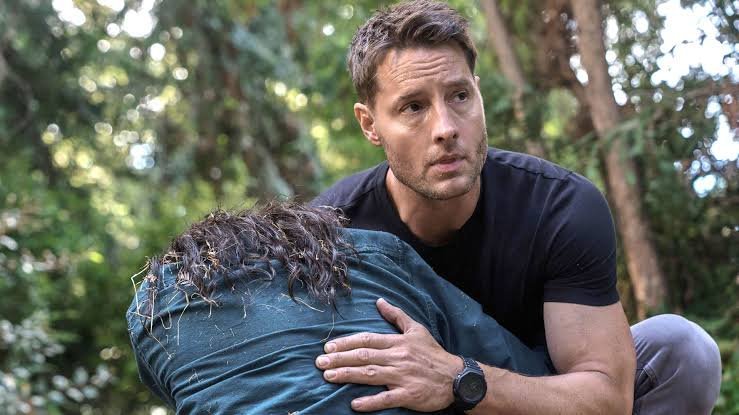
Hartley also reflected on how quickly the show has reached season four, saying he still can’t quite believe it. He credited the brisk cadence of the production, noting that many series today have no clear timetable between seasons. Although he leaves Colter behind when he goes home, he said he enjoys playing a hero with a moral north star who is also flawed and still figuring things out.
With the show now based in Los Angeles, the interviewer floated the idea of TV crossovers, and Hartley was game. He said Colter would gladly help Kathy Bates on a case in Matlock, and he was equally open to a visit with the NCIS team. For now, the move to Los Angeles marks a fresh start for Tracker, with a bigger canvas and a hero who may finally have time for something beyond the road.
When Paramount+ greenlit Tulsa King for a fifth season just weeks ahead of its fourth-season rollout, it proved that Dwight Manfredi’s brand of old-school mob justice isn’t losing any steam. The swift renewal comes as the crime drama prepares to drop its fourth season on October 16, giving fans an immediate double dose of confidence that the Taylor Sheridan-backed universe isn’t slowing down anytime soon. Rather than waiting to gauge viewer reactions to the upcoming batch of episodes, the platform locked in the future of its powerhouse asset early, cementing the show’s status as a top-tier streaming heavyweight.
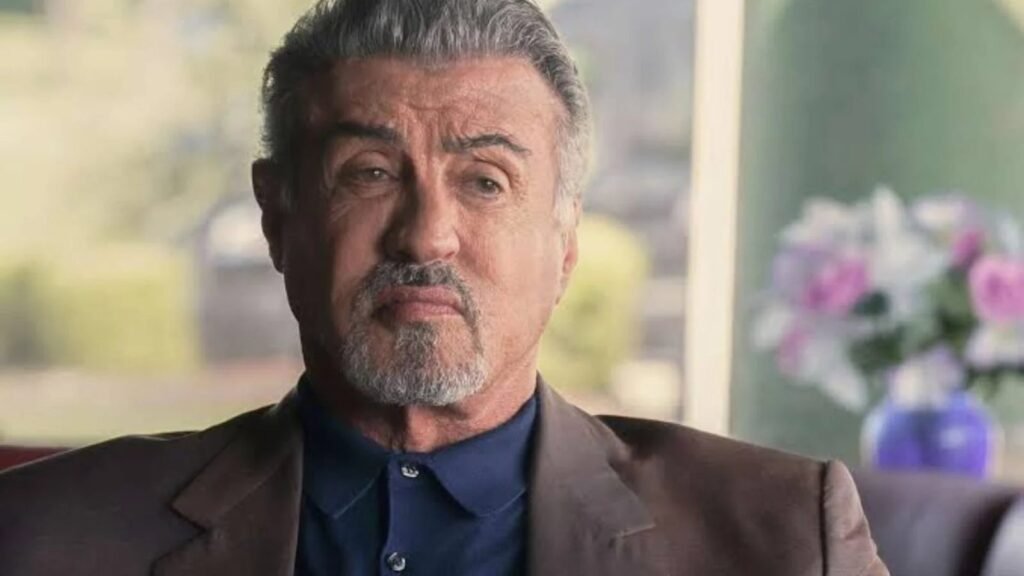
Ever since it first debuted in November 2022, the series has charted a steady climb from an amusing fish-out-of-water experiment into one of the most reliable draws on television. The premise—following a weathered New York mafia capo exiled to Oklahoma after a 25-year prison stretch—quickly hooked audiences by blending sharp crime syndicate grit with unexpected regional humor. Spanning multiple successful seasons that expanded Dwight’s criminal footprint, the show carved out a massive viewership base that consistently returned for the clever dialogue, high-stakes turf wars, and undeniable charisma of its lead.
The current wave of excitement is driven by a massive structural shift for the production alongside the double-whammy of a fresh renewal. Alongside the impending arrival of Season 4, the creative team announced that production for Season 5 officially kicked off in New York, marking a physical return to the character’s East Coast mafia roots after spending three years shooting in Atlanta. This relocation mirrors a narrative pivot back to where it all began, setting up a high-voltage collision between Dwight’s hard-earned Oklahoma empire and the original New York underworld that tried to throw him away.
At the center of this momentum remains Sylvester Stallone, who continues to shape the series both as its gravel-voiced protagonist, Dwight “The General” Manfredi, and as an executive producer. The upcoming blocks of episodes also mix up the family dynamic by promoting Scarlet Rose Stallone to a series regular, while injecting fresh blood into the ensemble with industry veterans like Erik Palladino and Glenn Fleshler. With production actively underway on the streets of New York and a bulletproof streaming future already guaranteed, the kingpin of Tulsa is proving he can rule just as comfortably wherever he plants his flag.

There is a small, reliable pleasure that belongs to the American autumn: the window cracked against the first cold, the kettle on, the blanket that only comes down from the closet shelf when the leaves do. This November, that ritual gets an outrageous upgrade. On Wednesday, November 11, The Lord of the Rings: The Rings of Power returns to Prime Video — and for the first time in the show’s history, Amazon is not dispensing Middle-earth one patient installment at a time. The first four of eight episodes arrive at once, like a host who, upon answer the door, sets the whole table before you can take off your coat. Two more chapters follow on November 18, and the season closes — as we now know the truly great stories insist on doing — with a two-part finale on November 25. In an era when streaming schedules are engineered to ration your longing, the gesture reads like something almost old-fashioned: an invitation to settle in beside the fire and stay.
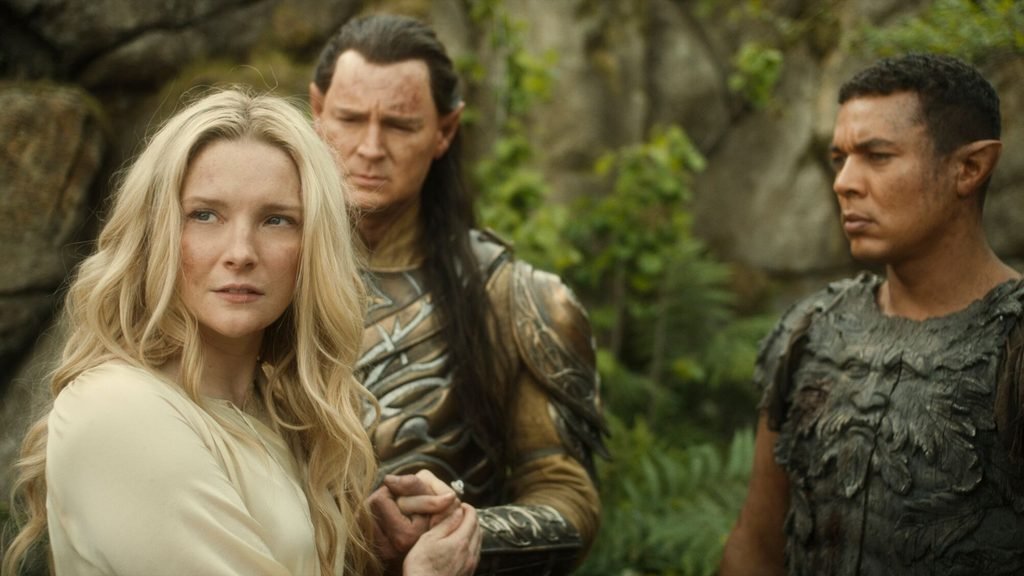
And what is waiting behind that door deserves the candlelight. The showrunners have told us where we’re going — five years after the fall of Eregion, a war story in which what was gathering shadow finally begins to take shape — and the season’s center of gravity is not a battle at all, at least not at first. It’s a reunion. After two full seasons of absence, invisibility, and grief that Galadriel carried like a hidden wound, Celeborn arrives — played by Jamie Campbell Bower, in what may be the single most quietly awaited entrance the series has staged. Think about what the show has been holding in reserve: a wife who believes she is widowed, learning that her husband lives. Tolkien’s Second Age is a chronicle of realms and rings, but its most devastating magic has always been intimate, and the return of a love thought lost is exactly the kind of grace note this series has been saving for the moment its world turns darkest. The season’s warmth and its shadow arrive together — which is, perhaps, the most Tolkien thing about it.
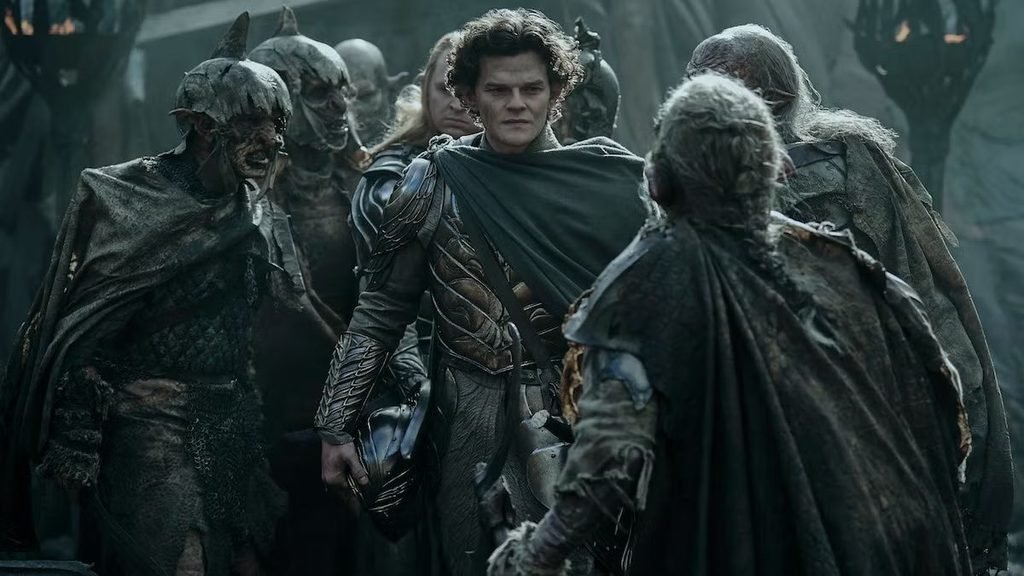
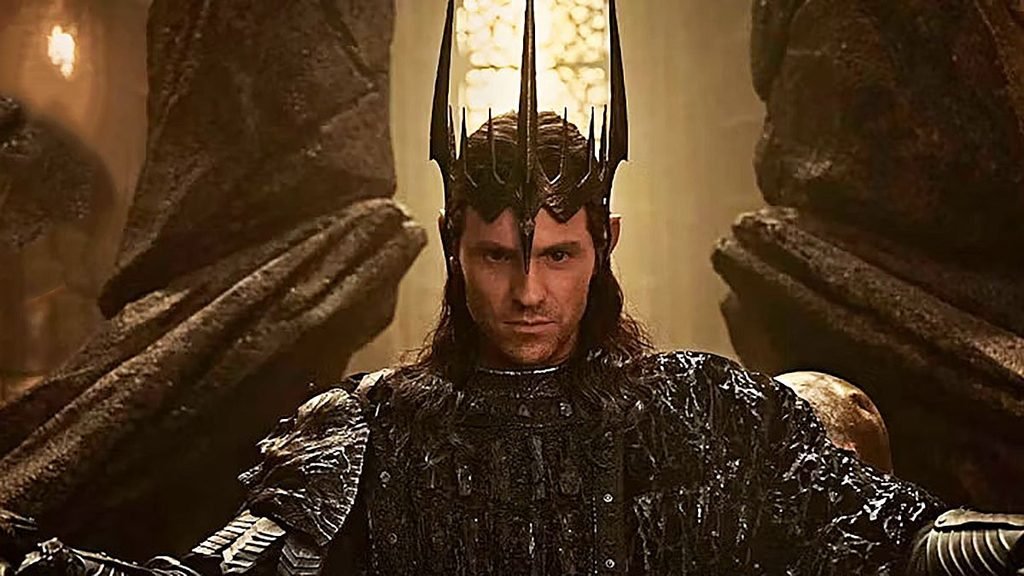
Then there is the matter of the Ring itself. Patrick McKay, half of the showrunner duo, has confirmed plainly what the teaser promised: this is the season in which Sauron — Charlie Vickers, chilling in his restraint — makes the One Ring, in the volcano, and the forging that the entire saga has been orbiting finally begins in earnest. McKay has described the change of tone bluntly: “Darker, more dangerous. No-one is safe,” with the first two seasons having spent their years lighting fuses so that all those bombs could start exploding now. And alongside the One Ring comes its promise of servants: the studio has introduced four ring-wraiths of Sauron — figures the official material frames as an earlier Second Age incarnation of the Ringwraiths we know are coming, with the Easterling Khamûl among them. Parse that carefully and you feel the floor tilt: the clay of the Nine Kings of Men, the Nazgûl-to-be, is already being gathered somewhere offscreen. That is the show’s masterstroke of dramatic architecture — we, the audience, are the only ones in the theater who know how the poem ends, and every honor these characters perform, every vow they swear, is being inscribed in a hand they cannot yet read.
What a gift, honestly, that it all lands in the heart of the season made for it. The Rings of Power has spent its life being argued about, but Season 3 feels designed for the people who stopped arguing and just stayed — the ones who kept the faith that this间的 Middle-earth would grow into its own weather. A darker season, yes. A war, yes. But war in Tolkien was never the point; it was the pressure that revealed what love, and loyalty, and small stubborn courage were actually made of. So light the candle. Queue the first four episodes the way earlier generations queued the carols — without irony, without apology. Middle-earth does not come home often, and when it does, it comes full: the husband returned from the edge of death, the Ring on its way to being, the wraiths stirring in the distance, and three quiet weeks of November to watch the age turn. Some marathons are about deciding whether a show is good. This one is about remembering why we ever wanted to go there in the first place — and how good it feels, on the first cold night of fall, to be believed when we say we’re going.
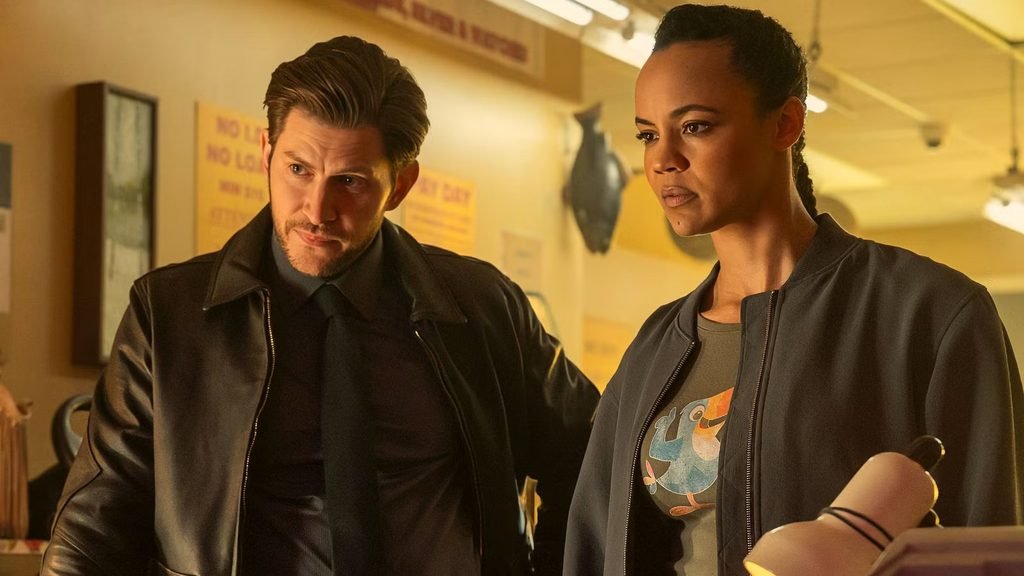
Here’s the thing Prime Video understood before anyone else did: the most interesting person in the Jack Reacher universe was never the 250-pound drifter at all. It was the five-foot-four intelligence specialist who could dismantle a bar full of oversized men, and who eats Cocoa Puffs for dinner like the tradition runs three generations deep. When Neagley premiered on September 16, 2026 — eight episodes dropped directly onto the Reacher Season 4 finale — the platform wasn’t launching a spin-off so much as finally handing the keys to the person in the passenger seat who’d been driving half the time anyway. Maria Sten had spent three seasons turning Frances Neagley, a Lee Child secondary character with no solo novel to lean on, into a fan favorite through sheer precision: the clipped dialogue, the no-nonsense posture, the personality of someone who has never once needed to raise her voice to end a room. Amazon bet that audiences would follow her without the human battering ram beside her. They did — 40 million global viewers in thirteen days, the fourth-biggest original-series debut in Prime Video history, 52% of them international, and a Season 2 renewal confirmed on October 1, barely two weeks after the finale credits rolled.
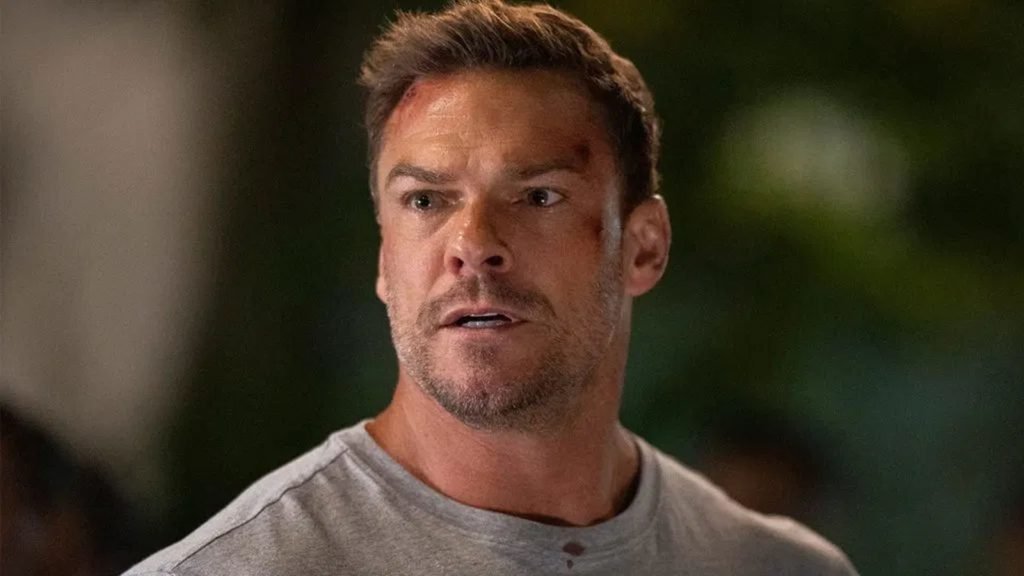
For the veterans, the series works like a well-timed callback — it honors the universe Lee Child built across three decades of paperbacks without ever asking viewers to show homework. Neagley’s past in the Army’s 110th Special Investigations Unit, the tight-knit team of military investigators she served alongside in Reacher and in Child’s Bad Luck and Trouble, isn’t recited; it informs everything she does. Her obsessive Cocoa Puffs ritual returns as a quiet badge of continuity, the kind of detail that reads as a wink to longtime fans rather than a prerequisite. And when Alan Ritchson’s Reacher appears, it’s as connective tissue, not an anchor. The series trusts that if you already knew her, you’d understand; if you didn’t, you’d want to. That’s the difference between adaptation as citation and adaptation as inheritance.
For everyone else, the good news is simpler: Neagley works as a fully self-contained urban thriller without a single episode of Reacher required. The premise — a Chicago private investigator whose beloved childhood friend dies in what everyone official swears was an accident — is as old and as reliable as noir itself, and the show builds outward from that loss into a conspiracy involving a cult-like commune and a pharmaceutical cover-up. Her Army past and her history with Reacher supply texture, not prerequisites; a newcomer can meet her mid-investigation and simply follow the case. Amazon knew exactly what it was wiring: the Reacher finale functioned as an airstrip, one franchise handing a baton to the next. And now the handoff has become a relay: three days before Neagley’s second season was made official on October 1, Amazon greenlit Reacher for a sixth — announced this week, with Season 5 already in production — giving the parent series its first double renewal in a single year, per Deadline. The rumor that spin-offs cannibalize their source material is, at this point, hard to find in any of these spreadsheets.
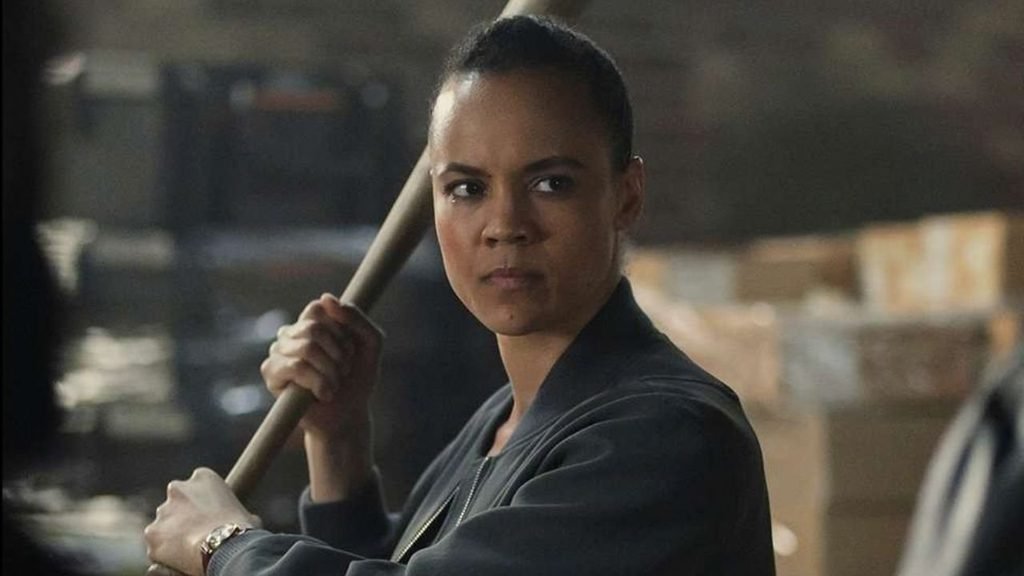
That’s the needle the show ultimately threads, and it’s the reason the dual renewal week feels earned rather than inevitable. Variety’s review argued that a franchise loses something when Reacher leaves the room — a fair critique of a show betting on quiet competence in a genre addicted to spectacle. But Neagley’s counterargument is baked into its design: it never needed the giant. Sten plays the character with the discipline of someone who survived an institution that manufactured men like Reacher as a survival strategy, and the show lets competence itself be the spectacle — checklists, constructions, the slow tightening of a case that closes on the villain’s own schedule. In a landscape where most spin-offs are licensing exercises wearing a dead star’s clothes, this one walked away from the mothership on its own legs — 94% on Rotten Tomatoes, a Nielsen No. 1 premiere week, and now two confirmed seasons running parallel with Reacher’s own future. With Reacher strapping in for a sixth lap and Neagley locked for Season 2, the universe Lee Child built has become the rare TV dynasty where the spin-off isn’t the apology — it’s the argument. Frances Neagley, twenty-plus years after Child first wrote her, was never a supporting character at all.
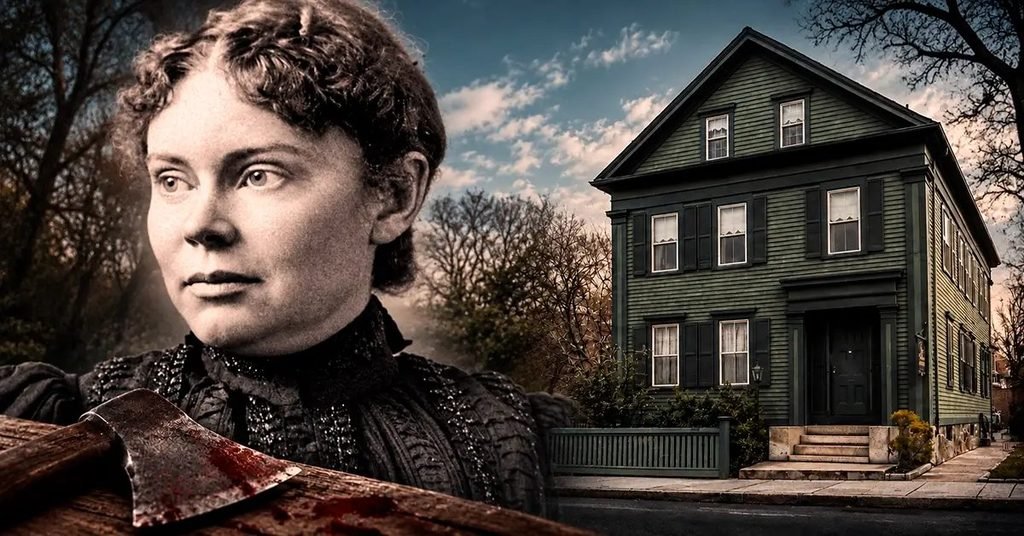
The first thing America ever wrote about Lizzie Borden — at least the earliest version anyone has ever located in print — ran in an Ohio newspaper on February 15, 1894, eight months after a jury acquitted her. The verse said she gave her mother “twenty whacks.” Within a generation, the count had swelled to forty. Within our own, it’s taught to schoolchildren with the confidence of scripture: forty whacks for the mother, forty-one for the father, eighty-one total. The real autopsy tallies, per historians, suggest roughly 29 blows combined — 18 or 19 to Abby Borden, 10 or 11 to Andrew. And Abby wasn’t Lizzie’s mother at all. She was her stepmother. The weapon was never conclusively identified. And the verse, despite the minor detail of an acquittal in June 1893, states her guilt as flat fact. Every single line is wrong. It’s still the most successful piece of true-crime content America ever produced, and it ran on nothing but rhythm and spite.
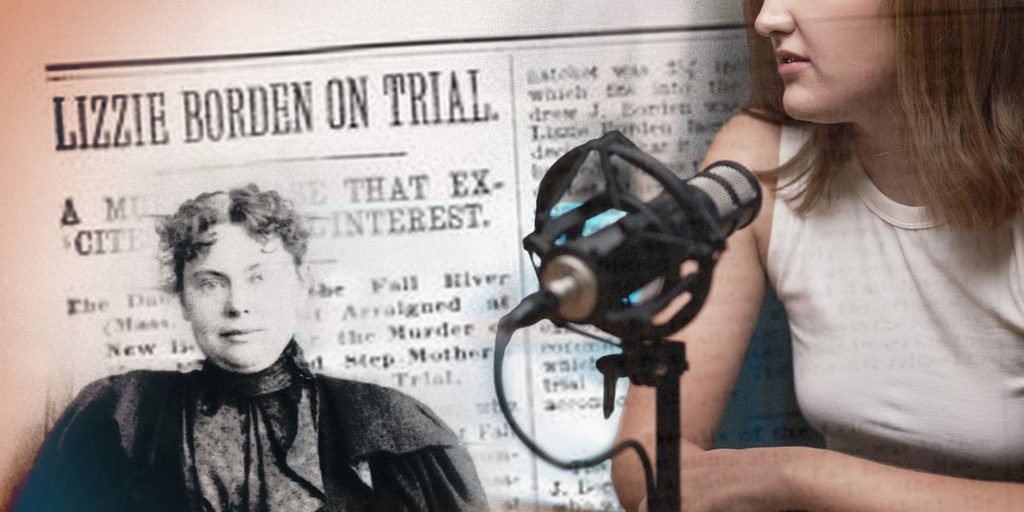
The actual case was messier than the rhyme allowed, which is precisely why the rhyme won. On August 4, 1892, Andrew and Abby Borden were killed in their Fall River, Massachusetts home, with evidence suggesting the deaths came perhaps ninety minutes apart — Abby’s body was cold when officers arrived; Andrew’s was still warm. Lizzie, 32, was home with the maid, Bridget Sullivan, and her account of the morning — a trip to the barn to look for fishing sinkers — shifted under inquest questioning. Then there was the blue dress, burned in the kitchen stove days after the murders, per a neighbor’s testimony; prosecutors thought it might have been painted with something other than paint, though it was never proven. A hatchet head with a broken handle and a clean blade surfaced in the basement. None of it added up to a conviction, and at the 1893 trial in New Bedford, the prosecution displayed the victims’ skulls in open court — one account has Lizzie fainting at the sight — before an all-male jury needed roughly ninety minutes to acquit. The newspapers of 1893 didn’t wait for the verdict to decide anything. They never do. That’s not a bug of American media; it’s the business model.

Now Netflix has run the story back, and America has hit play the way it always does. Monster: The Lizzie Borden Story, the fourth installment of Ryan Murphy and Ian Brennan’s anthology, premiered September 17 with Ella Beatty as Lizzie, Vicky Krieps as Sullivan, Rebecca Hall as Abby, and Charlie Hunnam as Andrew. It hit No. 1 on Netflix’s Top 10 and pulled in about 12 million views in its first four days, per Variety — a September surge the streamer did not have to wait for. Which is the thing worth sitting with: a case with no surviving evidence pointing anywhere definitive, no weapon, no confession, a defendant legally innocent for 133 years, and yet the number one show in America. The algorithm is just the Ohio newspaper with better distribution. The rhyme compresses uncertainty into a verdict; the streaming platform compresses it into a thumbnail, and the physics are identical — the story always beats the evidence, because evidence requires effort and a hook requires only an axe.
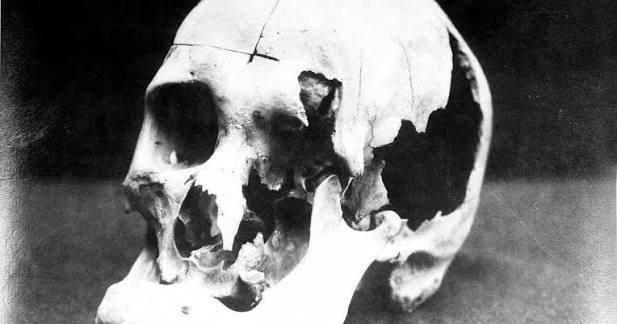
Here’s the anxious part, the part the view count quietly confesses: we don’t actually consume true crime for truth. We consume it for permission. The 1893 public got to gasp at skulls in a courtroom; the 2026 public gets eight episodes and a closed narrative loop, and in both cases the entertainment is settled in a way the facts never were. The rhyme convicted Lizzie because a conviction made a better verse; Netflix flagged nothing unresolved, because an unresolved case makes worse autoplay. This is the same appetite that fills the Lizzie Borden House — the actual murder house at 230 Second Street, operating as a museum and bed-and-breakfast since 1996 — with paying guests who book overnight stays and ghost hunts at the scene of crimes no one was ever convicted of. We sleep in it, we stream it, we hum it. Lizzie herself lived the aftermath the rhyme never bothered to mention: ostracized in Fall River, estranged from her sister Emma by 1905, dead in 1927. The law acquitted her. The culture never did. In 1894, somebody edited the rhyme up to forty whacks. In September 2026, the algorithm added twelve million views. The verdict never mattered. The story does.
In one of the most fitting casting announcements in recent memory, AMC and AMC+ have greenlit “Happy Jack,” a new half-hour comedy starring Charlie Sheen and his real-life father, Martin Sheen — playing, yes, father and son. The announcement dropped September 29, and it’s not a rumor or a project being shopped around: AMC has officially ordered six episodes, with production planned for early 2027 at Warner Bros. Studios in Burbank and a premiere set for 2027. Even more interesting for the TV nerds: according to The Hollywood Reporter, this will be the network’s first-ever multicamera comedy — prestige-drama home AMC stepping into the classic, live-audience sitcom format with one of television’s most famous families at the helm.
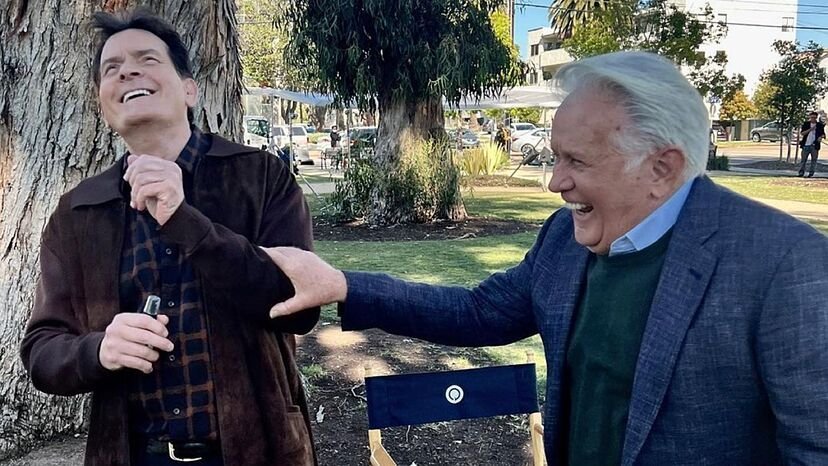
The Sheens’ joint TV history is, in itself, a story worth telling. Charlie Sheen spent the 2000s as network TV’s biggest comedy star, headlining “Two and a Half Men” from 2003 to 2011 before his highly public exit, then racked up 100 episodes of FX’s “Anger Management” through 2014 — and hasn’t held a regular scripted TV role since. Martin Sheen, meanwhile, is broadcast royalty: the Emmy-nominated lead of seven seasons of “The West Wing,” and more recently seven seasons of Netflix’s “Grace and Frankie.” They’ve shared movie screens before, but “Happy Jack” marks the first time in Charlie Sheen’s career that the two will co-star in a scripted television series. For a comeback vehicle, casting your own father is about as airtight as marketing gets.
So why is this happening now? The runway was quietly built over the past year. In September 2025, Sheen released his memoir “The Book of Sheen” — a No. 1 bestseller on Amazon on release day — followed immediately by the two-part Netflix documentary “aka Charlie Sheen,” which pulled him back into the center of pop-culture conversation after a decade out of the spotlight. In interviews around that publicity wave, Sheen said he was open to acting again. A year later, that openness has become an actual series order. The premise gives the pairing real comedy material: Charlie plays Jack Chambers, a lifelong ne’er-do-well with two daughters, whose world flips when his daughter Sam comes home with a boyfriend the same age as Jack — forcing him to choose between looking out for himself and stepping up as a father. Father and son, on screen and off, in a show about growing up late.
The creative team adds a knowing wink to the whole setup. “Happy Jack” was created by Jim Patterson and Matt Ross, who will co-showrun and executive produce — and both are veterans of “Two and a Half Men” and “The Ranch,” the sitcom world where Charlie Sheen made his name. Patterson, in particular, spent years writing for Sheen’s most famous show, which makes this less of a cold reunion and more of a homecoming with a new address. Charlie Sheen is also an executive producer, a detail that suggests the comeback comes with some ownership this time. When the series hits AMC and AMC+ in 2027, it will arrive carrying a rare double narrative: a star’s first scripted series in over a decade, and television’s most recognizable father-son duo finally playing family — in a comedy, on a network that’s never tried this format, with everything to prove. If past is prologue for the Sheens, “Happy Jack” should have at least one guaranteed quality: it will not be boring.
The year 3000 keeps pulling the planet Express crew back for encores. On September 28, Hulu aired “Final Ending: The Last Conclusion,” the season 14 finale of “Futurama” — and the very same day, Variety published an interview in which co-creator Matt Groening said there are no current plans for the show to return as a regular series. Cue the predictable headlines about the end of “Futurama.” Except here’s the thing anyone who has followed this show knows: “Futurama” has been ending for longer than most shows have existed. The crew has been cancelled, resurrected, boxed up on DVD, rebooted and re-streamed so many times that Groening himself told Variety, “Well, we’ve come to an end many times before.” In the same breath, he added, “They can put us in a coffin, they can nail the lid shut, but they can’t bury us. We will rise again.”
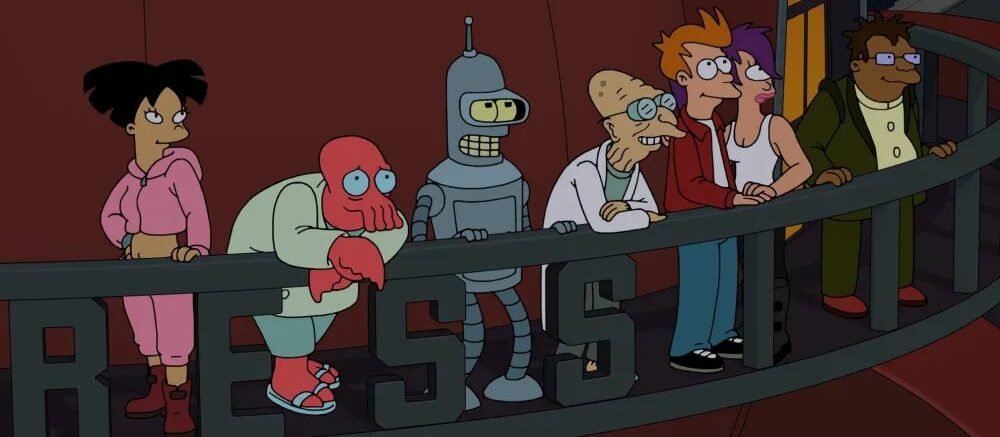
The résumé justifies the swagger. “Futurama” was born on Fox in 1999 from the mind of Groening and co-creator David X. Cohen, and the network gave it the axe in 2003 after 72 episodes — while fans were still figuring out how much they loved it. Then came the improbable first resurrection: four direct-to-DVD movies between 2007 and 2009, which Comedy Central chopped into episodes before ordering 52 brand-new ones that ran from 2010 to 2013. Then silence, until Hulu shocked the industry in February 2022 with a 20-episode revival order — followed by another 20-episode pickup in 2023 that carried the show through seasons 11, 12, 13 and 14. Along the way the show banked six Emmy wins and 14 nominations, including two for Outstanding Animated Program, and kept critics broadly charmed: the Hulu revival opened with an 86 percent critics score in 2023 and season 13 landed at a perfect 100 percent on Rotten Tomatoes this year, albeit from a small pool of reviews.
Why does this particular ending feel different? Timing, mostly. The news didn’t leak through a press release or a trade report of an order not being picked up — it arrived bundled with the finale itself, in Groening’s own wry mouth, hours before “Final Ending: The Last Conclusion” started streaming. And the signal behind the signal is clear: three supersized, so-called “XXXL-Sized” specials are already in production at Hulu, with the first — a Christmas-themed episode — slated for 2027. That’s the studio’s way of saying the door isn’t locked, even if the regular-season machinery goes quiet. Billy West, who voices Fry and Professor Farnsworth, told UPI on the eve of the finale that the writers always prepare for the possibility of no return while keeping a parachute packed — and noted that fans keep telling him season 14 has a “first season vibe,” as energetic as anything since the show began.
The cast, meanwhile, has earned its place in the story as much as the animation. West and John DiMaggio (Bender) and Katey Sagal (Leela) have voiced these characters across four separate networks and formats — a feat few voice casts ever match — and DiMaggio’s own 2022 pay dispute, resolved days before the Hulu revival’s cameras rolled, became the emblem of the cast fighting for the show’s survival rather than walking from it. Executive producers Cohen, Ken Keeler and Claudia Katz remain the engine behind the revival’s critical streak. So here we are again: season 14 has ended, no season 15 is on the books, and history suggests betting against this show is a losing wager. After all, “Futurama” once delivered an episode called “Roswell That Ends Well” — and few shows in television history have ever ended quite so well, so repeatedly, as this one.
HBO’s “The Last of Us” just made its biggest move of the fall. On September 26, the network announced that John Goodman, Laura Bailey and Ian Alexander have joined the cast of Season 3, the chapter that returns in 2027 and is expected to steer the story toward its finish line. On paper, it’s a routine casting drop. In practice, it’s a fascinating one — because two of the three names happen to be two of the most important voices in the history of the game this whole thing is based on.
The road here has been remarkably strong. When the show debuted on HBO in January 2023, it opened to 4.7 million same-night viewers and did something almost nothing on television does anymore: it kept growing. By the finale, that number had climbed to 8.2 million, up roughly 75 percent — and early episodes eventually stacked up around 30 million viewers each across platforms. Awards followed: 24 Emmy nominations and eight wins for Season 1, plus a 96 percent critics score on Rotten Tomatoes. Season 2, which premiered in April 2025, ran hotter and colder: critics stayed on board at 92 percent, and it collected 16 more Emmy nominations, but its finale audience settled at 3.7 million and the audience score on Rotten Tomatoes dipped to 37 percent — proof that even prestige TV’s biggest survivor story can’t please everyone while killing off its co-lead.
So why is everyone talking about Season 3 right now? Three reasons landed within days of each other. First, the new casting — Goodman, Bailey and Alexander — signals characters and corners of the world we haven’t met yet. Second, the season itself is a structural pivot: after Season 2 spent seven episodes largely inside Ellie’s side of the story, Season 3 shifts the lens to Kaitlyn Dever’s Abby, the most argued-about character in modern gaming, finally getting her full airing. And third, the finish line is coming into view — HBO chief Casey Bloys indicated this month that Season 3 is planned as the last one, though showrunner Craig Mazin has previously said a fourth season would most likely be needed to complete the narrative. Either way, the endgame is officially on the calendar for 2027, and Mazin has promised a longer season, “more on par with season one,” than the seven-episode Season 2.
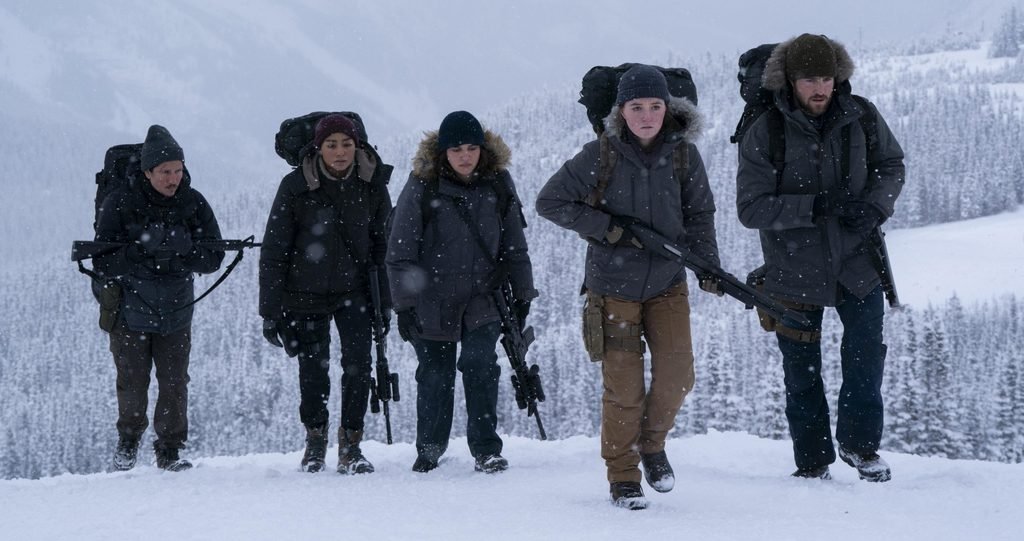
The new faces make the whole thing richer. John Goodman, the beloved big-screen fixture from “The Big Lebowski” and a decade of television royalty, is set to play a new character named Joey — not someone from the games, per the trade reports. Ian Alexander, who voiced Lev in “The Last of Us Part II,” will play Paco, and Laura Bailey, the voice of Abby herself, takes on Elizabeth, described as a leader among the Seraphites, the prophet-worshipping faction from the Seattle war. Neither is reprising their game role — instead, two of the most iconic voices in the franchise are now literally living inside its world in different skins. They join an already deepening bench: Peter Sarsgaard, Jason Ritter and Patrick Wilson all climbed aboard earlier in 2026, with Ariela Barer, Tati Gabrielle and Spencer Lord promoted to series regulars. Behind the camera, Mazin is flying solo as showrunner — Neil Druckmann, the game’s co-creator, stepped back from the series in July 2025 to focus on Naughty Dog, though he remains a co-creator and executive producer. As for the originals: Bella Ramsey is expected back as Ellie in a smaller dose, while Pedro Pascal’s return — Joel died, after all — hasn’t been confirmed.
In other words, the show that turned a mushroom apocalypse into must-see Sunday television is now entering its most interesting act: the one where the villain gets her say, the cast gets a legend like John Goodman, and two beloved game actors get to watch their characters’ world from the inside out. Nobody knows yet exactly how it ends — one season or two — but with cameras rolling in Vancouver since March and a 2027 premiere on the horizon, the longest wait in the post-apocalypse just got a whole lot more interesting.

Nearly three decades after Felicity made them one of television’s most beloved will-they-won’t-they pairs, Keri Russell and Scott Speedman are still finishing each other’s sentences — and still gently teasing each other about their ages. In a new conversation for Variety’s Actors on Actors series, published in June 2025, the two actors sit down not as co-stars trading nostalgia, but as old friends comparing notes on something far harder than television: how to keep loving a job that asks you to be watched for a living.
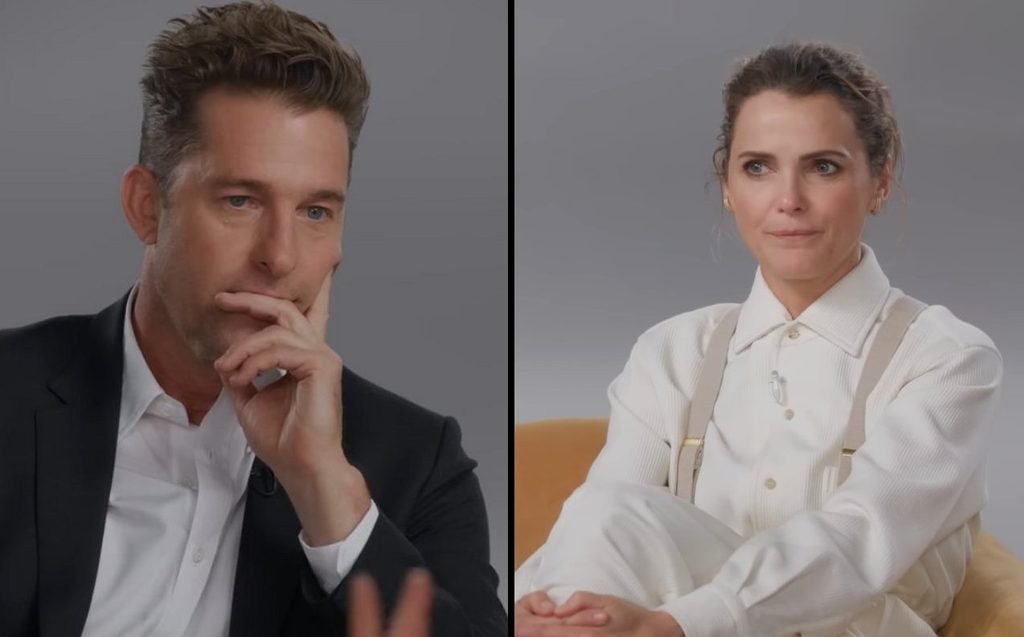
The premise is deliciously meta. Instead of fielding questions from a journalist, Russell and Speedman interview each other, armed with pre-written prompts they keep abandoning almost as soon as they begin. What emerges is less a reunion than a portrait of two shy kids who spent their twenties learning, very publicly, how to grow up.
They were both 22 when they shot the Felicity pilot in April 1998 — a fact they argue over with the intensity of people who have had this exact argument many times before. The WB drama, created by J.J. Abrams, turned Russell’s quiet, notebook-clutching college freshman into a generation’s romantic ideal and Speedman’s brooding Ben Covington into its enduring heartthrob. It ran for four seasons, ending in 2002, and neither of them has quite escaped it since. That’s not a complaint. In an industry that chews through young talent, Felicity gave them something rare: a shared origin story that still feels like home.
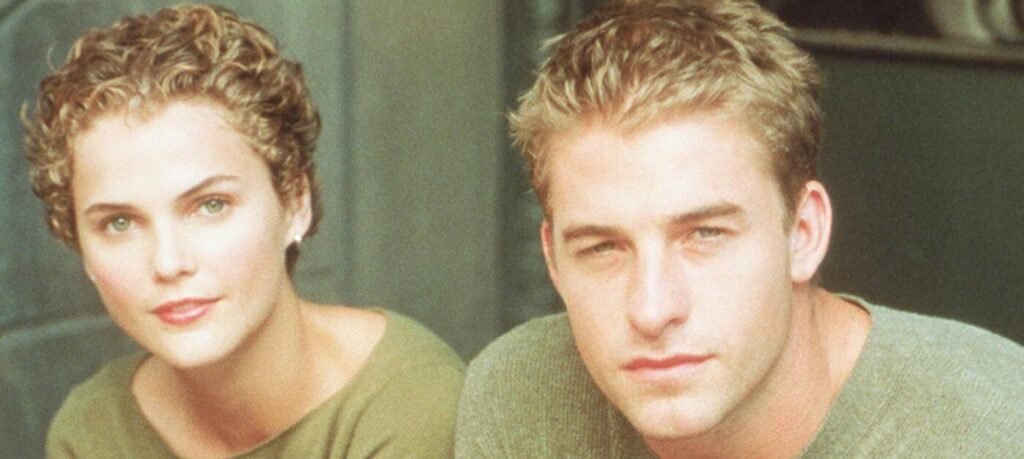
Speedman, characteristically, uses the occasion to roast Russell. She, in turn, points out that he was always the one who showed up knowing his lines — a work ethic she credits to his years as a competitive swimmer who reached the Olympic trials. He doesn’t disagree, but he adds the caveat that matters most: the discipline that builds a career is the same discipline you eventually have to unlearn.
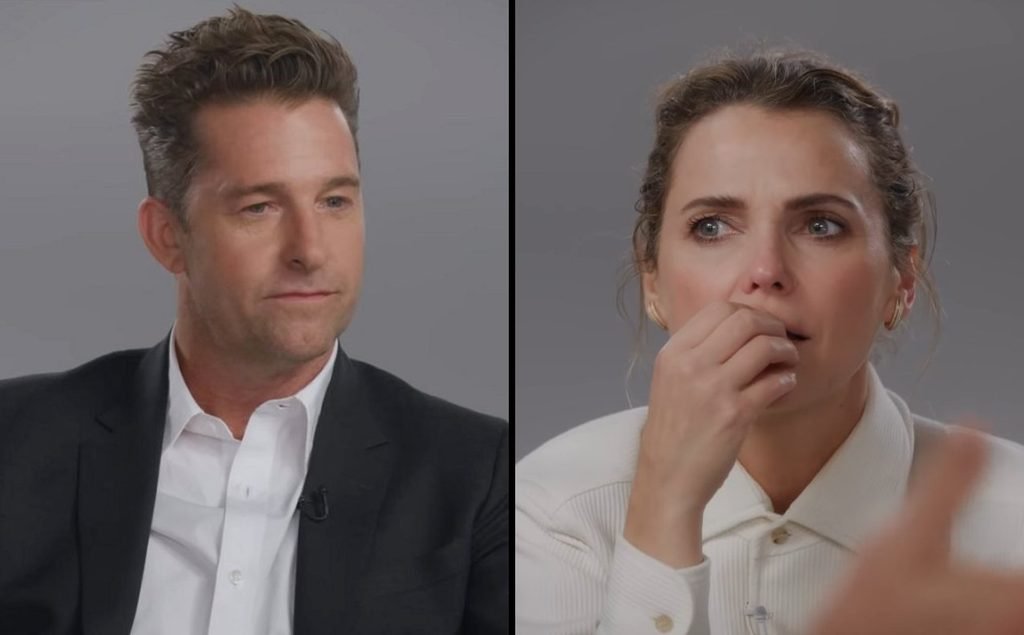
That tension — preparation versus surrender — is the quiet spine of the entire conversation.
Both actors confess to being over-preparers, the kind who run lines until their voices give out and then run them again. Speedman used to sprint around the stages before takes just to get out of his own head. Russell admits she was so anxious about memorizing the procedural jargon on Grey’s Anatomy, where Speedman now plays transplant surgeon Dr. Nick Marsh, that she quit coffee — caffeine, she found, made it harder to drop into dialogue.
But acting, they both eventually realized, rewards looseness more than muscle. Speedman describes himself as someone who fell in love with film before he fell in love with performing — a director’s actor, chasing Cronenberg and big ideas rather than the mechanics of the craft. Russell, who trained in dance rather than drama school, says she chases the writing. Good scripts, she explains, give her permission to stop being embarrassed.
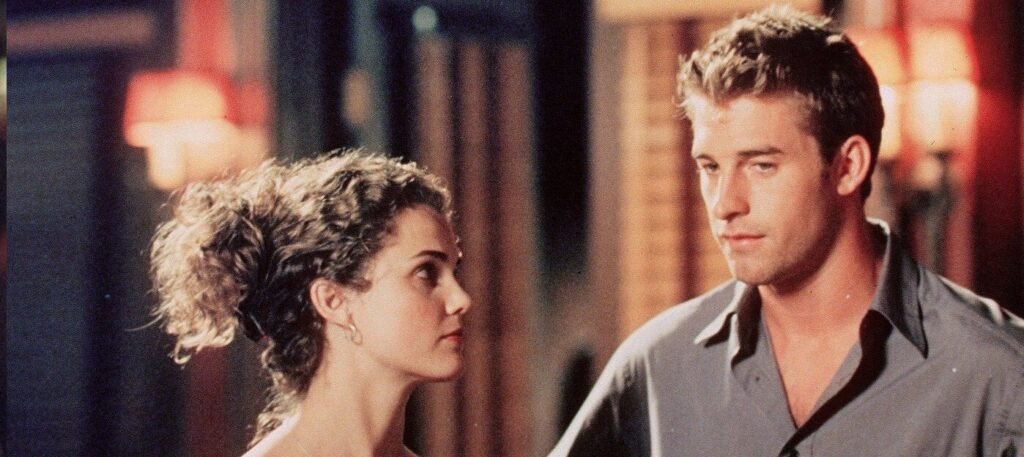
Because embarrassment, it turns out, never fully goes away. Speedman is startled to learn that Russell still gets nervous — that she downed a beer before their photo shoot and feels, some days, as self-conscious collecting her mail as she does on a red carpet. On screen, he tells her, she now reads as fearless, with no self-consciousness and no apology. Her answer is the most human moment in the interview: the visible tension people pick up on isn’t a flaw in her performance. It’s the performance.
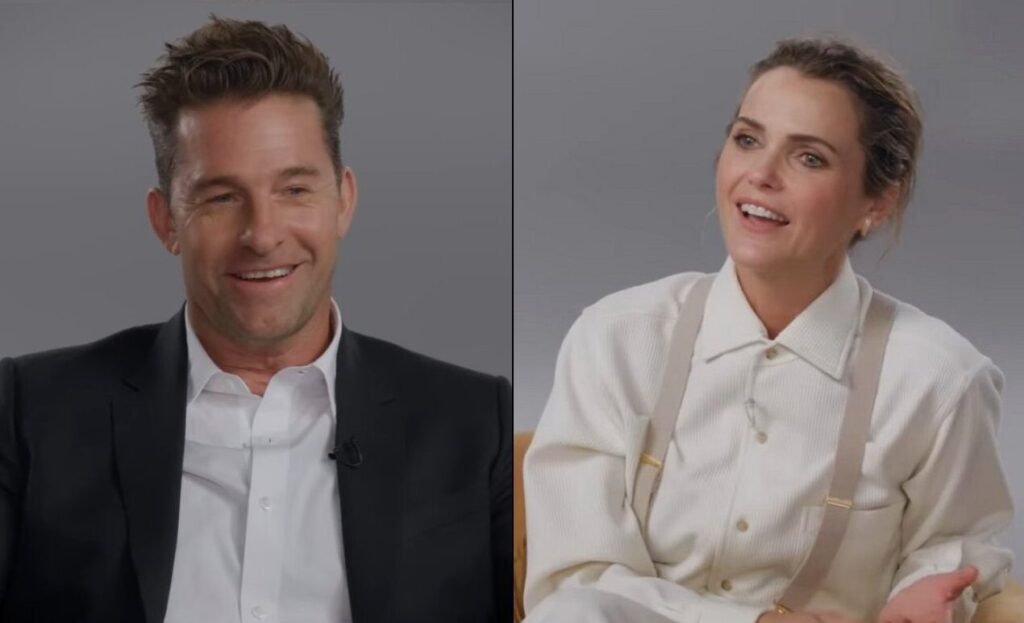
Russell illustrates the point with a story from The Diplomat, her Netflix political thriller in which she plays Ambassador Kate Wyler and serves as an executive producer. When Allison Janney arrived to shoot an episode, Russell was so convinced that a “real actor” was about to expose her as a fraud that she could barely breathe. Then she found Janney folded small in a makeup chair, nervous herself. The revelation — that everyone is nervous, all the way up — clearly stuck.
The Diplomat, which premiered in 2023 and has since earned Russell multiple Emmy and Golden Globe nominations, represents something new in her career: a show whose subject matter she genuinely lives for. The writers’ room consults real diplomats and policy experts, and Russell has met figures including Samantha Power and Ambassador Jane Hartley. Sitting in rooms with people that brilliant, she says, is both intimidating and exhilarating — a feeling she prefers to the alternative. Acting, she admits freely, can feel frivolous. This doesn’t.
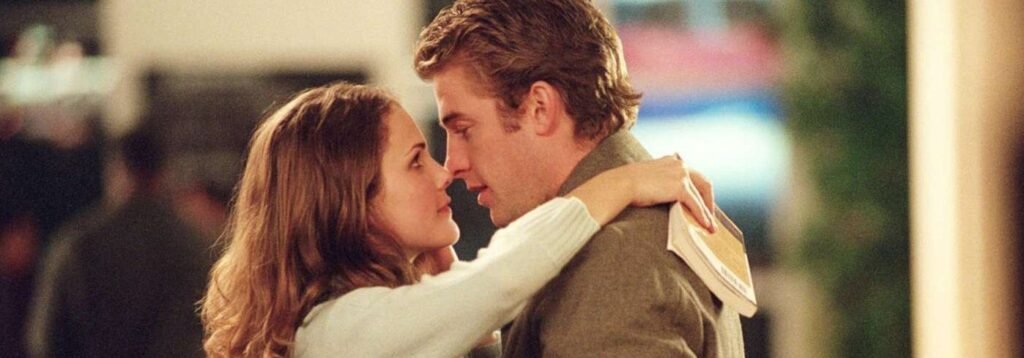
One of the interview’s most quietly persuasive arguments comes from Speedman: that Russell’s decision to make New York City her home after Felicity is what kept her career — and her — intact. She agrees. Her closest friends there aren’t actors at all; they’re a coder and a lawyer. In New York she can take the subway, ride her bike, and disappear into the crowd. For someone who was famous before she could rent a car, anonymity was never trivial.
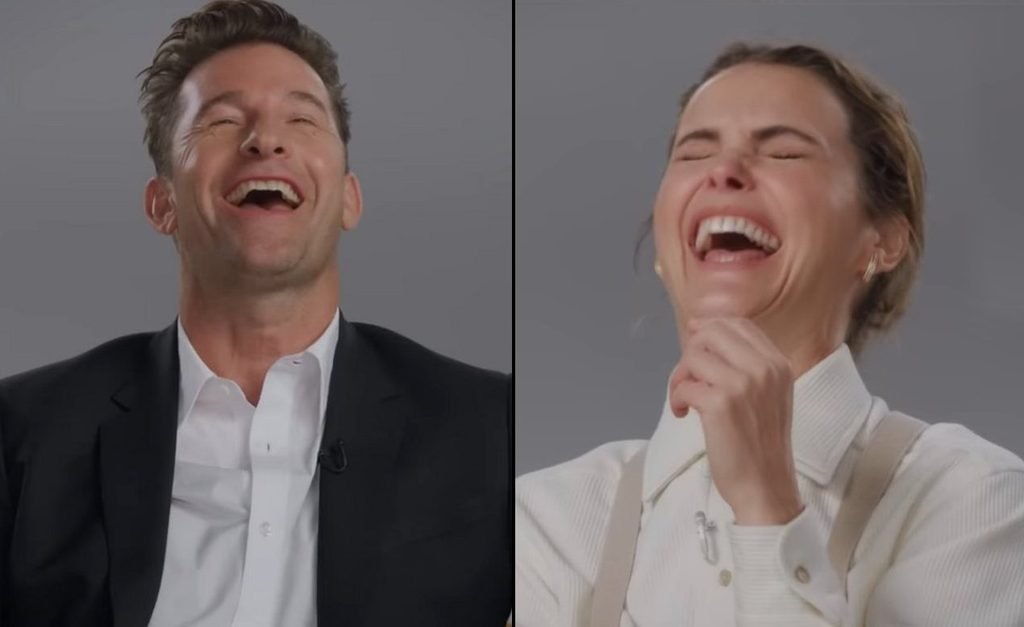
Speedman, a father of young children, is going through his own version of the same calculation, weighing Los Angeles’s private-school ecosystem against a life less saturated in industry. They have, in a sense, traded places over the years — she embraced the city he left, he embraced the quiet she once chased — but the instinct is identical: keep a life outside the work, and the work stays possible.
What keeps them going, by their own account, isn’t glory. It’s the adventure. Russell talks about landing in a small Greek town for a shoot and feeling genuinely alive; Speedman admits he would go out of his mind in a conventional job. Even the humiliating parts — the photo shoots, the dancing, the promotional machinery they both mock — are worth it if they’re the ticket to the next interesting place with the next interesting people.
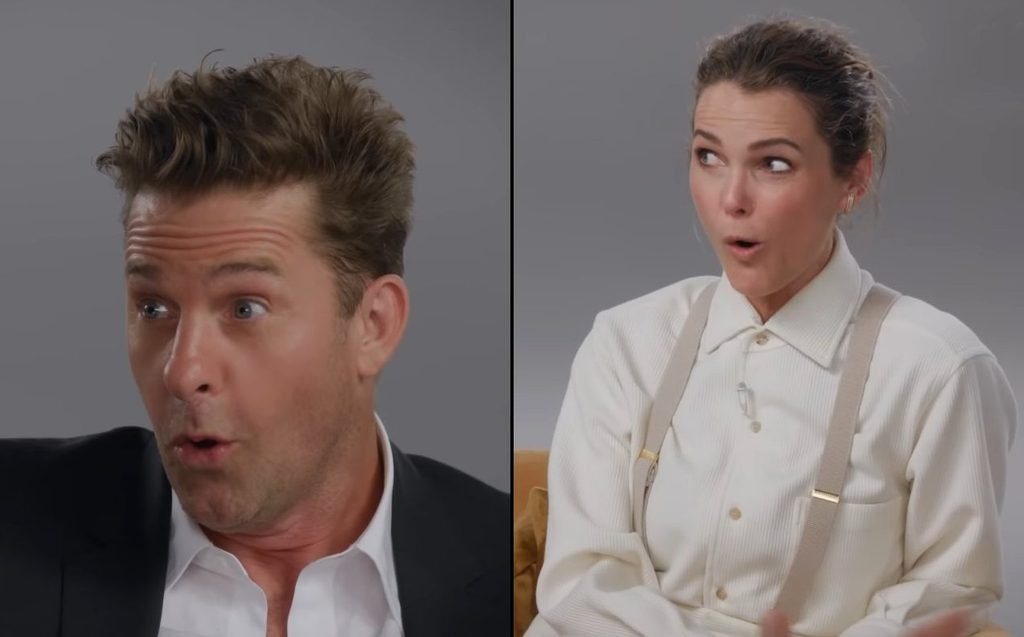
That’s the real story beneath the laughter in this conversation. Felicity ended more than twenty years ago, and its two leads could have become cautionary tales about child-level fame. Instead they became something more instructive: working actors who figured out that talent opens the door, discipline keeps you employed, and the willingness to be embarrassed — again, in front of everyone — is what turns a career into a body of work.
Nearly thirty years after they first met, Russell and Speedman are still shy. They’re still over-prepared. They still don’t watch each other’s shows. But they’ve learned the one lesson their younger selves needed most: the nerves don’t mean you’re not ready.
They mean you still care. And in an industry that often rewards people who stop caring the fastest, caring this much — for this long — is its own kind of stardom
Streaming giant Peacock has officially cemented its crown jewel of unscripted television by securing an unprecedented three-season renewal order for the smash-hit reality competition series The Traitors. The bold multi-year extension guarantees that the show will remain a centerpiece of the platform’s lineup through Season 8. Since debuting on Peacock as an adaptation of the Dutch series De Verraders, the show has rapidly evolved into a pop-culture juggernaut. Over the course of four highly rated seasons, the Highland-set murder mystery has captivated viewers by locking reality TV icons, celebrities, and athletes inside a dramatic Scottish castle to lie, deceive, and backstab their way to a massive cash pot.
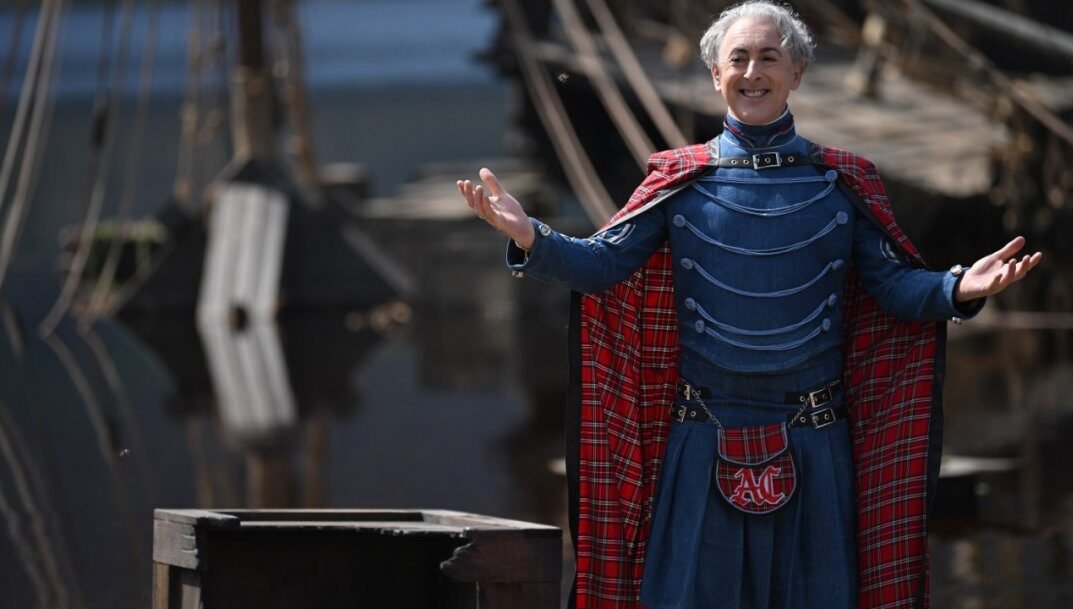
This multi-season commitment comes directly on the heels of a historic streak for the franchise, both in viewership and industry recognition. Season 4 concluded as the show’s most-watched installment to date, driving a staggering 72% surge in viewership over Season 3 and racking up over 8.1 billion minutes viewed. That momentum translated into total awards dominance at the 2026 Emmy Awards, where The Traitors swept seven categories—the most ever won by a single competition show in a single year—including Outstanding Reality Competition Program.

A major element of the show’s undeniable charm and secret sauce remains its iconic host, Alan Cumming, who took home his third consecutive Emmy for Outstanding Host for a Reality Program. Flamboyant wardrobe changes and sharp theatrical flair have turned Cumming’s role into a fan-favorite spectacle, anchoring the show’s tense roundtables with campy sophistication. Between the main series returning for Season 5 in early 2027 and the debut of the all-civilian spinoff The Traitors: New Blood, Peacock’s massive vote of confidence proves that television audiences simply cannot get enough of high-stakes deceit played out in tartan cloaks.
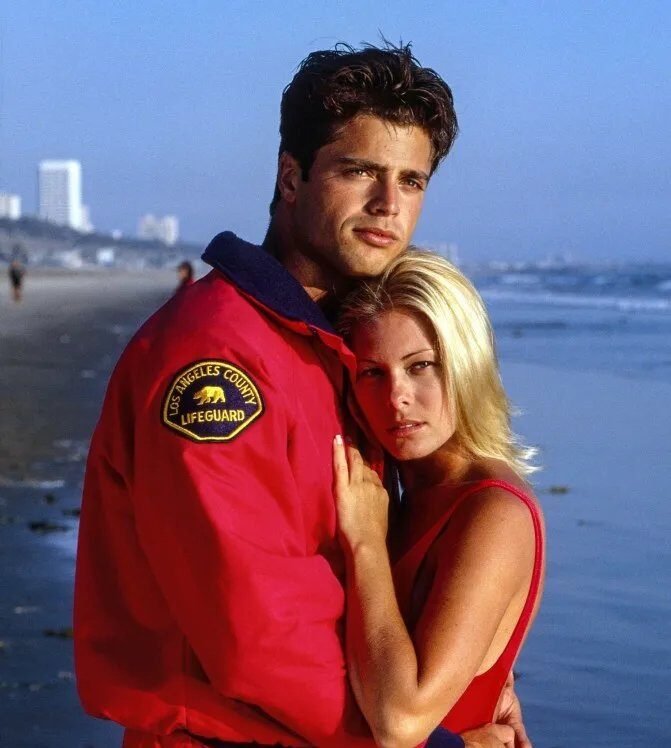
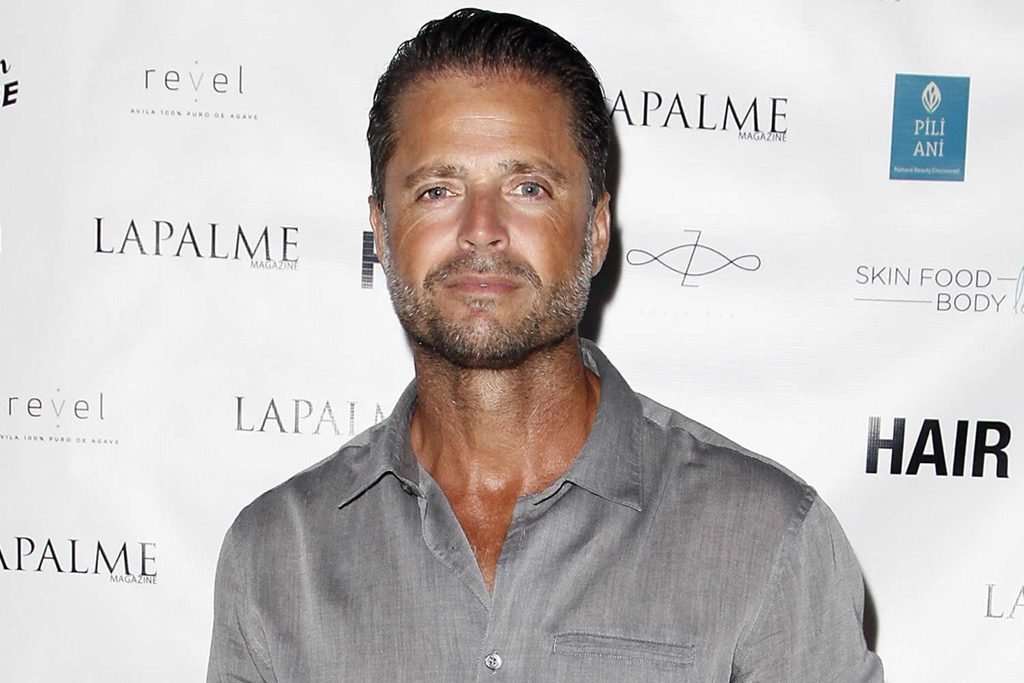
David Charvet made his name running down the beach on Baywatch in the ’90s. Now he’s back on Fox for Special Forces: World’s Toughest Test — and teasing a return to the sand.
David Charvet says a return to Baywatch is officially on the table. In a press-junket interview promoting the new season of Fox’s reality competition Special Forces: World’s Toughest Test, the 90s beach-drama star revealed he is talking with Fox executives about the network’s upcoming Baywatch reboot — though he is making one thing clear: it has to be about the story. With Fox’s revival in the works and several of the original cast members already set to return, the possibility of Charvet back in the red trunks adds a fresh layer of intrigue to one of TV’s most anticipated reboots.
The actor explained that it would take a great storyline to get him back on the beach, recalling that the Baywatch of 25 years ago was anchored by an incredibly close cast — a feeling he says he rediscovered, surprisingly, on Special Forces. He confirmed he has connected with the other originals who are returning and that they enjoyed the experience, but for him, the story always comes first
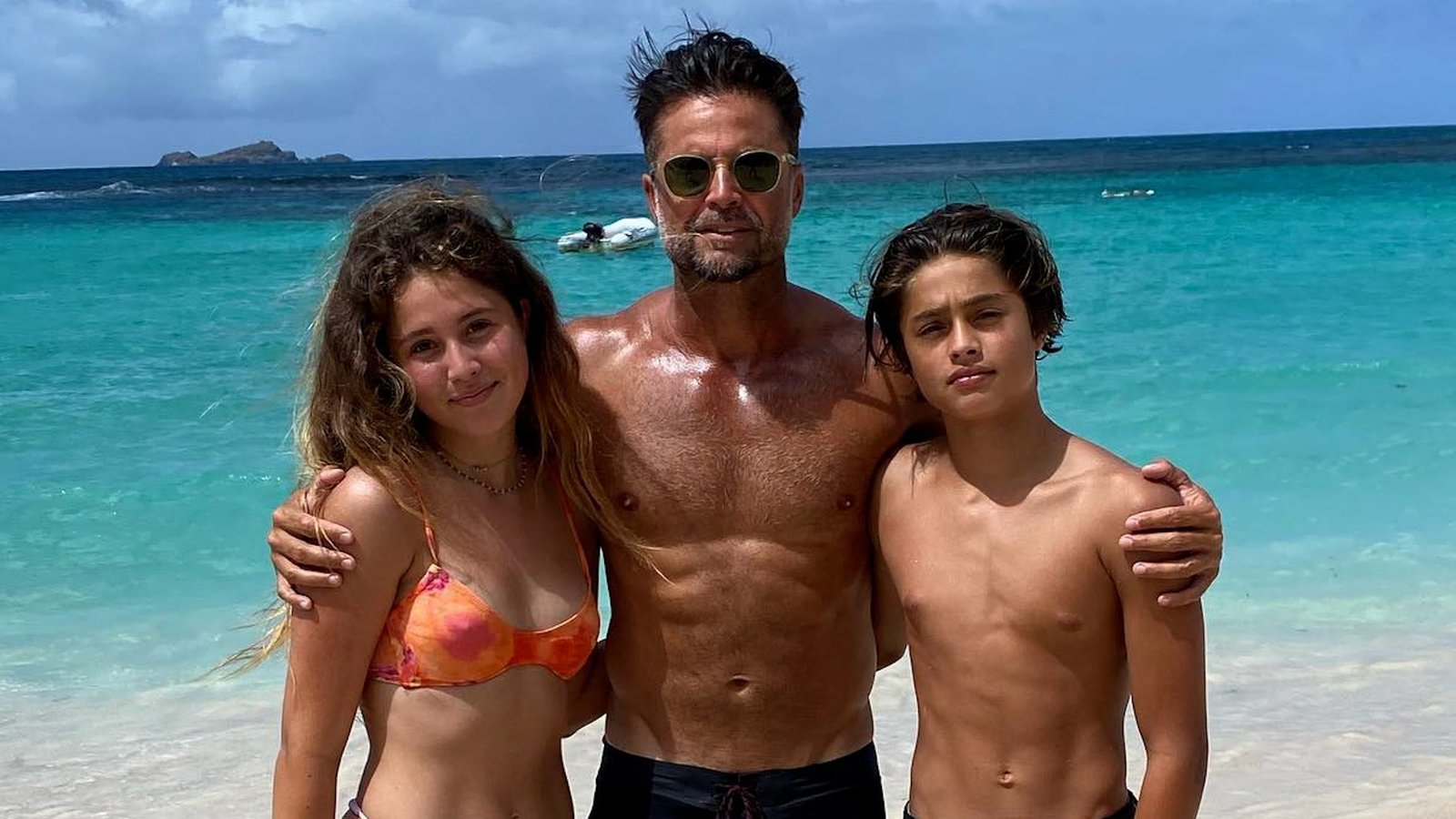
As for the show itself, Charvet said he signed on because of his children, who have never seen him on live television; after roughly 20 years away from the game, he wanted something unscripted, dangerous, and outside his comfort zone to show his kids that dad still has what it takes.
Also in the junket was Olympic figure skater Maxim Naumov, who joined the same Special Forces season and offered his own reasons for saying yes. The 2026 U.S. national medalist said he has always been comfortable pushing limits within his sport, but wanted to test whether those tools worked in a completely different environment — being comfortable with being uncomfortable.
Asked whether the Olympics or the show was more intimidating, he said the pressure felt different, but the nervous physical and emotional response was eerily similar to standing on the ice. He hopes viewers, especially athletes, take away the message that they are more capable than they think, and he is using his platform to push fellow skaters — and himself — to chase things beyond their sport, while also cheering on Amber Glenn’s run on the new season of Dancing with the Stars.
The two recruits also opened up about the bonds formed in the Malaysian jungle, where the season was filmed. Charvet said the most important victory was keeping his head in the game, and Naumov revealed he trauma-bonded the most with an NBA veteran named Matt, calling him a connected team player who went right for the hard tasks — the two, he said, went through experiences together that came close to death. He also credited fellow contestant Colin, who is close to him in age, with building his confidence through athlete-to-athlete conversations behind the scenes. Naumov also mentioned his strength-training studio, BUILD, which focuses on culture and community — a place where people can congregate and feel seen. For Charvet, the takeaway is bigger than any one challenge: everyone on the show has a why, and once you learn the story behind the person in front of you, the bond runs far deeper.
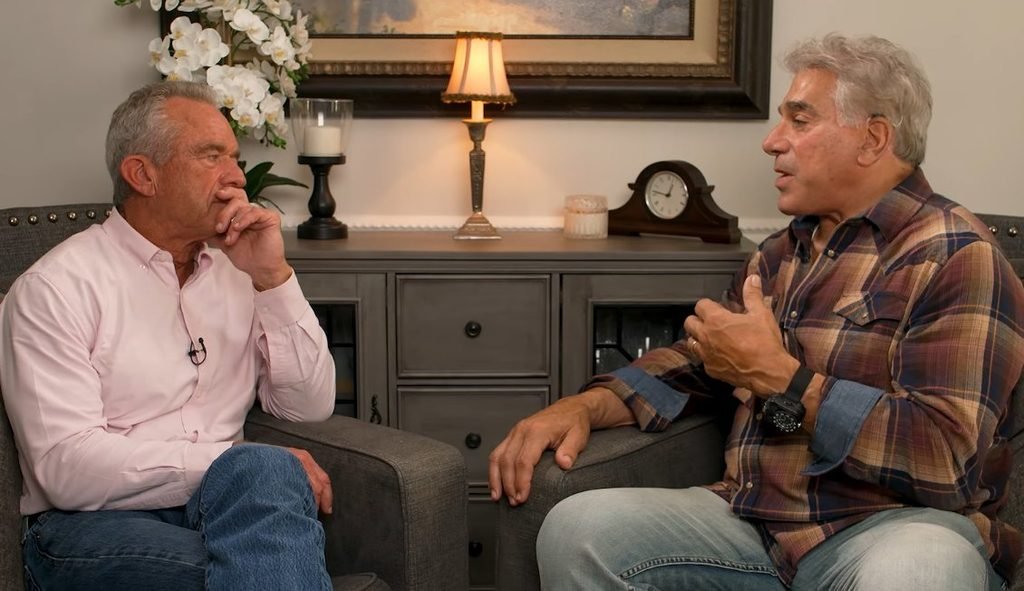
There are few images in pop culture as instantly recognizable as the towering, jade-hued silhouette of the Incredible Hulk crashing through a television screen in the late 1970s. Behind that primordial roar was not just CGI—which did not yet exist for weekly television—but the pure, sculpted humanity of Lou Ferrigno. Decades after stepping away from the competitive bodybuilding stage that made him a global phenomenon, Ferrigno remains a towering figure in every sense of the word. Sitting down for a candid conversation on the Segarra Kennedy podcast, the legendary icon reveals a narrative far more compelling than muscle fiber and silver screens: a masterclass in turning profound personal adversity into unbreakable armor.
Long before he was immortalized as comic books brought to life, Ferrigno’s world was shaped by silence and struggle. Stricken with a severe ear infection around six months of age, he suffered profound hearing loss by age three, spending his formative years relying on hearing aids and navigating a severe speech impediment. In an era before modern assistive technology offered widespread empathy or understanding, the isolation could have easily defined him. Instead, young Ferrigno found an unlikely sanctuary in the pages of comic books, escaping into the boundless power of his imagination and looking up at gods carved from marble.
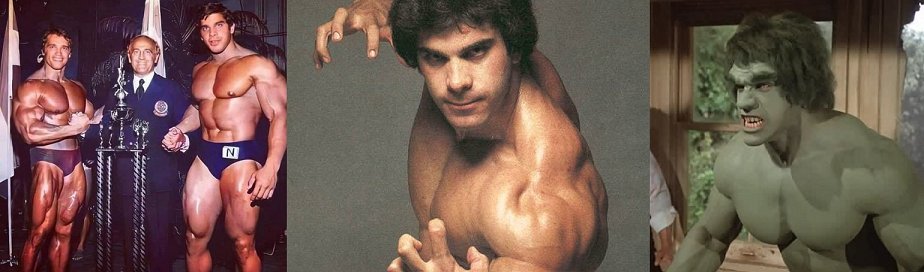
When he discovered legendary physique icon Steve Reeves pulling down pillars as Hercules on the big screen, the path forward became blindingly clear. Ferrigno did not just want to look strong; he needed to feel invincible.
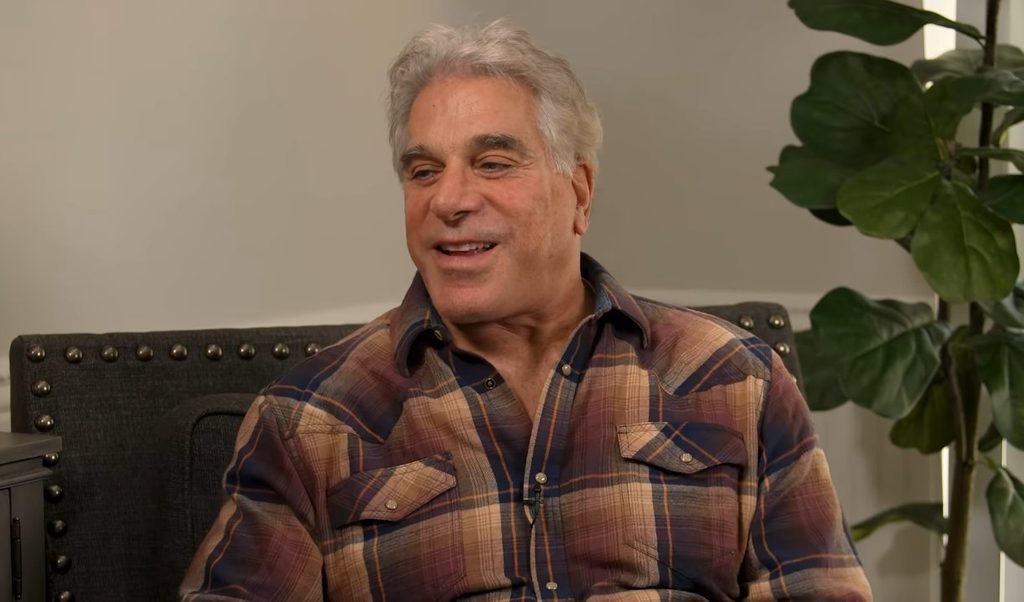
That inner fire propelled him into a sport where giants were born. In an era when competitive bodybuilding was dominated by competitors standing under six feet tall, Ferrigno smashed through the psychological and physical ceiling by standing proudly over six feet tall. At just twenty-one years old, he captured the Mr. Universe title, etching his name into the Guinness Book of World Records as the youngest competitor ever to do so.
Yet, the golden era of bodybuilding was defined by more than just trophies—it was built on an intense, communal camaraderie. Reflecting on his decades of training at the Mecca of Bodybuilding, Gold’s Gym in Venice, California, Ferrigno paints a picture of an era when athletes trained barefoot in simple shorts, eager to share their progress and build one another up. He notes a bittersweet contrast with modern gym culture, where headphones and hoodies often isolate individuals in a sea of solitary focus. For Ferrigno, the iron was never just about aesthetics; it was a communal language of survival.
That survival instinct was forged in the crucible of a difficult childhood. Growing up under the heavy shadow of a demanding father—an NYPD cop who struggled to accept a son who did not fit his rigid expectations—Ferrigno carried a profound burden. Rather than letting that rejection break him, he channeled the pain into the gym. Every repetition was a declaration of self-worth, a quiet vow that nobody would ever break him down again. It is a profound irony of life that Ferrigno would later become a father to a chief of police, sharing a generational understanding of discipline, duty, and the complex weight of paternal expectation.
When the landmark 1977 documentary Pumping Iron catapulted him and rival Arnold Schwarzenegger into international superstardom, Ferrigno’s career pivoted from the gym to the soundstage. Portraying the Hulk alongside Bill Bixby offered him a historic platform, leading to over fifty film and television appearances.
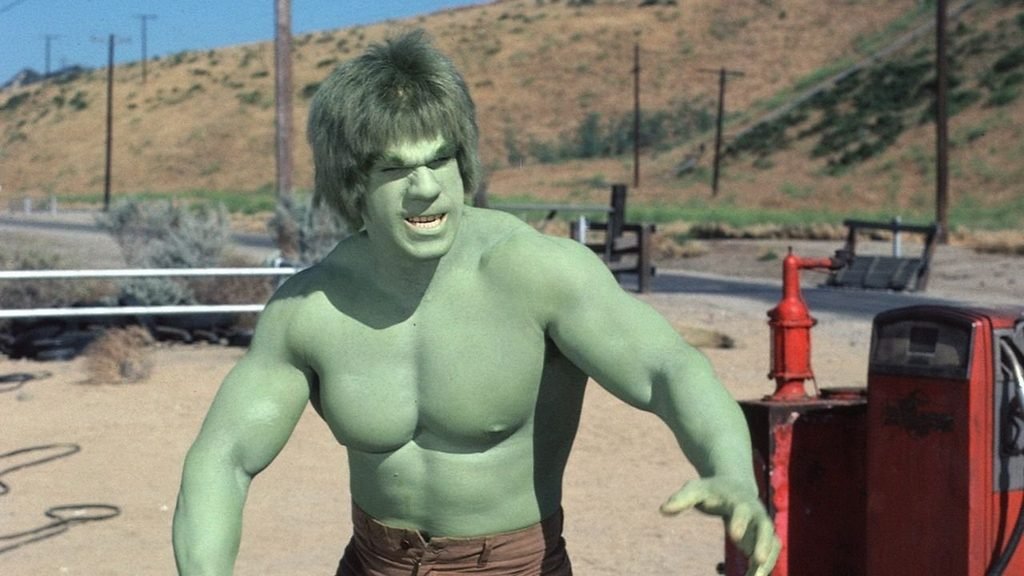
Yet, the pull of the iron never truly fades. In a move that stunned the fitness world, Ferrigno laced up his posing trunks at age forty-two—seventeen years after stepping away from competition—to step back onto the Mr. Olympia stage at a staggering 325 pounds. It was not about reclaiming past glory; it was a testament to his core philosophy that chronological age is merely a psychological barrier. By proving that passion has no expiration date, he redefined what longevity looks like in professional sports.
Approaching seventy-five, Ferrigno speaks not with the exhaustion of a man who has battered his body for half a century, but with the serene clarity of a sage. Modern medicine, advanced nutrition, and a lifelong commitment to clean, natural eating have replaced the reckless habits of youth. But more importantly, he has successfully conquered the internal demons that consumed his own father.
Reflecting on a life defined by heavy weights and heavy expectations, Ferrigno arrives at a conclusion far more powerful than any championship title. True strength is not found in the circumference of a bicep or the roar of a television audience, but in the quiet cultivation of inner peace. By letting go of anger and refusing to carry the generational weight of bitterness, he has transformed his trauma into triumph. Today, Lou Ferrigno stands not merely as an icon of physical perfection, but as a living monument to the enduring power of the human spirit.
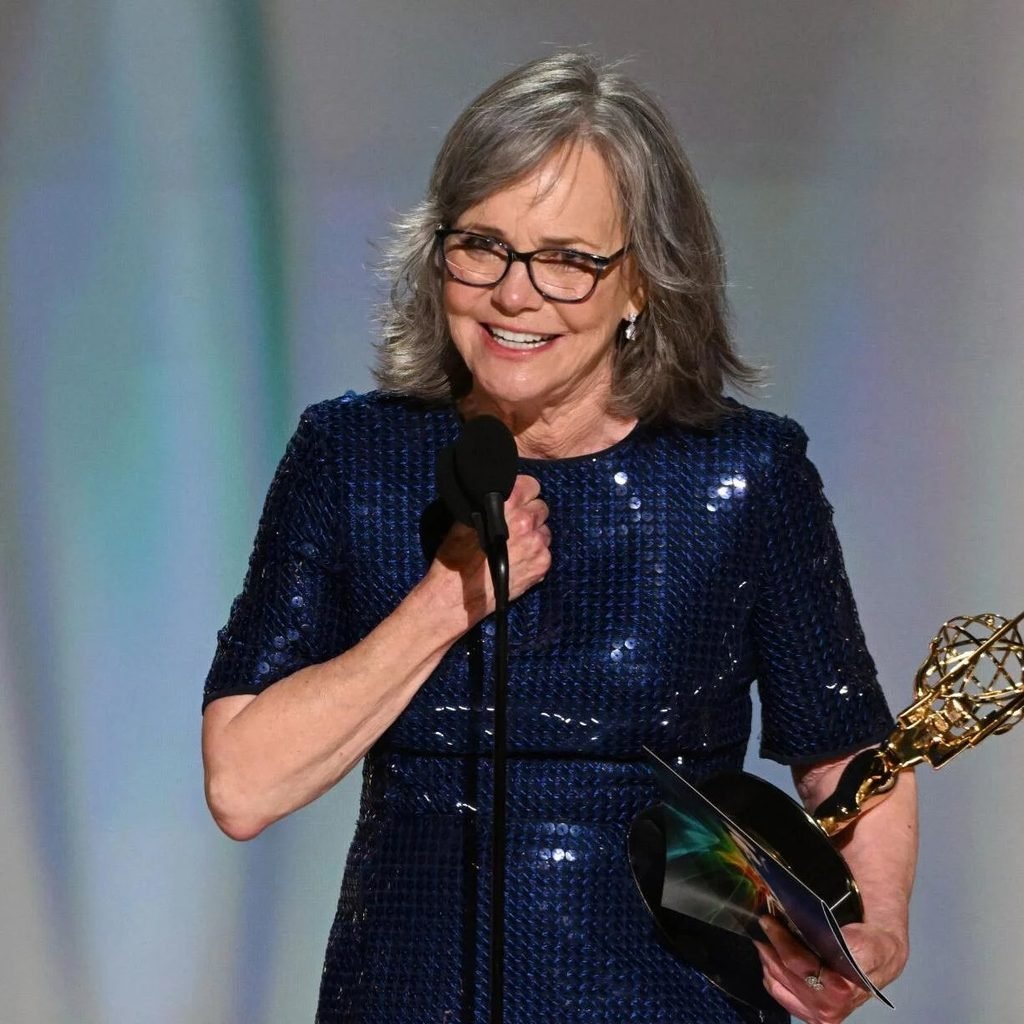
The 78th Primetime Emmy Awards delivered an unforgettable high point when 79-year-old Sally Field won Lead Actress in a Limited Series or Movie for the Netflix adaptation Remarkably Bright Creatures. Debuting on the platform on May 8, 2026, the film stars Field as Tova Sullivan, a grieving widow working night shifts at a Pacific Northwest aquarium who forms a heartwarming bond with a giant Pacific octopus named Marcellus (voiced by Alfred Molina). The emotional drama immediately resonated with audiences, but Field’s milestone victory has catapulted the film straight back to the top of streaming conversations. Taking the stage to a full standing ovation at the Peacock Theater, the two-time Oscar winner accepted her fourth career Emmy, making history as the oldest performer ever to win in this category.
Based on Shelby Van Pelt’s best-selling 2022 novel, the screen adaptation earned strong word-of-mouth praise upon its release, holding an 85% approval rating on Rotten Tomatoes. Field’s grounded performance carries the narrative, transforming what could have been a quirky premise into a genuine exploration of loss, connection, and second chances. Her win marks a rare achievement for a feature film in a category traditionally dominated by multi-episode limited series, making it the first TV movie performance to take home the statuette since 2012.
The sudden surge in viewership comes directly on the heels of Field’s viral acceptance speech, which quickly captured public attention. “I loved this project from page one,” Field shared, before taking a moments to thank the Vancouver production crew and issuing a warm shoutout to “blessed Canada, our neighbors, our friends”. The heartfelt gesture drew loud applause from the audience and ignited widespread discussion across social media, prompting thousands of viewers to seek out the movie on Netflix.
Directed by Olivia Newman (Where the Crawdads Sing) and co-starring Lewis Pullman, the project bridges veteran Hollywood talent with fresh creative direction. Field’s historic triumph underscores a career that continues to evolve six decades in, proving that deeply human storytelling paired with brilliant performances will always find an audience.
Matthew Rhys has delivered one of the most memorable turns of the television season, steering the wildly original comedy-horror series Widow’s Bay on Apple TV+ straight into the 2026 Emmy Awards conversation. Playing Tom Loftis, the overly optimistic mayor of a superstitious, isolated New England island, Rhys balances small-town bureaucratic absurdity with genuinely terrifying supernatural encounters as he desperately attempts to transform his cursed home into a bustling tourist hotspot. The 10-episode first season premiered on April 29, 2026, and rolled through its June finale as one of the summer’s most unexpected breakout hits. Following a massive haul of 14 Emmy nominations and major wins for Outstanding Comedy Series alongside acting honors for Rhys, Apple TV+ officially greenlit a second season, keeping the eerie coastal saga firmly at the top of streaming watchlists.
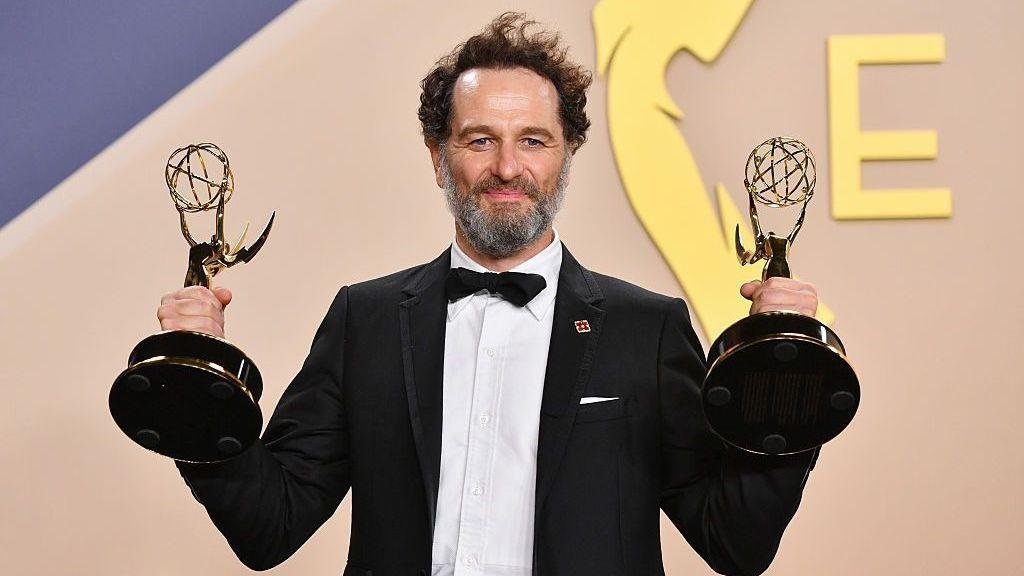
The trajectory of the show represents a rare success story for a completely original genre mashup on streaming. When the series debuted earlier this spring, critical praise was immediate, highlighting its ability to weave genuine horror tropes—think classic sea hags and boogeymen—with a razor-sharp, character-driven workplace comedy. Over its debut run, the show established a passionate fanbase drawn to its oddball cast, including Kate O’Flynn as the mayor’s erratic assistant and Stephen Root as the island’s resident apocalyptic conspiracy theorist. What began as a quirky genre experiment rapidly transformed into a bona fide critical darling, anchored by strong word-of-mouth viewing metrics throughout mid-2026.
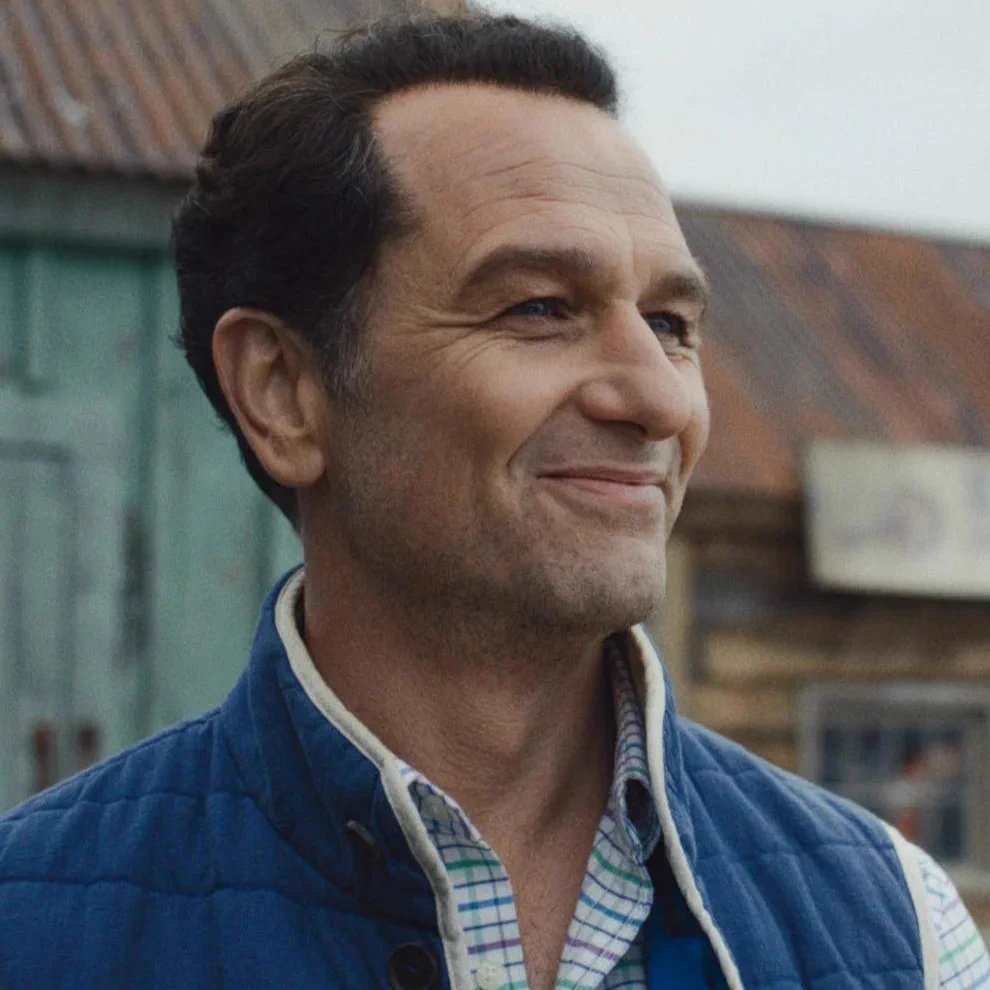
The immediate surge in attention surrounding Widow’s Bay is driven by its high-profile awards recognition at the 78th Primetime Emmy Awards. Rhys’s performance as the out-of-his-depth town leader earned critical acclaim for seamlessly anchoring the show’s shifting tones—transitioning from dry comedic timing in town hall meetings to raw terror in haunted inns. With key acting victories alongside co-stars Kate O’Flynn and Stephen Root, new audiences are pouring into the platform to discover the debut season, while long-time fans revisit the early episodes to unpack subtle visual details and foreshadowing embedded throughout the foggy coastal mystery.
Much of the show’s creative identity stems from the powerhouse pairing behind the camera: creator Katie Dippold (Parks and Recreation) and director-executive producer Hiro Murai (Atlanta, The Bear). Murai, who directed half of the first season’s episodes, brought a grounded, cinematic look to the fog-drenched streets, allowing Rhys to showcase his versatility far beyond the serious dramatic roles that defined his career in The Americans and Perry Mason. Supported by a creative team that includes guest directors like Ti West, the series gives Rhys a dynamic playground to fuse physical humor with heartfelt father-son stakes. With Season 2 pre-production underway, this massive Emmy run proves that the strange, cursed waters of Widow’s Bay on Apple TV+ are offering some of the freshest entertainment on modern television.
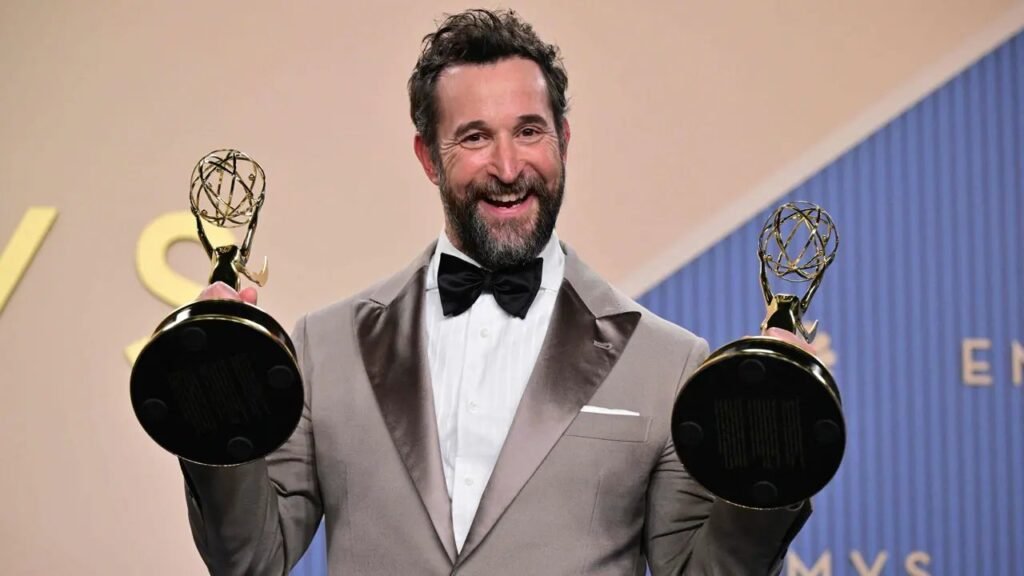
Noah Wyle has solidified his status as television royalty after capturing the Emmy Award for Outstanding Lead Actor in a Drama Series for the second consecutive year at the 78th Primetime Emmy Awards, anchoring the massive success of The Pitt on Max. The hit medical drama, which concluded its second season earlier this year and boasts a third season slated for January 2027, swept the ceremony once again by defending its title for Outstanding Drama Series. With Wyle taking home trophies as both the leading actor and executive producer, while also contending in the directing category, the series continues to hold the streaming world in a vice grip as the most celebrated frontline ER portrayal in modern television.
When The Pitt made its debut in early 2025 on Max, it instantly broke streaming viewership records for an original drama on the platform. Spanning 38 Emmy nominations across its first two seasons alone, the show has earned universal critical acclaim for its raw, real-time depiction of healthcare workers facing systemic strain in a modern Pittsburgh emergency room. Over two high-intensity seasons, the series transformed from a heavily anticipated medical procedural into an industry benchmark, earning back-to-back Outstanding Drama Series honors over formidable rivals like Slow Horses and Pluribus.
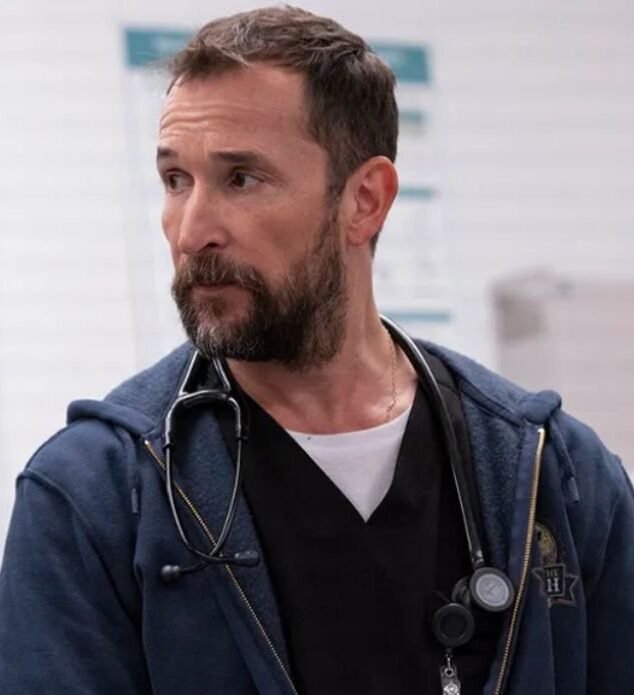
The immediate surge in attention around The Pitt stems directly from the September 2026 Emmy broadcast, where the show dominated major drama categories. Wyle’s historical milestone as the fifth actor in television history to win consecutive lead drama actor Emmys for a show’s first two seasons—joining the ranks of Bryan Cranston and Bill Cosby—has put the series back at the absolute top of trending charts on Max. Viewers are diving back into the 15-episode second season to rewatch Wyle’s performance as Dr. Michael “Robby” Robinavitch alongside an ensemble cast that secured seven distinct acting nominations this year alone.
Much of this triumph lies in the creative reunion behind the scenes between Wyle, showrunner R. Scott Gemmill, and executive producer John Wells, three veteran collaborators who previously defined hospital television on ER. Decades after his initial Emmy-nominated breakout as Dr. John Carter in the 1990s, Wyle has successfully reclaimed the medical genre on his own terms, taking on directing duties on set while steering the show’s realistic, high-pressure narrative pace. With Season 3 production already rolling on Stage 22 in Los Angeles, this historic Emmy night proves that The Pitt on Max is far more than a temporary hit—it is the defining drama of the current decade.
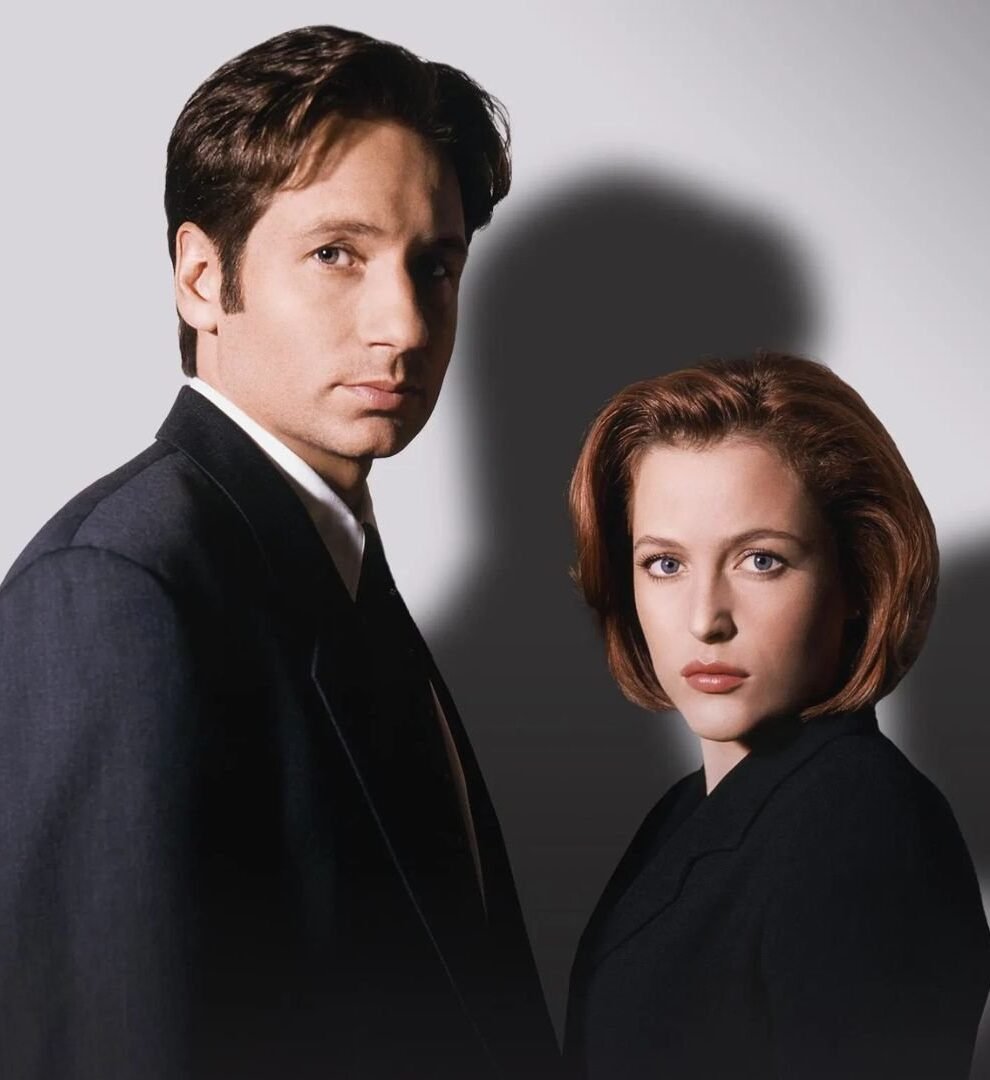
Thirty-three years ago, on September 10, 1993, iconic FBI special agents Fox Mulder and Dana Scully opened their first paranormal case file, launching a cultural phenomenon that redefined sci-fi television forever.
Today, the entire 11-season run of The X-Files is experiencing a massive digital resurgence on streaming services, including Peacock, as audiences rediscover its eerie, conspiracy-laden universe. What started as a niche network experiment on Fox grew into an juggernaut spanning 218 television episodes and two feature films. Over its initial nine-season run and subsequent two-season revival in 2016, the series racked up 16 Emmy Awards and earned a reputation as one of the most influential pop-culture staples in modern history.
The primary catalyst driving The X-Files back into the trending headlines right now is the major momentum surrounding its officially greenlit reboot, directed and executive produced by Oscar-nominated filmmaker Ryan Coogler.

Hulu ordered a pilot for the series, which officially wrapped filming in Vancouver—the exact filming location where the original series shot its iconic first five seasons. With starring roles given to Danielle Deadwyler and Himesh Patel alongside high-profile guest stars like Steve Buscemi and Ben Foster, fans are revisiting the original series to prepare for this new era.
The original vision crafted by showrunner Chris Carter relied on the magnetic chemistry between David Duchovny and Gillian Anderson, a dynamic that remains unmatched in television history. Original series creator Chris Carter has given his full blessing to Coogler’s reimagining while serving as an executive producer. With fresh behind-the-scenes updates confirming that Coogler shot the pilot on classic 65mm film to preserve its cinematic atmosphere, interest in the classic 1990s series has reached its highest point in years.
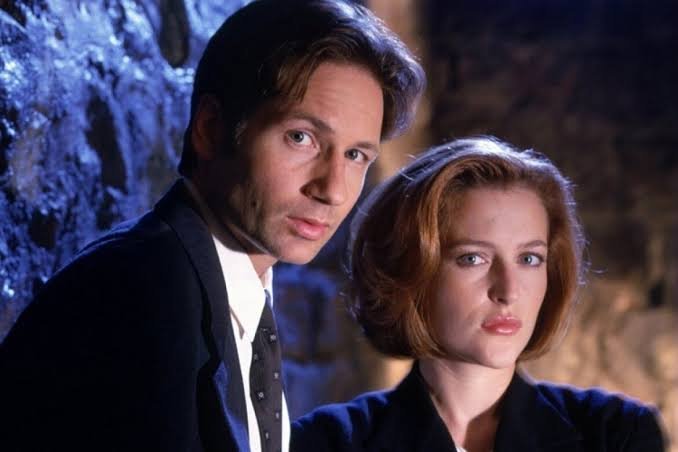
More than three decades after its television debut, The X-Files proves that its unique blend of “monster-of-the-week” standalone horror and overarching government conspiracy theories is truly timeless. As streaming platforms report elevated viewership numbers for classic episodes, the franchise demonstrates a rare longevity that few television shows ever achieve.
Whether long-time fans are rewatching classic episodes or new viewers are diving in for the very first time, the core message of the series still holds true: the truth is out there.
When the Cold War espionage drama Ponies made its debut on Peacock on January 15, 2026, it seemed to have every ingredient necessary to become a major hit. All eight episodes dropped at once, inviting viewers into a stylish 1977 Moscow setting where two American embassy secretaries suddenly turn into CIA operatives after their husbands die under mysterious circumstances. The show quickly won over TV critics, earning an impressive 94% approval rating on Rotten Tomatoes due to its balance of dark intrigue and sharp comedic timing. Yet, despite the glowing critical response, Peacock officially canceled the series after its first season.

The trajectory of the show illustrates how tough the streaming landscape can be even for high-concept, critically acclaimed projects. Set up as a binge-watch release, the eight-episode run followed Bea, played by Emilia Clarke, and Twila, played by Haley Lu Richardson, as they navigated a dangerous network of KGB secrets. The premise played on the acronym “Ponies”—standing for “persons of no interest”—making the lead duo the ultimate unsuspecting spymasters. Reviewers praised the dynamic back-and-forth between the two leads, emphasizing how the show seamlessly shifted from light buddy-comedy moments to intense period drama.
The main reason Ponies is making headlines right now comes down to its abrupt cancellation by Peacock, which sparked widespread conversation among television fans. Despite stellar reviews, the series failed to break into Nielsen’s streaming Top 10 rankings following its release. Because Peacock rarely publishes internal streaming metrics, industry observers point to lower-than-expected viewership relative to its production budget as the decisive factor. The decision caught many off guard, especially since Clarke—who also executive produced the series—had publicly mentioned being in active discussions regarding ideas for a second season.
Much of the show’s initial hype stemmed from the creative powerhouses attached both in front of and behind the camera. Beyond starring opposite Richardson, Clarke brought significant star power to the project alongside co-creators Susanna Fogel and David Iserson. Fogel, who previously directed the spy comedy The Spy Who Dumped Me, directed half of the season, lending her signature sharp tone to the narrative. The supporting cast featured strong talent like Adrian Lester and Vic Michaelis, giving the creative team a solid foundation that made its sudden end all the more surprising to audiences.
Ultimately, the story of Ponies reflects the ongoing challenge niche, high-quality streaming shows face when trying to build a massive audience quickly. While a single eight-episode season is all fans will get, the show leaves behind a brief but memorable run that showcased great on-screen chemistry and sharp storytelling.