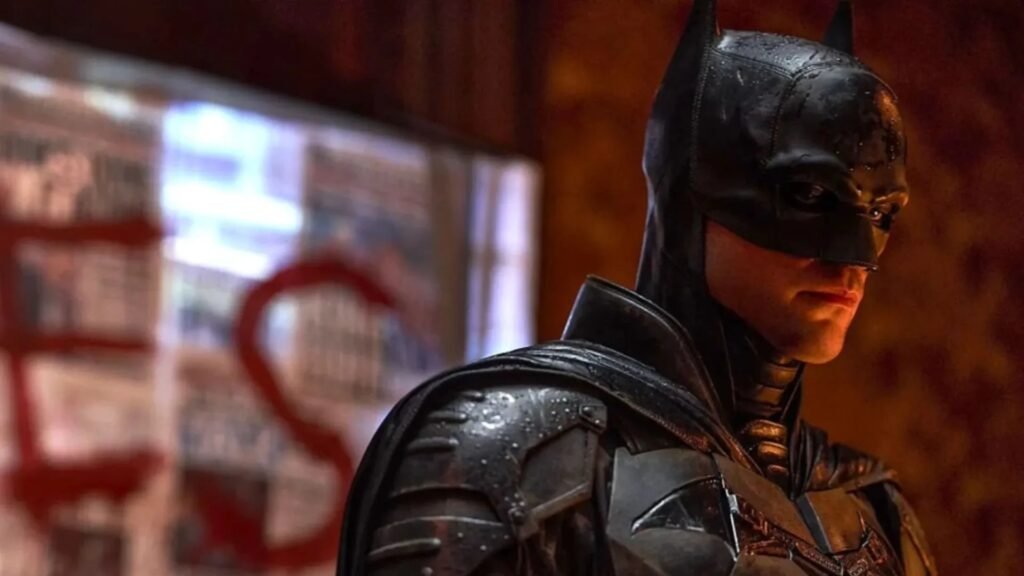
When a studio needs a director rescued, it usually calls a journeyman, a trusted replacement, someone who knows how to keep a set moving. Warner Bros. did not make that call this time. After Matt Reeves paused The Batman Part II on October 5 to deal with a family matter, the studio confirmed on October 15 that Steven Soderbergh — the man who won the Academy Award for Best Director for Traffic in 2001 — would fly to London and shoot the final weeks of principal photography himself. The trades are consistent on the arrangement: this is not a replacement. Soderbergh is generating footage designed to integrate seamlessly with what Reeves has already filmed, Reeves stays on from Los Angeles and takes over post-production when he can, and Reeves made a point of stating he is not leaving the movie. An Oscar-winning auteur picking up a camera so another director’s vision can survive a crisis is not how blockbusters usually get finished — and that says something about what this particular script is considered to be worth.
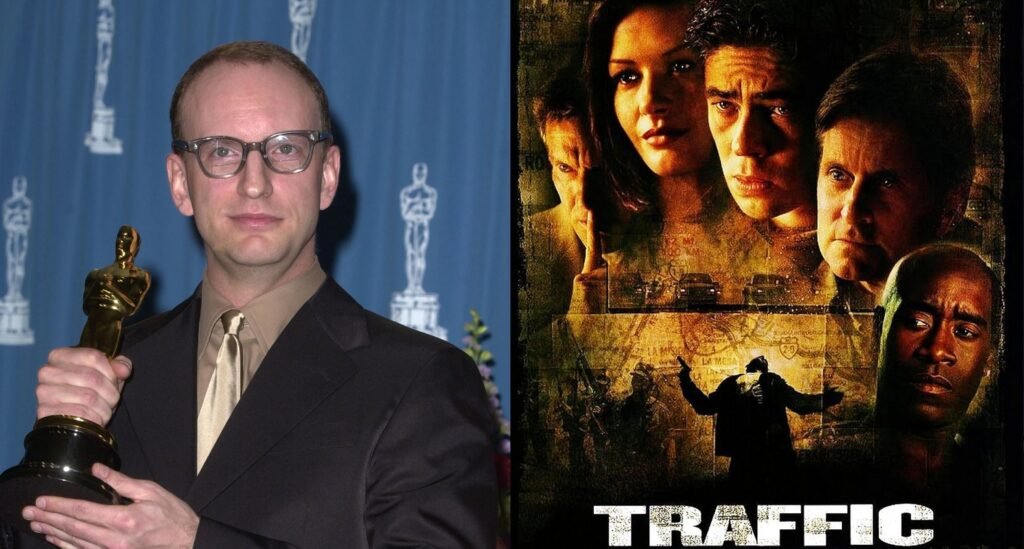
Consider how rarely this happens. Soderbergh has spent his career protecting his own independence: the Ocean’s trilogy for Warner Bros., then a run of smaller, faster films — Presence, Black Bag — that he makes on his own terms. He does not need a paycheck job, and nobody brings in a director of his stature to babysit footage unless the footage is worth protecting. That is the part of this story worth sitting with. The Batman Part II is not being rescued because the schedule demands it; it is being rescued because what is already in the can — Pattinson’s Bruce Wayne deepened further, Farrell’s Oz Cobb, a cast that now includes Scarlett Johansson, Sebastian Stan as the reported Harvey Dent, Brian Tyree Henry, Sebastian Koch and Charles Dance — represents something the studio and the filmmakers have decided cannot be gambled. A two-thirds-complete $200 million movie is expensive to pause. Volunteering to finish someone else’s shoot is expensive in a currency directors care about more.
The track record around that script helps explain the urgency. The Batman opened in 2022 with $772.8 million worldwide, holds 85% on Rotten Tomatoes and 72 on Metacritic, and drew three Oscar nominations. The Gotham it built held up on television: The Penguin premiered September 19, 2024 on HBO and Max, grew from 5.3 million viewers in four days to nearly 17 million by November, closed with 2.1 million on finale night, and collected 24 Emmy nominations with nine wins, plus a Golden Globe and a Critics Choice award for Colin Farrell. Reeves has said the sequel will turn more toward Bruce Wayne after a first film told almost entirely from Batman’s perspective — the kind of character-first ambition that survives only when the material earns it. No villain has been confirmed, no full trailer exists beyond a July 15 camera test of Pattinson in the cowl, and the release has moved four times to its current February 18, 2028 IMAX date. The Soderbergh news is, right now, the strongest signal that the story underneath all that turmoil is considered genuinely good.
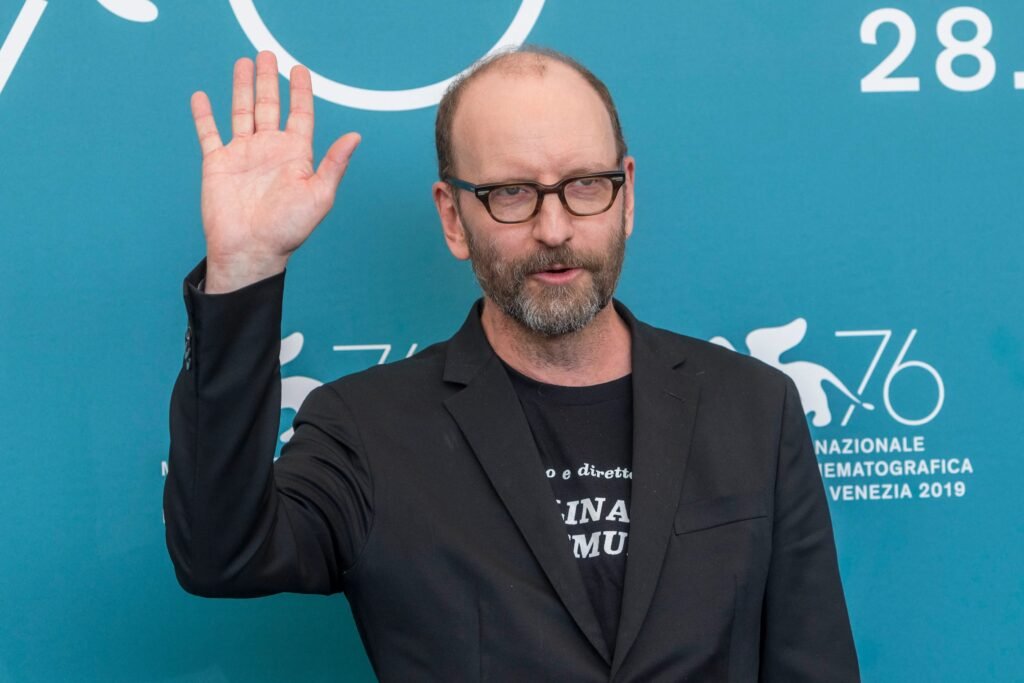
There is precedent for Soderbergh being exactly the right emergency call, even if this particular role is new for him. He directed the Ocean’s films for Warner Bros., worked with the studio on HBO’s No Sudden Move, and has spent decades moving between studio scale and personal projects faster than almost anyone in the business. What the reporting has not found is any well-documented case of him stepping in to complete another director’s interrupted photography, which is why every trade describes the setup as unusual. His own framing was modest: the goal, he said, is to work with Reeves and the team to generate footage that integrates with what has already been shot so Reeves can properly finish his film. That sentence is the whole story in miniature — a marquee director subordinating his name to someone else’s authorship, because the script underneath it warranted it. After five years between installments and four release-date shifts, Gotham’s rescue came not from a new plan, but from a filmmaker willing to help an old one land.
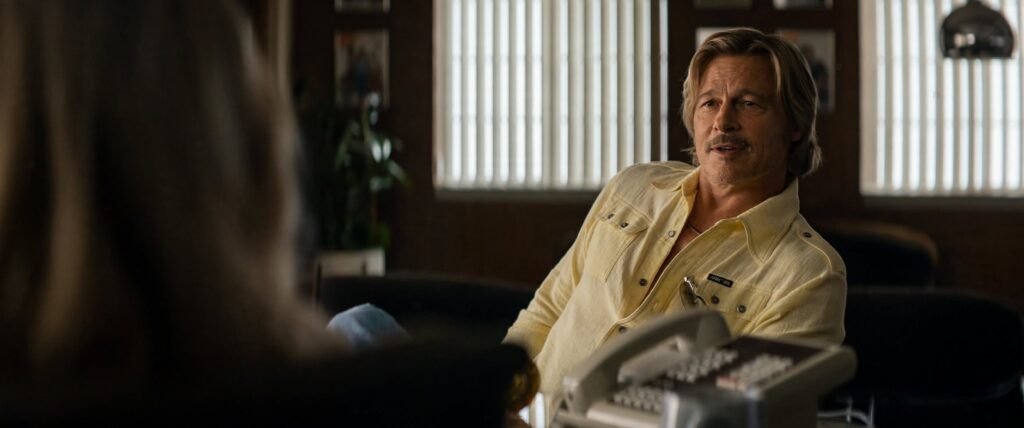
If you thought the best part of Quentin Tarantino’s Once Upon a Time… in Hollywood was the guy grilling dog food and casually kicking Bruce Lee off a trailer, you are not alone — and now he’s getting his own movie. The Further Mis-Adventures of Cliff Booth, directed by David Fincher from a screenplay by Tarantino and starring Brad Pitt, is set for a two-week IMAX run starting November 25, 2026, before landing on Netflix on December 23. The trailer dropped on September 21, and the full title was only confirmed on August 26, when Netflix’s own listing finally settled months of rumors that had people calling it The Adventures of Cliff Booth. That timing is exactly why the film is everywhere right now: it’s the first real look at what may be the most unlikely sequel of the decade — a follow-up to a Tarantino movie, written by Tarantino, but directed by somebody else.
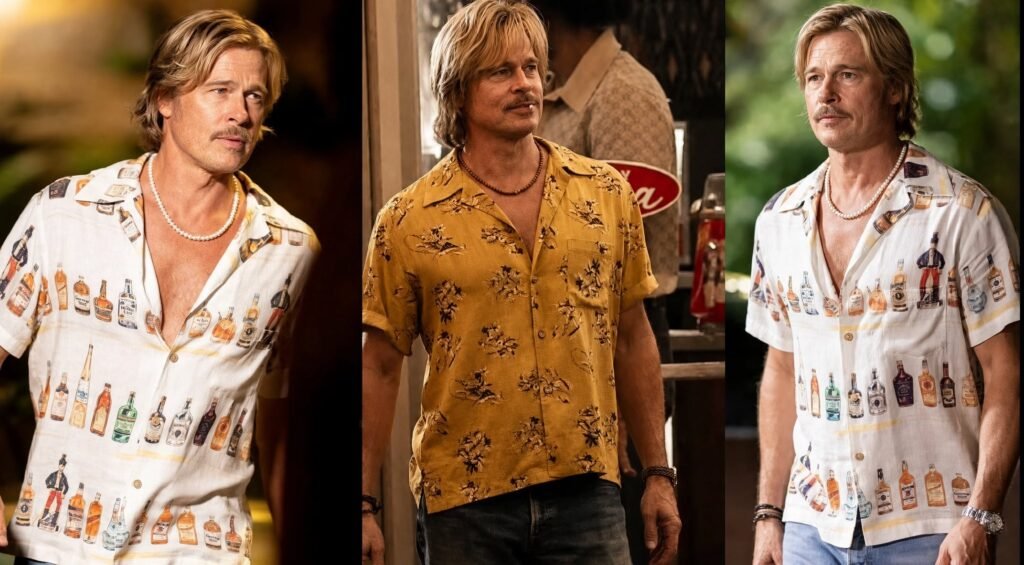
To understand why that matters, you have to go back to the original. Once Upon a Time… in Hollywood opened in 2019 and grossed roughly $378 million worldwide against a reported $90 million budget, per The Numbers and Box Office Mojo. It earned 10 Oscar nominations and won two — Best Production Design and, more notably, Best Supporting Actor for Pitt, the first acting Academy Award of his career. Critics have it at 86% on Rotten Tomatoes and 84 on Metacritic, where it’s classified as “universal acclaim.” Tarantino then went further than the movie: his 2021 novelization of the film quietly resolved the biggest mystery around Cliff — the rumor that he killed his wife — and, as CrimeReads documented, confirmed that yes, he did. A second Tarantino novel, The Adventures of Cliff Booth, is due from HarperCollins on December 8, 2026, just two weeks before the Netflix premiere, and it’s set in the same 1977 Los Angeles as the film. Book and movie are companions, not adaptations of each other.
The concrete factors behind the current wave of attention are easy to pin down. Beyond the trailer, the official synopsis finally laid out the premise: it’s 1969 plus eight years, Cliff has retired from doubling Rick Dalton — the trailer has him explaining he stopped because Rick “got too fat” — and now works as a Hollywood studio fixer, tangled up in murder, blackmail, theft and extortion. Variety has confirmed Leonardo DiCaprio is not returning as Rick, so this is Pitt’s show alone. The cast around him is loaded: Elizabeth Debicki, Yahya Abdul-Mateen II, Timothy Olyphant (reprising his role as James Stacy), Carla Gugino, Scott Caan, Holt McCallany and Peter Weller, among others. There’s also a behind-the-scenes wrinkle worth knowing: The Playlist reported in August that principal photography had wrapped but several days of reshoots with Pitt were scheduled, which is why the film skipped the fall festival circuit entirely. No delay to the release dates has been announced since.
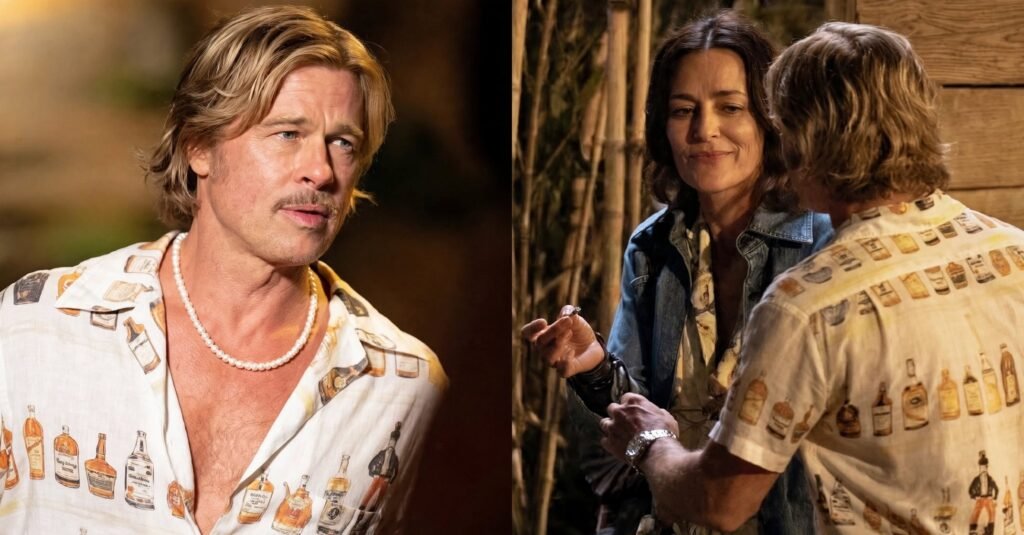
The people making it are half the story. Fincher’s last two features — Mank (2020) and The Killer (2023) — were both Netflix films, part of an exclusive deal he signed with the streamer in 2020. Deadline reported in September 2026 that Fincher has decided not to renew that deal when it expires in 2027, which makes Cliff Booth effectively a closing chapter of one of the most productive studio relationships of the streaming era. On Pitt’s side, the film arrives after F1 put him back in the summer-movie conversation in 2025, and Tarantino has publicly said the project carries a reported $200 million budget — a figure he shared himself — because the script was, in his words, too gigantic and unwieldy to be a conventional theatrical release. A Tarantino story too big for Tarantino to direct, handed to one of the most meticulous filmmakers alive, funded at blockbuster scale by a streaming service that also gave it IMAX screens.
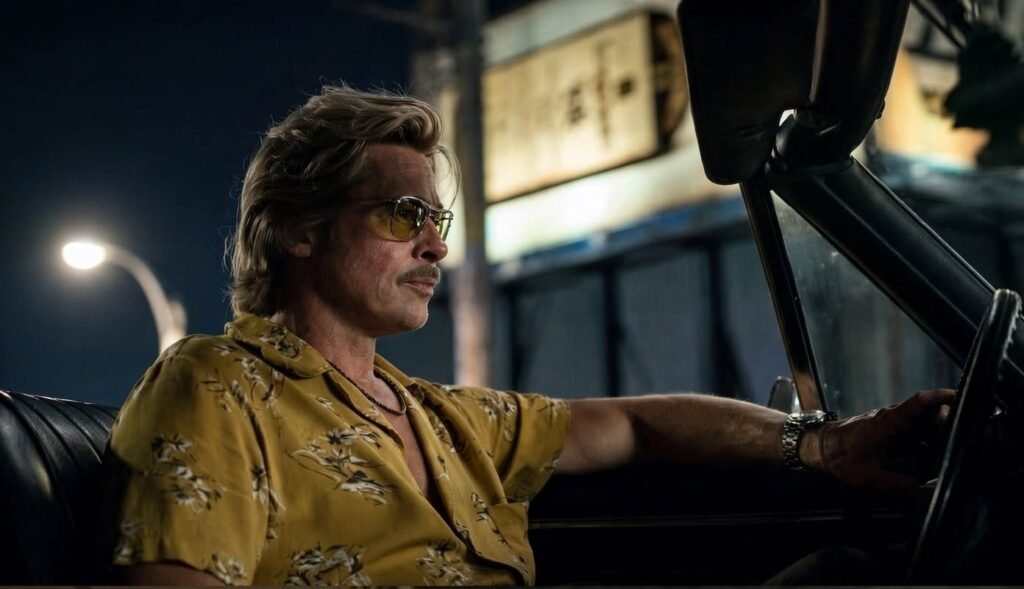
That’s the shape of it: a character who was never supposed to carry a movie, now anchoring a $200 million crime story set in a fictional 1977, written by the director who invented him, directed by the man who may be saying goodbye to his streaming home, and released in the same month as the novel that expands his legend. Once Upon a Time… in Hollywood was a love letter to a version of Los Angeles that never existed. The Further Mis-Adventures of Cliff Booth is what happens when you let one of its residents stick around eight years longer than the story needed him. December 23 can’t come fast enough.
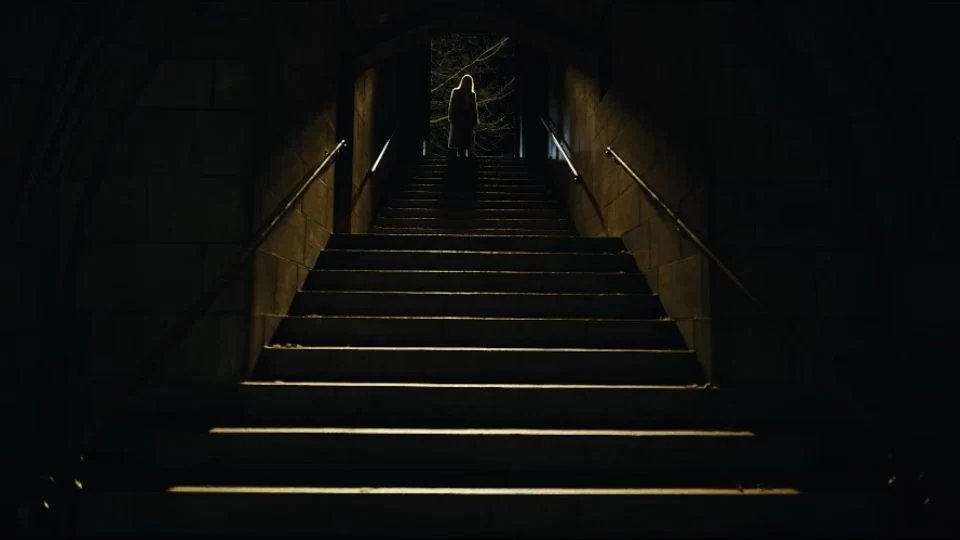
Some franchises don’t need a trailer to scare us. The name alone does the job. Today, October 9, 2026, Universal released the first official trailer for The Exorcist: Martyrs. If you caught the teaser earlier this week, you already knew what to expect: long silences, and images that stay with you after the screen goes dark.
The name behind the project carries real weight. Mike Flanagan, the director of “Doctor Sleep” and creator of “Midnight Mass,” was given essentially free rein to take the franchise wherever he wanted. Anyone who has watched The Haunting of Hill House or Midnight Mass knows his method. He builds horror out of grief, guilt, and crises of faith, and the scares come after. For a franchise that has spent years stumbling, it’s the right fit.
THE SCRIPT OF ANGUISH
Written and directed by Flanagan, the film tells a story that takes place in the world of The Exorcist, but stands on its own, with all-new characters. It is neither a remake of William Friedkin’s classic nor a direct sequel to The Exorcist: Believer (2023).
At the center is an NYPD homicide detective. Scarlett Johansson plays Julie Miller, a single mother whose son has just turned 12. The film promises an ancient, visceral evil tied to a serial killer who has already been executed. The killer, known as Father Sunday and played by John Leguizamo, staged crime scenes inspired by the martyrdoms of Catholic saints. That’s where the title comes from.
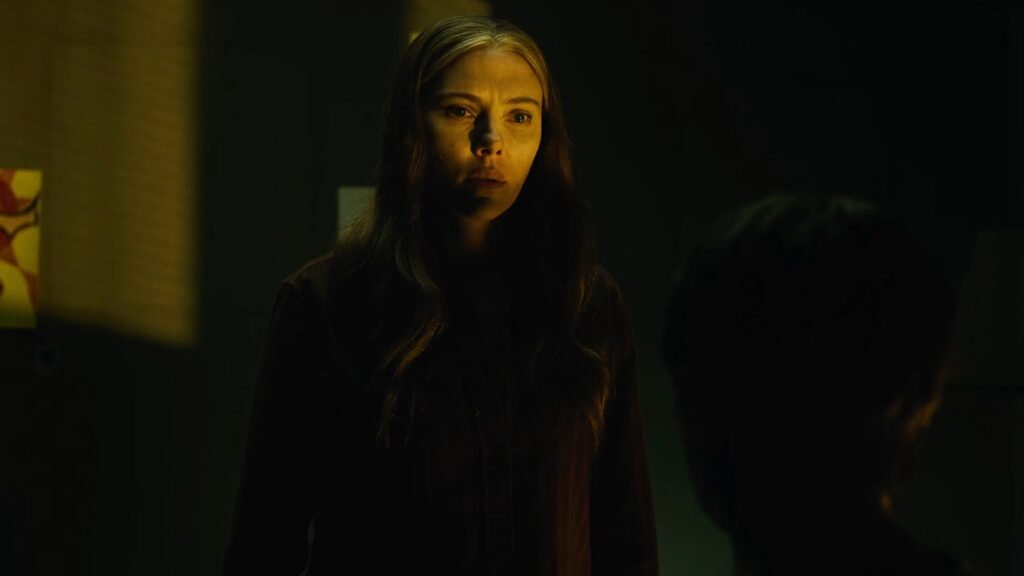
The most disturbing part is the idea that the execution ended nothing. The detective did everything right. She caught the man and watched the sentence carried out, and the evil is still here. Flanagan cites Seven, The Silence of the Lambs, and William Peter Blatty’s The Exorcist III as influences. He also describes the possession as something that leaves the bedroom and the torment of a family behind and moves into a serial-killer mystery. The question he keeps returning to in interviews is the film’s backbone: what do we do about the problem of evil?
The cast reinforces the tone. Besides Johansson and Leguizamo, the film features Chiwetel Ejiofor, Laurence Fishburne, Diane Lane, Sasha Calle, and Rahul Kohli, along with several familiar faces from Flanagan’s regular company. And exorcism fans can rest easy: the director has confirmed there will be an exorcism, “the one job” the title demands.
THE CURSE THAT REFUSES TO DIE
Anyone who talks about The Exorcist ends up talking about the legend that follows it. Since the 1973 production, the story goes that the set was a place where things went wrong. A fire destroyed much of the sets, sparing, of all things, the possessed girl’s bedroom. Deaths among the crew and in the orbit of the cast during filming fed the idea that something was collecting a price. Friedkin is said to have had the set blessed, and priests were reportedly a regular presence during production.
It’s worth separating what’s documented from what’s folklore. The legend has grown over the decades, and some of it is behind-the-scenes embellishment. But that’s exactly why it works. Horror audiences love to believe that certain films carry something with them.
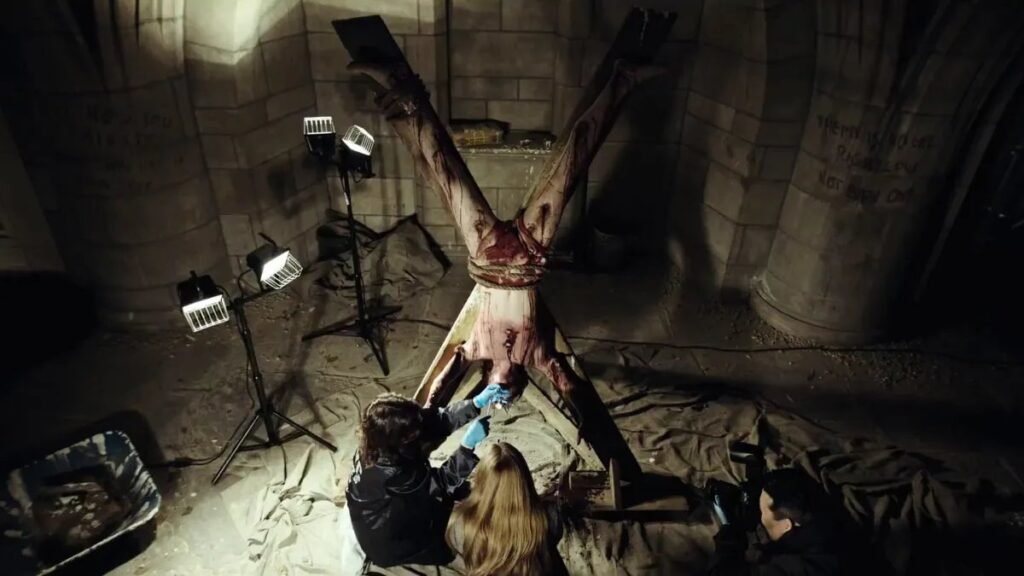
Flanagan seems to understand that. He isn’t leaning on nostalgia. He has said he wants to do something “never done within the franchise” that honors what came before without being built on nostalgia. If the curse is real, he turns it into atmosphere. The trailer suggests the horror this time isn’t in the dark bedroom of a Georgetown house. It’s in interrogation rooms, in execution chambers, and in the daily life of a woman trying to protect her child from something that should not exist.
CONCLUSION: THE WAIT
The film is set to hit theaters in March 2027, and today’s trailer does what matters most: it makes audiences want to see the movie while making them hesitate. It’s a rare combination. There’s a director they trust, a leading lady with serious star power, a villain who feels memorable from the start, and a franchise that needs a redemption worthy of its own myth.
After so many attempts to bring The Exorcist back from the dead, what we feel now is the old mix of excitement and dread. The question is whether Flanagan will scare us the way only he can, and we won’t have the answer until March. Until then, you might want to sleep with the lights on.

The biggest Middle-earth casting news in years landed at CinemaCon in Las Vegas on April 14, 2026, when Warner Bros. confirmed that Jamie Dornan will play Strider — who is, of course, Aragorn — in The Lord of the Rings: The Hunt for Gollum, a theatrical release set for December 17, 2027. Yes, Viggo Mortensen’s boots have a new owner, and the internet reacted the way you’d expect: instantly and loudly. It’s a classic movie-legacy situation — a beloved original, a fresh face, and a franchise stepping into its biggest expansion since the original trilogy. Here’s why this particular casting is the conversation everyone’s having.
The Hunt for Gollum was first announced back in May 2024 as part of Warner Bros. Discovery’s plan to bring Middle-earth back to the big screen, with Andy Serkis directing and reprising his role as Gollum, while Peter Jackson, Fran Walsh, and Philippa Boyens return as producers. What started as a cautious one-off has grown into a full pipeline: the movie landed a firm December 17, 2027 release date, and a second Middle-earth film is already in the works at Warner Bros., co-written by Stephen Colbert — yes, that Stephen Colbert, the famously devoted Tolkien superfan. The audience appetite never really went away either; the original trilogy still draws crowds in anniversary re-releases, and The Hobbit trilogy pulled in roughly $2.9 billion worldwide. This is not a studio taking a flier. It’s a machine being switched back on.
So why is this trending now? Because The Hunt for Gollum is set in the gap between The Hobbit and The Fellowship of the Ring — the years when Gandalf sends Aragorn to track Gollum across the wild — and it fills one of the last unfilmed stretches of Tolkien’s story. The cast rollout turned it into an event: Ian McKellen is back as Gandalf, Elijah Wood returns as Frodo, and Anya Taylor-Joy joined as an elf on June 15. But the decision to cast Dornan as Aragorn rather than bring back Mortensen was the real flashpoint. Serkis addressed it head-on on the Happy, Sad, Confused podcast in late April, saying Mortensen is “thrilled” about Dornan taking the part — a blessing from the original King that cooled down a lot of the internet’s skepticism overnight.
It makes sense creatively, too. This is the pre-royalty version of Strider, a rugged, doomed lone ranger played by Dornan, the Northern Irish actor who built a post-Fifty Shades career on prestige material, including an awards-season run for Belfast. He’s not imitating Mortensen; he’s playing the man years before the crown. And Serkis, directing while also starring, has Jackson’s full backing and a story that keeps Gandalf on the sidelines and Gollum at the center. With Amazon’s The Rings of Power filming its third season at the same time, Middle-earth is suddenly everywhere again — but this is the one built for the big screen. Full-circle stuff: the hunted became the director, the king waited for his successor, and now we all get to watch the hunt play out. December 17, 2027. Mark the calendar.
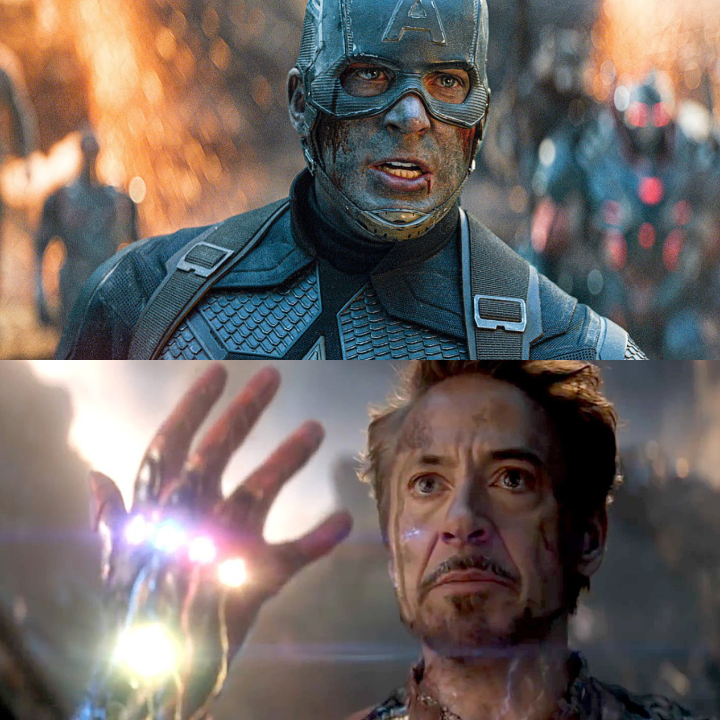
Theaters this week aren’t just revisiting Avengers: Endgame — they’re using it as a doorway to what comes next. Marvel’s Avengers: Endgame Encore kicked off September 25, bringing the 2019 finale back to cinemas for a limited run, with every screening packed with nearly two minutes of brand-new material and IMAX and “Infinity Vision” audiences treated to an extended sneak peek at Avengers: Doomsday. What looks at first like a nostalgic victory lap turns out to be a carefully staged bridge to the next era of the MCU.
The new footage gives fans plenty to dissect. Among its biggest beats: Loki reappearing to Steve Rogers and Peggy Carter right after their long-delayed dance to pull them into a multiverse problem, TVA agents Mobius and O.B. warning that thousands of universes are colliding, and a post-credits scene in which Bruce Banner is cornered in an underground bunker by Doctor Doom himself. Even the 2019 film’s original end-credits sound has been quietly reworked, now paired with images of Doom forging his mask — a small change that says a lot about where this story is headed.
That story is Avengers: Doomsday, arriving December 18 and directed by Anthony and Joe Russo, the duo behind Infinity War and Endgame. Set roughly 14 months after Thunderbolts*, it pulls heroes from three separate universes — the Avengers and their allies, the Fantastic Four, and the Fox-era X-Men — onto a collision course as the multiverse collapses, with Robert Downey Jr. trading his Iron Man armor for the role of Victor von Doom. The ensemble spans Chris Evans, Chris Hemsworth, Tom Hiddleston, Anthony Mackie, Florence Pugh, Pedro Pascal, Vanessa Kirby, Patrick Stewart, Ian McKellen, and many more, making it one of the biggest casts the franchise has ever assembled.
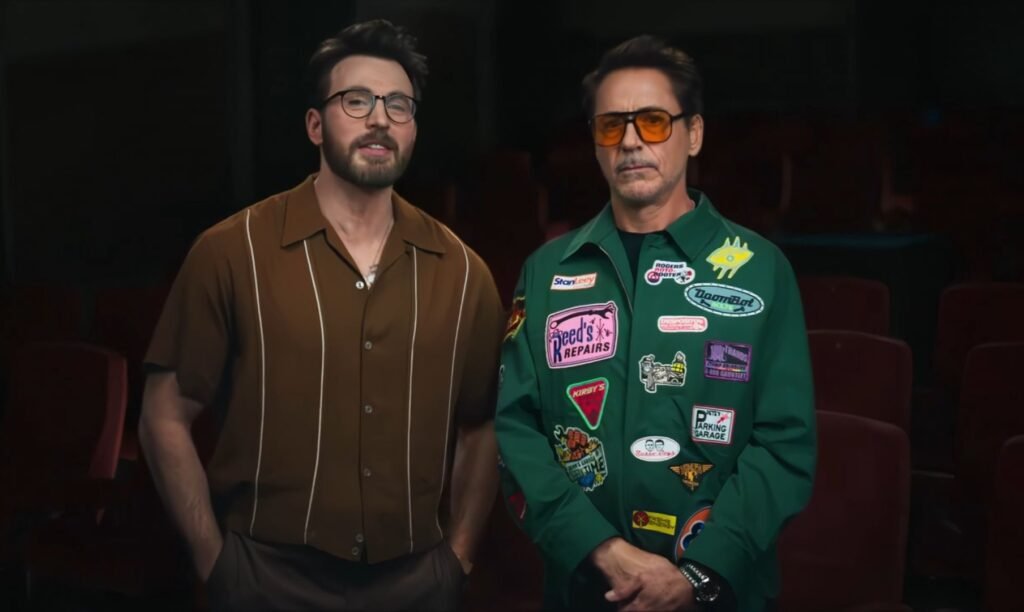
The anticipation is already measurable: the official Doomsday trailer pulled more than 503 million views in its first 24 hours after debuting in July, and a fresh special look surfaced at D23 with Feige, Downey Jr., Evans, and Hayley Atwell on stage. For now, though, the Encore screenings are where the Marvel conversation is happening — proof that Endgame still fills seats seven years on, and that its final scene was never really the end of the journey. Tickets are available for the limited run, and the movie it’s setting up arrives in December.
SPOILER WARNING: The following details the new scenes in Avengers: Endgame Encore. Read on only if you want to know before you go.
The Encore’s roughly two minutes of new material begin with a moment fans have waited seven years to see resolved: right as Steve Rogers and Peggy Carter settle into their long-awaited dance, Loki appears to pull them into a multiverse crisis still unfolding. The stakes get spelled out when TVA agents Mobius and O.B. pop up on monitors warning that thousands of universes are crashing into each other — the same catastrophe that will define Doomsday. The biggest reveal is saved for the post-credits slot, where Bruce Banner, hiding out in an underground bunker, is tracked down and cornered by Doctor Doom, who announces he’s there to collect him. Even the film’s original end-credits audio has been quietly altered: the familiar metallic clanging now plays over shots of Doom forging his mask, retroactively turning Endgame’s closing beat into a setup for its villain.
There is an undeniable magnetism when an A-list movie icon steps into the raw elements of nature. In an exclusive promotional video covering a recent panel and advanced screening for the survival thriller Heart of the Beast, director David Ayer and leading man Brad Pitt offered audiences an intimate look into their relentless new cinematic venture. Reuniting more than a decade after their visceral World War II drama Fury, the director and actor team up once again to explore masculine vulnerability, psychological survival, and ultimate redemption.
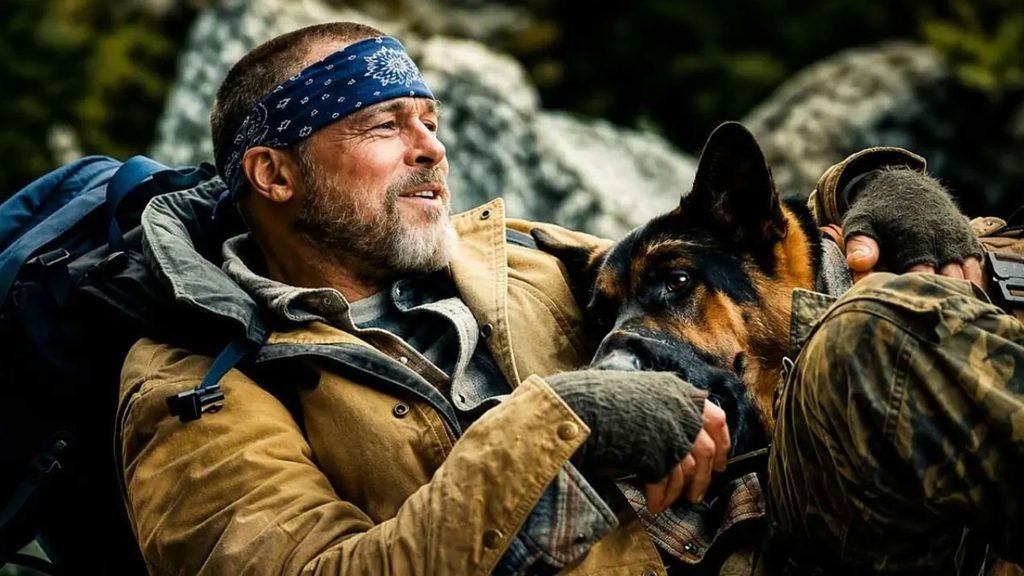
The narrative follows a former Special Forces officer who survives a harrowing plane crash in the harsh, unforgiving Alaskan landscape alongside his retired military working dog. For Pitt, stepping into this role was less of an acting exercise and more of a deeply personal return to his origins. Growing up amidst the expansive outdoor terrains of the Ozarks, the Academy Award winner felt an immediate kinship with the material, connecting with the script on a primal emotional level before even weighing the daunting physical toll production would exact on his body.
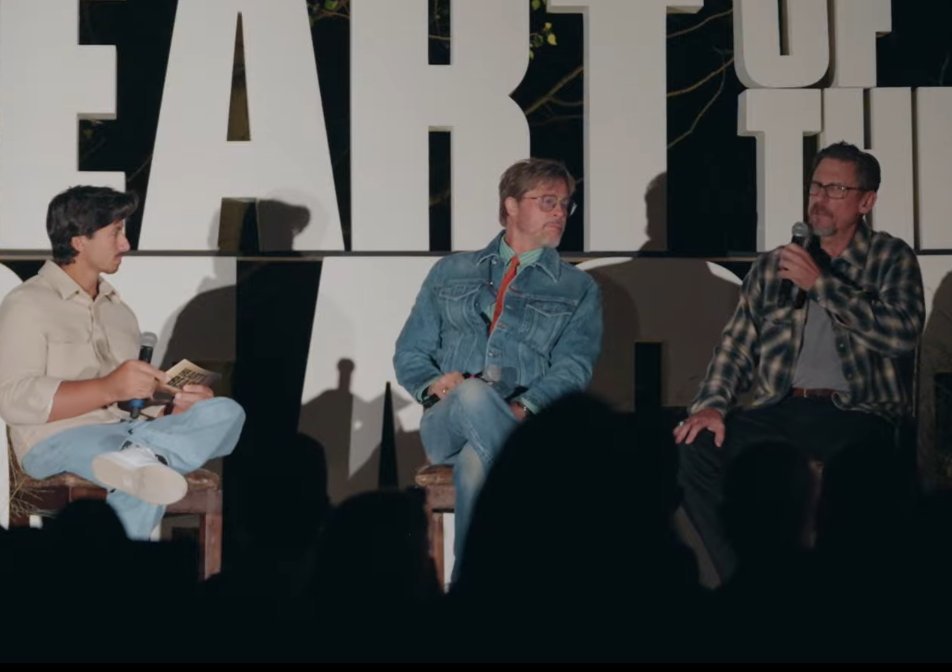
To bring this high-stakes wilderness odyssey to life, Ayer maintained his signature commitment to raw realism. As highlighted throughout the feature interview, the filmmaker surrounded his star with elite military personnel, survival experts, and specialized canine handlers, ensuring that every frame resonated with authentic grit. The heart of the film, however, rested entirely on finding the right canine co-star. Animal coordinator Andrew Simpson combed through New Zealand from north to south before discovering Uber, a real-life retired search-and-rescue dog accustomed to helicopters, extreme conditions, and high-intensity rescue missions.
Building a credible bond between the leading man and his four-legged companion required intense commitment long before cameras rolled. Pitt spent the first three weeks of pre-production solely bonding with Uber, establishing an authentic sense of trust and rhythm. The Oscar-winning star admitted during the discussion that amidst distracting outdoor scents, maintaining emotional intensity during dramatic takes often involved secret pockets filled with boiled chicken to keep his co-star focused without breaking the scene.
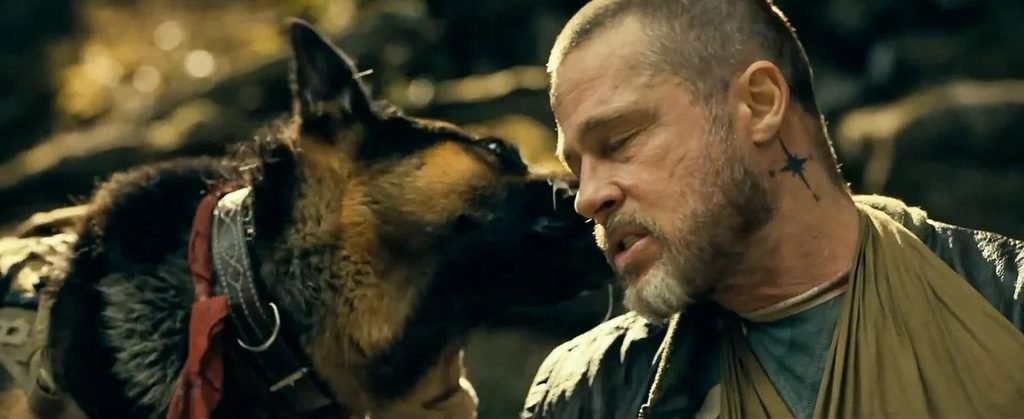
Beyond the physical hardship, both director and actor found profound spiritual depth in the rugged landscapes. Pitt reflected on how nature acts as a mirror, revealing who a person truly is when stripped of societal noise. While his character ventures into the wilderness searching for solitude, the journey ultimately yields an unconditional love and profound inner peace that transforms his entire worldview.
The event documented in the video culminated in a celebratory atmosphere, highlighting how deeply music anchors the emotional framework of filmmaking. Following an impassioned musical intro, rising musician Stephen Wilson Jr. took the stage alongside his own dog to perform, closing a night dedicated to art, brotherhood, and the powerful bond between humans and animals. As Heart of the Beast prepares for its theatrical release on September 25, it stands as a testament to cinema’s power to reflect human resilience in its purest form.
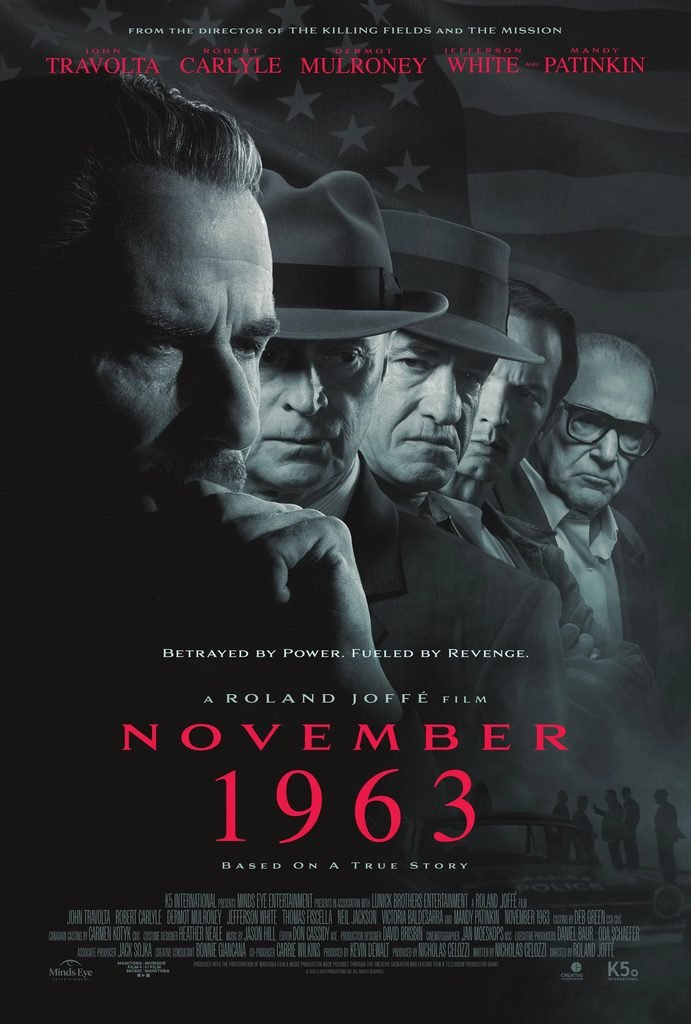
The upcoming historical crime feature film ‘November 1963’, set to head to Peacock following its theatrical run, has officially sparked massive online buzz following the release of its first official trailer. Directed by two-time Academy Award nominee Roland Joffé, the movie dives deep into the chaotic 48 hours surrounding the assassination of President John F. Kennedy through the lens of organized crime. Centering on the Chicago Outfit’s alleged insider involvement, the project brings an entirely new layer of intrigue to one of the most exhaustively analyzed moments in modern American history.
Produced by Ketchup Entertainment, the feature project completed principal photography in late 2025 across Manitoba, Canada, where the production team meticulously reconstructed 1963 Dallas. Rather than relying on familiar theories, writer Nicholas Celozzi penned the script using direct insider accounts from his own family—he happens to be the nephew of notorious Chicago mob boss Sam Giancana. The narrative focuses on the high-stakes power dynamics, broken political promises, and covert operations that went down right before the shots rang out at Dealey Plaza.
The sudden surge in interest comes directly on the heels of the dynamic first-look trailer, which sets up a November 20, 2026, nationwide theatrical release date before its exclusive home streaming premiere on Peacock. Moviegoers and history enthusiasts alike are latching onto the film’s unique claim to historical authenticity, utilizing family secrets rather than recycled Hollywood sensationalism. To pull off the ambitious scale, the production deployed over 1,500 extras and more than 75 period-accurate vehicles to bring the early 1960s back to life with crisp detail.
Leading the ensemble cast is John Travolta playing mob enforcer Johnny Roselli, anchoring the project alongside an impressive lineup including Robert Carlyle as Jack Ruby, Dermot Mulroney as Chuckie Nicoletti, Mandy Patinkin as Anthony Accardo, and Jefferson White portraying Lee Harvey Oswald. Travolta’s return to gritty, character-driven mob cinema marks an exciting chapter for the veteran actor, perfectly complementing Joffé’s signature cinematic realism. With its impressive star power, deeply personal insider source material, and tense real-time structure, ‘November 1963’ is shaping up to be one of the most talked-about historical thrillers of the year.

Marvel Studios is bringing one of its biggest films back to theaters, and this isn’t a simple rerun. Avengers: Endgame returns to cinemas nationwide on September 25, 2026, under the retitled banner Avengers: Endgame Encore, and the timing has nothing to do with nostalgia for its own sake. This re-release lands exactly twelve weeks before Avengers: Doomsday hits theaters on December 18, 2026, and Marvel built the whole event around that countdown.
Endgame first hit theaters on April 26, 2019, closing out the Infinity Saga and grossing nearly $2.8 billion worldwide, a number that made it the second-highest-grossing film of all time and set the record for the biggest opening weekend ever with $1.2 billion globally. Directed by Joe and Anthony Russo, the film became the emotional finish line for over a decade of interconnected Marvel storytelling, and it’s held that cultural weight ever since, regularly topping fan rankings of the best entries in the franchise.
What makes Encore different from a standard theatrical rerelease is the new material attached to it. Marvel confirmed the cut includes a custom introduction, additional footage, and a new end tag, all exclusive to the theatrical run, with the extended content reserved specifically for IMAX and Disney’s newly launched Infinity Vision premium format. Ticket buyers also get an exclusive first look at Avengers: Doomsday, a preview that’s only available through the Encore presentation and nowhere else. That’s a deliberate structure: Marvel isn’t just reselling old footage, it’s using Endgame to physically funnel audiences back into theaters ahead of its next tentpole.
The connective tissue here is the Russo brothers, who directed Endgame in 2019 and are back behind the camera for Doomsday, alongside the return of Robert Downey Jr., who spent over a decade playing Tony Stark and now steps into the franchise again as Doctor Doom. That casting alone has kept Marvel’s fanbase talking since the announcement, and Encore gives Downey’s old character one more theatrical send-off right as his new one gets ready to take center stage. Seven years after the Avengers made their final stand, the big screen is calling them back one more time, and this round comes with a preview of what happens next.
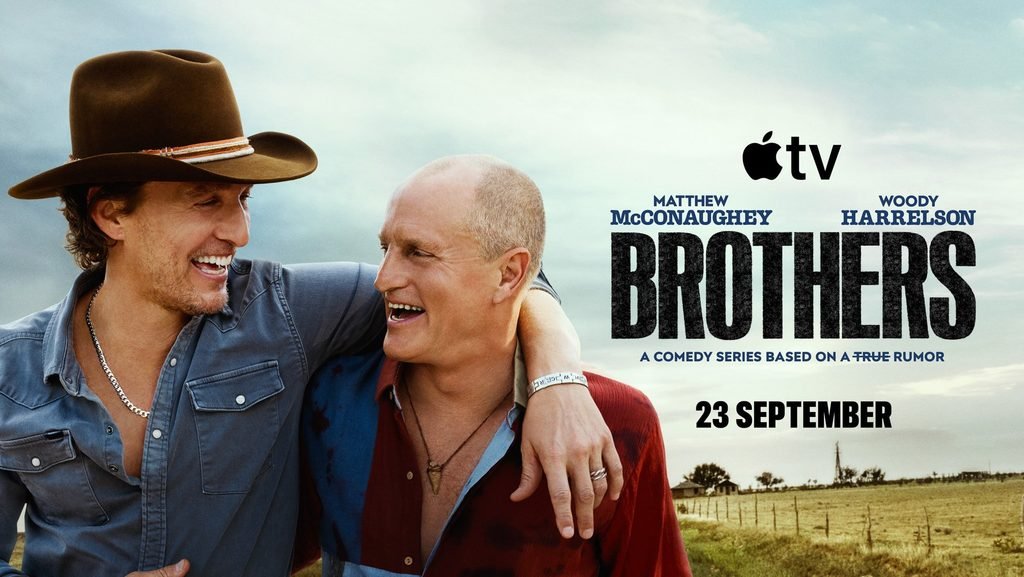
Apple TV+ has a premiere date circled for one of its most talked-about fall bets: Brothers, the new comedy starring longtime real-life friends Matthew McConaughey and Woody Harrelson, drops its first two episodes on September 23, with the remaining six rolling out weekly through a November 4 finale. The series has been building buzz for months, but the last few weeks pushed it from “upcoming” to genuinely can’t-miss, thanks to a freshly released trailer, new poster art, and cast details that finally confirmed just how personal this project is for its two leads.
The show has actually been in the works for years. Apple TV+ first ordered it back in March 2023, with McConaughey and Harrelson signed on to star and executive produce alongside creators Lee Eisenberg and David West Read, who also worked together on Little America and Schitt’s Creek-adjacent projects. Casting news trickled out gradually, with Holland Taylor, Natalie Martinez, and Brittany Ishibashi joining in February 2025, and director Jason Winer coming aboard to helm multiple episodes. Along the way, the project’s production arm shifted from Skydance Television to Paramount Television Studios following the 2025 Skydance-Paramount merger, though Apple TV+ remained the home for the show throughout. Since Brothers hasn’t aired a single episode yet, there’s no audience or critical data to point to — what’s driving interest right now is entirely anticipation, built on a premise nobody expected: a real theory McConaughey and Harrelson have floated for years that they might actually share a father.

That premise is the engine behind the current wave of attention. The fictionalized version has Harrelson’s daughter’s wedding collapsing, sending his family to stay with McConaughey’s at his Texas ranch, where Ma Mac, played by Holland Taylor, accidentally reveals the decades-old secret that sets the whole season in motion. Trade outlets picked up the story fast once the trailer landed in mid-June, and coverage has only intensified as the premiere date approached, with several outlets already floating Brothers as an early contender for next year’s Emmy conversation — not a bad position for a show that hasn’t premiered a single frame.
Much of that early confidence traces back to the two names above the title. McConaughey is an Academy Award winner, and Harrelson has three Oscar nominations of his own, for The People vs. Larry Flynt, The Messenger, and Three Billboards Outside Ebbing, Missouri. Eisenberg serves as showrunner, with Trent O’Donnell directing the pilot and several additional episodes, giving the series a steady hand behind a premise that leans heavily on the real chemistry between its two stars. Whether that chemistry translates into a genuine hit or just a fun curiosity, Brothers arrives September 23 with more built-in goodwill than most new comedies ever get, and that’s worth watching play out one Wednesday at a time.
After decades commanding action franchises and signature blockbusters, Tom Cruise is about to step into territory he’s rarely touched: auteur-driven black comedy. Digger, his first project alongside Oscar-winning Mexican filmmaker Alejandro González Iñárritu, arrives in theaters this fall, carrying a rare mix of artistic prestige, studio-level scale, and genuine curiosity about what Cruise can deliver outside his comfort zone.

Here’s what’s confirmed so far — and what’s still up in the air.
Digger has already moved through every core stage of production. The project formally began development in March 2024, advanced to production that December with filming at Pinewood Studios in the UK, and entered post-production in December 2025. By July 2026, the film had reached completed status, with only its release date left to arrive. The shoot itself, based in the UK, ran for roughly six months. Iñárritu confirmed the film was captured in VistaVision, the large-format process also recently used by Paul Thomas Anderson — a sign of the technical care and visual ambition behind the production.
As for the story, without giving anything away, Warner Bros. has kept the logline deliberately cryptic: Cruise plays the most powerful man in the world, embarking on a frantic mission to prove he’s humanity’s savior before the disaster he unleashed destroys everything. It’s billed as a satirical black comedy, with Warner itself describing the tone as “a comedy of catastrophic proportions” — the pitch chosen to sell a film that blends absurdist humor with an apocalyptic backdrop. Analysts who’ve pored over the promotional material speculate the plot follows an influential man convinced he can fix the world, whose ideas spiral out of control and turn his mission into chaos. Worth stressing: that reading comes from trade press interpretation of trailers and posters, not an official full synopsis — the studio is still keeping the plot details close to the vest.
The creative team is stacked, typical of a prestige international production. Alejandro G. Iñárritu directs and shares screenwriting credit with Alexander Dinelaris, Nicolás Giacobone, and Sabina Berman — the first two also “Birdman” writers — on a script originally written in 2023. The film is produced by Iñárritu, Tom Cruise, and Mary Parent, under Legendary Pictures alongside Cruise’s TC Productions and M Productions. Cinematography comes from Emmanuel Lubezki, with editing by Stephen Mirrione and Conor O’Neill. Confirmed cast, alongside Cruise in the title role of Digger Rockwell, includes Jesse Plemons, Sandra Hüller, Riz Ahmed, Sophie Wilde, Emma D’Arcy, Robert John Burke, Burn Gorman, Michael Stuhlbarg, and John Goodman. Distribution in the US and UK falls to Warner Bros. Pictures. This marks Cruise’s first collaboration with Iñárritu, and it’s not a recent one: according to the director, the idea for the film began taking shape shortly after “The Revenant” (2015), taking about seven years to actually reach the actor.
On budget, it’s worth separating official figures from industry estimates. The number most widely cited — passed along by a Warner Bros. representative to entertainment industry journalist Matt Belloni — is $125 million. Belloni himself, however, reported being skeptical of that figure, saying he’d heard the real cost was significantly higher. In other words: $125 million is the most-repeated press estimate, but it shouldn’t be treated as a final, officially locked-in number from the studio. Still, for comparison, that figure sits below the budgets of the action tentpoles that defined Cruise’s last decade, like the recent “Mission: Impossible” chapters — suggesting that Digger, despite its starry cast and studio backing, operates on a budget scale closer to a prestige drama than an action tentpole. Using the 2.5x multiplier commonly applied by industry analysts to estimate a film’s break-even point, Digger would need to gross roughly $312 million worldwide to turn a profit — a speculative industry calculation, not an officially stated studio target.
For a while, speculation swirled that Digger might launch at a major festival like Venice or Cannes, a plausible move given Iñárritu’s history with those events. Behind-the-scenes reports, however, indicate Warner Bros. decided to skip the fall festival circuit altogether, opting instead for a direct release backed by an aggressive global IMAX marketing push. That’s a piece of trade reporting, not a detailed official statement from the studio. Even so, the film will get its moment of glamour: Digger‘s world premiere will take place as the Royal Film Performance, a longstanding British charity event, on September 22. The theatrical release date, meanwhile, is one of the few fully confirmed and stable facts about the project: October 2, 2026, simultaneously in the US and UK, with no indication of a change so far.
The buzz around Digger runs on two tracks: artistic and commercial. On the artistic side — and this is awards-analyst speculation, not settled fact — there’s talk that the film could land Cruise his first Best Actor Oscar nomination, a category where he’s been nominated twice before, for “Born on the Fourth of July” and “Jerry Maguire,” without a win. The Iñárritu comparison is unavoidable: the director already guided Leonardo DiCaprio to the statuette in “The Revenant,” and repeating that feat with Cruise would be a symbolic milestone for both. On the commercial side, the stakes are just as real. Cruise’s previous release, the latest “Mission: Impossible” installment, underperformed franchise expectations despite grossing nearly $600 million worldwide — a result seen as below the series’ historical standard. That puts Digger in the position of having to reaffirm Cruise’s box-office pull outside the action genre. One thing worth flagging from trade coverage: the film’s first trailer had a modest initial reception on video platforms, sparking discussion about the challenge of marketing an absurdist satire led by an actor historically associated with action. That’s an observation from the early weeks of the rollout — not a box-office prediction, which will only be known after release.

What makes this project especially compelling is the contrast it represents. After a decade devoted almost entirely to franchise filmmaking — powered by the success of “Top Gun: Maverick” and successive “Mission: Impossible” chapters — Cruise is stepping into character-actor territory here, something he hasn’t done since donning prosthetics to play studio executive Les Grossman in “Tropic Thunder” (2008). Behind-the-scenes accounts describe Cruise’s physical and performative transformation for the role as striking. The actor himself has referred to the film, in recent public appearances, as one of the high points of his four-decade-plus career — a line that, like any promotional-campaign soundbite, is worth taking with the usual grain of salt.
Digger also needs to be read within a bigger picture. It’s Cruise’s first film since he signed a deal in late 2024 to develop and produce theatrical films with Warner Bros. Discovery — his first project with the studio since “Edge of Tomorrow,” released a decade earlier. The move reinforces a thesis Cruise has publicly championed for years: that going to the movies requires events big enough to justify leaving the house. By balancing action franchises with a high-profile detour into auteur cinema, Cruise broadens his portfolio without abandoning his long-standing commitment to big theatrical releases made for the big screen rather than streaming.
With post-production wrapped, the October date confirmed, and the gala premiere already set for late September in the UK, Digger now enters the most visible phase of its journey: the release campaign. In the coming weeks, expect a growing wave of promotional material — new trailers, interviews, and public appearances from Cruise and Iñárritu — along with the first critical reactions after the premiere. What remains uncertain is exactly what will make the difference: whether audiences will respond to seeing Tom Cruise in a register so far removed from what’s defined his recent career, and whether the film can convert curiosity into solid box-office performance. Until then, what’s certain is a rare pairing of talent on both sides of the camera — and the expectation, not yet backed by any concrete result, that this combination could become one of the most talked-about moments of Hollywood’s fall calendar.