Jennifer Lopez Is in Her Happy Era — and She’s Not Waiting for Anyone to Complete It
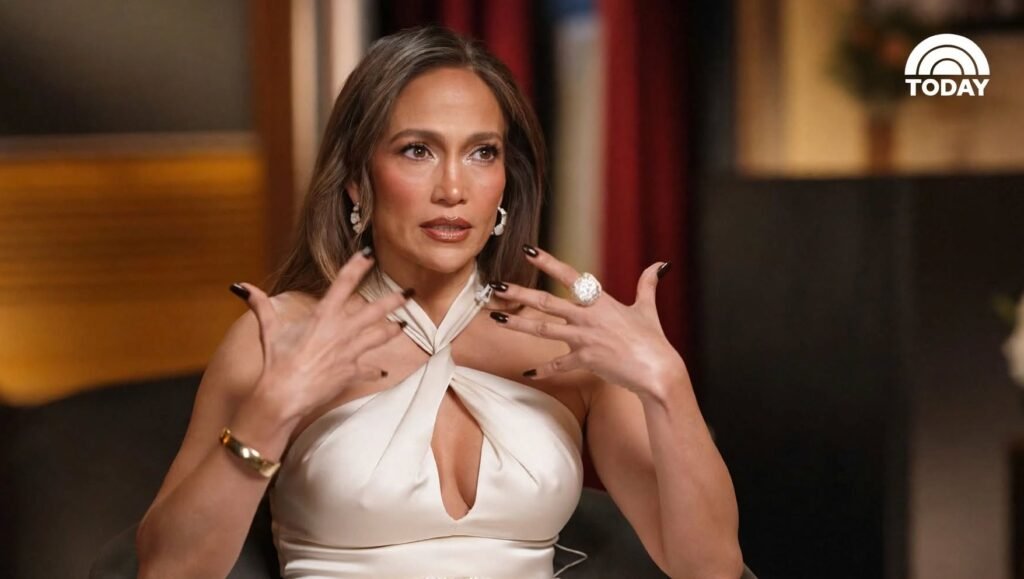
For three decades, Jennifer Lopez has been narrated by other people. The marriages, the headlines, the scrutiny that arrived before the work and sometimes outlasted it. Sitting down with Hoda Kotb for an extended edition of Making Space, she does something rarer than a comeback: she describes herself in her own words, and the portrait that emerges is not of a woman rebuilding after a loss but of one who has stopped outsourcing her happiness.
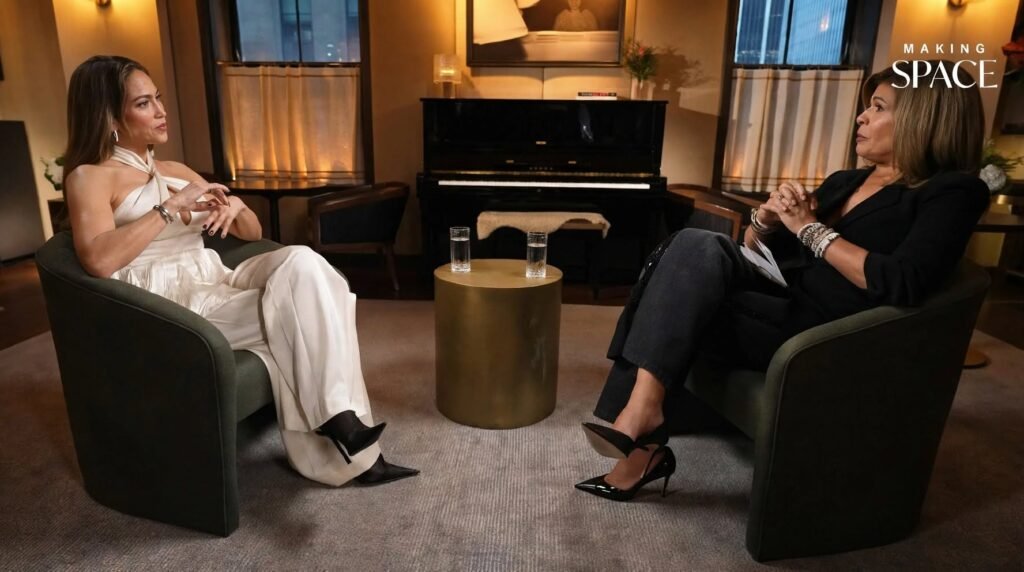
She calls this the best time of her life, and she is aware of how that sounds. Her argument is specific rather than promotional: maturity, she says, lets a woman grow into alignment with herself, and that alignment produces a kind of ease she spent years assuming other people would supply.
The show that started with an ending
The timing is not accidental. On Thanksgiving night — Thursday, Nov. 26, from 8 to 10 p.m. ET/PT — CBS and Paramount+ premiere The JLO Show: Live in Las Vegas, the concert film of her sold-out residency at the Colosseum at Caesars Palace. An extended version streams exclusively on Paramount+. The residency itself ran from New Year's Eve week of 2025 through March 28, twelve sold-out performances backed by a full orchestra, a vocal ensemble and sixteen dancers.
Getting there required her to say no first. After coming off her summer tour, she was offered the efficient path: take that show to Vegas. She refused. A decade had slipped by since her last residency there, and she argues that a residency is not a concert — it is an intimate, theatrical thing, closer in spirit to Sinatra and Elvis than to an arena run.
What she pictured first was not the opening number but the ending: herself mid-Let's Get Loud, then taking the mic for a standard. Her team was skeptical. She told them to trust her. The show that took shape tells her life in music — the Bronx, the Hollywood years, the romances, and finally this chapter — across four acts, from I'll See You in My Dreams to Shall We Dance.
The seed of it is a family ritual. Her mother made her watch West Side Story every Thanksgiving, the annual broadcast that convinced her she wanted to perform for a living. That is why the final act opens with Get Happy sliding into Happy Days Are Here Again, the medley Judy Garland and Barbra Streisand made immortal.
It also explains the title. The J.Lo Show works on two levels, she says: the show you watch her sing and dance in, and the life that became a show whether she planned it or not. Starting out in front of a television on Thanksgiving, she never imagined her personal life would end up as material.
The empty house
The other story she tells is smaller and harder. This fall, her twins, Max and Emme, left for college, and for the first time in her adult life she is living alone. She decorated both dorm rooms. She left cards for them to find later. She dropped them off weeks apart and cried through two entirely different goodbyes — the first, a three-way hug that left her and one child in a silent car; the second, twinkle lights and tapestries and a mother on a dorm bed with nothing left to say except that she would miss them.
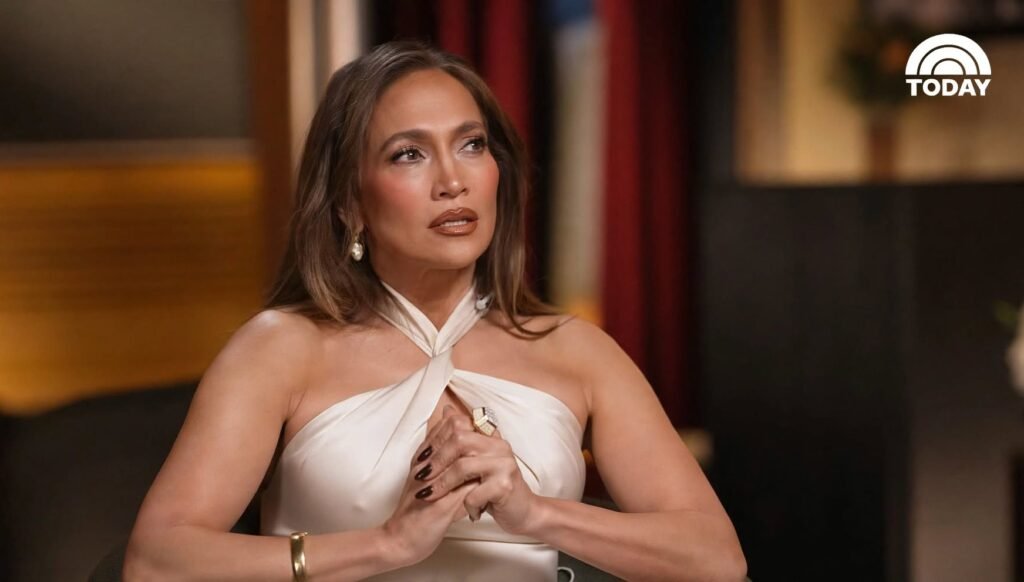
Then came the drive home with the pride, the worry, and the strange relief of a job done.
For a while, she admits, she stared into the emptiness of what her life would now be. Since her twenties she had not been this unencumbered — no partner to answer to, no children down the hall — and she had spent years afraid of exactly that silence, a fear she says drove decisions that were not good for her.
What she found in the quiet surprised her. The house she built and decorated feels like peace now, every corner of it hers. She reads — she has started The Calamity Club. She watches MobLand and The Gilded Age in pajamas, which she calls her happy place, and no one asks her for anything. She describes having nothing left to prove to anyone, and only one obligation remaining: to be happy. She calls that an empowering place to stand.
The question she couldn't answer
The most disarming moment arrives almost casually. Kotb asks whether she has ever truly, deeply been in love. Lopez says she doesn't know.
It lands hard precisely because she is famous for romance — for the grand gesture, the public devotion, the weddings. Her answer is not cynicism. It is a woman auditing her own history and declining to flatter it, and she concedes that the uncertainty carries a quiet sadness.
Later she fills in what replaced the certainty. What she had been searching for in another person, she says, was always hers to give: she can fall in love every day with her own life — with the coffee, the bath, the song written that afternoon.
The fairy tale she was handed
She is precise about where the old script came from. Girls of her generation, she says, were raised on the story that someone would arrive and complete them; a woman could build an entire career and still carry that belief in her pocket, mistaking it for a plan. She includes herself in the diagnosis without excusing it. Whatever she was taught to expect, nothing outside her was ever going to make her happy — the best relationship in the world cannot rescue someone who isn't.
She describes the lesson arriving the way lessons do: not once, but repeatedly, each iteration larger than the last, until, in her image, a whole city falls in on you. What she took from it was boundaries, and the understanding that boundaries are not walls but a form of self-care. She is no longer available to be pummeled, and she frames that as a responsibility rather than a grievance: protecting herself is her own job, and being her own keeper is part of loving herself.
The result is not a rejection of love but a reclassification of it. A relationship is no longer something she needs; it is something she would like. She has been at her happiest in recent years while single, and she is candid that the standard has risen — someone who meets her where she is, who chooses her as deliberately as she chooses them, who can match the love she is capable of giving. She believes that person exists, and she is in no hurry to prove it.
Grief is the proof
The new music came from a stranger's worst day. Scrolling in the car on the way to the studio, she watched a video of a grieving widower on a plane, holding a photograph of his late wife, insisting on the seat where the two of them used to sit. He seemed unreasonable until the footage made clear he was simply destroyed — and by the end, everyone in frame was crying.
She walked into the session with tears still on her face. The writers had a dance track ready. She asked for something else, and Proof of Love was written in that room: grief as evidence that you loved something deeply, rather than a thing to be cured. She was about to release it when she sat down with Kotb.
The rest of the record, she says, is unapologetic in a way she hadn't dared before — love, motherhood, the specific ache of a house going quiet — written for people at her stage of life rather than for the pop charts she conquered in her twenties. She points out that the awards conversation is dominated by artists half her age, and that she made that music when she was that age. What she wants now is a voice for the listeners who are where she is.
What she's making space for
Thanksgiving will be noisy again. The twins are eager to come home; one has found theater friends, the other is more of a loner and a writer, and both are adjusting at their own speed. Meanwhile the show that began as a family ritual returns as one: her Las Vegas act, in the living rooms of everyone who couldn't get a ticket.
Thirty years in, the revelation is not that Jennifer Lopez can still fill a room. It is that she has stopped needing the room to tell her who she is — and that she can admit uncertainty about the thing she was once most sure of, and sound freer for it.
What to know before you watch
When does The JLO Show premiere? Thanksgiving night, Thursday, Nov. 26, 2026, 8–10 p.m. ET/PT on CBS and Paramount+. An extended cut streams exclusively on Paramount+.