Breakfast Club: The Room That Never Existed
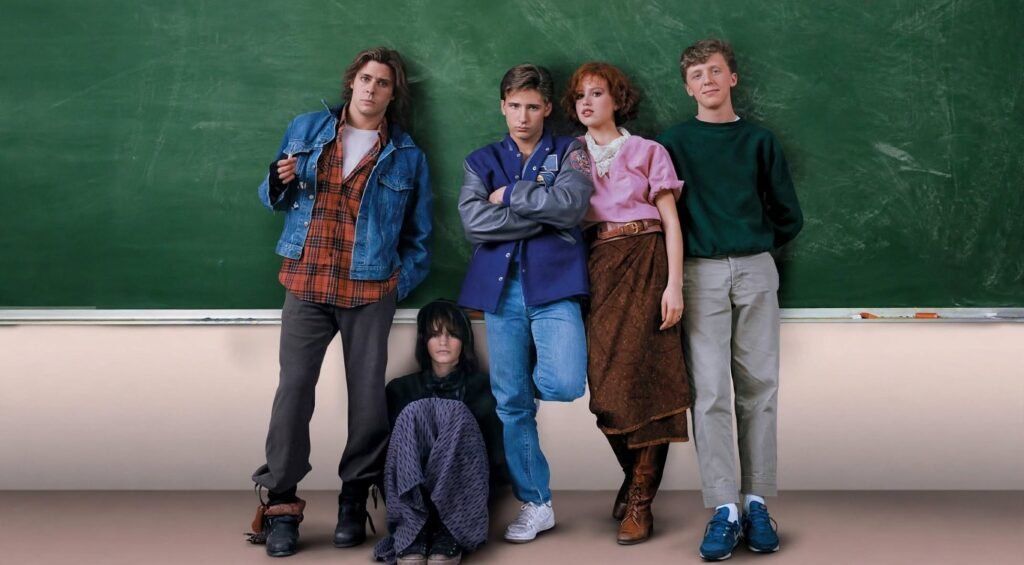
There was no library at Maine North High School
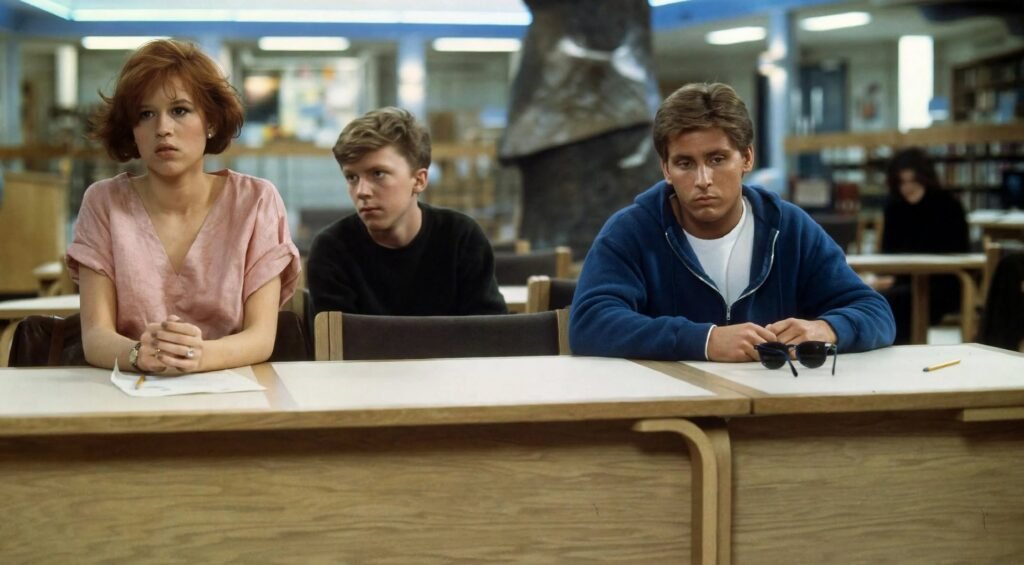
There was no library anywhere near it, in fact — not the open-plan learning center with the staircases climbing to a terrace, not the tables the kids sprawl across, not the balconies Bender drops from. All of it was constructed inside a gymnasium.
In Breakfast Club, that gym belonged to a brutalist school in Des Plaines, Illinois, that had already been closed for three years when John Hughes arrived in the spring of 1984. The production built its library from scratch, then moved its offices, its editing rooms and a screening room into the empty building. A school with no students in it, borrowed to play a school where five kids are being watched.
For ninety-seven minutes, the world made sense in that room. That is how one writer, fourteen years old in February 1985, remembered the opening-night screening thirty years later: every kid in every clique, however put-together, had been bent out of shape by their parents, and five strangers locked in a room for a long Saturday could walk out understanding each other.
Nine hours, one room, no escape
Once the door shuts, the film does something strange for a teen movie. It refuses to leave.
The constraint is the whole architecture. Brian's letter opens the picture in voice-over, framing the day before it happens. Bender stalks the library, sweeps oversized books off a table, and when Andrew doubts his stories about home, pushes up a sleeve to show a cigar burn. Brian travels from tears to a real laugh at his own expense in about two minutes. There is nowhere to cut away to, so every reaction has to land in the same fluorescent light.
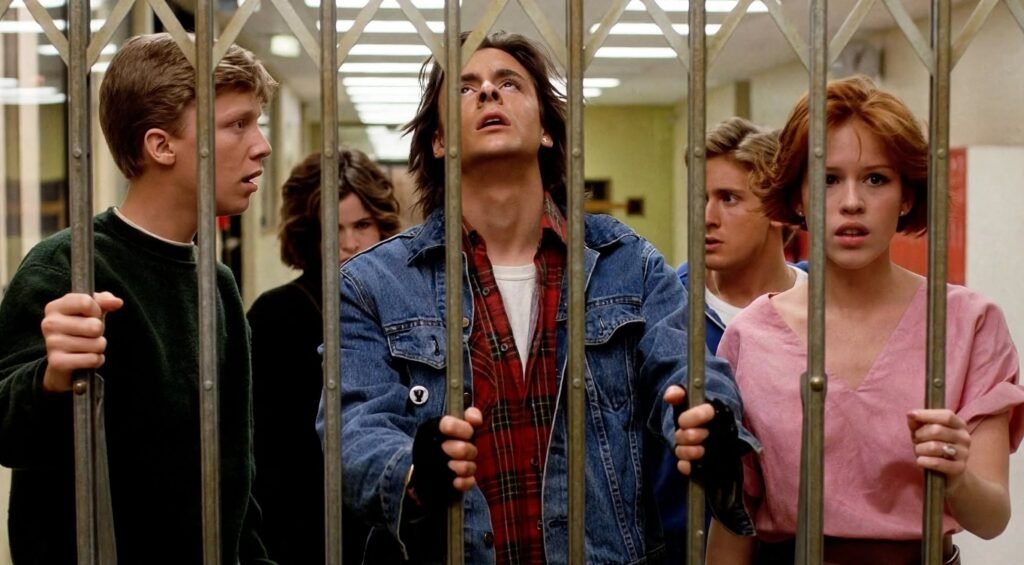
Some of the sharpest lines weren't on the page. Judd Nelson coined "neo-maxi-zoom-dweebie." Anthony Michael Hall came up with Brian's answer about wanting a fake ID so he could vote. Hughes shot more than a million feet of film across a thirty-two-day schedule, and the movie cost about a million dollars and grossed about fifty-one million — a return that, along with the cast it made famous, helped define the 1985 teen-film moment and the "Brat Pack" label that came with it.
What the critics saw
Not everyone in the dark that winter was convinced. The Hollywood Reporter's review of February 11 said audiences might feel sentenced to a day in that library with the five leads, just sitting and doing nothing.
Chicago critics gave it thumbs up. Others were mixed. One reviewer who found it "a little pat" in 1985 said thirty years later that he had changed his mind.
The kid in the back of the theater in Pasadena and Where the library went
Then there was John Singleton — seventeen, the film critic for his high school paper, at a preview screening early in 1985. He was bowled over. It didn't matter to him that the kids on screen were white, he said later; they were teenagers finding their way into adulthood, as he was.
The gym that held the set had hosted football practice and a Michael Jordan commercial shoot. Today the library is gone and the space is a warehouse stacked with boxes of toner cartridges, with no trace of a learning center anywhere in it.
In the basement, a poster sits in a glass case. The building manager says about thirty people a summer ask to see where it happened. And in 2010, someone packing up a filing cabinet in the old school found a first draft of the screenplay dated September 21, 1983 — left behind like a forgotten detention slip.
The last shot
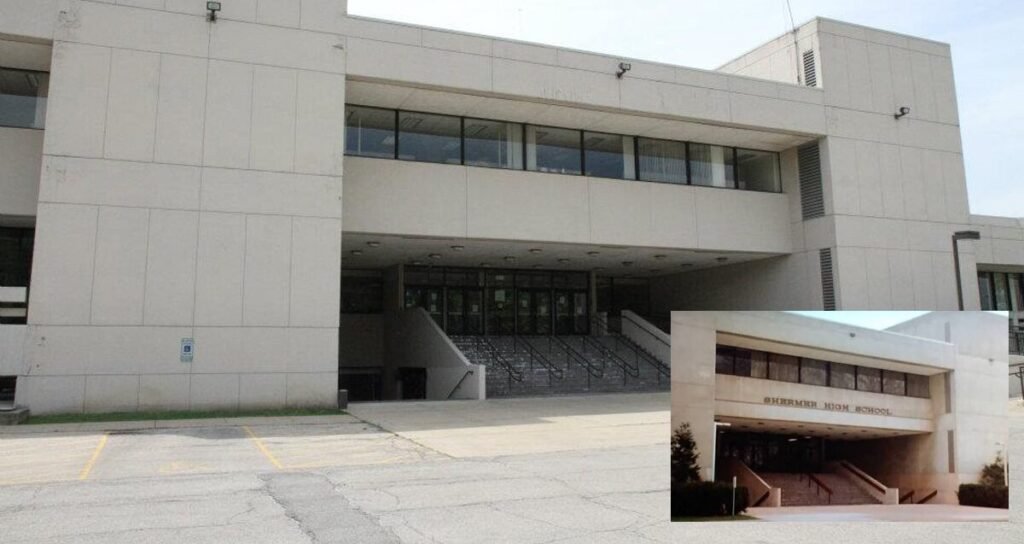
Go back to the final image: Bender crossing the football field, fist raised. That field sits behind the same school, because the cinematographer said they never left the premises — it was faster that way. Five kids, one day, and a building that never let them out. Maybe that's why we still carry them around.