The $32 Million Western Movie That Sharon Stone Refused to Let Die
Some movies open into a chill, and The Quick and the Dead got one on February 10, 1995: 2,158 theaters across the United States, an opening weekend of $6.5 million, and a domestic total that would settle, six weeks later, at $18.6 million — less than the $32 million the film cost to make, according to Box Office Mojo and The Numbers. The Los Angeles Times ran its review that same day, and Kenneth Turan's verdict was the temperature of the moment: showy and rarely dull, he wrote, but not noticeably compelling, a movie leaning hard on the spaghetti-Western playbook. Gene Siskel said he was thoroughly bored; Roger Ebert gave it two stars. A western about a woman walking into a town for a shooting tournament, directed with comic-book bravura by Sam Raimi, arrived in the middle of the 1990s and was received by much of the press as an artifact from another decade. It was. That was the point, and almost nobody said so at the time.
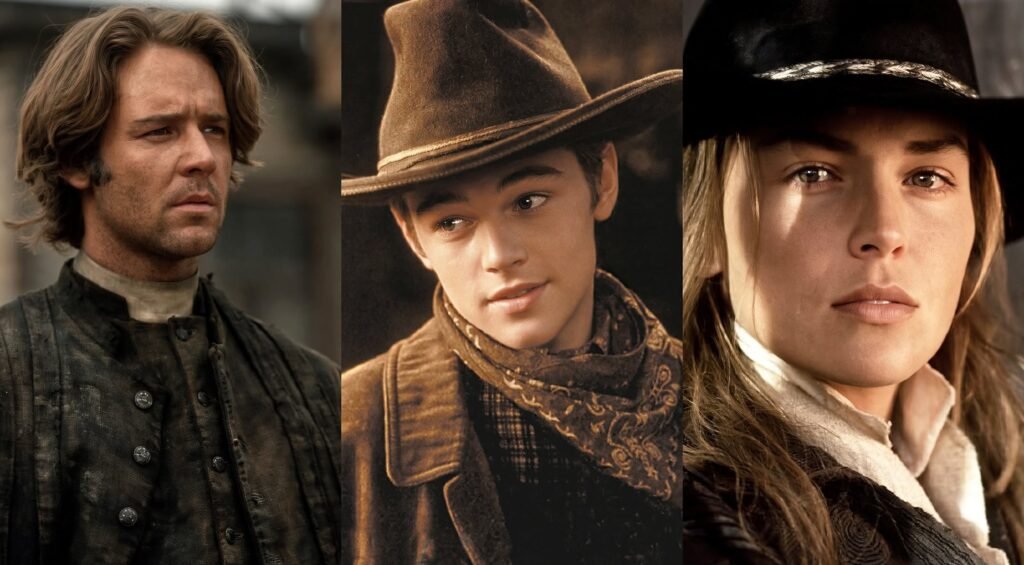
What makes the film worth returning to is not that it was misunderstood, though — it is that Sharon Stone refused to let it be a small movie. TriStar offered her the script and a co-producer credit, and in her 2021 memoir, The Beauty of Living Twice, she described treating that credit as real authority, not decoration. She fought with the film's male producers to cast Russell Crowe, an unknown in America whose entire American career, as he put it decades later, followed hundreds of meetings that led nowhere until she saw him in Romper Stomper and decided she wanted the actor who frightened her — her word, from a March 1995 New York Times interview — because she was convinced she couldn't be frightened by him. And when Leonardo DiCaprio, fresh out of The Basketball Diaries, was the only auditioning actor who moved her in a scene, the studio gave her an ultimatum she would remember: if she wanted him that badly, she could pay him out of her own salary. She did. It is the rarest thing in 1990s studio filmmaking — a star using her own leverage not for herself, but to build a better cast around someone else's movie.
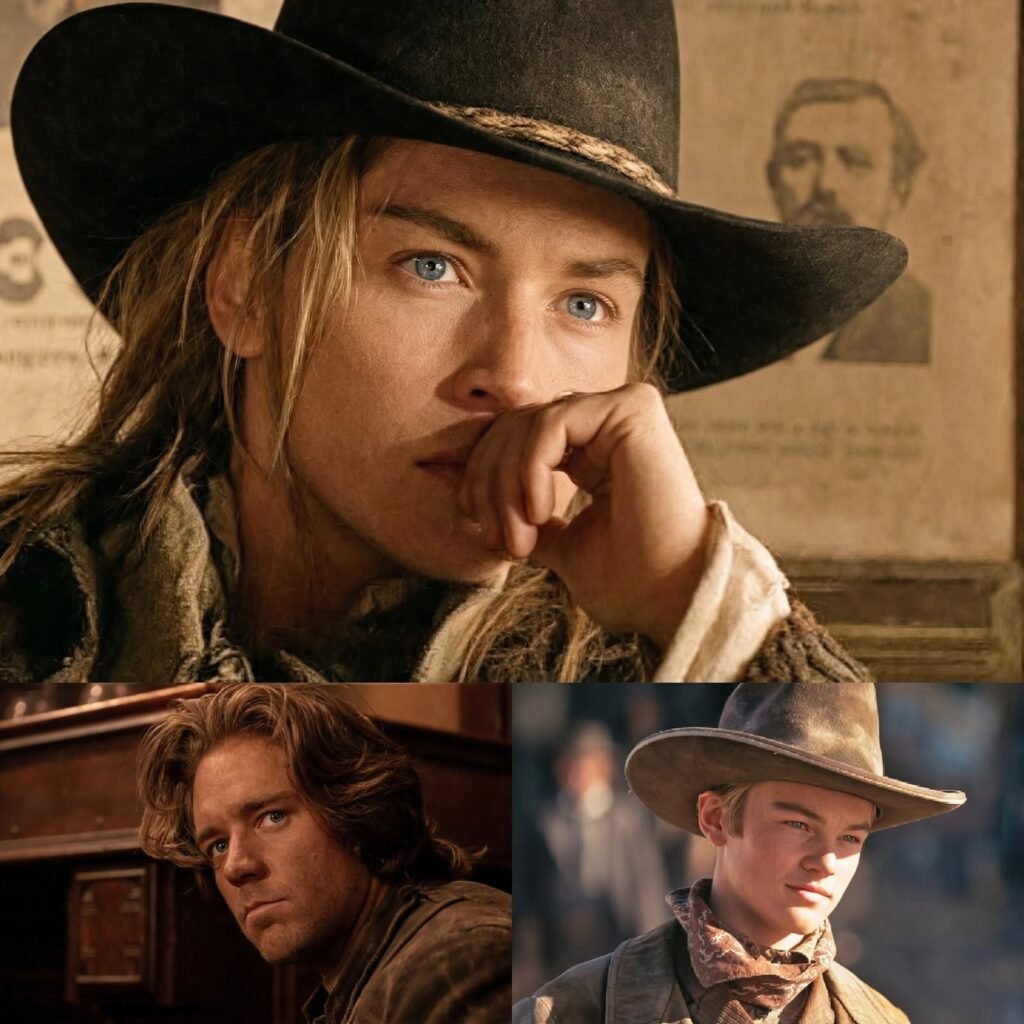
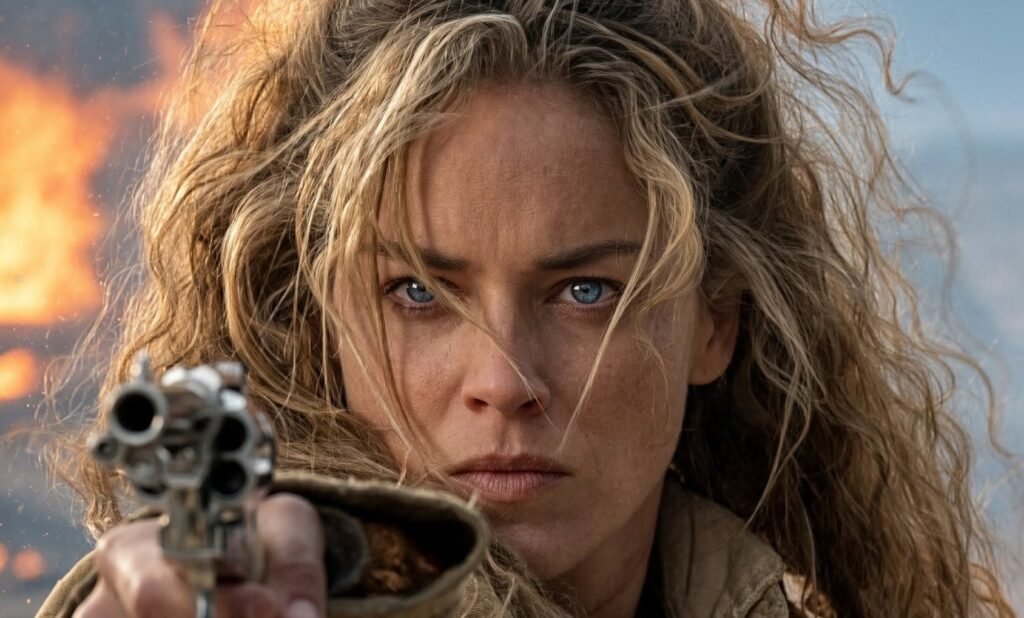
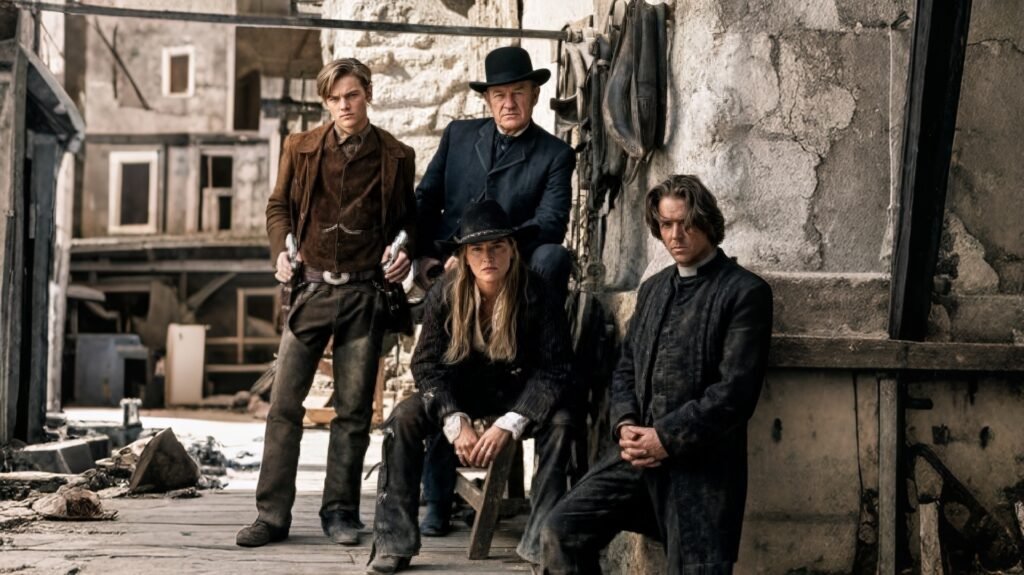
The movie she was building deserves the spotlight back. In Redemption, a town with a name that works as a threat, Ellen rides in with one shotgun shell and a surname nobody wants to hear, and enters a tournament of duels run by Herod, Gene Hackman's smiling tyrant, with the cocky Kid (DiCaprio) and the reformed preacher Cort (Crowe) as the other men in the bracket. Raimi shot it in Mescal, Arizona, on a Western movie set outside Tucson, and staged every duel like a short film: slow walk, close-up, one bullet. The most revealing set memory comes from Lance Henriksen, who played the showman gunfighter Ace Hanlon and remembered, years later, preparing period boots and a custom hat for the role — and a particular day when Raimi proposed a camera angle shooting from below, framing him between Hackman's legs, and Hackman questioned the setup so sharply that Henriksen nervously offered to be the one to walk instead. Hackman accepted. It is a small story about blocking, and it tells you almost everything about the movie's tension: even its comedy was built out of men measuring themselves against other men, while Ellen, the only person in town with a reason to be there, kept her own counsel until the final shot.
The film's commercial defeat had consequences that stayed with its director for years. In a 2009 interview with Empire, Raimi said he had reached a dead end after The Quick and the Dead, that he felt his style hadn't helped make it a great picture — the kind of self-assessment that reads strangely now, when his visual excess in that movie is exactly what has aged into its reputation. The reappraisal has been slow and real: contemporary reviews from the period, from the LA Times to the D-minus the Spokesman-Review gave it, sit in the record next to later assessments that treat it as an underrated, distinctive western whose style found its audience on home video and over decades of reruns. The numbers never recovered; the movie did.
That is the memory worth keeping: not a premiere — no documented crowd for this one exists in the record — but something quieter and, in its way, more cinematic. In the spring of 1995, with the box-office verdict already in, Sharon Stone sat for a New York Times interview and explained what had attracted her to a little-known Australian she had seen once on screen: he was fearless. Around that same time, according to a March 1995 real-estate report in the same newspaper's home turf of the LA Times, she closed on an 11,000-square-foot house in Beverly Hills and talked about fixing it up before moving in — a star buying a future while her western was still playing to half-empty auditoriums. The Quick and the Dead lost its gamble in February 1995. It just didn't know it was going to win later.