Who Is Adam Sandler and How did Hollywood turn Adam Sandler into a household name?
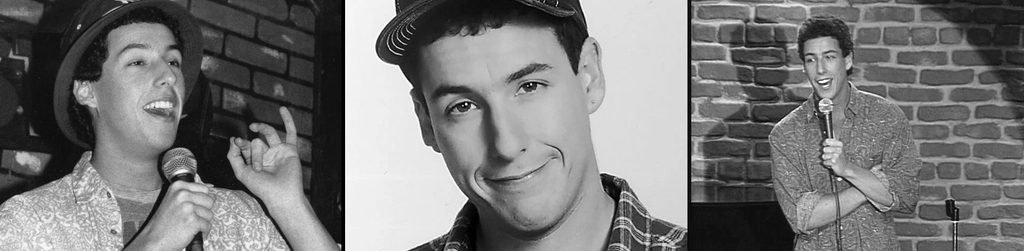
Today, September 9, 2026, Adam Sandler turns 60. Somewhere in Los Angeles, he is almost certainly wearing an oversized basketball jersey and shorts that have never once seen a red carpet, because that is, improbably, part of the point. Few men in the history of the movie business have made looking like they don’t care about the movie business into a billion-dollar strategy. And on the day he turns 60, Sandler isn’t winding down — he’s coming off the single biggest opening weekend any film has ever had on Netflix in the United States. That is the strange, stubborn fact at the center of this story: the goofball from Brooklyn who was told by a high school guidance counselor that comedy wasn’t a viable career is, six decades into his life, the closest thing Hollywood has to a guaranteed hit.
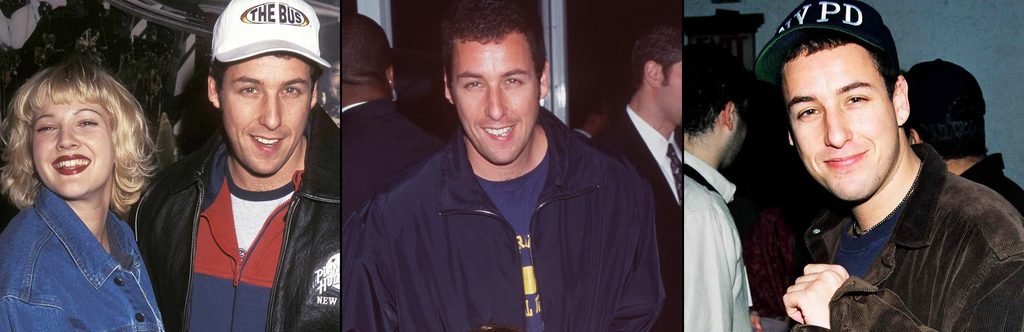
This is where the MOVIE STAR series usually asks a different question. Most of the names we investigate here got famous fast — actors thrust into the center of the industry through a single franchise, a viral awards-season run, an algorithm-friendly social feed, before they had the résumé to justify the wattage. Sandler is the opposite case, and that’s exactly why he belongs at the start of this series. He is what “star power” looked like before streaming metrics and brand deals rewrote the definition — the control group against which every fast-tracked star of the last few years is, whether they know it or not, being measured.
He didn’t start as a leading man. He started as a kid from Manchester, New Hampshire — born in Brooklyn, the youngest of four — doing stand-up in clubs before he could legally drink in some of them, picking up bit parts on television while everyone around him assumed he’d eventually need a real job. In 1983, a guidance counselor at his Brooklyn high school reportedly suggested he learn a trade instead. Seven years later, in December 1990, he showed up on Saturday Night Live, first as a writer, then as a featured player, then — by the 1993–94 season — as a full cast member alongside a group that included Chris Farley, David Spade and Chris Rock. Opera Man. Cajun Man. “The Chanukah Song.” It made him a cult favorite inside the show, but it also made him, in the eyes of NBC’s West Coast leadership, expendable. He was let go in 1995, at the end of the show’s twentieth season, ratings and internal politics cited as the reasons.

Getting fired turned out to be the best thing that ever happened to his career. That same year, Billy Madison — a film critics like Roger Ebert dismissed outright — became a modest hit and, more importantly, a dorm-room staple. A year later came Happy Gilmore, a scrappy $40 million-grossing sports comedy about a failed hockey player turned golf phenomenon, made for a fraction of what studios spend on tentpoles today. Neither movie was a “moment” in the way a franchise debut is now. They were slow-building cult objects — the kind of films that made their real money on video store shelves and cable reruns, embedding Sandler in the culture one dorm-room rewatch at a time rather than one opening weekend. By the time The Wedding Singer, The Waterboy and Big Daddy landed between 1998 and 1999, the pattern was set: critics shrugged, audiences didn’t, and Sandler kept working with the same rotating troupe of friends — Rob Schneider, David Spade, Kevin James, Steve Buscemi, Allen Covert — a repertory company built more like a garage band than a Hollywood career.

That same instinct for control is what turned him from a hired actor into a mini-studio. In 1999 he founded Happy Madison Productions, initially to produce Schneider’s Deuce Bigalow: Male Gigolo, and used it over the next decade to keep making the kind of broad, family-and-friends comedies that studios were increasingly reluctant to greenlight on their own. It’s easy to underestimate what that decision did for his longevity: while plenty of his ’90s peers depended on studios to keep casting them, Sandler simply built the machine that kept casting him.
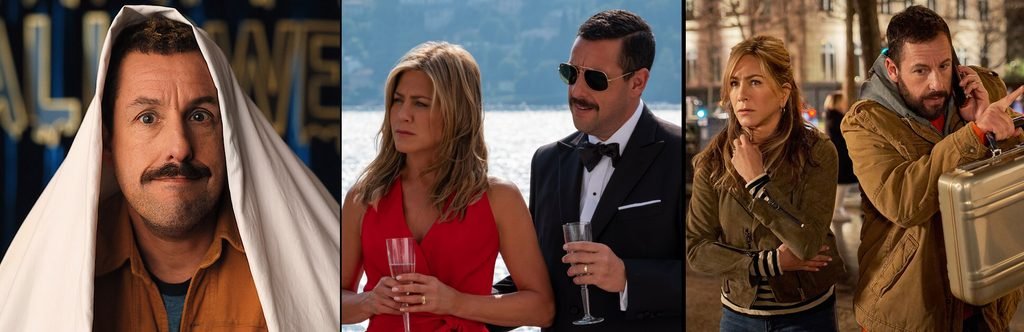
The real inflection point, though, wasn’t a movie — it was a contract. In 2014, as Hollywood was still treating streaming as a secondary market, Sandler signed an exclusive four-film deal with Netflix reportedly worth $250 million, an eyebrow-raising bet on a platform most of the industry hadn’t taken seriously yet as a home for movie stars. It paid off almost immediately: 2019’s Murder Mystery, co-starring Jennifer Aniston, was reportedly watched in 83 million households within a month of release and became the platform’s biggest film of that year. Netflix extended the deal in 2017, again in 2020, and once more since — a partnership industry estimates now place well past $500 million in cumulative value, alongside a $20–25 million-per-film upfront fee plus backend profit participation that most theatrical stars can only envy. According to Nielsen, Sandler’s films have generated more than 61 billion minutes of viewing on the platform since 2018 alone. No leading man in the streaming era has that kind of standing volume.

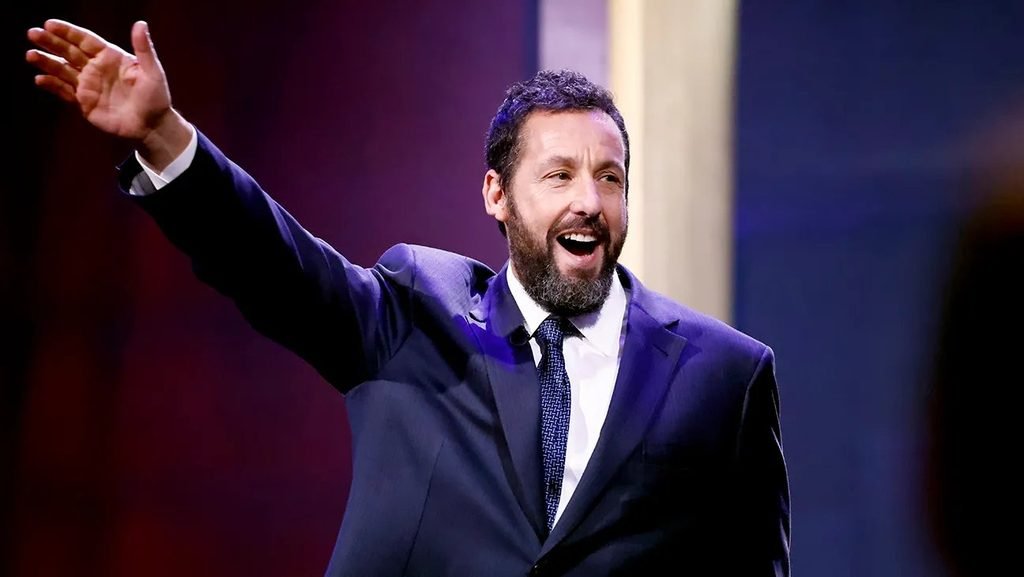
Which brings us to the number that made this birthday newsworthy in the first place. In July 2025, Happy Gilmore 2 — a legacy sequel arriving nearly thirty years after the original — pulled in 46.7 million views in its first three days, the biggest U.S. opening weekend any film has ever had on Netflix. Over its first week it logged 2.89 billion minutes of viewing, edging out Glass Onion: A Knives Out Mystery for the largest single-week total in the five-year history of Nielsen’s streaming rankings — and it did it in three days, where Glass Onion needed a full week. The sequel dragged the 1996 original back onto the platform’s own top ten in the same week. Sandler is now heading into his tour, “Adam Sandler: You’re My Best Friend,” a 37-date arena run, and into Jay Kelly, a Netflix drama reuniting him with Meyerowitz Stories director Noah Baumbach alongside George Clooney — proof that the goofball and the character actor have learned to coexist on the same call sheet.
And that dual identity is where the “fame versus popularity versus star power” question gets genuinely interesting. Sandler has never lacked fame — he has been a known quantity since 1995. What’s rarer is that he has real, demonstrable popularity: an audience that has followed him, specifically, across three decades and multiple format shifts, from VHS to DVD to cable to streaming, without needing a franchise, a comic-book suit or an algorithm to keep bringing them back. That’s not manufactured buzz; Nielsen’s numbers are viewers actually pressing play, film after film, for a decade. And that popularity has occasionally translated into something the industry takes even more seriously than box office: prestige-adjacent credibility. Paul Thomas Anderson cast him as a dramatic lead in Punch-Drunk Love in 2002. Judd Apatow did the same in Funny People. The Safdie brothers built Uncut Gems around him in 2019, and Sandler’s performance as the frantic, self-destructing jeweler Howard Ratner won the National Board of Review and the Independent Spirit Award for Best Male Lead — a nomination-season sensation that the Academy still, notoriously, declined to recognize with an Oscar nod. He turned the snub into one of the more memorable non-wins in recent memory, joking on stage that his fellow nominees would now be remembered as the guys who lost to him anyway. In 2023 the Kennedy Center gave him the Mark Twain Prize for American Humor — the same honor once given to Richard Pryor, Carl Reiner and Billy Crystal — with tributes from Jennifer Aniston, Judd Apatow, Drew Barrymore and Conan O’Brien.

That is the distinction worth making: Sandler’s fame is obvious, his popularity is measurable, and his star power is what connects the two. He has largely opted out of the modern visibility economy, doing very little traditional brand ambassador work and almost no red-carpet media cycle, while keeping a famously low-key social presence for someone this famous. Yet the industry keeps building around him because his name can move tens of millions of viewers without requiring a franchise, a fashion campaign or a constant press tour. Netflix didn’t simply give Sandler a place to make movies; it recognized that Sandler himself was the draw. That is a much harder kind of power to manufacture.

It’s also what separates him from the new generation of Hollywood names this series exists to interrogate. Sandler isn’t riding nostalgia for a legacy he inherited — he built the nostalgia himself, one dorm-room VHS and one Netflix binge at a time, across a career that predates the streaming era he now dominates. He has no famous last name, no franchise armor, no algorithmic tailwind; what he has is more than three decades of receipts. Where a newer star’s ubiquity can sometimes be a function of exposure — being everywhere because the industry has decided to put them everywhere — Sandler’s longevity has been sustained by an audience that keeps returning, even when the surrounding industry changes. That makes his career less a story of constant reinvention than one of something much rarer in Hollywood: consistency that survives changing formats, changing tastes and changing definitions of what a movie star is supposed to look like.
So — who is Adam Sandler, and how did he become one of Hollywood’s biggest stars so fast? He didn’t do it fast at all, and that’s the answer. He is proof that “Movie Star” doesn’t have to mean the fastest ascent or the loudest press cycle — it can mean the longest one. Sixty years in, still headlining the platform’s biggest openings, still capable of silencing his critics with an Uncut Gems, still touring arenas in his free time, Sandler is less a product of the modern star machine than a reminder of what the machine used to require: not virality, but returns — decade after decade of an audience simply, stubbornly, showing up.